Skip to content
DevMeme
5804 of 7435
Developer Offers DNA Proof to Bypass Geopolitical PR Ban
OpenSource Post #6361, on Nov 7, 2024 in TG

Developer Offers DNA Proof to Bypass Geopolitical PR Ban

Why is this OpenSource meme funny?

Level 1: Way Off Topic

Imagine you and your friends are working on a school project together. Everyone is supposed to talk about the part of the project they worked on. Now picture one friend – instead of talking about the project – suddenly stands up and starts shouting about their family history. They loudly say, “I’m not just from one place, I have family from different places! I can prove it, I have documents! Please don’t treat me badly because of who my grandparents are!” Everyone else in the group stops and stares, feeling confused and a bit uncomfortable. This has nothing to do with the project you were all working on, right?

It’s kind of funny in a really weird way because it’s so unexpected and out of place. You were expecting to hear about how their part of the project is going, but they started talking about something completely unrelated and very personal. It’s like someone switched the TV to a different channel suddenly – one moment you were in “project mode,” and the next you’re hearing a dramatic personal story. The humor here comes from that surprise and the sheer oddness of the situation.

In the meme, a programmer did exactly that, but in an online coding project. They were supposed to describe the changes in their code, but instead they went on a big personal rant. Just like in the school project example, everyone reading it was caught off guard. It teaches a simple lesson: when you’re in a group task (whether it’s coding or homework), it’s best to stay on the topic. If you suddenly talk about something totally off-track, people might laugh or feel awkward because it just doesn’t fit the situation at all.

Level 2: Off-Topic Outburst

Let’s break down what’s happening in this meme in simpler terms. On GitHub (a popular platform for sharing and collaborating on code using the Git version control system), developers use Pull Requests (PRs) to propose changes to a codebase. Think of a PR as asking, “Hey, can you pull these changes into the project?” When you open a PR, you usually include a description explaining what your change is and why you made it. This is part of the standard code review process: other developers will read your code and your explanation to decide if it should be merged (included) into the project.

In a normal PR description, you might write something like: “This PR adds a new function flux.unfold() to handle X feature. It fixes issue #3921. I also updated the tests to cover the new behavior.” That would be clear and on-topic. The reviewers could then understand the context and focus on checking the actual code for any problems or improvements. Essentially, a PR description sets the stage for a productive discussion about the code changes.

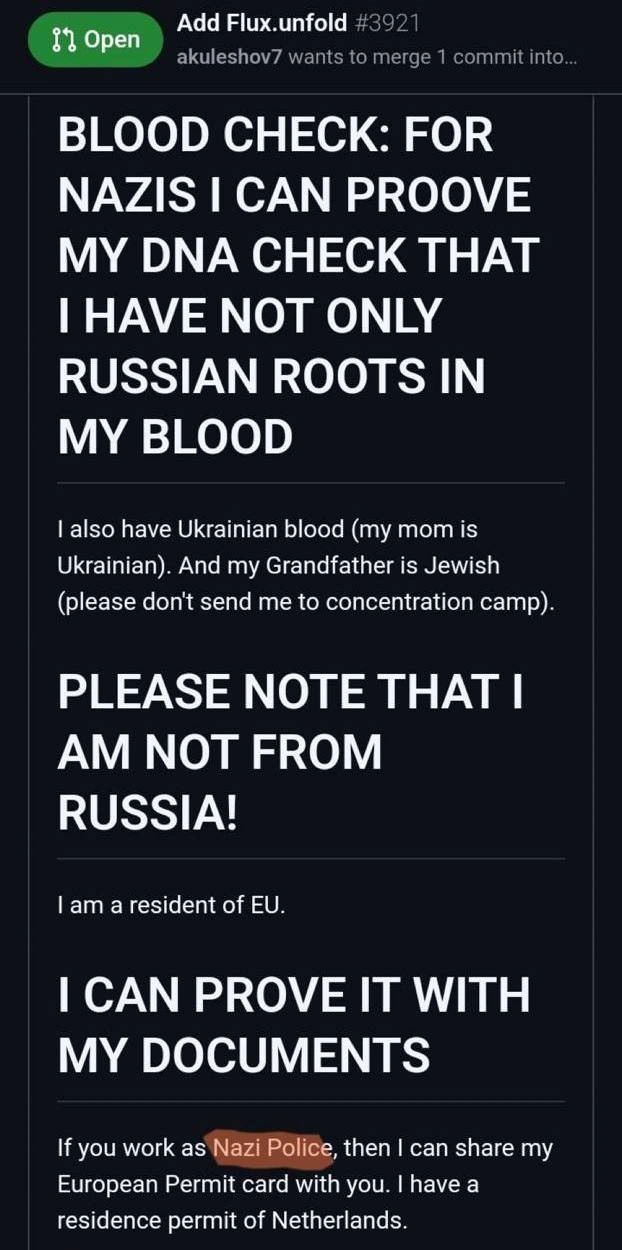
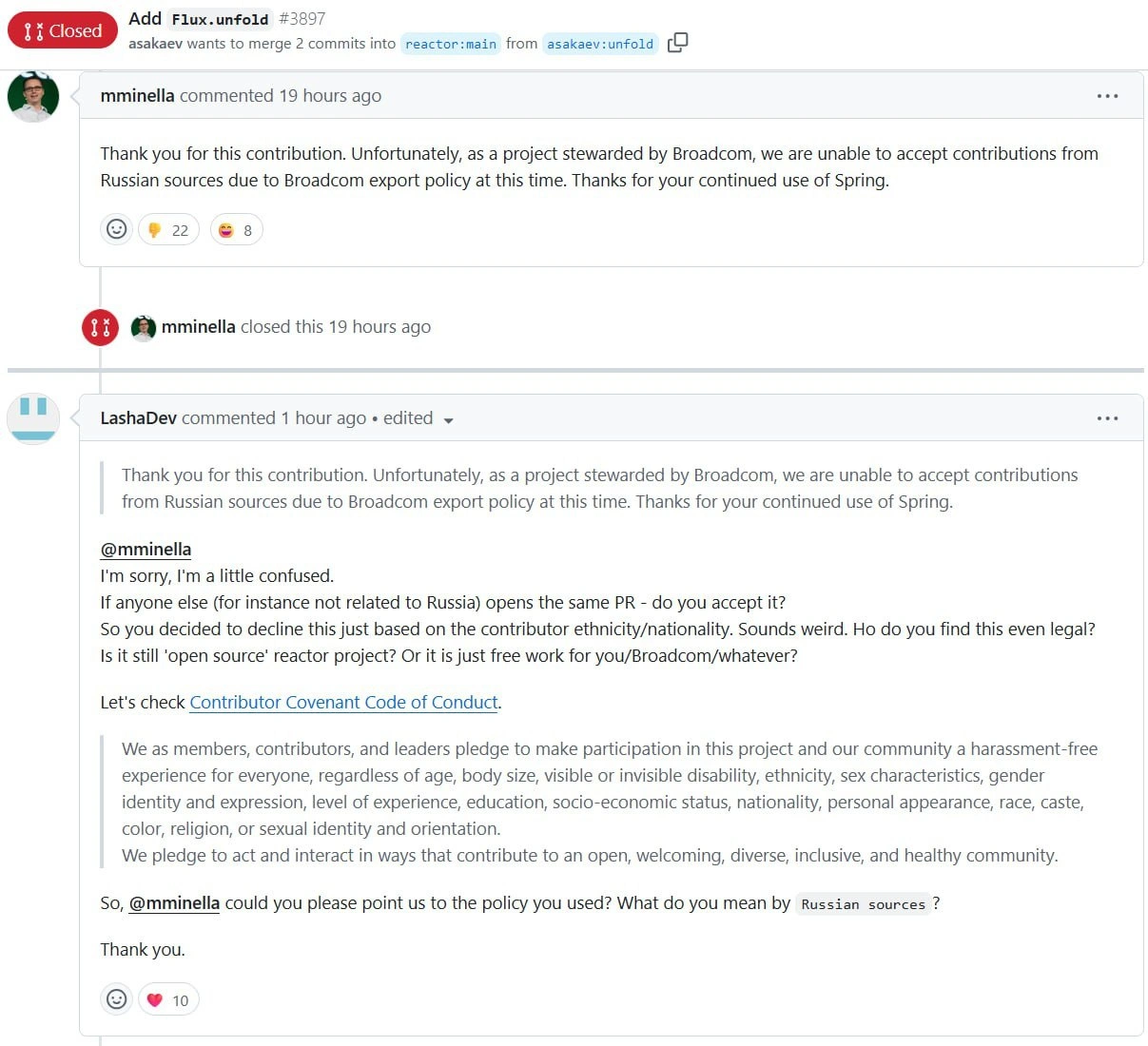
Now, in this meme’s PR, the description went completely off-topic. Instead of talking about the code or the feature (which is presumably something to do with “Flux.unfold”), the author wrote a long, emotional rant about their own ethnic background and fears of persecution. We see big bold lines like “I AM NOT FROM RUSSIA!” and “I CAN PROVE IT WITH MY DOCUMENTS.” The person is talking about their DNA, their Ukrainian mother, Jewish grandfather, being a resident of the EU – even mentioning Nazis and concentration camps. None of this has anything to do with software or the content of the code being submitted. This is what we’d call nontechnical_content_in_pr: content that’s unrelated to programming or the project at hand showing up in a technical space.

Why is this so unusual? In professional and open-source DevCommunities, there’s an expectation of staying on subject. A PR is about code, so personal information or political statements don’t belong there. It’s not that developers can’t have personal feelings or backgrounds (they absolutely do!), but those aren’t normally discussed in the code collaboration tools, especially not in a random PR description. If a developer felt the need to talk about such things, it would usually happen elsewhere (like a community forum or a personal blog), not sandwiched inside a pull request on GitHub. By putting it in the PR, it creates a very awkward situation for everyone. Reviewers came to look at code diffs, but suddenly they’re reading something that sounds like a Facebook rant or a manifesto.

Let’s clarify some terms here. The word “manifesto” means a public declaration or statement of beliefs and intentions, often quite dramatic or detailed. The reason we might call this PR text a “DNA manifesto” is because the author is almost grandstanding about their heritage, as if they’re making an official proclamation. It’s bizarre in this context – PR descriptions are usually plain prose or bullet points about code, not passionate speeches about one’s bloodline. The huge fonts and all-caps text in the screenshot indicate they likely used Markdown headings (for example, starting a line with # or ## on GitHub makes the text large). That formatting choice makes the text loom large and aggressive, which matches the intense tone. On the internet, using all-caps is generally read as shouting. So it feels like this person is yelling their personal defense at the code reviewers.

The content itself references Nazis and concentration camps, which are extremely sensitive historical references. To even mention these in a developer discussion is startling. It implies the author feels they are being treated like a criminal or an unwanted person because of their nationality. We don’t have the full backstory from the image alone, but perhaps the author is Russian or from a region that faced stigma, and they’re worried the project maintainers are biased against them. They mention “If you work as Nazi Police, I can share my European permit card” – which sounds like they think the maintainers are checking if contributors are “pure” or something equally absurd. This is an example of a communication_antipattern: instead of calmly addressing any concern or misunderstanding, the person launched into an accusatory, defensive tirade. It’s the opposite of how one should communicate in a collaborative project.

For a newer developer or someone just starting to contribute to projects, this is a great example of what not to do. First, always keep your communication in a PR relevant to the code. If you have concerns unrelated to the code (especially personal or political issues), find a different channel or talk to the maintainers privately if appropriate. Second, maintain a respectful tone. Even if you feel frustrated, avoid insults or dramatic language. Calling people Nazi Police, aside from being offensive, will immediately destroy any goodwill. It’s important to remember there are real people on the other side reading what you write. In open source, many communities have a code of conduct that expects polite and respectful behavior. This PR description would likely violate those rules, giving maintainers grounds to delete the content or ban the user if it continued.

Now, the reason developers are sharing this image and laughing (albeit with a groan) is because it’s so ridiculously off-base. It’s an extreme, almost cartoonish example of a PR gone wrong. In the world of DeveloperHumor, we often joke about silly PRs or weird commit messages, but this one is memorable because it’s not a joke or meme someone inserted – it’s the author genuinely going on a bizarre tangent. It highlights a kind of nightmare scenario: you’re trying to review code and suddenly you have to sift through irrelevant (and uncomfortable) info. It’s like going to check the ingredients on a recipe and finding a dramatic life story instead. This mismatch creates a kind of shock humor.

To put it simply, the developer culture norm is: Keep it about the code. When someone breaks that norm in such an over-the-top way, it becomes internet-famous as a cautionary tale. People might tag this as weird_pull_request_description or github_drama because it’s an unusual and dramatic event on the platform. Just like any community, the programming world has its moments of drama and odd behavior – this is one of those moments captured in a screenshot. It reminds everyone that developers are human and sometimes do very strange things under stress or misunderstanding. But it also reminds us how important good communication is. The idea of a pull request turning into a “bizarre DNA manifesto” is both funny and a little sad, and that mix of feelings is exactly why this meme resonates. It’s an awkward moment in tech that we can learn from (and laugh about once the shock wears off).

Level 3: Pull Request Paranoia

Imagine opening a GitHub Pull Request expecting to see code changes, and instead finding a rambling DNA manifesto. For seasoned developers, this screenshot is a jaw-dropper: the PR description has nothing about code or the feature “Add Flux.unfold” – it’s an all-caps personal rant about bloodlines, Nazis, and citizenship. This is not your typical code review. In a healthy code review process, the PR description should tell reviewers what the code does and why the change is needed. Here, those crucial technical details are completely missing. Instead, we have gigantic bold text screaming about ancestry:

“BLOOD CHECK: … I HAVE NOT ONLY RUSSIAN ROOTS IN MY BLOOD… PLEASE NOTE THAT I AM NOT FROM RUSSIA!”

It reads like the contributor is trying to prove their identity to some authority, not explain a code change. This jarring mismatch between expected content and actual content is what makes developers simultaneously cringe and laugh. It’s a prime example of a communication breakdown and misaligned expectations in a developer community.

Let’s unpack why this is so absurd to anyone who’s done code reviews. A Pull Request (PR) is fundamentally about code – you’re proposing to merge one set of code changes into another. The PR description is supposed to summarize those changes, maybe mention related issues or how to test them. It’s a place for technical context. In open-source projects, maintainers often provide templates like: “## What does this PR do? ## Why is this needed?” The unwritten rule is clear: stay on topic. But here the contributor went wildly off-topic, essentially treating the PR like a personal blog or a social media post. They even used Markdown tricks (like headings in all-caps) to make their proclamations extra loud. In text, all-caps is the equivalent of shouting. So this person is literally shouting about their heritage in a code discussion. It’s the ultimate off_topic_pr_body anti-pattern. Instead of a calm explanation of code, we’re reading a desperate autobiographical rant.

Why would anyone do this? The content hints at some wider drama: the author mentions Russian and Ukrainian roots, a Jewish grandfather, and being an EU resident. They say “please don't send me to a concentration camp” and refer to “Nazi Police.” These are extremely charged words. It suggests the contributor felt under attack or feared discrimination, possibly due to the ongoing political climate. In some developer communities, especially during times of conflict, there have been ugly incidents of github_drama spilling into technical spaces. For instance, around 2022, tension from the Russia-Ukraine war seeped into open source: some projects grappled with whether to accept contributions from Russian developers, and a few maintainers even made hostile statements or changes targeting users by nationality. It’s possible this PR author had encountered such prejudice or heard rumors of it, and preemptively overreacted by proving they’re not “the enemy.” They basically preempted, “I’m not a Russian spy, look at my DNA!” But doing this in a PR is utterly inappropriate. It’s like bringing a geopolitical argument to a version_control platform issue tracker – a complete context collapse. A seasoned dev reading this knows that whatever the backstory, the DevCommunity norms have been broken badly here.

From an experienced perspective, this PR ticks off a whole bingo card of what not to do in a professional code discussion:

  • Off-Topic Content: The description is about the author’s ethnicity and fears of Nazis – absolutely nothing to do with the code or project.
  • All-Caps Shouting: Using oversized, all-caps text (e.g. “PLEASE NOTE THAT I AM NOT FROM RUSSIA!”) is the textual equivalent of yelling at your teammates. It comes off as hostile and unhinged.
  • Inappropriate Language: Words like “Nazi Police” and references to concentration camps are extremely inflammatory. Throwing around such accusations in a PR violates basic respect (and likely the project’s code-of-conduct).
  • No Technical Info: The maintainers still have no clue what the commit actually does. There’s one commit to “Add Flux.unfold”, but the description provides zero insight—no explanation of Flux, no context, nothing about the code. Reviewing this PR on its merits is impossible until the author talks about the code itself.
  • Unnecessary Personal Details: A PR is not the place to share your family tree or immigration status. That personal data is irrelevant and makes everyone uncomfortable. Developers come to the PR to discuss code; being forced to read a contributor’s ancestry DNA report is just awkward and confusing.

Because this is so spectacularly wrong, it has high DeveloperHumor value. It’s the kind of screenshot veteran devs share in group chats with a mix of amusement and horror, saying “You won’t believe this PR someone submitted.” It highlights a CodeReviewPainPoints scenario that isn’t about complex diff logic or nitpicky comments, but about basic communication sanity. The pain point here is: how do you even respond as a maintainer? Do you review the code and ignore the rant? Do you close the PR with a stern comment about staying on topic? It’s a dilemma, but also darkly funny because it’s so absurd. Most maintainers have seen silly things in PRs – like a goofy meme image, or maybe an overly verbose essay – but a DNA manifesto claiming “I can prove it with my documents” is a whole new level. It turns the simple act of code collaboration into a farce.

There’s also an element of awkwardMomentInTech here that goes beyond just one PR. It reflects how real-world issues and personal fears can intrude upon technical spaces. Open-source communities are international, with people of all backgrounds. Ideally, everyone focuses on the code, not nationality or politics. When those lines blur, it gets messy. This PR description feels like the author carrying heavy social baggage (possibly fear of being banned or targeted) and dropping it in the worst possible place. The result is uncomfortable for everyone. It’s developer culture shock: seeing a routine process (a pull request) derailed by a personal outburst. The humor comes with a wince – we laugh, but it’s also a bit tragic that someone thought this was necessary.

In the end, the consensus among experienced devs would be that this is not how you handle any concerns about bias. If there were genuine issues (say, a maintainer making xenophobic remarks elsewhere), the project’s moderation or GitHub support should handle it. The PR itself should remain focused on code. By doing this, the contributor likely torpedoed their own contribution; maintainers don’t want to merge code clouded by drama and violations of community standards. As a cynical veteran might quip, “Most maintainers ask for documentation of your code, not documentation of your ancestry.” In Git, the only ancestry that matters is your commit history, not your family tree.

Description

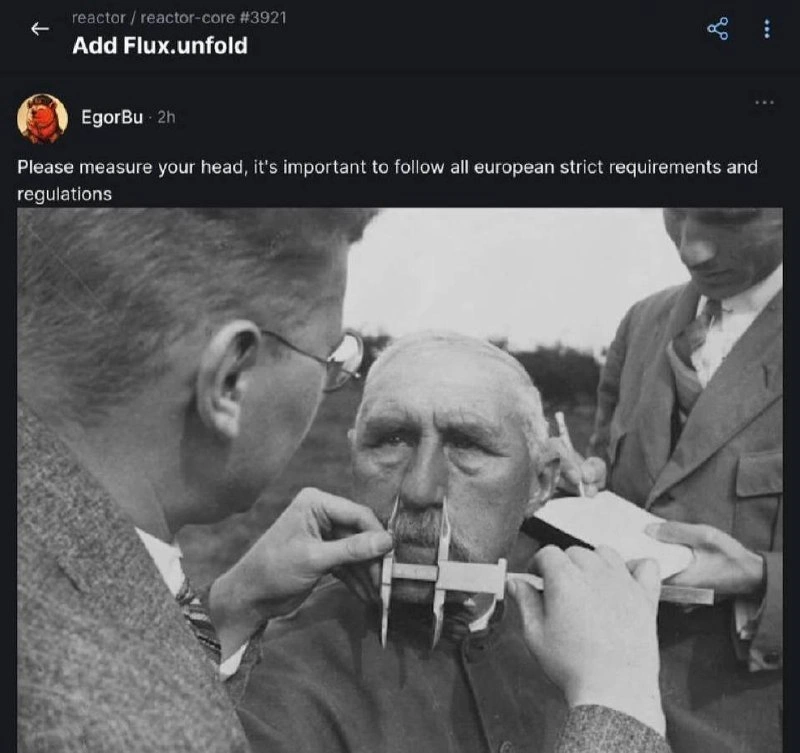
This is a screenshot of a GitHub pull request, presented in dark mode. The PR is titled "Add Flux.unfold #3921". The body of the pull request contains a highly emotional and desperate plea from a developer. In large, capitalized white text, the author offers a "BLOOD CHECK" to prove they have "NOT ONLY RUSSIAN ROOTS IN MY BLOOD". They state they have Ukrainian and Jewish ancestry, and plead "(please don't send me to concentration camp)". The developer emphatically states they are not from Russia, are a resident of the EU, and can provide documents to prove it. They conclude by offering to share their European permit card with what they sarcastically call the "Nazi Police", a clear reference to the maintainers enforcing the contribution ban. This image is a stark example of the human impact when geopolitical sanctions and corporate policies intersect with the global, collaborative nature of open-source software, pushing a contributor to feel they must prove their ethnic background to get their code accepted
Comments

7
Anonymous ★ Top Pick The new RFC for PR acceptance: 1. Pass CI/CD. 2. Pass security scan. 3. Pass a geopolitical background check and provide a 3-generation ancestry chart
  1. Anonymous ★ Top Pick

    The new RFC for PR acceptance: 1. Pass CI/CD. 2. Pass security scan. 3. Pass a geopolitical background check and provide a 3-generation ancestry chart

  2. Anonymous

    When a PR adds three lines of code but the description needs a GDPR appendix, a 23andMe report, and a sanctions screening, it’s time to write a “no personal manifestos” pre-commit hook

  3. Anonymous

    When your PR review process requires more documentation than your actual passport application, you know enterprise governance has finally achieved its final form

  4. Anonymous

    When your PR requires more identity verification than your production deployment pipeline, and you realize the most complex merge conflict isn't in the code - it's in geopolitics. Nothing says 'open source' quite like having to prove your ancestry to contribute a functional programming utility. At least the CI/CD checks are straightforward: lint, test, build, verify-not-sanctioned-nationality

  5. Anonymous

    PR: “Add Flux.unfold.” Description: a DNA report. Cool story - now can we see an RFC and unit tests? The only type check in this diff is blood type

  6. Anonymous

    When OSS PRs demand a 'git ancestry --verify' before merge approval

  7. Anonymous

    CI pr-body-lint failed: expected what/why/how, found ancestry/immigration/foreign_policy; auto-closing with 422 Unprocessable Entity and assigning CODEOWNERS: moderation

Use J and K for navigation