A Developer's Plea for Meme Cessation
Why is this DevCommunities meme funny?
Level 1: Too Many Jokes
Imagine you’re in a classroom working on a group project, and a couple of your friends keep telling jokes and showing funny pictures instead of helping. At first it’s really fun and everyone is giggling. But after a while, you realize you’re not getting any of the project done and the work is still unfinished. Finally, one of your friends – who usually loves goofing around – throws up their hands and says, “Please, no more jokes, we really need to finish this!”
This picture is just like that scenario. It shows a person who is tired out and begging others to stop playing around. It’s funny because normally everyone loves to laugh at silly things, but here even the biggest jokester has had enough. We’ve all had moments when playing around went on for too long, and even the people having fun realize they need to get serious for a bit. This image captures that feeling in a goofy way: someone who is normally enjoying the fun is now pleading for a break. It’s a little bit silly and a little bit true-to-life. We laugh because we recognize that exact mix of fun and frustration – when a bunch of jokes have made us smile, but now it’s time to focus again.
Level 2: Slack Attack
Imagine a typical developer team chat channel (often on Slack or Microsoft Teams) during the workday. Slack is a popular workplace chat app that software teams use to communicate quickly – think of it like a group text message stream for the whole team. In these chats, it’s common for developers to share memes – funny images or jokes – especially to lighten the mood during a stressful project. A meme in this context might be an image with big white text (classic meme style) joking about code, like the famous “This is fine” cartoon dog sitting in a burning room when a server is on fire, or a goofy “It’s always DNS” joke when the website goes down. These inside jokes make the developer team feel more fun and connected as a community.
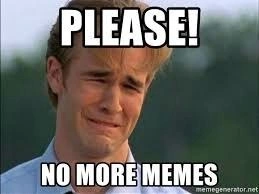
However, posting too many memes can become a problem. This meme image (“PLEASE! NO MORE MEMES”) is showing someone in the chat essentially begging their teammates to stop flooding the channel with jokes. Why would they do that? Because the constant stream of funny pictures and comments is starting to distract everybody from real work. In a developer’s day, there are tasks like writing code, debugging, or doing a code review (where you check a colleague’s code for issues before it gets added to the main project). Those tasks require concentration. If every few minutes another meme or witty comment pops up in the chat, it breaks everyone’s focus.
Developers often talk about something called flow state. That’s when you’re “in the zone” – you’re so focused on coding or solving a problem that you lose track of time and really make progress. It’s a fragile state, and getting into it takes some effort. Constant notifications from a busy chat channel will knock you right out of that zone. It’s like trying to read a book while your friends keep tapping you on the shoulder to show you funny videos – you keep losing your place. This can seriously hurt developer productivity, which is basically how much useful work (like coding and fixing bugs) someone can get done in a given time. When memes are interrupting work, less gets done, and people might start feeling frustrated or behind schedule.
Let’s say Alice is trying to concentrate on reviewing Bob’s code changes. Meanwhile, Charlie and Dana are having a meme war in the same Slack channel, posting one joke after another:
Dev1: posts a funny bug meme in chat
Dev2: “LOL that’s a good one 😂”
Dev3: “Alright guys, back to work, code review time...”
Dev4: drops another reaction GIF
Dev3: “PLEASE! NO MORE MEMES 😫”
In the above chat, Dev3’s patience runs out after seeing meme after meme. They use all caps and even a crying emoji to show they’re really begging for the jokes to stop. This scenario is very relatable in many dev teams. A little bit of joking is normal and can help team morale – it’s fun to have a laugh about the latest error or share a silly GIF in the middle of the day. But if it goes on too long, everyone else can lose their train of thought. Important messages (like “hey, the server is down” or “please review this code by 5 PM”) might get buried in the flood of memes. You end up scrolling past a lot of humor to find the serious stuff, which is frustrating when you’re trying to work.
This image is basically poking fun at that exact situation. It’s highlighting the moment of frustration when even the team members (who usually enjoy a good meme) have to put their foot down and say “Enough!”. There’s a bit of irony too: the picture itself is a meme about not wanting more memes. It’s a meta-meme – a joke making fun of joke overload. In real office life, it’s like someone standing up during a goofy office prank session and shouting, “Okay guys, joke time is over, back to work!” Only in our modern software world, that plea happens in a Slack chat with a funny image and text for everyone to see.
Overall, this meme highlights a common challenge in modern offices and developer communities: balancing fun and focus. Team bonding through humor is great for culture and keeping morale high, especially during crunch times or boring afternoons. But as the “PLEASE! NO MORE MEMES” moment shows, there’s a limit – people still have deadlines and serious work to do. When that limit is passed, even folks who love meme culture will ask to dial it down so everyone can concentrate. It’s a lighthearted reminder that yes, we all enjoy a good laugh, but we also need to get things done.
Level 3: Memetic Denial-of-Service
The meme’s top caption screams “PLEASE!” and the bottom pleads “NO MORE MEMES”, slapped over the blurred face of an exhausted office worker. It’s basically a developer frustration primal scream coming from a team chat (like Slack or Microsoft Teams). This is meta-level humor: a developer meme about being overwhelmed by memes. In engineering culture where MemeCulture thrives, that’s a hilariously self-aware situation. It’s the please-stop plea heard ’round the corporate Slack channel – a desperate attempt to halt an onslaught of inside jokes and reaction GIFs that’s derailing code reviews and real work discussions.
Experienced devs recognize the scenario instantly. One minute you’re trying to focus on a critical code review, the next your notification tray is blowing up with the latest TechHumor images. That flow state you fought so hard to enter? Completely obliterated, like a CPU core thrashed by too many context switches. Flow state is that deep concentration zone where a developer’s brain runs at 100% on a single task, but constant pings from a busy chat are like an I/O interrupt storm – each meme is a context switch dragging your attention away from code and onto the joke of the minute. The situation becomes a memetic Denial-of-Service attack on your developer productivity: your brain’s capacity for focus is swamped by a flood of pings, LOL emojis, and “Check out this hilarious bug screenshot” messages. Imagine your code editor is open with a complex algorithm, but Slack on the side keeps sending NULL references to your concentration – eventually something’s going to crash.
This meme is funny because it’s too real. Developer teams love to share humor as a bonding tool – from classic DeveloperHumor staples like “It works on my machine” jokes to spicy new memes about the latest JavaScript framework du jour. A healthy dose of laughter can ease the stress of looming deadlines or production issues. But there’s a tipping point where the fun turns counterproductive. The RelatableDeveloperExperience being satirized is that moment when even the biggest meme addicts on the team have to tap out and beg for mercy. It’s like at 2 AM during a production outage when the on-call engineer finally yells, “Focus, people!” because half the war room is cracking jokes about the database being haunted. Here, the weary dev (or the dev team as a whole) is essentially saying: we love memes, but please, not right now.
It also underscores a bit of CorporateCulture irony: modern tech companies often encourage quirky humor and camaraderie, yet that very culture can undermine serious work when taken to extremes. There’s a subtle office_space_reference vibe here – think of the film Office Space where the protagonist is ground down by inane corporate rituals. In our meme’s modern office scenario, endless meme sharing becomes the new absurd ritual. The person pleading “no more memes” has big Office Space energy, like Peter Gibbons finally snapping – but instead of being sick of TPS reports, they’re fed up with a barrage of SpongeBob and Star Wars GIFs flying around while real tickets are catching fire on the sprint board. It’s a comedic exaggeration of a real tension in tech workplaces: balancing the free-flowing communication and fun of a developer chat with the need to actually get stuff done.
From an organizational perspective, this highlights a common communication anti-pattern. Tools like Slack were introduced to enhance collaboration and reduce stuffy emails, but they’ve inadvertently turned work chat into an attention sinkhole that can derail your day. We traded the slow drip of email for the firehose of real-time messaging. When every deploy status, build break, and Chuck Norris coding joke hits the same channel, you get MemeCulture overload. It’s practically tradition in some teams to respond to a serious announcement with a goofy meme – a bit of levity. But when everyone jumps in with their own clever one-liner image, real work threads get buried. Code review comments scroll off the screen, and urgent questions get drowned out by the GIF tsunami. The developer productivity cost isn’t immediately obvious until someone finally loses it (like our friend in the meme) and begs for quiet. By then, the damage is done – half the team has lost an hour of work tumbling down the meme rabbit hole. It’s a new kind of technical debt: call it meme debt – the accumulated cost of all those distracted minutes that will have to be paid back later when people scramble to catch up.
And of course, in true dev fashion, the moment someone says “Please, no more memes,” it’s practically an invitation for the next person to drop a self-referential joke about that very request. I can almost guarantee the next message in that chat was a classic “One does not simply stop posting memes” image or a Captain Picard facepalm GIF aimed at the plea. That’s the unspoken rule of DeveloperCommunity humor: the meta-meme is irresistible. Pleas for silence often just become the loudest jokes. The cyclical absurdity is what draws out both the laughter and the groans – everyone recognizes they’ve become caught in a comedic feedback loop. The meme flood has gone so far that it’s now mocking itself, and the poor soul who tried to restore order just provided fresh meme fodder.
So this scenario ends up resonating on multiple levels with seasoned engineers. It captures both the hilarity and the hidden pain of our everyday work chat culture. It spotlights that universal experience of trying to maintain focus amidst a barrage of distractions that we ironically created ourselves. It’s a wink and a sigh at the same time – a perfect snapshot of tech life where the line between productive collaboration and endless joking is constantly blurred. Any veteran of a chaotic Slack workspace sees that bold Impact text “PLEASE! NO MORE MEMES” and can’t help but smirk, because they’ve either felt exactly that way or maybe even been the meme spammer guilty of causing it.
Description
The image is the classic 'Crying Dawson' meme, featuring actor James Van Der Beek from the 90s TV show 'Dawson's Creek' with a famously overwrought, tearful expression. The meme is formatted with bold, white text in the Impact font, typical of early meme generators. The top line reads 'PLEASE!' and the bottom line reads 'NO MORE MEMES'. A watermark for 'memegenerator.net' is visible in the bottom right corner. This meme format is used to express exaggerated despair or being overwhelmed. In a tech context, this speaks to the phenomenon of meme fatigue within developer communities. While memes are a core part of communication on platforms like Slack or Discord, the relentless stream can lead to a sense of burnout or information overload, making this a relatable sentiment for anyone in a very active tech-centric community
Comments
7Comment deleted
This is the face of the on-call engineer after acknowledging 300 identical, non-actionable alerts. The real emergency is the notification fatigue, not the memes
Enabled back-pressure on #random to throttle memes; the team replied with a meme about back-pressure - turns out culture operates on layer 8, well outside my control plane
When you've spent 15 years architecting distributed systems, but the new junior's PR comment is just a GIF of SpongeBob, and you realize your carefully crafted ADRs are now competing with reaction memes for attention in technical discussions
The ultimate paradox: using a meme to protest memes is like writing a 500-line bash script to automate a task you'll only do once - technically correct, but you've already become what you sought to destroy. At least we didn't implement this complaint as a microservice
When memegenerator.net becomes your meme monolith: scalable templates, zero DX, endless watermarks - time for a refactor
We finally treated memes as production traffic - added a Slack circuit breaker that 429s #general with Retry-After: “next retro,” and our cognitive SLO recovered faster than any microservice
Please, no more memes - last time we did, we ended up with event sourcing, CQRS, and a Kafka cluster for the settings page