Skip to content
DevMeme
3858 of 7435
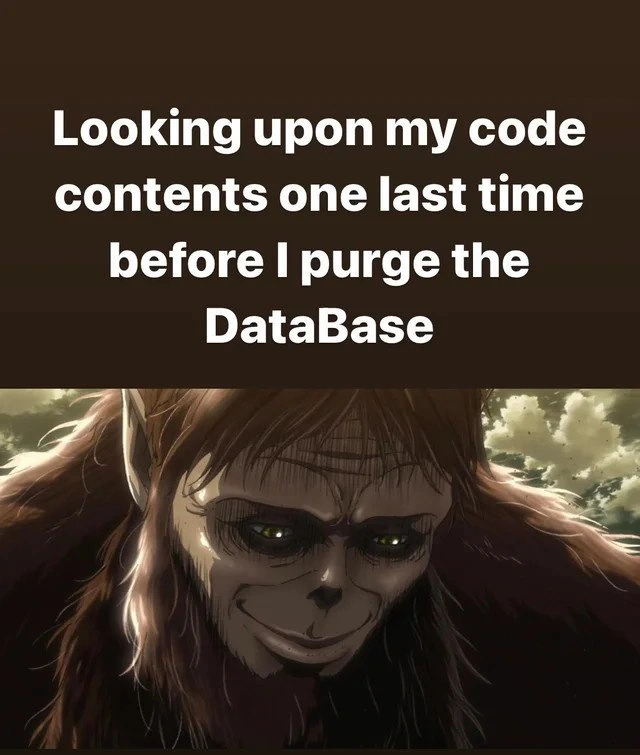
Taking one last look before executing that irreversible DROP DATABASE command
Databases Post #4201, on Feb 11, 2022 in TG

Taking one last look before executing that irreversible DROP DATABASE command

Why is this Databases meme funny?

Level 1: No Take-Backs

Imagine you have a video game that you've been playing for a long time, and now you decide to delete your saved game forever. You know that if you delete it, all your progress, characters, and high scores will be gone, and you can’t get them back. When you click on "Delete", the game probably even asks, "Are you sure? This action cannot be undone." How do you feel at that moment? You’d probably stop for a second and think really hard. You might even open up your save and look at all the cool things you achieved one last time, just to say goodbye. You feel a bit nervous and a bit sad, because once you press "Yes", that's it — all that work is gone.

That’s exactly what’s happening in this meme, but with a programmer and a database instead of you and your game. The developer is about to permanently erase a bunch of important information (kind of like deleting that game save). They know that once they do it, there’s no easy way to bring it back. So they pause and take one last look at it, making sure they’re ready and that this is what they really want to do. It’s a mix of being scared of doing something permanent and saying goodbye to something they worked on. The picture of the big, furry Titan looking sad is a dramatic cartoon way to show those feelings. Even a giant monster pauses and thinks before doing something that can't be undone. The joke is funny because we all understand that feeling of "uh oh, once I do this, there's no going back", and sometimes the only thing you can do is take a deep breath and look one last time before you go through with it.

Level 2: Look Before You Drop

Let's break down what's happening in this meme in simpler terms. The phrase DROP DATABASE is an SQL command. SQL (Structured Query Language) is how we talk to databases. And a database is an organized collection of data (think of tables full of information that apps and websites use). When you run DROP DATABASE, you're telling the system to permanently delete an entire database and everything inside it. Think of it like selecting a whole folder of important documents on your computer and hitting "Delete" – except this isn't going to the recycle bin. There's no easy undo button. It's an irreversible operation. Once you execute that command, all the tables and data in that database are gone. The only way to get them back is if you have some separate backup copy saved.

That's why one of the golden rules in software is backup before delete. A backup is a safety copy of your data, usually stored in a separate file or on another server. For example, before running a risky command like dropping a database, an engineer will often make a backup file (using a tool like mysqldump for a MySQL database, or taking a snapshot if it's a cloud database). This backup is basically your insurance. If you realize you made a mistake or if something goes wrong, you can use that backup to restore the data. Companies also have change-control processes (formal steps and approvals) to ensure that dangerous actions like deleting data in production are done carefully and at the right time. Production refers to the live environment — the actual system that real users or customers are interacting with. It's opposed to a development or test environment, which is like a sandbox copy of the system where mistakes don't hurt anybody. In production, a screw-up means real DataLoss and possibly a lot of angry users. In development, you can mess up and usually just shrug it off, fix the issue, maybe reload the test data, and move on. Simply put: the stakes in production are wildly higher. Doing something like dropping a database in production is considered a huge DeploymentRisks, which is why there are so many safety steps and warnings around it.

The meme's text "looking upon my code contents one last time before I purge the DataBase" highlights a big moment of caution. The developer is basically saying, "I'm about to delete all of this, so let me just make sure one last time that this is what I want to do." It's both literal (maybe they're scrolling through the data or double-checking the code that will do the deletion, to be absolutely sure everything is correct) and a bit emotional (taking a moment to say goodbye, because they've probably invested time and effort into that data/system). You can sense a mix of nervousness and a weird sentimental feeling. Nervousness because dropping a database is scary – you know if you mess up here, it's a big deal. Sentimental because maybe that database has been around for years and has a lot of history; even if it needs to go, it's like deleting something that was a part of the project for a long time.

Now, about the image: it's from an anime called Attack on Titan. It shows a character known as the Beast Titan. In the show, this Titan is a giant, fur-covered creature that usually wreaks havoc (like, he throws massive rocks and causes destruction – not a gentle guy). The meme uses this image because here the Beast Titan looks unusually calm and sad, almost like he's deep in thought. He’s staring off into the distance with a serious, somber expression. It’s a dramatic way to visualize the developer’s feeling. The idea is that even this powerful, destructive creature is taking a quiet moment before unleashing chaos – just like a programmer might pause and reflect for a moment before executing a command that will wipe out a database. The fact that the Titan’s face is blurred (censored) in the meme adds to the gravity and bleak mood, almost like “this is too tragic to look at directly.” It’s a bit of extra humor too, implying maybe the Titan (the dev) might be crying or feeling pretty awful, and the blur playfully hides that.

For someone new to coding or databases, the underlying message is: be very careful with commands that can delete things, especially in your live system. Before you run something like DROP DATABASE on a real server, you want to:

  • Double-check you're on the right database – you don't want to be connected to the wrong server by accident. It's common to literally query “which database am I connected to?” just to be absolutely sure.
  • Make a backup first – always save a copy of the current data. For instance, you might run a backup command and save the data dump to a file. This way, if you oops-ed, you have a way to get the data back by restoring that file.
  • Think about alternatives – do you really need to drop the whole database? Sometimes the safer move is to delete or archive just the specific data you don't need, rather than everything. Or maybe take the database offline temporarily instead of deleting it outright. Basically, the question is: is there a less nuclear option?
  • Get a second pair of eyes – if you're newer, you'd definitely want a more experienced teammate to okay the plan. Even if you're experienced, it often helps to have someone else double-check that you're not missing anything.
  • Plan the aftermath – know what comes after the drop. Are you immediately creating a new database? Deploying a new version of it? How do you verify that things are working after the deletion? If users are affected, did you schedule downtime or maintenance notices? These are things professionals consider to make sure the action is smooth.

The meme uses exaggeration to be funny, but it's based on a real feeling. Many developers, at some point, have to perform a prod data purge – maybe it's deleting obsolete records, cleaning up after a test that went wrong, or shutting down an old service. It’s never done lightly. Even if everyone agreed it’s necessary, you’ll often find the team triple-checking everything when the time comes. Someone might joke, "Alright, moment of truth!" or "No turning back now..." just to break the tension. The cautious folks insist on that one last look or an extra backup "for luck." The less cautious folks… often end up with hard lessons learned and a new appreciation for why those precautions exist.

In plain terms, the meme is funny to developers because it turns a very relatable tech moment into an epic scene. It’s saying, “Hey, we’ve all been here – about to do something that scares the heck out of us – and doesn’t it feel like you're a character in a drama when it happens?” The use of an anime titan makes it over-the-top in a delightful way, but the core is true. If you're new to this field, remember this: when you get that gut feeling of "uh, this is a big deal", trust it. It's the sign to be extra careful. The person in the meme listening to that feeling by taking one last look is doing exactly the right thing. It’s a little bit of humor serving as a friendly reminder: look before you drop.

Level 3: The Nuclear Option

This meme captures that heart-stopping moment every seasoned developer dreads: the instant before hitting Enter on a DROP DATABASE command in a live production environment. The top caption "Looking upon my code contents one last time before I purge the DataBase" is both dramatic and darkly funny. It's a perfect summary of a ritual we've all done in fear: double-checking everything one final time, as if savoring the last moments of a system before irreversibly obliterating it. The bottom image – the somber Beast Titan from Attack on Titan, half-shrouded as if censored – mirrors a developer’s thousand-yard stare. It's the look of someone about to unleash devastation, fully aware of the consequences. The fact that the Titan’s face is partially blurred is a tongue-in-cheek detail: maybe to hide unspeakable horror... or just to mask the single tear of regret in his eye. After all, even a giant monster pauses in solemn reflection before committing carnage, just like a dev hesitating before nuking a database.

Seasoned engineers find this hilarious because it's painfully true. There's a blend of nostalgia (all the data or code that led here) and raw fear (the looming DataLoss). We laugh at the absurd melodrama because we’ve felt that exact 3 AM adrenaline rush. It's the "nuclear option" of DevOps humor – an extreme act that can easily become a major ProductionIncident if anything goes wrong. The combination of elements here hits on industry war stories and shared trauma. Everyone remembers (or has heard of) that one time someone dropped the wrong database or ran a destructive script on the wrong server. As soon as you find yourself in this situation, there's that internal groan of "oh no, not again" – recalling prior close calls or legendary disasters. Those incidents become IT folklore, and seeing them reflected in a meme is both cathartic and amusing. It’s an almost mythical horror story passed around in ops teams: "Remember when Bob did DELETE FROM users without a WHERE clause in prod and we lost a week of transactions?" Such tales are told with a shudder and a chuckle, and this meme nails that exact feeling with an anime flourish.

The humor also comes from how seriously the meme presents a very mundane-looking action. In reality, running a SQL command isn’t visually dramatic – it's just typing and pressing enter – but internally every engineer’s stomach is doing backflips. The meme exaggerates that by comparing it to a pivotal anime scene. It satirizes the deployment risks and careful rituals senior devs follow when dealing with dangerous operations. The phrase "one last look" hints at the unofficial checklist devs run through in these moments:

  • Confirm the target: Are we absolutely sure this is the intended database and not, say, the production customer DB by mistake? That paranoid double-check of the connection string or server name is practically a reflex. Nobody wants to be the person who meant to drop a test database but nuked the live one instead.
  • Backups on standby: Smart teams ensure there's a recent DatabaseBackup (or five) before doing the deed. And not just having backups – testing those backups is key. A veteran might quip, "I hope you tested the restore procedure too, not just the backup script." Because discovering your backups were corrupt or misconfigured after you've dropped the database is the stuff of nightmares (and yes, it happens more than you'd think).
  • Change-control and approvals: In theory, a destructive change in production should go through multiple approvals and safeguards. Maybe an architect or DBA has to sign off, or it’s done during a scheduled maintenance window with everyone informed. The meme hints that if you’re at this point, you probably bypassed some of those usual safety nets (or were pushed to by urgency). The comedy is in that grain of truth: plenty of us have been in situations where a boss says "just do it now, we’ll sort it out later," turning a planned procedure into a nervous late-night execution.
  • Personal dread and focus: No matter how many times you do this, it never becomes casual. The moment before executing, there's often a quiet pause. You clear your mind, maybe whisper a tiny hope or prayer to the tech gods, and brace yourself. That solemn Beast Titan gaze embodies this perfectly. It's the calm before either relief or chaos. A snarky thought might cross your mind like, "Well, if this fails, at least tomorrow's calendar is cleared for recovery!" – a bit of gallows humor to cope with the stress.

All these unspoken practices and emotions are packed into the meme’s few words and that knowing image. It’s funny because it’s true: irreversible operations hold a special place in developer lore. We’ve all seen how one wrong move can take down an app or wipe crucial data. The meme resonates especially with senior devs and ops folks who have lived through at least one hair-raising close call. The use of a dramatic anime scene is over-the-top in just the right way, because that’s how the moment feels internally. It turns a dry technical action into an epic, do-or-die decision. And honestly, sometimes deploying to production does feel like an anime battle in your head.

Finally, there's the aspect of solemn reflection. In Attack on Titan, the Beast Titan is a figure of fearsome power, yet here he looks almost mournful. That juxtaposition is comedic gold: a hulking beast known for destruction, pausing pensively like he's having second thoughts. That’s the developer mood, distilled. It underlines an unwritten rule in IT: before executing a catastrophic command, a good engineer takes a deep breath and mentally says goodbye – to the data, to the uptime, maybe even to their peace of mind for the next few hours. It’s a dark form of DeveloperHumor that seasoned devs share with a grim smile. We're essentially laughing at our own nightmares – because if we didn't laugh, we might just cry (like that Titan possibly hiding tears behind the blur).

Description

The meme has a dark brown gradient background on the upper half with large, bold, white text that reads: "Looking upon my code contents one last time before I purge the DataBase". The lower half is an anime screenshot (from Attack on Titan) showing a somber, fur-covered Beast Titan gazing forward; the character’s face is partially obscured by a censorship blur added by the meme creator. The visual tone conveys solemn reflection just prior to a catastrophic action. Technically, the joke resonates with seasoned engineers who have felt the dread of running a destructive SQL statement in production, highlighting the critical need for backups, change-control gates, and rollback plans when modifying databases. It satirizes the mixture of nostalgia and fear developers feel moments before issuing a potentially data-wiping command

Comments

8
Anonymous ★ Top Pick DROP DATABASE; - the only command where RTO, RPO and your time-to-update-LinkedIn all share the same SLA
  1. Anonymous ★ Top Pick

    DROP DATABASE; - the only command where RTO, RPO and your time-to-update-LinkedIn all share the same SLA

  2. Anonymous

    The same energy as reviewing your terraform plan one last time before applying it to prod, knowing full well you disabled the safety checks because "it's just a small change" and your backup strategy is essentially "the data is probably in someone's local cache somewhere."

  3. Anonymous

    The serenity comes from knowing the backup job has been 'green' for two years - because it backs up an empty staging instance

  4. Anonymous

    That moment when you're about to run 'DROP DATABASE production;' and suddenly remember every architectural decision, every clever optimization, and every hack you promised yourself you'd refactor 'next sprint.' It's like watching your entire technical debt ledger flash before your eyes - except instead of your life, it's three years of stored procedures that nobody understands anymore, including you. At least the Titan transformation is reversible

  5. Anonymous

    Senior ritual: BEGIN; run a SELECT preview, verify snapshots and PITR, then spot the missing WHERE and thank least‑privilege for blocking DROP DATABASE

  6. Anonymous

    That brief silence before running the purge job, when you realize your RPO is “hope” and your PITR is “LinkedIn.”

  7. Anonymous

    When schema drift hits critical mass and even VACUUM FULL can't save it - DROP DATABASE; incoming

  8. @cptnBoku 4y

    Oh no

Use J and K for navigation