Skip to content
DevMeme
5568 of 7435
The Ultimate Data Science Gig: Working with 'Models'
DataScience Post #6110, on Jul 14, 2024 in TG

The Ultimate Data Science Gig: Working with 'Models'

Why is this DataScience meme funny?

Level 1: Silly Word Mix-Up

Imagine your friend says, "I work with stars." You might get excited and think they hang out with famous movie stars all day. But then it turns out they actually mean stars in the sky (like they're an astronomer who studies space). You'd probably laugh at the misunderstanding, right?

This meme is funny for the same kind of reason. The person sees a job that involves "working with models" and jokes that they'd take it just so they can tell everyone they "work with models at Victoria's Secret." Hearing that, people would picture them surrounded by famous fashion models in glamorous outfits. But in reality, if they took the job, they'd be working with computer models (math and data) in an office. The joke is that one little word – "models" – can mean two completely different things. The person is playing with that mix-up to sound super cool, even though the actual job is a normal tech job. It's the surprise and misunderstanding that make it funny!

Level 2: Not That Kind of Model

This meme is all about a mix-up with the word "model." For a data scientist (someone who uses math and coding to analyze data), a model usually means a machine learning model. That’s basically a computer program or mathematical formula that has been trained on a bunch of data to recognize patterns or make predictions. For example, a data scientist might create a model to predict what styles of clothing a customer will buy, based on their past purchases. On the other hand, in everyday language (and especially at a company like Victoria’s Secret), a model means a fashion model – a person who wears outfits in photo shoots or walks down runways to showcase clothing. So the exact same word "model" has two very different meanings depending on context.

In the meme, the joke comes from confusing these two meanings on purpose. The data scientist sees a job listing at Victoria’s Secret & Co. that likely involves “working with models” in the machine learning sense (like building predictive models for their business). But they quip that they want to apply just so they can say they "work with models for Victoria's Secret," letting people assume the other meaning (i.e. working with supermodel humans) for comedic effect. In simple terms, it's a pun: they're taking a technical phrase and pretending it means the glamorous version.

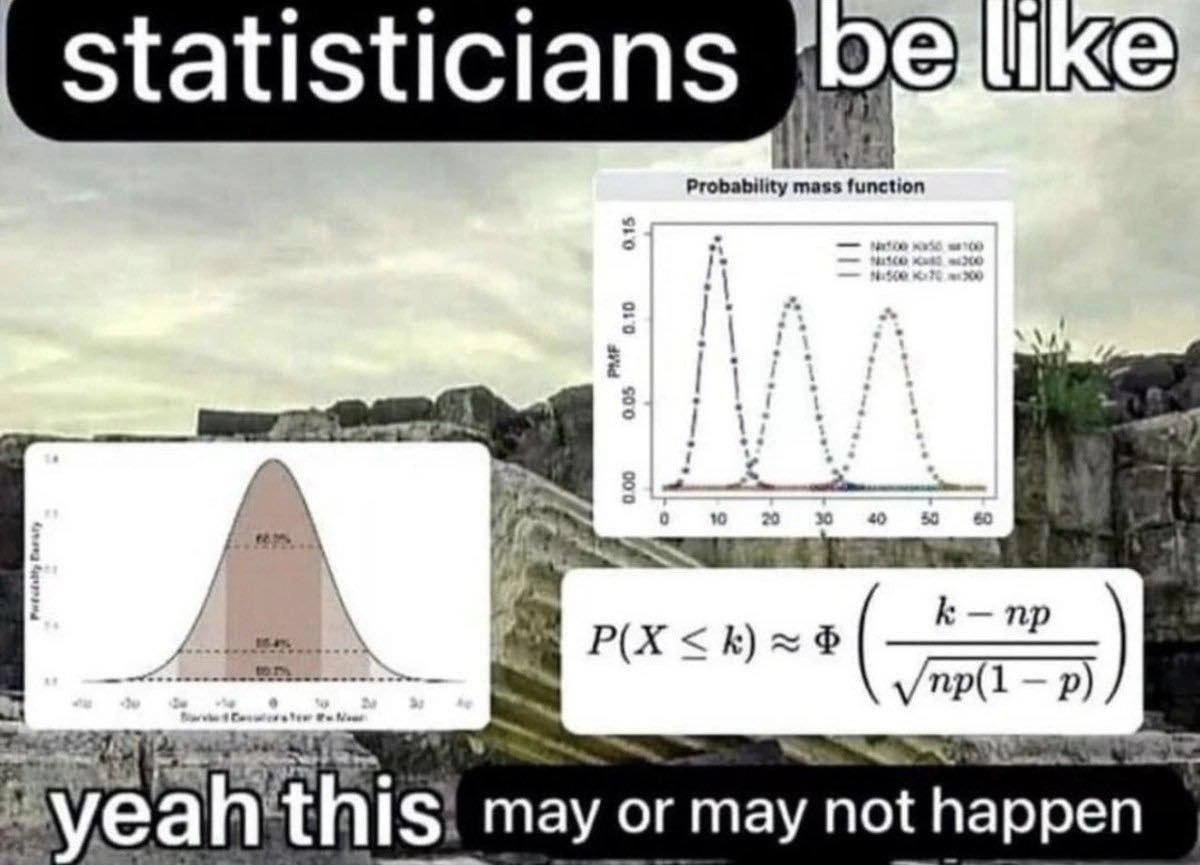
Let's break down the LinkedIn screenshot we see: LinkedIn is a professional networking site where users have profiles listing their skills, job titles, etc. It has a feature that shows "Recommended jobs for you" based on your profile. In this image, LinkedIn is recommending a job called Senior Data Scientist at Victoria's Secret & Co. in Bengaluru, India. It says "Based on your Profile information" – meaning LinkedIn’s algorithm looked at the user’s data (maybe they have "Data Scientist" as their current role or skills in machine learning) and found a matching opening. This can lead to funny surprises. Here, the algorithm matched the user with a data science job at a lingerie and fashion company. LinkedIn’s job matcher doesn't realize that the company might be unexpected – it just sees "Data Scientist" and thinks, "Hey, you are a data scientist, and here's a data scientist job, so you might like this."

So why is that ironic or funny? Because if you say "I work at Victoria's Secret with models," most people would picture you in a studio surrounded by fashion models. But what would a Senior Data Scientist at Victoria's Secret actually be doing? Probably things like: analyzing sales numbers, studying customer shopping trends, building a recommendation system for the website ("customers who viewed this also viewed that"), or forecasting sales. All of those tasks involve working with machine learning models, not supermodels. There's likely a lot of coding in Python, data crunching in spreadsheets or databases, and statistical modeling. The closest they'd get to the fashion side might be analyzing which lingerie styles are selling best. In other words, they’d be working with data models behind the scenes, while the public image of Victoria’s Secret is all about those famous runway models.

To make it really clear, here are the two meanings of model side by side:

Term Meaning for a Data Scientist (Tech) Meaning in Fashion (Everyday)
Model A mathematical or computational model – basically an algorithm or program trained on data to make predictions. For example, a model can predict what products a shopper might want. A person who models clothing – a fashion model who shows off outfits (like those seen in Victoria’s Secret catalogs or fashion shows).
"Working with models" Building, training, and tuning ML models using code, data, and statistics. It involves tasks like writing algorithms, using machine learning libraries, and running lots of experiments on a computer. Working with fashion models – meaning coordinating or interacting with human models in photoshoots, runway events, fittings, etc. (the typical glamorous fashion job image).

As you can see, they’re completely different! The meme is funny because the data scientist is deliberately using the ambiguity. They know that when they say "I work with models at Victoria’s Secret," folks will initially think of the fashion meaning, not the math one.

This kind of humor is pretty common in tech circles – we have a lot of terms that mean something in tech and something totally different outside. (For example, a "cookie" in web development isn’t a snack, and "Python" is a programming language, not a snake.) Here, "model" is that tricky word. So if you're new to this, remember: when a data scientist talks about their models, they usually mean lines of code and math equations, not runway stars! The meme is taking that little quirk of language and having fun with it. Essentially, it’s poking fun at how a serious tech job can sound ridiculously glamorous (or misleading) if you take the jargon literally.


Level 3: Mixed Model Signals

For an experienced data scientist or engineer, this meme instantly registers as a clever play on the word model. In the context of AI and machine learning (ML), a model refers to a complex mathematical or statistical program we train on data to make predictions or decisions. But in normal English (especially when talking about Victoria’s Secret), a model is a person who walks the runway or poses for product photos. The caption "gonna apply just so I can tell people I work with models for Victoria's Secret" exploits this dual meaning brilliantly. It’s a classic tech double entendre: “working with models” sounds ultra-glamorous to the uninitiated, even though within the data science field it means wrangling algorithms and code. The humor comes from that jarring contrast – one phrase that simultaneously evokes high-fashion glam and hardcore data crunching.

Now, how did a Senior Data Scientist job at Victoria's Secret & Co. even show up in this techie’s feed? Chalk it up to LinkedIn’s recommendation engine – itself powered by an algorithmic model under the hood. LinkedIn scans your profile for skills, job titles, and keywords (think machine learning, Python, data analysis) and then suggests jobs with matching terms. It doesn’t really understand context or company domain; it just knows “Senior Data Scientist” matches your profile, whether that job is at a bank, a hip startup, or, in this case, a famous lingerie brand. The result is a slightly absurd job suggestion that perfectly sets up the joke. There’s a delightful irony here: an AI model (LinkedIn’s job-matching algorithm) has recommended a position where you’d be building AI models at a company legendary for their supermodels. It's almost an Inception-like nerd joke – a model suggesting a job to work with models!

From a career perspective, this scenario highlights how ubiquitous data science has become. These days, every industry – even fashion retail – is hunting for data talent. A decade ago, imagining a data analytics team at Victoria’s Secret might’ve raised eyebrows. But today, it's quite normal for a global retailer to employ data scientists for everything from supply chain optimization to personalized marketing. As a senior engineer, you’re hardly surprised that a lingerie company needs machine learning models — but you definitely appreciate how perfect that company’s "models" branding is for a nerdy joke. It’s also a little snapshot of modern hiring trends: tech roles pop up in the most unexpected places. The juxtaposition of a cutting-edge ML role with a high-fashion brand is funny, but it also rings true in our era of data-driven everything. In practice, a Senior Data Scientist at Victoria’s Secret is probably busy optimizing recommender systems for the online store or analyzing sales numbers, not exactly rubbing elbows with runway stars. Still, the company’s name gives the perfect setup to make that mundane reality sound thrilling.

This meme’s punchline strikes a chord with anyone who’s tried explaining their tech job to non-tech friends. The whole “I work with models” gag is practically legendary in data science humor circles. It’s the go-to cheeky line data folks use to make their job sound way cooler at parties. (Because let’s face it, saying “I tune gradient boosting hyperparameters” doesn’t get you many oohs and aahs.) Many of us have joked, “I spend my day evaluating models,” enjoying that brief moment of confusion or intrigue. This LinkedIn screenshot is basically that classic joke brought to life: a real job listing that lets a data scientist say with a straight face, “I work with models at Victoria’s Secret.” Imagine casually dropping that to your college buddies – technically true, and guaranteed to get a double-take.

Ultimately, the meme works on multiple levels. First, it’s a simple pun on the term models. But it also playfully highlights the oddball results these career algorithms can churn out – the kind of quirky, out-of-context job recommendations every professional has seen pop up in their feed. And underneath it all, it’s winking at the way techies sometimes wish their work sounded as exciting to others as it occasionally does to us. By fusing a dry data science reality with a glamorous brand name, the meme gives developers a hearty laugh and maybe a handy new one-liner. After all, who wouldn’t want to tell people, “My day job? Oh, I just work with models…” and enjoy the stunned silence before explaining the nerdy truth?


Description

This image is a screenshot of a job posting, overlaid with a humorous caption. The caption at the top reads, 'gonna apply just so I can tell people I work with models for Victoria's Secret'. Below this, the screenshot shows a job recommendation card with the VS&Co Careers logo. The job title is 'Senior Data Scientist' for 'Victoria's Secret & Co.' located in 'Bengaluru, Karnataka, India (On-site)'. The post was made '5 days ago'. A faint watermark 'made with mematic' is visible in the bottom-left corner. The humor is a classic pun based on the double meaning of the word 'models'. In the context of the job (Data Scientist), 'models' refers to statistical or machine learning models. However, for the company (Victoria's Secret), the word is strongly associated with fashion models. The meme captures the amusing and tempting thought of a tech professional using this ambiguity to make their job sound far more glamorous than it is

Comments

7
Anonymous ★ Top Pick The biggest challenge in that role must be preventing model drift, especially during the annual fashion show when all the parameters suddenly change
  1. Anonymous ★ Top Pick

    The biggest challenge in that role must be preventing model drift, especially during the annual fashion show when all the parameters suddenly change

  2. Anonymous

    Finally, a gig where saying "I spend my day tuning models" works both for the stand-up and the stand-in-line at the bar

  3. Anonymous

    After 15 years of explaining to relatives that 'working with models' means debugging gradient descent and not runway walks, this job finally offers the perfect ambiguity - though you'll still spend more time with confusion matrices than fashion matrices

  4. Anonymous

    The real machine learning challenge here isn't building recommendation systems - it's explaining to your non-technical relatives that 'working with models at Victoria's Secret' means debugging PyTorch tensors in Bengaluru, not walking runways in Manhattan. Though honestly, both jobs probably involve dealing with overfitting issues, just in very different contexts

  5. Anonymous

    Finally, a chance to say I work with models at Victoria’s Secret - mostly an XGBoost ensemble and a moody Prophet time series that refuses to walk the runway whenever the feature store goes stale

  6. Anonymous

    VS DS role: Finally, models engineered for high strut-ability with zero hallucination on the catwalk

  7. Anonymous

    Yes, I “work with models” at Victoria’s Secret - propensity-to-buy and demand forecasting ones; the only runway is our deployment pipeline, and they’re judged by AUC, not heels

Use J and K for navigation