Failing a Code Review in a Galaxy Far, Far Away
Why is this CodeReviews meme funny?
Level 1: Bad Accent
Think about when you’re learning a new spoken language, like if you only know a few words of French and try to make a sentence. You might say things in a funny way or mix up words. A French friend could giggle and say, “You speak terrible French.” They mean you’re using the language, but not quite correctly, so it sounds strange to them. You’d probably feel a bit embarrassed but also know what to fix next time (maybe use a different word or order the words correctly).
This meme is the coding version of that. Java is a language for computers, and writing code is like talking to other programmers and the computer at the same time. If a new programmer writes Java code in a very odd or messy way, other programmers will have trouble understanding it – just like a friend couldn’t understand your mixed-up French. The senior developer jokingly says, “You speak terrible Java,” which is a playful way to tell the junior developer that their code is written poorly (even if it kinda works). It’s funny because it’s exaggerated and uses a Star Wars scene to make the point. Imagine a group of wise, hooded aliens telling you your grammar is awful – in real life that would be rude, but in a joke it makes people laugh and nod. Essentially, the meme is saying: “Oops! Your code sounds wrong. Let’s learn to say it better.”
Level 2: Language Barrier
Java is a popular programming language known for its strict syntax and detailed rules on how to structure code. Think of syntax as the grammar of a language: where to put parentheses, semicolons, how to name things, etc. Every programming language has its own “accent” or style. Code review is the process where other developers (usually more experienced or just fresh eyes) check your code and give feedback. It’s like a peer review to catch bugs, but also to ensure the code is clean and understandable.
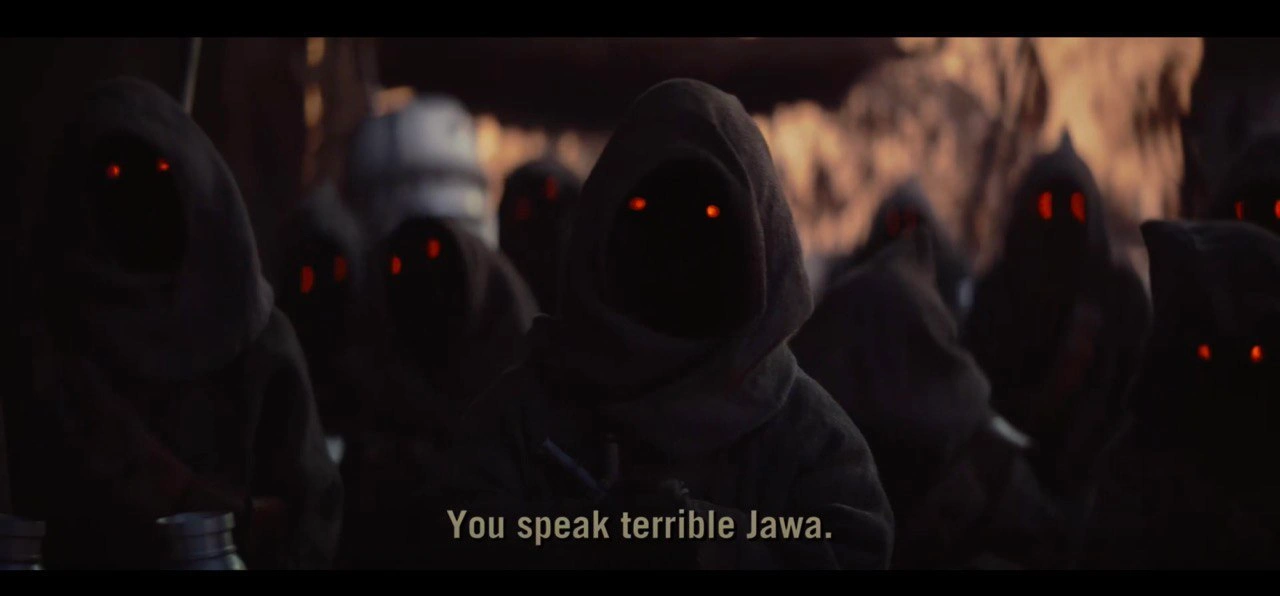
In the meme’s Star Wars scene, an alien (a Jawa from Tatooine) tells the hero, “You speak terrible Jawa,” because the hero tried to speak their language and did it badly. The meme replaces Jawa with Java as a pun. (Java and Jawa sound almost the same, but one is a programming language and one is a fictional alien language!) So the subtitle reads “You speak terrible Java.” This is a humorous way to say “Your Java coding is really bad.” The post caption adds context: “When you didn’t pass code review.” In other words, the junior developer’s code didn’t meet the team’s standards, and the reviewer’s feedback is essentially that funny subtitle. It highlights a communication gap: the junior thought the code was okay, but the reviewer had trouble understanding it – almost like they were reading a foreign language.
So, what makes code “terrible Java”? It usually isn’t that the program doesn’t run at all. Often, it runs fine but the code quality is poor – meaning other humans have a hard time reading or maintaining it. Imagine a Java program that prints numbers 1 to 10. Here’s how a newbie might write it versus a more seasoned, clean approach:
// Terrible Java example: works, but style is off
class demo{
public static void main(String[] args){
int X=0;
for(int i=0;i<10;i++){ X = X + 1; } // poor spacing and naming
System.out.println("Counter is " + X);
}
}
In the above “terrible” example, the code will actually output “Counter is 10” as expected. But there are style issues: the class name is demo (in Java, class names should start with capital letter, like Demo), the variable X is uppercase (Java convention says use lowerCamelCase, e.g. counter or x for variables), and everything is crammed in main with minimal spacing. A reviewer would look at this and raise an eyebrow because it doesn’t follow normal Java conventions. Now compare with a cleaned-up version:
// Idiomatic Java example: does the same thing, but in a cleaner way
class Demo {
public static void main(String[] args) {
int counter = 0;
for (int i = 0; i < 10; i++) {
counter++;
}
System.out.println("Counter is " + counter);
}
}
In the improved code, we capitalized the class name Demo (following Java standards), used a clearly named variable counter instead of a mysterious X, and formatted the loop with proper spacing and braces on new lines. Both programs do the same thing, but the second one “speaks” Java more clearly. The first one isn’t wrong — the computer can run it — but it feels clumsy and hard for a human to read. It’s like a sentence with bad grammar: the meaning is there, but you have to work harder to understand it.
During a code review, a senior dev would likely comment on the first version with specific feedback, for example:
- “Class names should be capitalized.” (They’d point out
class demois not standard Java style.) - “Use meaningful variable names.” (
Xis too vague; better to usecounter.) - “Follow our formatting guidelines.” (They might suggest adding spaces or line breaks to match the team’s style guide, making the code easier on the eyes.)
These kinds of comments can sting if you’re the one who wrote the code, but they’re meant to help you improve. Every programming language has agreed-upon conventions – essentially grammar and style rules – to make everyone’s code look and feel consistent. In Java, for instance, method names start with lowerCase, class names with UpperCase, constants in ALL_CAPS, and so on. If you break those conventions, other Java programmers will immediately notice. It’s a bit like using slang or wrong grammar in an essay – the teacher (or in this case, the reviewer) will call it out.
The meme captures this in a fun way. A junior developer “speaking terrible Java” means maybe they came from another language or haven’t yet learned Java’s idioms. For example, a Python developer moving to Java might initially write all their variable_names_with_underscores, because Python uses snake_case. In Java, that’s not idiomatic – Java folks use camelCase. So a reviewer seeing user_name in Java code might chuckle and think, “Ah, this person is new to Java,” just like hearing a non-native speaker’s accent. It’s not a moral failing – it just stands out. The phrase also covers using the language incorrectly, like writing overly complicated code for something that has a simple built-in solution. All of that would lead a reviewer to say, “Please clean this up.” In meme-speak, that becomes “You speak terrible Java.”
Importantly, code reviews are about communication. The reviewer isn’t really attacking the person; they’re critiquing the code. But phrased bluntly (especially with a meme), it emphasizes the humor and shared frustration. Developers often share memes like this as a lighthearted way to vent: “Haha, I felt exactly like that Jawa elder when I reviewed that last messy pull request.” It’s a form of DeveloperInJokes – if you’re in the programming community, you instantly get the reference. Even without knowing Star Wars, you understand it means “the code wasn’t good.” And if you have seen Star Wars, the extra layer (a stern alien judge telling you off) makes it even funnier.
In short, the meme teaches a little lesson: writing code isn’t just about getting the computer to do something; it’s also about writing it in a clean way so other programmers can understand it. When you’re new, it’s easy to accidentally write code that might work but is hard for others to read — like speaking a language with an accent so strong people struggle to get it. A good code review will point that out (hopefully more kindly than a Jawa!). The result? You learn to “speak” the programming language more clearly.
Level 3: Galactic Code Review
In a scene from Star Wars, a gruff alien tells the hero, “You speak terrible Jawa.” In this meme remix, that’s every senior developer’s snarky code review comment to a junior who writes Java like they just picked up coding in a Mos Eisley cantina. It’s a classic code_review_burn: the reviewer is basically saying “Your Java code is so bad, it’s almost an alien language.”
Why is this funny to seasoned devs? Because we’ve all been there — either on the giving or receiving end. The code might compile and run (the computer understands it), but to human eyes it’s a hot mess. This is the communication gap: code isn’t just for machines; it’s a language between developers. If you write Java with weird grammar and no punctuation (so to speak), reading it feels like deciphering droid-speak at 3 AM. The meme hits on a painful CodeReviewPainPoints: that moment a maintainer opens a pull request and thinks, “Was this written in Java or in Jawa tongue? I can’t tell.”
Behind the humor is the idea of being “fluent” in a programming language. Experienced Java devs talk about writing idiomatic Java – using the typical patterns, style, and conventions the community expects. When someone’s code isn’t idiomatic, it sticks out like a protocol droid in a Jawa tribe. The reviewer’s quip “You speak terrible Java” means the code technically uses Java syntax, but it’s so unidiomatic and awkward that it doesn’t read like Java at all. It’s as if the junior dev has a thick accent from another coding culture. (Maybe they wrote Java as if it were Python or C – a common rookie move, mixing paradigms.) This touches on LanguageWars in miniature: programmers can be fiercely proud of their language’s “right way” to do things. If you write Java in a bizarre, non-Java way, a die-hard Java fan might react like you insulted their favorite framework, launching into full grammar police mode.
Let’s be real, seasoned engineers find this meme painfully accurate. We’ve seen code so convoluted that the CodeQuality issues practically jump off the screen. The image of hooded Jawas with glowing eyes? That’s basically the senior dev team huddled around your Git diff in the dark, eyes glaring, about to pass judgment. :smirk: The subtitle “You speak terrible Jawa” fits perfectly because in a brutal review, a senior might as well say “You speak terrible Java.” It’s a short way to convey: “Your code is hard to read, doesn’t follow our conventions, and needs serious cleanup.” It’s harsh, sure, but devs use humor (and sci-fi references) to take the sting out of these critiques. It’s an inside joke in developer humor circles precisely because it’s so true. Everyone remembers the first time they wrote something they thought was clever, only to have a reviewer basically translate it to plain English: “What you meant was fine, but the way you said it in code was terrible.”
What does “terrible Java” look like? Seasoned reviewers have seen it all:
- Misusing language features – e.g. ignoring Java’s standard libraries and reinventing the wheel in a clumsy way, or using a
Listlike an array with manual index math instead of high-level iteration. The code works, but it’s clunky and screams “I don’t know the proper Java way.” - Non-idiomatic style – maybe using
snake_casefor variables instead ofcamelCase, or writing one giant 500-line function with no classes (treating Java like a scripting language). It’s technically Java, but it reads like a junkyard of ideas, as disorganized as a Jawa sandcrawler workshop. - Inconsistent conventions – mixing tabs and spaces, random indentation, or naming every variable
tempanddata. In Java culture, classes start with uppercase, constants areALL_CAPS, etc. If you break these rules, the code reviewer’s eyes twitch. It’s like speaking with wrong pronunciation — people notice immediately. - Cross-language “accent” – writing Java as if it were C or Python. For example, manually managing memory or using pointer-style logic (a habit from C/C++ that’s unnecessary in Java), or conversely, trying to cram Python’s dynamic tricks into Java, resulting in reflection hacks and unreliable type casting. The code might run, but it’s jarringly out-of-place, like someone greeting you with “Bonjour, y’all!” – technically words from one language slathered in the accent of another.
The Star Wars reference amplifies the joke. In the actual scene, the Mandalorian is trying to speak the Jawa language and a Jawa elder brusquely says the line, meaning his Jawa grammar/pronunciation is awful. Swap “Jawa” with Java, and it’s a perfect metaphor for a clumsy coder. It’s funny-because-it’s-true humor: maintaining someone’s badly written code can feel like deciphering alien hieroglyphs. And as any hardened maintainer will tell you, stumbling on confusing code in the middle of the night is practically a rite of passage (cue the thousand-yard stare of on-call developers everywhere). That’s why this meme resonates — it takes a universal developer experience (the tough love of code reviews) and gives it a pop-culture twist. We laugh, a bit nervously, because we’ve all known the pain behind the punchline.
Description
A dark, atmospheric screenshot from the Star Wars universe, showing a group of shadowy, brown-robed Jawas with their iconic glowing red eyes staring menacingly at the viewer. The yellow subtitle at the bottom reads, "You speak terrible Jawa." The meme is contextualized by the caption "When you didn’t pass code review." This scene humorously equates the experience of a harsh code review with being judged by cryptic, native speakers of a language you barely understand. The Jawas represent the senior developers or a team of reviewers who find the submitted code (the "terrible Jawa") to be sloppy, non-compliant with team standards, or difficult to comprehend. It perfectly captures the feeling of intimidation and inadequacy a developer can feel when their pull request is heavily criticized
Comments
7Comment deleted
That feeling when your PR gets hit with a 'You speak terrible Jawa' comment, and you realize your elegant solution was just a dialect of 'write-only' nobody else on the team speaks
PR comment: “You speak terrible Java.” Fair - apparently mixing Lombok, reflection hacks, and half-migrated Kotlin in one method looks less like polymorphism and more like a Jawa parts swap
After 20 years in this industry, I've learned that "You speak terrible Java" is just senior developer for "You forgot to make everything final, used == instead of .equals(), and somehow managed to create a memory leak in a Hello World application."
When the senior architect reviews your enterprise Java codebase and discovers you've been using raw types, catching generic Exception everywhere, and your 'AbstractSingletonProxyFactoryBean' is 47 levels deep in inheritance hierarchies - suddenly those glowing red eyes make perfect sense. At least the Jawas had the decency to speak their terrible language in the desert; your code has to run in production
“You speak terrible Jawa” - same vibe when a Java 17 microservice meets a 2008 JEE app server; unless you’re fluent in EJB incantations, JNDI rituals, and XML scripture, the classloader refuses to negotiate
When your Java monolith's cyclomatic complexity summons the Jawas for the audit
That PR mixing Java 6 patterns, Spring @Autowired sorcery, Lombok boilerplate, and stream().map().flatMap().collect() reads like a pidgin - no wonder the reviewer subtitles it: you speak terrible Java