The Unanswerable Refactoring Question
Why is this MentalHealth meme funny?
Level 1: Changing People is Hard
Imagine you have a friend who always builds his LEGO towers in a wobbly, messy way. You keep giving him new, shiny LEGO pieces (like giving him bright ideas, represented by lightbulbs đĄ) hoping heâll change how he builds. But no matter how many new pieces you hand over, he keeps stacking the same silly way. This meme is joking about that kind of situation.
In normal jokes, we ask how many people it takes to change a lightbulb â thatâs usually an easy task made funny. But here we ask how many lightbulbs (the easy thing) it would take to change a person (the hard thing!). Itâs funny because it flips things around. Changing a lightbulb is simple; changing a personâs habits or mind is really hard.
Think of it like trying to get Grandpa to use a smartphone instead of his old flip phone. You might show him a bunch of cool new phones (those are like the âlightbulbs,â or new ideas) â but he still wonât change his ways. You could give him five smartphones, and he might still say, âNo thanks, Iâm fine with what I know.â đ The memeâs big question, âHow many lightbulbs does it take to change a man?â, is a playful way of saying âItâs not easy to make someone change, no matter what you do.â
So the reason itâs funny (and a bit true) is: fixing a thing (like a burned-out bulb) is usually quick, but convincing a person to fix something about themselves can be a huge challenge. It makes us laugh and nod because we all know someone who just wonât change until they really want to â and sometimes it feels like no number of bright ideas can light up that change for them!
Level 2: The Lightbulb Joke Rewired
For those newer to the dev world, letâs break down why this meme tickles the tech crowd. First, it riffs on a well-known lightbulb joke format. Typically, those jokes go like: âHow many X does it take to change a lightbulb?â â where X might be any group (programmers, testers, managers, etc.) â and then the punchline humorously exaggerates how that group would complicate a simple task. For example:
- âHow many programmers does it take to change a lightbulb?â
âNone, they just assume the hardware is the problem and code around it.â đĄđ
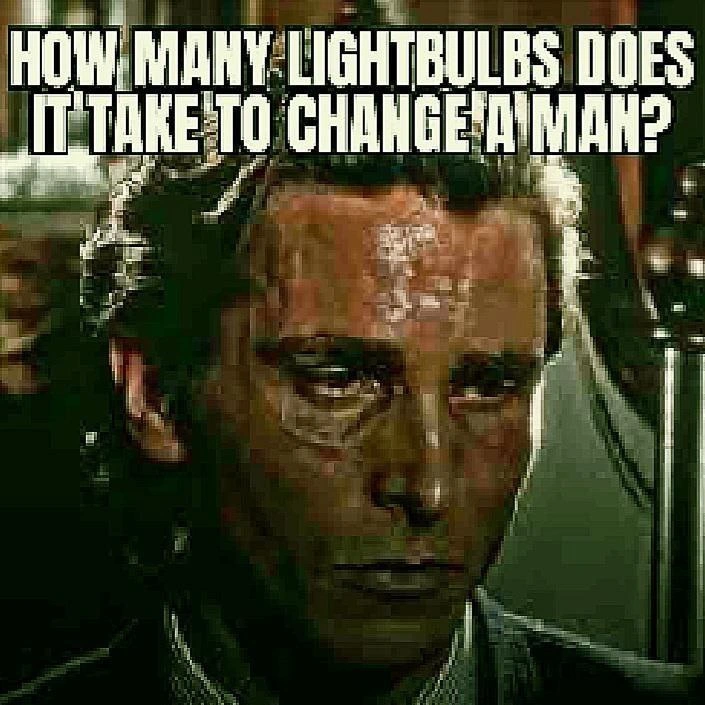
Here, the meme cleverly reverses the question: instead of people changing a lightbulb, it asks how many lightbulbs it would take to change a person. This reversal instantly signals that weâre dealing with a joke â a parody of the classic format. The top text in big bold letters, âHOW MANY LIGHTBULBS DOES IT TAKE TO CHANGE A MAN?â, is styled exactly like a typical meme caption for emphasis and comedic timing. It reads like the setup to a joke, but thereâs no explicit punchline written. The humor comes from us recognizing the inversion and filling in the blank: it implies changing a person is way harder than changing a lightbulb (maybe so hard that no number of lightbulbs will ever be enough!).
Now, why is this funny specifically to developers? Because in the tech world, we often talk about âlightbulb momentsâ â those flashes of insight when a solution or new idea pops into your head. A cartoon trope is a literal lightbulb turning on above someoneâs head when they get an idea. The meme uses lightbulbs as a metaphor for new ideas or attempts to cause change. So itâs basically asking: âHow many bright ideas or prompts does it take to get a developer to change himself?â The joke suggests that a stubborn developer might need a lot of these insights (maybe an absurd number of them) to truly change his ways. Itâs a playful way to say developers (or people in general) can be stuck in their ways.
Letâs connect this to some terms: Refactoring is one key concept here. In programming, refactoring means improving the internal structure of code without changing its external behavior. Itâs like cleaning up the code, making it nicer and more maintainable. We do it when code becomes messy or âlegacyâ. Legacy code usually refers to old code thatâs still in use â often code thatâs hard to understand, perhaps written by someone who left the company (or by ourselves years ago when we knew less đ ). Working with legacy code can be frustrating; it might be full of hacks or outdated patterns. We often say legacy code has a lot of technical debt. Technical debt is a metaphor: itâs like when you take shortcuts in code (quick fixes, poor design) to get something working now, but you âborrowâ time â later youâll have to pay interest in the form of extra work and bugs because of those shortcuts. Refactoring is how we âpay downâ technical debt by cleaning up those old shortcuts.
So, what does it mean to refactor oneself? Itâs an analogy â comparing a person to a codebase. Just as code might need restructuring, maybe a developerâs habits or mindset might need an update. Perhaps a dev has always done something a certain (outdated) way and now needs to learn a new approach. But unlike code, you canât just hop in and rearrange a personâs brain or habits overnight! Changing personal habits (like finally adopting proper testing, or learning a new programming paradigm, or even a mindset like âdonât take critique personallyâ) is hard. It often takes repeated experiences or feedback â those are the lightbulbs here. Each âlightbulbâ could be a code review comment, a conference talk, a pair-programming session with a colleague, or a nasty production bug that teaches a lesson. The meme jokes that it might take a whole bunch of these to truly change the person.
The image itself adds mood to the joke. Itâs a grainy shot of a man in a dark room, face blurred and sweaty. It looks dramatic, almost like a scene from a psychological thriller. This dramatizes the question: itâs not a cheerful query, itâs posed like a heavy, existential challenge. The phrase âto change a manâ sounds profound, like weâre talking about deep personal transformation. Thatâs much more intense than changing a lightbulb, right? đ For a developer audience, this over-the-top seriousness is part of the humor. We deal with mundane issues like variable naming or fixing bugs, but here weâre jokingly comparing a devâs self-improvement to a life-altering journey illuminated by countless lightbulbs. Itâs funny because it mockingly exaggerates how stubborn or set in our ways a tech person can be â as if changing that is a monumental, cinematic struggle.
We should also mention Developer Experience (DX) because itâs tagged. DX refers to what itâs like for a developer to do their work, day to day. A good DX means the tools, codebase, and processes are working for you, not against you. When you have high technical debt and lots of legacy code, DX suffers: everything feels harder, and developers get frustrated. In this scenario, improving DX could involve refactoring the codebase and upgrading developer skills. But if the dev (or management) resists change, that improvement wonât happen. So the meme indirectly touches on DX â itâs frustrating to work in an environment that needs change but where change is slow or resisted. Thatâs why you see Developer Frustration as a tag: the frustrated feeling when you know things should be done better (like refactoring that messy code) but itâs an uphill battle to convince people (maybe even yourself on a lazy day) to do it.
Finally, the phrase âchange requests metaphorâ in the tags hints at another layer: in software teams, a change request is a formal way to propose a modification or feature (often in project management or via a ticketing system like Jira). Itâs kind of humorous to think of a âchange requestâ for a person. Imagine filing a ticket: Change Request: Update SeniorDevâs coding style to Java 17 standards. đ Itâs poking fun at the bureaucracy of change and the fact that you canât just file a ticket to change someoneâs behavior. Change in people is not a straightforward pull request you can merge; itâs more like a long, unpredictable process with many iterations. So by calling this scenario a self_refactoring_analogy and a change_requests_metaphor, the meme is likening the developerâs personal growth to a planned code change â except humans donât come with an easy merge button.
In short, at this intermediate level: The meme is saying âChanging a developerâs old habits or ways of thinking is much harder than any simple code change, even harder than the old joke of changing a lightbulb.â It uses the structure of a familiar joke and the idea of lightbulb = idea/insight to convey that it might take a comical amount of convincing (or âlightbulb momentsâ) to get a person to truly change. Itâs funny to developers because it resonates with real-life experiences: whether itâs trying to adopt a new framework, convince a teammate to stop doing something hacky, or even oneself trying to break out of a comfort zone â these changes take multiple attempts and often face resistance. The humor has a bit of a knowing sigh in it: âyeah, weâve all been there; people are the hardest part of tech.â
Level 3: Legacy Habits Die Hard
Seasoned engineers will recognize this meme as a grim twist on the classic lightbulb joke format, pointing a flashlight back at ourselves. In the usual tech joke, we ask âHow many programmers does it take to change a lightbulb?â and quip with answers about over-engineering or blame-shifting (e.g. âNone â thatâs a hardware problem.â đ). Here the script is flipped: âHow many lightbulbs does it take to change a man?â. The developer is the one expected to change â not an easy refactor. This parody gets a dark chuckle from senior devs because it exposes an uncomfortable truth in Developer Humor: sometimes the biggest legacy system in a project is the developerâs own mindset.
Refactoring isnât just a code activity; itâs a personal challenge. In code, refactoring means restructuring messy logic or improving design without altering functionality. Weâve got textbooks and tools for that (thanks, Martin Fowler!). But refactoring myself? Thereâs no IntelliJ quick-fix for that one. The meme highlights the struggle of self-refactoring: trying to rewrite our entrenched habits and attitudes. How many âlightbulb momentsâ (those sudden insights đĄ) does a stubborn engineer need before they finally embrace a new practice? If youâve ever tried convincing a veteran programmer to adopt unit tests after years of cowboy coding, you know it can feel like an endless loop:
attempts = 0
while not senior_dev.is_convinced():
attempts += 1
senior_dev.expose_to_new_idea("Write tests first")
if attempts > 100:
break # Sometimes even 100 epiphanies won't budge a grizzled coder
print(f"Lightbulbs used to change the dev: {attempts}")
In a perfect world, one good idea should suffice to spark change â but in reality, that attempts counter climbs depressingly high. Legacy code isnât the only thing with inertia; legacy habits resist change just as much. The memeâs blurred, haunted face (is that Christian Bale from American Psycho or just every tech lead at 3 AM? đ
) epitomizes the psychological cost of confronting deeply ingrained practices. Itâs the thousand-yard stare of someone whoâs been asked to rewrite a gnarly 10-year-old module and unlearn a decade of âthis is how weâve always done it.â
This lands for senior devs because weâve lived it. Weâve seen technical debt pile up not just in code but in team culture. Imagine a codebase thatâs a tangled mess of global state and obsolete frameworks legacy frameworks. Now imagine the original author of that mess is you, five years ago, or your mentor whoâs now resistant to change. Ouch. Technical Debt isnât just a code problem; itâs a people problem. We accrue process debt and mindset debt when we postpone improvements or cling to old ways. âWeâll refactor later,â turns into âweâll train Bob on modern architecture⊠eventually.â Meanwhile, Bob (and half the team) keep using what worked in 2009. The codebase ossifies, and so do the developersâ skills. Changing that trajectory can feel almost Sisyphean â an endless uphill push.
This meme wryly asks if thereâs a quantifiable number of bright ideas (lightbulbs) that can force a personal refactor. Itâs tongue-in-cheek, but also a bit tragicomic: in reality, transformation usually requires more than a few brilliant suggestions. It needs painful experiences (like prod outages that finally convince a team to address that one bad practice), strong incentives, or new perspectives. A veteran coder might joke, âIt took three major incidents and one junior repeatedly questioning me before I finally ditched my deprecated ancient pattern.â In other words, multiple âlightbulb momentsâ over time. Developer Frustration builds each time we donât change, and ironically it often takes frustration reaching a boiling point to catalyze real change. The meme captures that exasperation: the top text screams like an existential riddle, as if an exasperated manager or a codebase itself is asking, âWhat will it take to get you to change, man?!â.
Thereâs also a meta-commentary about Developer Experience (DX) here. DX is like UX but for engineers: itâs the quality of life in our day-to-day coding. Working in a modern, well-factored codebase with up-to-date practices is a dream DX. Being stuck in a crusty legacy system with no will to change is a nightmare. Poor DX often persists because people resist change; the code canât refactor itself. The meme is essentially pointing out a refactoring needed flag on the culture and the individual. It teases the idea of a change request on the developer themselves â an absurd idea that you could file a Jira ticket to upgrade a personâs mindset the way youâd upgrade a library version. And just like forcing updates on an old system, forcing a person to change is precarious and might lead to a system crash (or at least a very grumpy engineer).
In summary, at the senior perspective this image hits home as satire with a sting. Itâs funny because itâs true: changing a lightbulb (or even a code snippet) is trivial compared to changing a human being set in his coding ways. We laugh, perhaps a bit bitterly, because weâve all asked ourselves or a colleague a version of this question: How many code reviews, how many all-nighters, how many production fires will it take to finally change our approach? The answer, implied by the memeâs weary tone, is âmore than youâd think.â Itâs a nod to every battle-scarred programmer whoâs had to refactor not just a program, but their own perspective.
Description
A heavily pixelated and dark image showing a close-up of a man's intense and distressed face, often identified as Patrick Bateman from the film 'American Psycho'. The image is overlaid with bold, white, all-caps text that poses a philosophical question in a classic joke format: 'HOW MANY LIGHTBULBS DOES IT TAKE TO CHANGE A MAN?'. The meme derives its humor from its absurdist and existential nature, subverting the simple 'lightbulb joke' structure to ask a complex, unanswerable question about personal transformation. For a technical audience, this resonates with the immense, often underestimated difficulty of fundamental change, whether in a person or a complex legacy system. It's a dark, humorous reflection on the intractable nature of core 'human' or 'system' architecture

Comments
15Comment deleted
The answer is none. You can't change the man. You just have to write an abstraction layer on top of him and hope the new APIs don't expose his underlying sociopathic tendencies
Zero - he just toggles a âpersonal_growthâ feature flag to staging, keeps the legacy personality in prod, and rolls the actual refactor to ânext quarterâ in every OKR
Just one lightbulb - but it's a breaking change in prod at 3am after your fifth consecutive sprint of 'minor refactoring' that somehow touched 47 microservices and now the CEO is asking why the login button is returning kafka partition errors
After 20 years in this industry, I can confirm: it takes zero lightbulbs to change a man - just one production incident at 3 AM, a legacy codebase with no documentation, and a PM asking 'can we just make it work like Facebook?' The lightbulbs are optional; the existential transformation is guaranteed
Answer: zero - culture change isnât idempotent; a 03:00 SEV-1 triggers the only durable state transition
Infinite - humans version their opinions incompatibly with every new framework 'aha' moment
How many lightbulbs does it take to change a man? One - the pagerâs red LED at 3 AM; after that he ships with feature flags, circuit breakers, and a runbook before code
It depends which orifices you put it in Comment deleted
lol, imposter Comment deleted
i highly recommend you to shut up Comment deleted
Is it some kind of Navalny joke?đ Comment deleted
what? Comment deleted
How many dead bodies do you need in your basement to change a lightbulb? Tbh idk but at least 9. Comment deleted
Let's ask Jim Carrey Comment deleted
I don't get it Comment deleted