Skip to content
DevMeme
3052 of 7435
The ultimate big-brain: shitposting directly inside your Java source comments
CodeQuality Post #3367, on Jul 3, 2021 in TG

The ultimate big-brain: shitposting directly inside your Java source comments

Why is this CodeQuality meme funny?

Level 1: Doodles in the Margin

Imagine you open a school textbook to do your homework, and on one of the pages, a previous student has drawn a big funny cartoon in the margin. It doesn’t affect the actual lesson or the math problem you need to solve – it’s just there to make someone laugh. This meme is basically the programmer’s version of that. Instead of drawing in a textbook, a programmer drew a silly picture with text characters (like a keyboard cartoon) inside their code file. Code files usually only have instructions for the computer and maybe a few serious notes for other programmers. So finding a huge joke picture in there is super unexpected! It’s like a secret graffiti hidden in an official document. It makes people laugh because it’s showing something very informal and goofy (a meme about “big brain” ideas) in a place that’s usually very formal and strict (source code). In simple terms: it’s funny for the same reason seeing a cartoon in the middle of a serious manual would be funny – it’s playful, surprising, and a little bit cheeky.

Level 2: ASCII Art Comments

This meme takes place entirely within a Java source file’s comment section. Let’s break down what’s going on in simpler terms. In Java (as in many languages), anything between /* and */ is a comment. That means it’s ignored by the computer when running the program. Comments are usually used to explain what the code does or to leave notes for other developers. They’re meant for humans to read, not machines. In this case, a developer decided to use a comment as a canvas for an ASCII art meme.

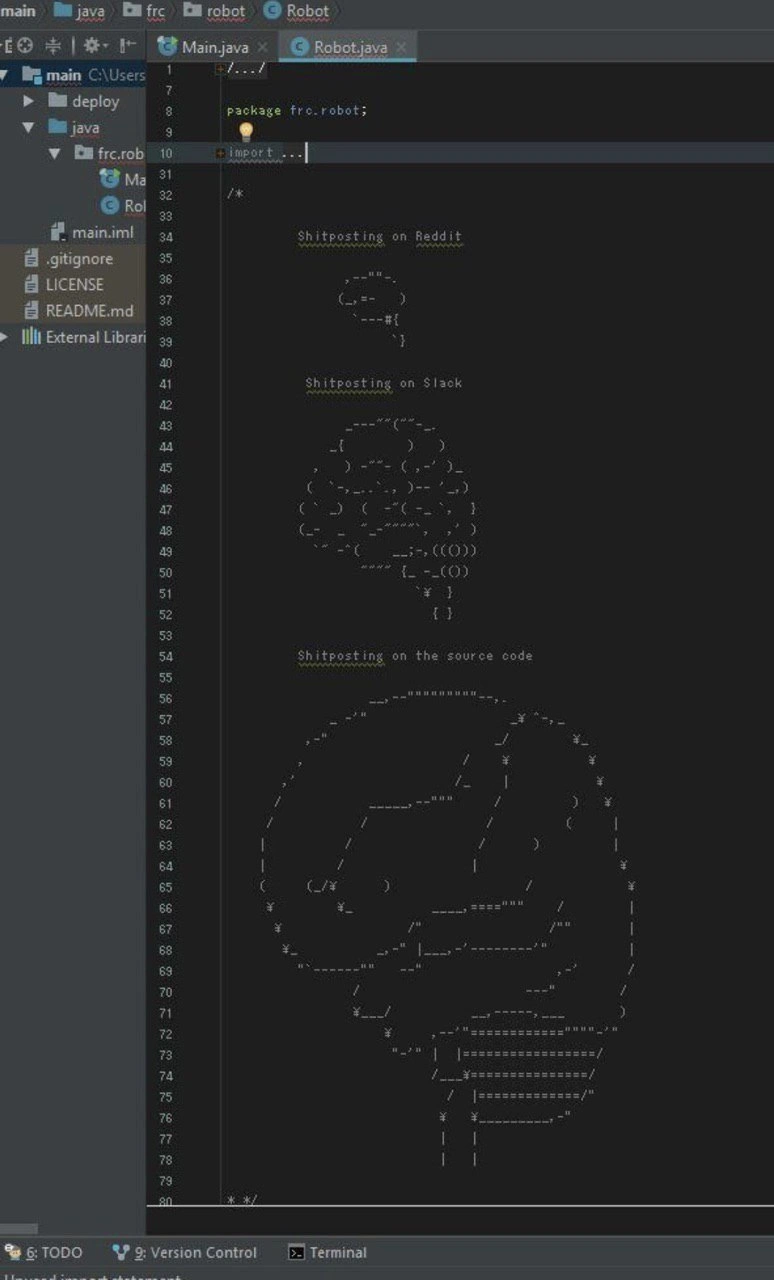
ASCII art means drawings made out of text characters (letters, numbers, symbols). Before high-resolution images were common, people on computers used text characters to draw pictures. Here, the ASCII art is shaped like brains of different sizes. It’s illustrating the “expanding brain meme,” which is a popular internet joke format. The idea of that meme format is: you show a small brain for a simple or basic idea, and then progressively larger, glowing brains for ideas that are supposedly more enlightened or extreme (often the humor is that the “enlightened” idea is actually absurd). In the screenshot, the text labels each brain drawing: “Shitposting on Reddit” for the small brain, “Shitposting on Slack” for the bigger brain, and “Shitposting on the source code” for the giant brain. “Shitposting” is internet slang for posting content that is deliberately silly, low-quality, or off-topic just for the laughs or chaos of it.

So the meme is saying: posting goofy memes on Reddit is one level of brain power, doing it on your company Slack is a bigger brain move, but the ultimate galaxy-brain move is putting the meme inside your actual code as a comment. It’s exaggeration for comedic effect. It’s funny to developers because code is usually serious business – you don’t expect to find a whole meme when you open a code file. Seeing a meme right in Main.java is like finding a joke hidden in a textbook.

The environment shown is IntelliJ IDEA, which is an Integrated Development Environment (IDE) for Java. It has a dark theme in the screenshot, and you can see on the left the project’s folder structure (src/main/java/... etc., plus files like .gitignore and README.md). This means it’s a real project (possibly for a robot, since the package name is frc.robot). The developer has two files open (Main.java and Robot.java tabs). In Main.java at the top, there’s the package declaration and imports, then immediately a big comment block with the ASCII meme. This suggests the meme is probably at the start of the file, maybe as a crazy form of file header or just an in-joke at the top.

Now, let’s consider why this is a bit controversial in terms of CodeQuality and Documentation. Normally, comments should be clear and helpful. For example, a comment might say // calculate motor speed above some code, which is useful. But a huge meme doesn’t explain the code at all – it’s just there for fun. Code reviewers (senior developers or teammates who check your code) typically expect comments to be purposeful. If they saw this, they might ask, “What is this and why is it here?” Some might find it funny, but others might think it’s unprofessional or distracting. It’s like writing a big joke in the middle of an instruction manual – it might make some readers laugh, but others will scratch their heads.

Because the ASCII art spans dozens of lines, it also visually breaks up the code. If the actual logic of Main.java starts below this meme, you have to scroll past an art gallery before you get to the real code. That’s why this is called an inline meme or a source code easter egg – it’s hidden within the code for humans to find, not something the computer or the normal user would ever see. Easter eggs in software are secret or playful features. In this case, the Easter egg is purely in the source code comments.

For a junior developer or someone new to coding, the takeaways are: yes, code comments can technically contain anything (since the compiler ignores them), including jokes, memes, even your grocery list. But just because you can doesn’t mean you should in a serious project! This meme highlights that devs sometimes can’t resist injecting a bit of personality or humor into their work. It’s a form of a developer in-joke. Only someone looking at the code (likely another developer) will ever know this meme is here. On Reddit or Slack, shitposting is more public or at least team-wide. In code, it’s almost secret – unless your team has a habit of reading comments closely.

In terms of CodingCulture, some workplaces have a fun, jokey atmosphere where something like this might be laughed at, at least in an internal tool or weekend hackathon project. Other workplaces are very strict, and adding an ASCII meme in a mission-critical code repository might even get you a stern talking-to. There are also practical reasons to avoid such things: if you use auto-generated documentation tools (like Javadoc for Java), they might pick up the comment and try to include it, resulting in a very strange documentation page! Also, if someone is searching the code for a specific keyword, having a huge block of unrelated text could throw off their search results.

So, this meme is really playing on the surprise factor. It’s TechHumor about where memes do or don’t belong. By seeing a “shitpost” meme in a place usually reserved for serious notes, developers find it funny – it’s a clash of two worlds. It reminds us that behind the code are human beings who sometimes get bored or playful. The expanding brain joke format just amplifies it by saying “the more extreme the idea (shitposting directly in code), the bigger the brain.” It’s an exaggeration: in reality, doing this doesn’t make you a genius – if anything, it might create a bit of chaos in your team. But that tongue-in-cheek exaggeration is what makes it a meme.

In summary, at this level we understand that the image is showing a Java code file where the comment section is hijacked to host an ASCII version of a popular meme. It’s making a joke about how far developers might go to put jokes in their work. We’ve covered what code comments are, what ASCII art is, and why mixing them in this way is humorous to people familiar with developer life. It’s a mix of CodingHumor and a lighthearted jab at what is considered proper Documentation in code. If you’re new to coding: enjoy the laugh, but maybe don’t start your own code files with a meme unless you know your team’s sense of humor!

Level 3: Documentation Or Distraction?

In a twist of developer humor, this meme shows an ASCII-art expanding brain right inside a Java code comment. We have a Java file (Main.java in an IntelliJ IDEA editor) where a multi-line comment block /* ... */ isn’t explaining code at all – it’s containing a full-blown meme. The three panels of the classic galaxy brain format are rendered in text:

  • “Shitposting on Reddit” – accompanied by a tiny ASCII brain (smallest brain, baseline idea).
  • “Shitposting on Slack” – with a medium-sized ASCII brain (bigger idea).
  • “Shitposting on the source code” – above a humongous ASCII-art brain taking up dozens of lines (the ultimate big-brain move).

By embedding this inline meme in the source, the developer is basically shitposting in code comments. It’s a tongue-in-cheek commentary on our coding culture: as the brain drawings expand, so does the audacity of where one can shitpost. The humor works on multiple levels. First, there’s the sheer absurdity of seeing an internet meme immortalized in a codebase. It’s the kind of developer in-joke that might make a teammate do a double-take during a code review. After all, code comments are supposed to be clarifying documentation, not an ASCII art canvas for your shitposting masterpiece. This scenario pokes fun at the fine line between creative expression and professional code quality in a team setting.

From a CodeReviews perspective, this is both hilarious and cringe-inducing. Imagine you’re reviewing a pull request and stumble on a 50-line ASCII brain filling up the comment section. Do you laugh and give an approving nod to the dev’s meme game, or do you comment “WTF please remove this” because it’s not exactly a best practice? The meme lampoons that awkward dilemma. The code review etiquette in most teams would frown on giant meme blocks in comments – they’re considered noise or distraction, no matter how epic the joke. Yet, it’s hard not to admire the boldness: the dev literally documented an inside joke. It’s an ultimate source code easter egg, visible only to those who read the code. In a way, it’s the geek equivalent of graffiti on a building – hidden from the user-facing side, but left for other developers to discover.

There’s also an ironic truth behind the expanding brains: “shitposting on Reddit” (the smallest brain) is common and low-effort. Doing it on Slack at work (medium brain) is bolder – you’re mixing memes into your professional sphere. But shitposting directly in source code (galaxy brain) is next level – it permanently enshrines your meme in a supposedly serious, version-controlled environment. The joke suggests that truly enlightened engineers skip the message boards and go straight to committing memes in the repo. It’s poking fun at how far devs will go to inject humor into their work.

On a technical note, this huge comment doesn’t affect the program’s execution – the Java compiler will ignore anything inside /* ... */. So it’s harmless to the machine, but to human collaborators it could be baffling. It’s a classic case of something that works on my machine (since it doesn’t break code) yet might not work for the team’s sanity. In terms of CodeQuality, cluttering files with massive joke comments can be seen as bad practice. It increases file length and could distract anyone trying to read or maintain the code. Future maintainers might waste time scrolling or wonder if the ASCII brain has some hidden meaning for the code (spoiler: it doesn’t, it’s just a meme).

However, in some projects – especially hobby, open-source, or internal tools – developers do leave fun Easter eggs or witty comments to lighten the mood. There’s a long tradition of humorous code comments (like // magic happens here or quirky haikus in comments). ASCII art banners (like big text logos or diagrams) have also been used legitimately in code to denote sections or provide ASCII documentation. This meme riffs on that tradition by going completely over-the-top. It’s self-aware: the code comment itself is about the act of shitposting, turning the comment section into a mini social platform. It satirizes developer life where one might procrastinate on Reddit or joke on Slack – and jokes, why not procrastinate by embedding that humor in the code itself?

In summary, this image spoof brings together CodingHumor and real developer workflow. It highlights the eternal tension: “Is this comment a helpful note, or just a distraction?” Here it’s clearly a glorious distraction, cheekily masquerading as documentation. It leaves us seniors chuckling but also shaking our heads, thinking, “Sure, it’s funny now… but just wait until someone runs a documentation generator or prints the code out for a meeting!” It’s a perfect snapshot of modern developer culture – where the work and the memes sometimes collide in the unlikeliest place: the source code itself.

Description

A dark-theme IntelliJ IDEA window is open with two tabs, "Main.java" and "Robot.java". In Main.java the normal boilerplate appears: the line "package frc.robot;" followed by "import ...", then a multi-line comment beginning with "/*". The comment contains three ASCII-art meme panels: (1) the caption "Shitposting on Reddit" above a tiny ASCII brain, (2) "Shitposting on Slack" above a medium-sized ASCII brain, and (3) "Shitposting on the source code" above a huge, full-skull ASCII brain that spans dozens of lines. The project explorer on the left shows folders such as "main", "deploy", "java" and files ".gitignore", "LICENSE", "README.md". By placing an expanding-brain meme directly in the codebase, the screenshot lampoons developer culture, code review etiquette, and the fine line between documentation and distraction
Comments

13
Anonymous ★ Top Pick Nothing says “self-documenting code” like a 300-line ASCII brain that blows the diff limit - finally, a comment with higher cyclomatic complexity than the method it explains
  1. Anonymous ★ Top Pick

    Nothing says “self-documenting code” like a 300-line ASCII brain that blows the diff limit - finally, a comment with higher cyclomatic complexity than the method it explains

  2. Anonymous

    The real technical debt isn't the ASCII art taking up 50 lines of code - it's explaining to the CTO why the git blame shows you committed a toilet to production at 3 AM during the last sprint's 'critical bug fixes'

  3. Anonymous

    The progression from simple emoticons on Reddit to elaborate ASCII art in production code perfectly captures the inverse relationship between communication platform formality and developer creative expression - because nothing says 'I've achieved senior engineer status' quite like embedding a 25-line ASCII masterpiece in your robotics competition codebase where future maintainers will discover it during a critical bug hunt at 3 AM

  4. Anonymous

    The only social network with guaranteed retention is the monorepo - put the joke in a Java comment and CI/CD will replicate it to three regions, backups will keep it for seven years, and git blame will make sure everyone knows exactly whose idea it was

  5. Anonymous

    Pro tip: a 200-line expanding-brain ASCII in a Java block comment never reaches the .class file, but it will annihilate git blame, triple your PR diff, fail Checkstyle on whitespace, and still be the only thing boosting Sonar’s “comment density” KPI

  6. Anonymous

    Context switching tabs: instant TLB miss for your short-term memory, every single time

  7. @Tenoooo 5y

    IntelliJ love

  8. @nuntikov 5y

    *in source code

  9. @nipunattri1 5y

    Source code of shit

  10. @Mrdedmrz 5y

    жиза

    1. @sylfn 5y

      Please provide a translation of your message to English langlage --- this is English-only chat. Other languages are allowed if and only if you provide a translation. You are from comments seciton --- that's why you are first told the rules, and only then you will get warnings. Это - англоязычный чат, поэтому, пожалуста, не пишите сообщения на любом другом языке без их перевода на английский. Исключением являются только непереводимые шутки, но их надо помечать. Вы пришли из комментариев, а потому могли не знать правил, поэтому Вы их сначала увидите, и только потом (в случае повторного нарушения) получите предупреждения.

    2. @beton_kruglosu_totchno 5y

      translation: iktf

      1. @Mrdedmrz 5y

        👌👍

Use J and K for navigation