When the Interview Loop is 2,000 Years Long
Why is this Interviews meme funny?
Level 1: Asking for an Army
Imagine you ask someone to solve a puzzle, and they reply, “Okay, but I’ll need every single person in a huge country to help me.” 😮 It’s such an over-the-top and silly response that you can’t help but laugh. In this joke, a coding interviewer expected the person to pick a computer language (like how you might choose a pencil color to write with), but the person jokingly asked for a giant army instead. It’s funny because it’s like using a whole army to do a job that one person could normally do with a computer. The idea is so exaggerated and unexpected that it makes the situation feel completely ridiculous – and that surprise is what makes it so humorous.
Level 2: Any Language, Literally
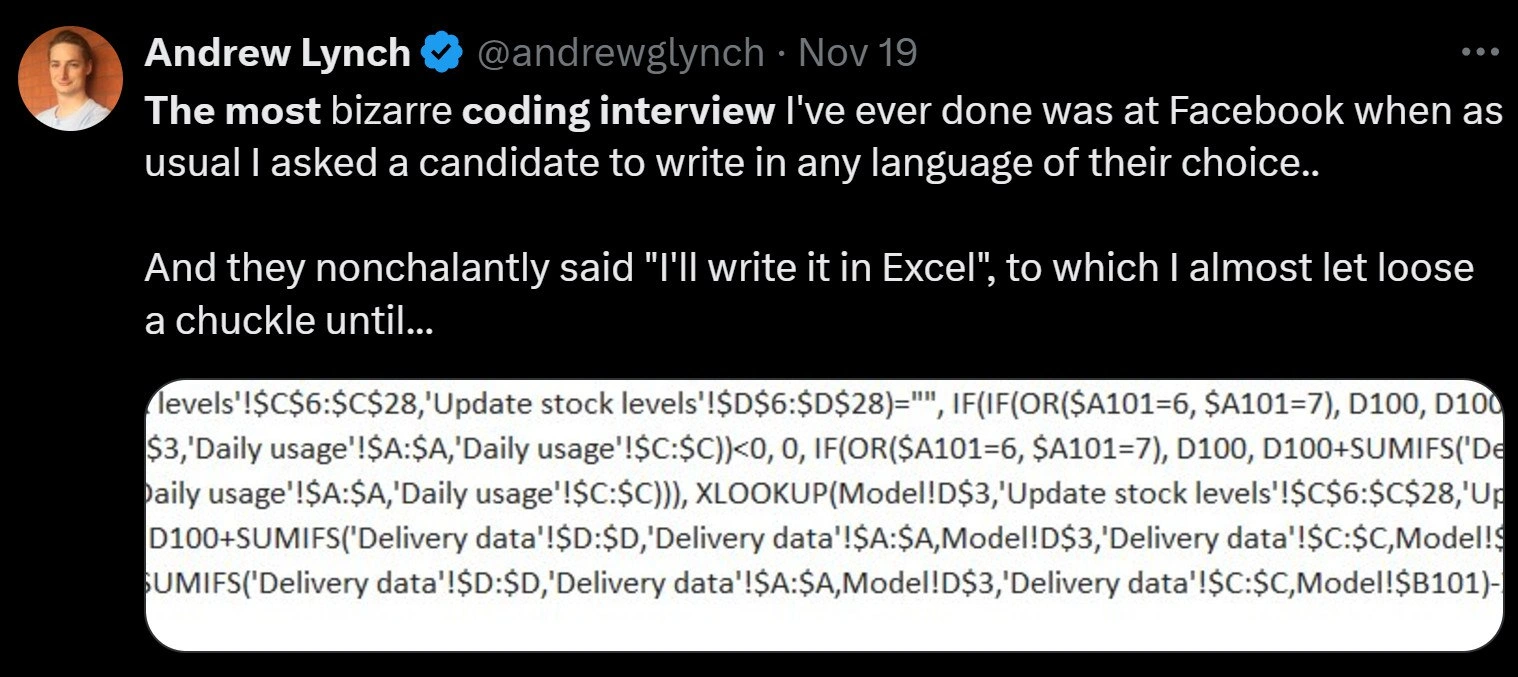
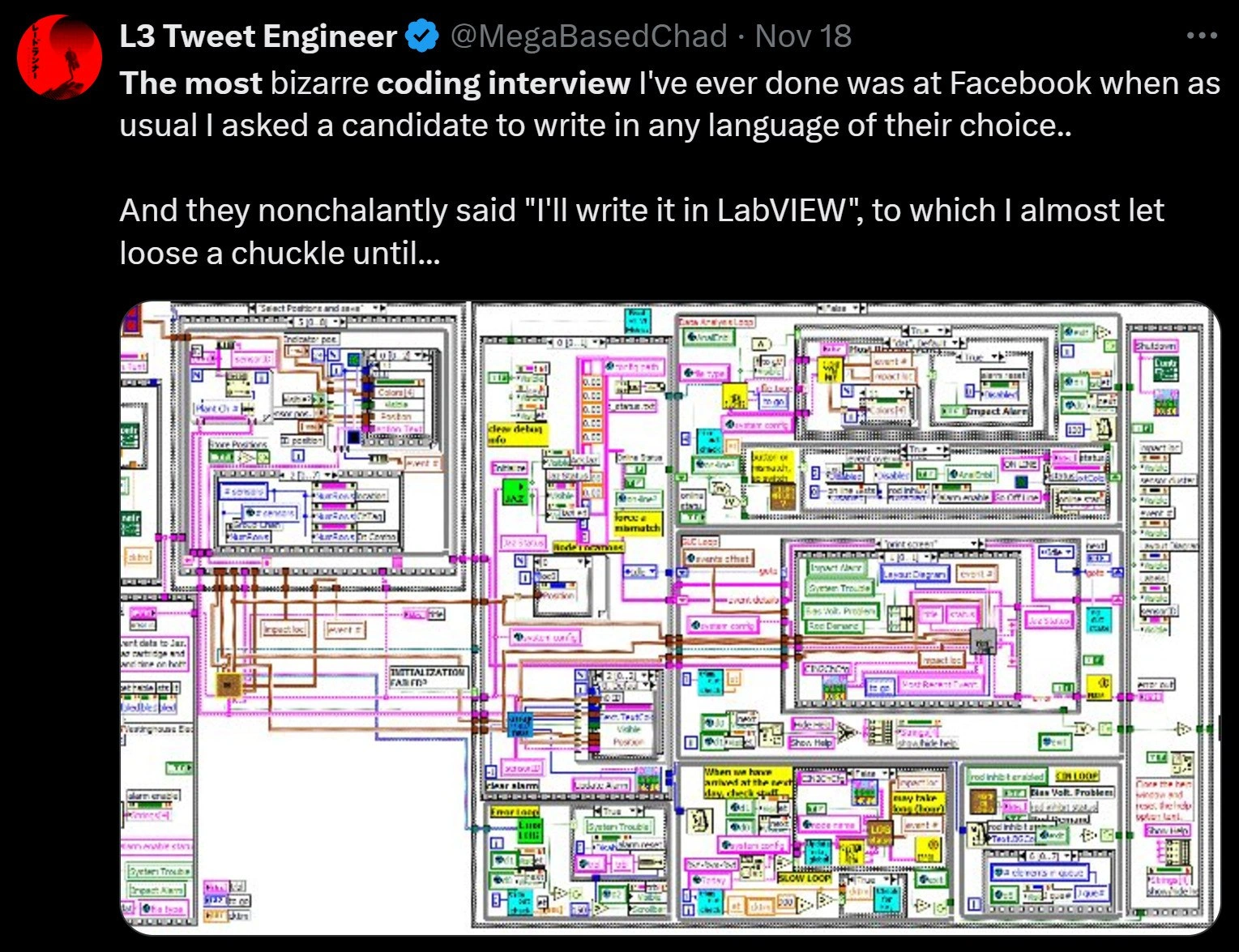
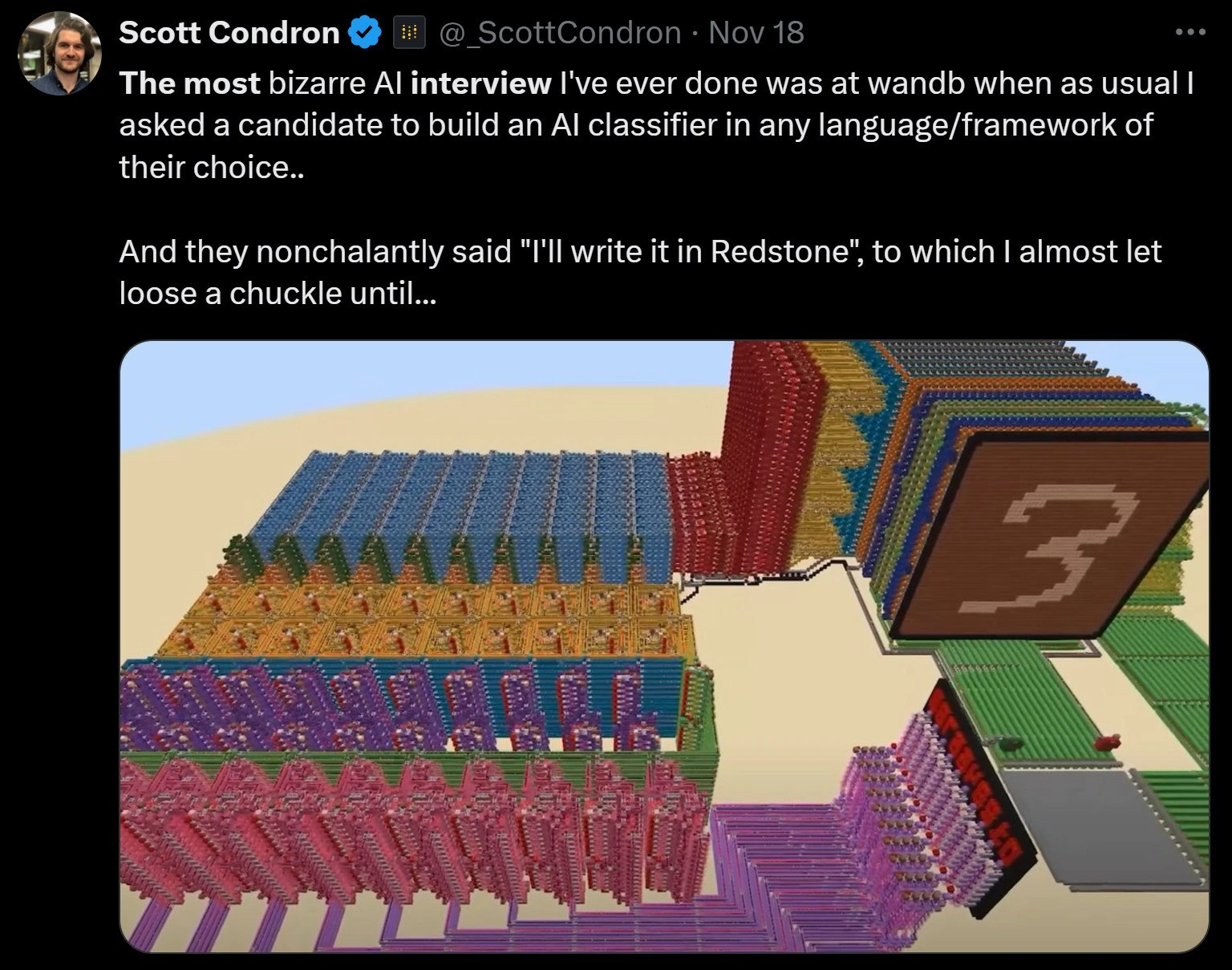
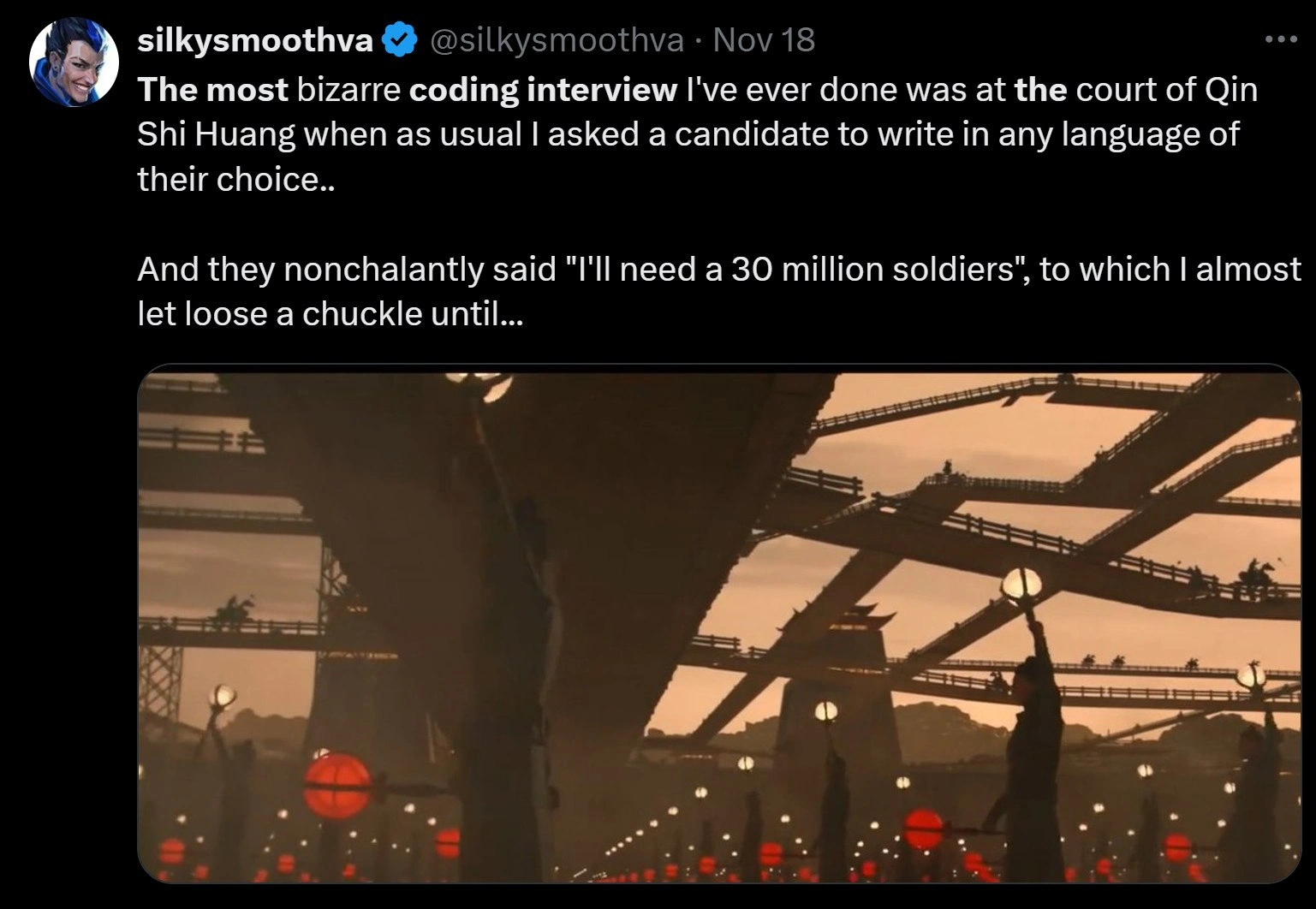
So what’s actually happening here? The meme is a screenshot of a tweet (in classic dark-mode style) where a developer jokes about a coding interview that supposedly took place in ancient China. In real life, coding interviews are when companies ask programmers to solve problems by writing code. Typically the interviewer says something like, “You can use any programming language you like” – meaning you could code your solution in C++, Python, JavaScript, or whatever you’re comfortable with. It’s a standard courtesy during an InterviewProcess to let candidates pick their favorite coding language. But in this joke scenario, the setting is the imperial court of Qin Shi Huang (who was a real historical figure – the first Emperor to unify China, over 2,000 years ago). When asked to write in any "language" of their choice, the candidate gives a totally unexpected answer: “I’ll need 30 million soldiers.” This is a language_choice_joke – the candidate pretends to misunderstand "language" in a literal or at least very non-standard way. He isn’t naming a programming language at all; instead, it’s like he’s proposing to solve the problem using an entire army as his “language.” It’s an absurdly over-engineered solution to whatever coding challenge was posed. Essentially, the candidate is saying they want to marshal 30 million human beings to tackle the task, as if the problem could be solved by sheer manpower.
To put this in context, 30 million soldiers is an astronomically high number – even the largest armies in human history (including Qin Shi Huang’s own armies or the Terracotta Warriors in his tomb) were only a tiny fraction of that. By choosing an army as his tool, the interviewee is making an absurd_resource_estimate – asking for way more resources than any reasonable solution would require. This exaggeration is the source of the humor. It’s poking fun at both the interview scenario and the idea of overkill in problem solving. In developer terms, it’s like solving a simple bug by buying thousands of new servers instead of just debugging the code – a ridiculous approach.
The image attached to the tweet reinforces the joke visually. It shows a vast, cinematic scene in warm sepia tones: endless ranks of people (the “soldiers”) holding glowing red-and-white lanterns, standing on huge wooden bridges and platforms. This looks like an ancient army assembly – something grand you might see in a historical or fantasy epic. By presenting an imperial army gathering as the result of a coding interview question, the meme mashes up DeveloperHumor with a dash of history. It’s as if the candidate’s request came true in a dramatic movie scene. People in dev communities find this funny because it’s so over-the-top and creative. It riffs on how sometimes in tech, solutions can be comically disproportionate to the problems, and it also parodies those wild stories you hear about crazy interviews. Even if you’re new to coding, you can appreciate the silliness: the interviewer expected a programming language like Python, but got a demand fit for a conquering emperor! This kind of meme is popular in dev Twitter stories and online forums because it’s both relatable (everyone nervously jokes about weird interviews) and absurd (no one’s ever actually called for an ancient army to debug an app, obviously). It’s a reminder that developer culture loves to laugh at itself – taking a normal phrase from the technical interview process and blowing it up to mythical proportions just for the laughs.
Level 3: Imperial Overengineering
At first glance, this meme reads like a tech interview war story on steroids. On developer Twitter (a key part of modern DevCommunities), engineers often share InterviewHumor about bizarre whiteboard challenges or outlandish candidates. Here, that trope is cranked up to epic proportions by transporting a routine coding interview back to the court of Qin Shi Huang (the first Emperor of China). The interviewer casually says "write in any language of your choice," expecting the usual answer (like writing code in Python or Java). Instead, the candidate deadpans: "I'll need 30 million soldiers." This punchline jolts us out of the ordinary. It's a perfect storm of over-engineered solution meets historical absurdity. Seasoned devs smirk because they've seen modern equivalents: teams trying to solve simple bugs by throwing way too many resources at them. It's reminiscent of the classical software joke that brute force fixes everything if you have infinite hardware (or in this case, an infinite army). In real life, we talk about scaling horizontally with more servers or instances; here it’s scaling with human beings as if they were server nodes. The candidate’s request lampoons that mindset – imagine a massively parallel human computer with 30 million cores (soldiers)! Senior engineers recognize a wink at Brooks’ Law (adding manpower to a software project often makes it later); this interviewee is adding manpower at a literally imperial scale. The visual under the tweet drives it home: countless silhouetted figures with glowing lanterns arrayed on tiered bridges, an army so vast it vanishes into the horizon. It’s like someone took the phrase "deploy more resources" and applied it to Qin Shi Huang’s legendary legions. The humor thrives on this contrast: a mundane technical interview process question colliding with ancient warfare aesthetics. It satirizes both overkill solutions in engineering and the almost mythic tall tales developers share. After all, every experienced dev has heard an insane interview story, but "candidate demands 30,000,000 soldiers" sets a new bar for absurd resource estimates. This meme tickles that part of a senior programmer’s brain that loves clever misinterpretation: any language? Sure, I choose the language of war – just give me an army and I’ll solve it! It’s an over-the-top metaphor for overengineering, and the more you know about tech and history, the funnier (and more insightful) it gets.
Description
This image is a screenshot of a tweet from the user @silkysmoothva, which parodies the 'bizarre coding interview' meme format. The tweet reads, 'The most bizarre coding interview I've ever done was at the court of Qin Shi Huang when as usual I asked a candidate to write in any language of their choice.. And they nonchalantly said "I'll need a 30 million soldiers", to which I almost let loose a chuckle until...'. The image accompanying the tweet is a dramatic, wide shot of a massive, stylized army in what appears to be ancient China. Countless soldiers are depicted as silhouettes holding lanterns, standing under a network of enormous, interconnected bridges and structures against a dusky sky, conveying an epic and overwhelming scale. The humor is derived from transplanting a modern tech interview into the court of China's first emperor, famous for the Terracotta Army. The candidate's absurd 'solution' - requesting a massive army instead of writing code - is a satirical commentary on problem-solving, suggesting that some challenges are solved not with elegant algorithms, but with sheer, brute-force resources
Comments
7Comment deleted
Forget distributed systems, this is the original serverless architecture. The latency is terrible, but the parallel processing is unmatched
When a candidate requests 30 million soldiers, you know Brooks’s Law is about to get its first statistically significant benchmark
When your O(n!) solution has a literal body count but management loves the "human resources utilization metrics."
When the candidate said they needed 30 million soldiers to write code, they weren't asking for compute resources - they were proposing the world's first massively parallel human compiler. Each soldier represents a processing unit in what might be history's most literal interpretation of 'distributed systems.' It's the ultimate answer to 'what's your approach to horizontal scaling?' - though the deployment pipeline might take a few dynasties to complete, and the standup meetings would be absolutely legendary
When 'any language' means conscripting 30M threads - emperor's cluster, zero Kubernetes needed
Apparently “write in any language” includes deploying a 30M‑node human cluster - great horizontal scaling, terrible fault tolerance, and the scheduler is HR
Ask for “any language,” get a 30‑million‑core, flag‑based ISA with great horizontal scale and catastrophic on‑call