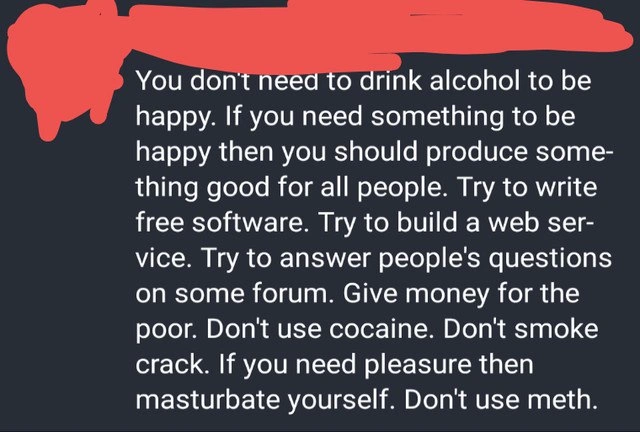
Meme proposes open-source coding as a healthier buzz than hard drugs
Why is this OpenSource meme funny?
Level 1: Good Deeds, Good Feels
Imagine someone telling you not to chase happiness by doing something harmful, but instead to do kind and creative things. It's like saying: you don't need a ton of candy or dangerous thrills to be happy. If you're feeling down or bored, try making something that others can enjoy or helping someone out – maybe draw a nice picture for a friend or help bake cookies to share. Doing these good deeds gives you a warm, happy feeling inside, kind of like a natural smile that lasts longer than a sugar rush. The funny part is how the advice suddenly mixes in a very serious warning with the good tips. It's as if a teacher said:
Always share your toys, be polite, and by the way, never ever play with fire or sharks!
—the jump to something obviously dangerous is so extreme that it makes you giggle. But the main idea is simple: making others happy and being creative will make you happy, and that's way better (and safer) than any bad stuff.
Level 2: Push Code, Not Drugs
At its core, this meme is telling developers (or anyone, really) that creating things and helping people can make you happy in a more wholesome way than any substance can. It’s using a bit of outrageous humor to get that point across. The post basically says: "If you're looking for happiness or pleasure, do positive, productive stuff — like coding or community work — rather than relying on alcohol or hard drugs." For a new developer, it highlights some familiar parts of the developer lifestyle and community:
"Write free software" – This means create open-source programs. Free software (also known as open-source software) is code that you share openly so anyone can use or contribute to it. For example, the operating system Linux is free software that many people around the world improve together. The meme suggests that by writing code that anyone can use, you'll feel good about doing something beneficial for all. It's true many coders get a warm fuzzy feeling from sharing their code and knowing it helps others. It's like donating your time and skills to make software better for everyone.
"Build a web service" – In simpler terms, make a useful website or online app. A web service could be any side project that runs on the web, like a little application that does something fun or helpful. Maybe you create a small site that helps people track their tasks, or an app that shows weather data for cyclists – anything that others might find useful. The idea is that building your own project from scratch can be super rewarding. You learn a lot and feel proud, almost like constructing a cool gadget that others can actually use. It's a positive challenge that can put you in "the zone," and when you finally deploy it and it works, you get that happy rush of I built this!.
"Answer people's questions on some forum" – This refers to helping others in online developer communities, like forums or Q&A sites. A popular example is Stack Overflow, where programmers ask questions when they're stuck, and other programmers answer. If you've ever googled an error message, you've probably seen Stack Overflow answers saving the day. By answering someone’s question on a forum, you're essentially sharing knowledge and helping a fellow developer solve a problem. For a newcomer, the first time you answer a question for someone else, you feel like, "Wow, I actually knew something useful!" It's a little victory that boosts your confidence and happiness. Plus, you're paying it forward because we've all been that person desperately searching for answers too. Dev communities thrive on this cycle of help – it feels good to give back.
"Give money to the poor" – This one is not tech-specific; it's general good life advice. Basically, do something charitable. Donating to those in need is a direct way to do good for the world. The inclusion of this line in a techie post is a bit random on purpose – it's emphasizing the "do good for others" theme. Whether it's giving to charity or contributing to open source, the point is you'll feel happier by making someone else's life better.
After listing all these positive actions, the meme starkly says "Don't use cocaine. Don't smoke crack... Don't use meth." These are obviously warnings against very harmful drugs. By stating them so directly, the meme is drawing a clear line: no matter how down or bored you might feel, absolutely stay away from these dangerous substances. To a junior developer, it might seem extreme to mention cocaine or meth in the same breath as writing code! But that shock factor is part of the humor. It's like your friendly internet elder reminding you, "Seriously, coding is fun and all, just never ever go down the drug path." It also nods to the fact that in tech culture, for all its intensity, people usually stick to milder indulgences (like coffee or the occasional craft beer) – hard drugs are way outside of healthy coping mechanisms.
Finally, the meme drops this line: "If you need pleasure then masturbate yourself." This is a very blunt (and a bit R-rated) suggestion which might make you do a double-take. Essentially, it's saying: if you're really seeking physical pleasure or stress relief, you're better off taking care of it yourself in a harmless way. It's an unexpected addition after the serious drug warnings, and it reads as both comedic and oddly practical. The frankness is part of the meme's over-the-top style – it's covering every base for finding happiness or relief: creative work, helping others, charitable giving, and even personal physical pleasure, all as alternatives to harmful substances.
For a newer developer or someone early in their tech career, the underlying message is surprisingly positive beneath the shock humor. It highlights the open-source and community-driven activities (coding projects, Q&A forums) as fulfilling hobbies. It suggests that pouring your energy into these constructive things will give you a "buzz" – basically, make you feel happy and satisfied. When you write code that others use or answer a question that unblocks someone, you get a sense of achievement. Your brain rewards you with a bit of happiness (thanks to chemicals like dopamine, our natural "feel-good" signal).
The meme contrasts that with getting a buzz from alcohol or drugs, which might feel good for a very short time but comes with a huge cost (hangovers, health issues, addiction – nothing any developer wants to deal with). So why not skip the whole drug scene and get your highs from tech humor moments and geeky accomplishments instead? It's a fun, slightly irreverent way to say "being a productive geek can be more enjoyable and definitely healthier than messing yourself up with substances." In tech terms, it's like choosing the long-term stable release of happiness (steady, meaningful progress) over a quick, crash-prone beta release (the dangerous rollercoaster of drug use).
In summary, this meme in plain language is encouraging positive, creative outlets – especially ones common in the tech world – as the key to happiness, while using exaggerated humor to warn against the obvious bad choices. It's both a joke and genuine advice: build things, help people, feel good – and leave the drugs alone.
Level 3: Free Software Fix
In the depths of developer humor, this meme equates open-source coding to a kind of healthier "high." It's playing on the idea that shipping code and helping others online can trigger the same dopamine rush in your brain that addictive substances do, but without the destructive fallout. Seasoned engineers recognize this satire as a nod to the OpenSource culture where contributing to free software and dev communities brings real satisfaction.
The meme's text reads like an earnest life-hack post with a twist. It starts by preaching classic self-improvement:
You don't need to drink alcohol to be happy. If you need something to be happy then you should produce something good for all people.
This is basically the gospel of the Free Software movement – if you're seeking purpose or a buzz, create something beneficial for everyone. Long-time programmers hear echoes of Richard Stallman's philosophy: the idea that writing free software (software anyone can use, modify, and share) is a noble pursuit that can bring personal fulfillment. Instead of looking for happiness in consuming something (like alcohol or drugs), the post urges you to produce something.
// Life advice in pseudocode:
if (needsHappiness()) {
produceGoodForAll(); // e.g. write open-source code or help someone
dopamine.release(); // feel good by doing good
} else {
// avoid harmful shortcuts
refrainFrom("alcohol");
refrainFrom("cocaine");
refrainFrom("crack");
refrainFrom("meth");
}
Then the advice gets very developer-specific:
Try to write free software. Try to build a web service. Try to answer people's questions on some forum.
These are all constructive outlets familiar in tech circles:
- Writing free software – coding an open-source project that anyone can use, aligning with the altruistic OpenSourceContribution ethos.
- Building a web service – creating your own app or site (classic developer side-project territory) to solve a problem or provide a service online.
- Answering forum questions – helping strangers on Q&A sites like Stack Overflow, essentially leveling up your karma in dev communities by sharing knowledge.
Each of these tasks gives a sense of achievement and community appreciation. An experienced dev knows that fixing a tricky bug in your open-source project or earning upvotes for a helpful forum answer can light up your brain's reward centers. Many have felt that mini-rush when their answer is marked "accepted" or when their GitHub repository gets its 100th star. It's a healthier addiction than doing lines of coke, and the meme milks that comparison by bluntly warning:
Don't use cocaine. Don't smoke crack. Don't use meth.
Seeing such illicit substances mentioned in the same breath as "write free software" is absurd – and that absurdity is the joke. It's reminding us with dark humor that coding and community help might be nerdy thrills, but at least they won't land you in rehab or jail.
Then comes the real curveball:
If you need pleasure then masturbate yourself.
This blunt suggestion is where the post goes full-on cheeky. It's basically saying: "For immediate pleasure that doesn't hurt anyone, you have solo options – wink – so you still don't need to ruin your life with meth." By juxtaposing something so personal (yet safe) with something so dangerous, the meme highlights how far it's willing to go to hammer the point: do whatever benign thing you want to feel good, just don't wreck your life with drugs.
Underlying this humor is a real acknowledgment of mental health in tech. Software development can be stressful – looming deadlines, midnight server outages, imposter syndrome in fast-paced jobs. Some developers struggle with anxiety or burnout, and it's not unheard of for tech folks to self-medicate with alcohol or worse. This meme slyly advocates for positive coping mechanisms that double as community service. The idea is that channeling your energy into creative or altruistic tech projects can give your mind the boost it needs. It's practically saying: the real programmer's high comes from solving problems and helping people in the tech world. You get the reward of seeing your code used by others or receiving gratitude from someone you helped on a forum – those are genuine mood lifters that beat the fleeting buzz of a substance.
Seasoned devs also appreciate how the meme captures the developer lifestyle quirks. It's humorously idealistic: imagine a coder feeling down and deciding, "I'll go contribute to an open-source project or answer Stack Exchange questions to cheer up!" It sounds nerdy – and it is – but it's also relatable. Plenty of us have spent an evening tinkering with code or writing an answer online as a form of relaxation (or procrastination). Helping others in a GitHub repo or forum can make you feel productive and valued, which is a great antidote to feeling low. The meme simply pushes that to an extreme conclusion: coding is not just fun, it's your anti-drug.
Ultimately, developer humor often lands best when it mixes truth with exaggeration, and this meme does exactly that. It takes the wholesome idea that "creating and sharing is fulfilling" and contrasts it with the extreme opposite of dangerous drug use. The result is both funny and oddly motivational. At Level 3, we can see how it cleverly aligns with open-source ideals, nods to developer mental health, and uses over-the-top contrasts to deliver a message: Better to get high on fixing bugs and helping others than on anything that comes in a needle or bottle.
Description
Dark-theme screenshot of a social-media post with the username header scribbled out in red. White sans-serif text on a charcoal background reads: "You don't need to drink alcohol to be happy. If you need something to be happy then you should produce something good for all people. Try to write free software. Try to build a web service. Try to answer people's questions on some forum. Give money for the poor. Don't use cocaine. Don't smoke crack. If you need pleasure then masturbate yourself. Don't use meth." The humor pivots on swapping chemical highs for the altruistic dopamine of contributing free software, building web services, and helping on forums - classic open-source community ethos. For senior engineers, it satirically highlights how shipping code, answering Stack Overflow, or donating can be more fulfilling (and less destructive) than substance abuse, touching on developer lifestyle and mental-health themes
Comments
11Comment deleted
Nothing hits harder than the dopamine rush when your open-source PR deletes 3 k lines, fixes a race condition from 2012, and the maintainer replies “LGTM” before you’ve even closed the tab
Finally, someone who understands that the real high comes from successfully merging a PR to a critical open source project at 3 AM, not from substances - though the withdrawal symptoms from Stack Overflow reputation points can be just as severe
Solid advice, except maintaining free software is the one hobby that drives people toward the substances it was meant to replace
When your therapist moonlights as a FOSS evangelist and suggests contributing to open source as harm reduction. Honestly though, debugging someone else's segfault at 2 AM on Stack Overflow might be healthier than most vices - at least you're building karma instead of destroying neurons. The real addiction is watching your GitHub contribution graph turn green
Swap the IPA for GPL and discover the gateway drug is 'just a small web service' that promotes you to unpaid SRE with a 99.9% SLA and infinite GitHub notifications
I quit drinking and started maintaining OSS - now the hangover is called “maintainer burnout,” and it pages me at 03:00 whenever semver goes rogue
Who needs meth when forking GNU gives that euphoric rush of true freedom - minus the license violations?
Thanx Comment deleted
math, not meth Comment deleted
That escalated quickly. Comment deleted
Try not to start masturbating when your code executes with no errors Comment deleted