Weaponizing Nostalgia with Vintage Memes
Why is this DevCommunities meme funny?
Level 1: Dad Jokes of Tech
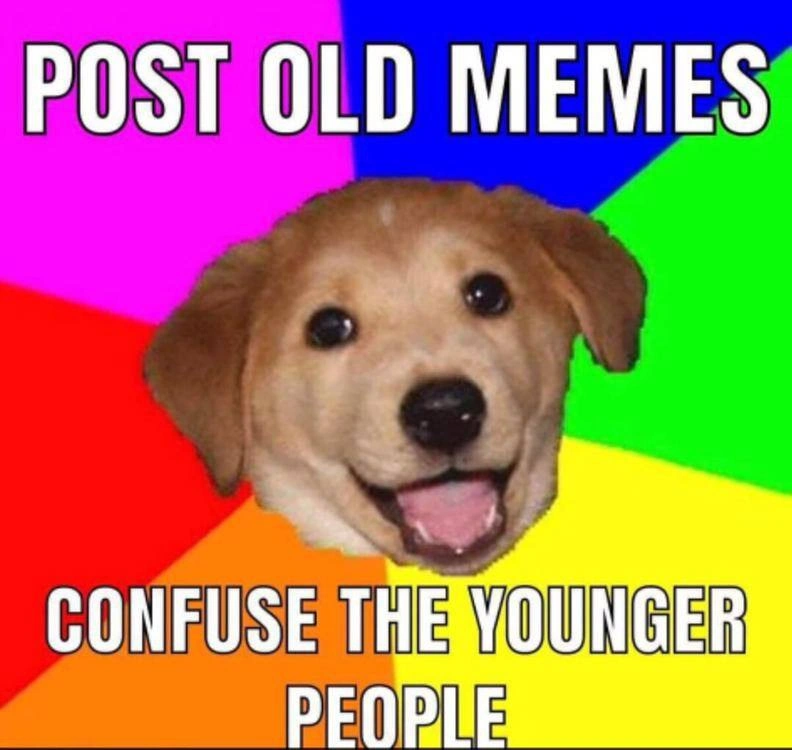
Imagine a grandpa telling a joke from the 1980s to a bunch of kids who only know today’s cartoons – the kids just blink in confusion while grandpa chuckles. This meme is doing the same thing, but in a programmer way. The picture shows an old-style silly dog meme (the kind older internet folks used to love). The text basically says: “Use the old jokes to confuse the young people.” It’s funny because it’s like a dad joke in the programming world – the older developers find it hilarious and nostalgic, and the younger ones don’t get it at first. It’s poking fun at the generation gap: just like slang or music can divide young and old, here the humor divides them. The older dev shares a goofy picture that was super popular long ago, and when the young devs go “Wait, why is that funny?”, the older dev just grins. We laugh because we recognize this everyday scenario: the playful teasing between someone who’s been around longer and someone who’s new, using an inside joke from “back in my day” just to see the perplexed looks. In simple terms, it’s saying: sometimes, the old-timers like to have a little fun by pulling out old memes – it confuses the newbies and gives everyone a lighthearted laugh about how quickly times change.
Level 2: Legacy Meme Lore
So, what exactly are we looking at? This image uses a classic meme format known as an “advice animal.” Back in the early 2010s (and late 2000s), meme images often looked like this: a colorful, pie-slice background with a goofy or symbolic character in the center, plus big white Impact-font text at the top and bottom. In this case, the cute puppy with the rainbow background is Advice Dog, one of the original advice animals. The general idea of an advice animal meme is that the character delivers a certain type of “advice” or humorous commentary associated with its persona. Advice Dog, for instance, would usually say something and then follow with a surprising or absurd twist – often bad or silly advice delivered with that happy dog grin. It’s a piece of InternetCulture history; think of it as the “Hello World” of meme formats for an older generation of netizens.
Now, fast-forward to today: the meme’s text says “POST OLD MEMES / CONFUSE THE YOUNGER PEOPLE.” This is the “advice” Advice Dog is giving, and it’s a tongue-in-cheek instruction to senior devs: go ahead and share outdated memes just to bamboozle the newbies. Why is this funny? Because it’s exactly what sometimes happens in real developer communities. There’s a generation_gap in our tech world: folks who started coding or hanging out online 10-15 years ago carry with them a backpack of jokes, references, and memes from “back in the day.” Newer developers (maybe those who learned to code more recently or grew up with different social platforms) might not recognize those old memes at all. So when a veteran posts something like a “Hitler Reacts” video or a joke about Angry Allen the Annihilating Apache (totally making that up, but you get the idea), the younger devs are left scratching their heads. It’s like someone suddenly started speaking a dialect you haven’t heard before.
The meme is highlighting this dynamic in a playful way. Posting legacy memes is analogous to dropping an inside joke from years ago. It would be instantly recognizable to anyone who was there at the time – for example, many experienced devs have at least heard of “All your base are belong to us” or the dramatic “double rainbow” video, or they remember trollish commands on IRC (Internet Relay Chat) like !partyparrot. But a junior who just joined the industry might not have a clue about those. They might be more familiar with newer meme formats like reaction GIFs, TikTok references, or the latest Twitter programmer jokes. So when an older colleague shares a decade-old meme image, the junior devs often have this moment of “Uh… I don’t get it?”
Let’s break down some terms and context:
- Legacy memes: Legacy in tech usually means old or outdated but still around (like legacy code running on an old system). So a legacy meme is an old meme format or joke that isn’t widely used anymore. Advice Dog is a perfect example – it was viral ages ago but you won’t see it popping up in 2023’s front-page memes very often.
- DevCommunities and inside jokes: Developers as a community share lots of humor about coding and tech life. Over time, certain jokes become classics. For instance, the phrase “It works on my machine!” is a well-known satirical excuse in programming culture. A newbie might not have heard it on day one, but eventually they learn it’s a joke about blaming environment differences for bugs. Similarly, seniors might reference “Y2K” (the year 2000 bug panic) or say something like “beware of the dragons in that legacy code” – these are flavorful phrases and references that come from past experiences. New devs might initially miss the meaning.
- Generation gap in meme knowledge: Think of it this way – if you joined the developer world recently, your first experiences of DeveloperHumor might involve jokes about Kubernetes or Stack Overflow reputation points. But an older dev might joke about things like a 56k dial-up modem screech (which is the sound of ancient internet connectivity) or make a gag about Space Jam’s 1996 website still being live. These references can fly over a newcomer’s head because they weren’t exposed to them. It’s not about intelligence or anything – it’s purely about exposure and context. In a fast-evolving industry, even humor has versions. It’s a bit like software version-skew: your “cultural library” might be on version 3.0 while someone else’s is on 1.0, and not all functions are compatible.
- IRC lore and Stack Overflow jokes:
IRCstands for Internet Relay Chat, an old-school text chat system that a lot of developers frequented especially before Slack, Discord, etc. It had its own memes and traditions. For example, on IRC and early forums, you’d see jokes like “+1 for this” or “Alice++” to upvote something (mimicking a C-style increment to say “I agree/like this”). A junior dev used to modern chat might not know what “Bob--” means when an older colleague uses it to jokingly downvote a bad pun in chat. And Stack Overflow – well, it’s a huge Q&A site for programmers. Over time, famous Q&As turned into running gags. One legendary example: new programmers often ask “How do I exit vim?” because Vim (a command-line text editor) is notoriously hard to quit for beginners. It became such a common pain point that it’s an ongoing joke. A senior dev might quip “Haha, looks like you found the exit vim problem” and a newbie could be mystified until someone explains, “Oh, it’s just a joke about how Vim confuses newcomers.” Similarly, there used to be a joke that the answer to every web-dev question was “Just use jQuery.” This was semi-serious advice around 2010 when jQuery was the hot new library for everything. If a veteran deadpans “I think you should just sprinkle in some jQuery” in a modern React or Vue discussion, the newcomers might tilt their heads – because today jQuery is considered dated, and they might have never used it.
All of this is to say: tech and InternetCulture move fast. Jokes and memes have trend cycles. What this meme does is make that phenomenon itself into the joke. The older generation deliberately uses an outdated classic meme format (Advice Dog with Impact font text) and the “advice” in the meme explicitly spells out the prank: confuse the young folks for giggles. In a way, it’s also a bit of affectionate ribbing in developer teams. Senior engineers often mentor juniors – and along with serious knowledge, they pass down goofy “lore” of the field. Sometimes that lore is technical (like how Git got its name, or tales of the Dot-com bubble), and sometimes it’s memetic (like sharing an old funny Stack Overflow thread). This meme encapsulates that passing of the torch, except the torch is a bit of a flickering Halloween trick candle. 🎃 The juniors get a taste of the old times and likely go, “Huh, you guys laughed at this back then?” – which, to be fair, is the same reaction every generation has about the last generation’s jokes. And that, right there, is RelatableHumor across the ages.
Level 3: Generational Meme Gap
At the highest level, this meme riffs on a cultural version-skew within developer communities – a phenomenon where the “API” for humor and references isn’t backward-compatible between generations. The image itself is a throwback to a classic meme format: the rainbow pinwheel background with Impact font text and an adorable puppy is unmistakably the old-school Advice Dog template. This format was a staple of early internet MemeCulture, especially in tech circles of the late 2000s. By 2023, it’s essentially legacy – akin to an outdated framework that only veteran coders remember how to use.
Here we see an older developer (implied by the meme’s voice) deliberately deploying this archaic meme format like it’s some dusty piece of legacy code, purely to watch the “program” break in a newer runtime – i.e., to amuse themselves as younger devs look baffled. It satirizes how DevCommunities evolve so fast that jokes, slang, and references can “bit-rot” just as quickly as software does. What was once universal internet humor now requires context tags or footnotes for anyone who didn’t “live through it.” This is deeply relatable TechHumor for senior engineers: they’ve experienced firsthand how a once-ubiquitous reference (like a “Best Practices” meme from 2010) will get blank stares from the fresh hires of 2023. The humor has a whiff of “kids these days” cynicism — a senior dev posting an ancient meme in Slack is basically executing a little insider trolling, a way to poke fun at the generational gap.
On a technical meta-level, you could say the junior devs’ humor parser is missing a dependency. The old meme triggers a kind of compatibility error in their mind: they haven’t imported the IRC lore or “deprecated” in-jokes that older devs take for granted. In code terms, it’s something like:
try:
import advice_dog_references # try loading the old meme library
except ModuleNotFoundError:
# New dev doesn't have the "old memes" module installed
raise ConfusionError("What is this rainbow puppy from 2006?")
For a senior engineer, the shared experience behind these legacy memes is so ingrained that they forget it’s essentially tribal knowledge. When they drop an old reference – say, joking about “Geocities-quality design” or throwing out a classic punchline like “~/.bashrc or GTFO” – it’s funny to them on its own, but it’s doubly funny to watch juniors scratch their heads. Why? Because the bewilderment confirms just how fast-moving tech communities are; it’s a reminder that even our jokes have a short shelf life. This meme self-referentially highlights that absurd speed: the Advisor Doge (as a stand-in for an old-timer) literally advises, “POST OLD MEMES, CONFUSE THE YOUNGER PEOPLE.” It’s humor with a hint of hazing – a gentle, tongue-in-cheek hazing where nobody is really harmed, except maybe the pride of a junior who has to Google that weird dog meme.
There’s also a bit of smug catharsis here for the veterans. They’ve spent years catching up with new frameworks and bleeding-edge trends (feeling old every time a new JavaScript library drops), so flipping the script is therapeutic: for once they hold the obscure knowledge. It’s the ROFLcopter revenge of the seniors. In a world where code and culture are constantly being obsoleted, being the one “in the know” (even if it’s knowledge about something obsolete) feels good. Essentially, the meme is a nod to InternetCulture history and how developer humor has its own inside jokes that can become unintelligible over time – much like trying to run an old piece of code on a modern system and watching it throw errors. Only here, the “error” is a bunch of bewildered younger devs asking, “Wait, what’s this dog about?”
Description
This image features a classic 'Advice Animal' style meme from the early 2010s. The background is a brightly colored wheel with distinct sections of magenta, blue, green, yellow, orange, and red. In the center is a cutout photograph of a happy, smiling puppy. The top text, in a bold, white, sans-serif font with a black outline (Impact font), reads 'POST OLD MEMES'. The bottom text, in the same style, reads 'CONFUSE THE YOUNGER PEOPLE'. This meme is self-referential, using its own outdated format to joke about the generational gap in internet culture. It appeals to veteran internet users who remember the era when this format was dominant, creating a sense of shared nostalgia and playfully gatekeeping meme history from newer generations who may not recognize the template
Comments
11Comment deleted
Posting an advice animal meme in a Gen Z developer Slack channel is the modern equivalent of asking them to debug a COBOL memory leak. The reaction is the same: confused silence, followed by a frantic Google search
Dropping an Advice Dog in Slack is the emoji-era version of checking a /CVS folder into Git - old hands smirk, juniors open a Jira to ask which microservice owns it
This meme is older than most JavaScript frameworks in production today - it's from an era when 'responsive design' meant your site worked in both IE6 AND Firefox, and the biggest deployment concern was whether your FTP credentials were saved in FileZilla
Ah yes, Advice Dog - the original microservice architecture of meme formats. While junior devs are busy with their TypeScript and React hooks, we're over here running legacy meme infrastructure that's been in production since 2006. No dependency updates, no security patches, just pure, unrefactored nostalgia. It's like maintaining a COBOL system, except the business logic is 'be a dog, give advice.' The younger engineers look at this rainbow-segmented layout and think it's a poorly designed pie chart, not realizing it's a battle-tested template that scaled to millions of instances before Docker was even a thing. Sometimes the best way to assert technical seniority isn't through system design discussions - it's through weaponized meme archaeology
Like dropping a 'vi editor' hotkey in a VS Code onboarding session - veterans nod, juniors frantically Google
Old memes are our org’s 2FA: recognize Advice Dog in #deploys and you’re now on call for the server that can’t be rebooted
Posting an Advice Dog in Slack is cultural backward compatibility - seniors smile, juniors throw ContextNotFoundException, and the org just failed the canary for institutional memory
finally Comment deleted
Oh my God. How many years passed since I last time saw an advice dog😁 Comment deleted
Let’s have an ayb rave Soon Comment deleted
I for one welcome our new boomer overlords Comment deleted