Skip to content
DevMeme
5888 of 7435
The Lost Art of Ugly, Wisdom-Filled University Websites
TechHistory Post #6446, on Dec 8, 2024 in TG

The Lost Art of Ugly, Wisdom-Filled University Websites

Why is this TechHistory meme funny?

Level 1: Treasure in the Attic

Imagine you’re looking for a really special secret, like a treasure map to something amazing. You find two places where it might be. One is a dusty old box in your grandparents’ attic – it’s plain, a bit cobwebby, and doesn’t look fancy at all. The other is a shiny new box in a store window – bright, colorful, and super attractive on the outside. Now, funny enough, when you open them up, the dusty old box has an actual treasure map inside (real secrets and wisdom!), while the shiny new box is mostly empty or filled with packing peanuts. This meme is joking that the old, plain-looking websites (like those with long university addresses and a little ~ in them) are like that dusty box holding real treasure. They might not look pretty, but inside they have the best information. On the other hand, many modern flashy websites are like the shiny box – they look cool but don’t always have a lot of substance. It’s a funny way to say “don’t judge a book by its cover”: the simple, old websites can be the ones that secretly contain all the great knowledge, and that’s why experienced developers love them.

Level 2: Tilde Homepages 101

Let’s break down what this meme is praising and why it’s funny to folks in web development and tech history circles. First, what’s with that weird URL format? ~<initials-of-guy> in a web address is called a tilde homepage. The tilde ~ is a symbol that, on Unix-based servers, traditionally denotes a user’s home directory. In the early web (think 1990s and early 2000s), if you were a student or professor with an account on a university’s server, you could have your own little web space. Your pages would live in a folder (often named public_html) inside your account, and people could access it by typing the main site, a slash, then ~yourusername. For example, if Alice had username alice on the CS department server at Example University, her personal site might be cs.example.edu/~alice. It was a simple, almost DIY way to publish content before personal domains and blogs were widespread. So when you see a URL with a tilde and a name, it usually means “this is a personal page of some user on that system.” Real devs get a bit excited seeing that, because it hints the content might be one person’s raw, original material rather than a polished corporate page.

Now, university department subdomains: the meme has <name-of-specific-computer>.{physics|math|e|cs}.<some-university>.edu. That looks intimidating, but it’s basically specifying a computer or server in a particular department at a university. For instance, physics.myuniversity.edu or cs.somecollege.edu are servers run by the Physics or Computer Science department of a school. Sometimes departments name their servers in geeky ways (like after famous scientists or random nouns), so you might get URLs like maxwell.physics.mit.edu or turing.cs.stanford.edu. The {physics|math|cs} part in the meme is showing that it could be any department – in other words, a lot of these gems are hidden in physics, math, or CS department sites (all fields where people might post interesting computing ideas or hacker culture tidbits). And .edu is the domain reserved (mostly) for educational institutions (in the US). So .edu instantly tells you this site is part of a university, which often implies researchy or educational content, not commercial.

The next part: stuff/bithacks.htm. This is the path and file name. “stuff” is likely just a directory name – maybe the user tossed this page into a folder literally called “stuff” (which shows how informal and personal these sites can be!). And bithacks.htm is a file, presumably an HTML page about “bit hacks” (bit-level programming tricks). The .htm extension is an old-school way of naming HTML files (back when file names were kept short, .htm and .html mean the same thing – .htm often appeared on Windows or DOS-based servers since they liked three-letter extensions). The meme’s author chose that to really emphasize the 90s vibe. Static HTML files like this are just written by hand and stored on the server. There’s no database or fancy scripting behind them – what you see is what the author wrote in a text editor. When you load bithacks.htm, the server just sends you that exact file. This is in contrast to modern dynamic sites (like a WordPress blog or a web app) which generate pages on the fly.

Importantly, the meme highlights that these pages often have no CSS. CSS stands for Cascading Style Sheets, which is what modern websites use to make things look nice (styles for colors, layouts, fonts, etc.). Saying a page has no CSS means it probably looks very plain – like black or blue hyperlinked text on a white background, maybe with a few <h1> headers or horizontal rules. Essentially, it likely looks like something out of the late 90s web, because it is. Here’s an idea of how such an old page might specify its look in the HTML itself, without separate CSS:

<body bgcolor="#FFFFFF" text="#000000">
  <h1>Bit Twiddling Hacks</h1>
  <p>By an old hacker (1998)</p>
  <hr>
  <p>This page shows bit-level programming techniques explained plainly.</p>
</body>

In the snippet above, you can see the bgcolor and text attributes being used right in the <body> tag to set background and text colors – a very retro way to style a page (today we’d use CSS for this, but back then this was common). A page like this would have no modern design elements: no fancy menus, no interactive JavaScript, no responsive mobile layout. It’s basically just content, maybe some images or ASCII art diagrams, and hyperlinks. This legacy web aesthetic – default fonts, simple layout – might look boring or “broken” to someone used to slick designs, but it has a charm and focus: it’s all about the information.

So why do developers joke that these ugly old pages contain “great wisdom”? It comes down to content vs. appearance. These pages were often written by experts – think professors, researchers, or early hackers – who wanted to share knowledge: algorithms, programming tricks, math concepts, you name it. They weren’t trying to sell anything or get clicks (no one was monetizing personal pages hosted on a university server!). Often, they wrote these pages for their students or peers, or just to document something cool they figured out. Over the years, some of these pages became famous in programming circles because they explain things really well or collect invaluable tricks. For example, a random-looking page from a university might hold the best explanation of pointer arithmetic, or a compendium of bit manipulation hacks that you can’t easily find elsewhere. They might show up in the top Google results for niche queries, or get shared on forums with comments like “This old gem is all you need to understand topic X”.

Meanwhile, modern websites that cover similar topics might be watered-down or padded with a lot of fluff. It’s a common gripe that many tutorial sites today spend more time on SEO (so they appear high in search results) and eye-catching design than on depth of content. That’s why the meme exaggerates that “everything else is slop for idiots” – it’s a tongue-in-cheek way to say “most fancy-looking sites are junk, and only the serious academic ones have the good stuff.” The word “grifter” in the quote implies someone who’s just out to trick people for profit. Calling non-.edu website makers grifters is an obvious exaggeration used for comedic effect, but it hints at a feeling that a lot of commercially-oriented websites might prioritize drawing you in over genuinely teaching you. By contrast, an old .edu page with a tilde is assumed to be written by someone who truly knows their stuff and just genuinely wants to share knowledge or cool hacks – no marketing agenda.

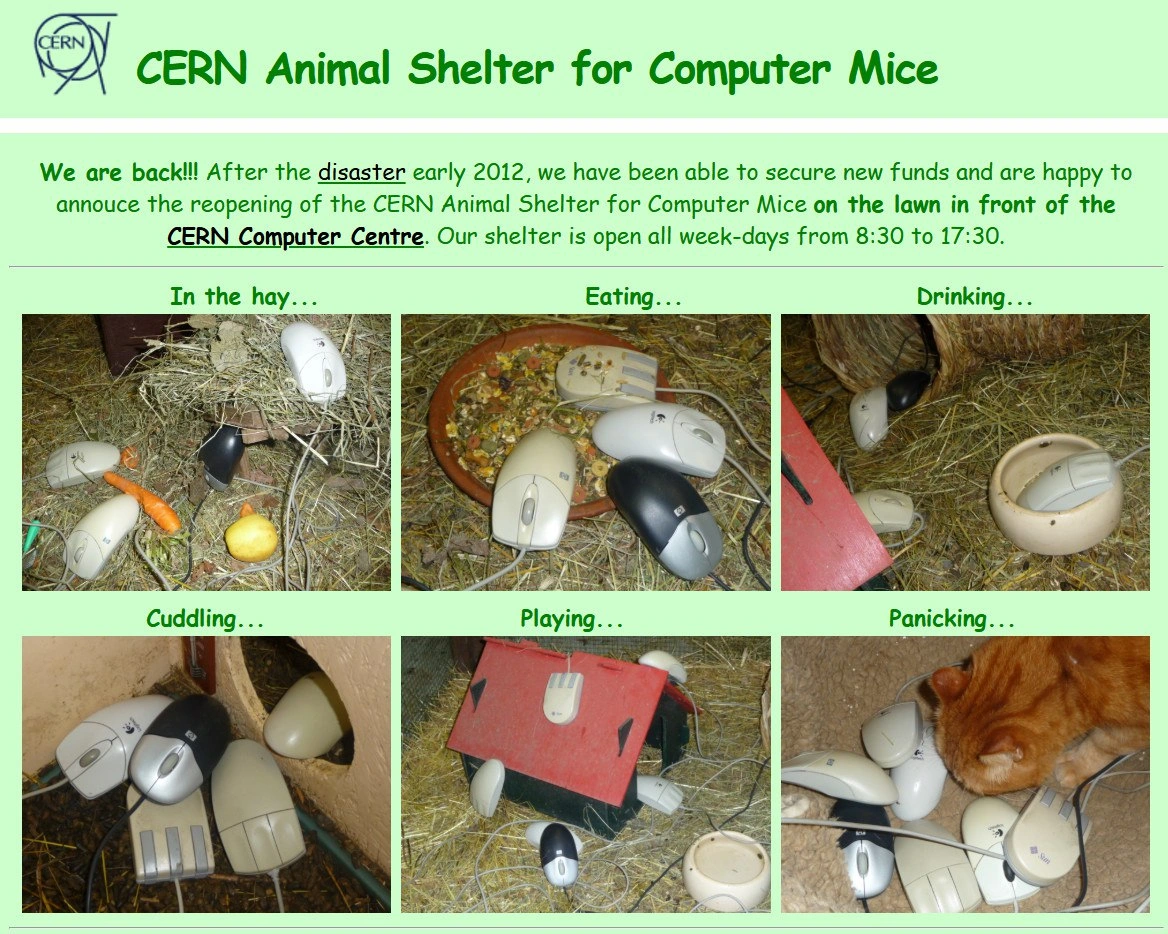
The meme even gives a super-specific example in the reply: a URL like /~sholmes/not-teaching-related/html-page-with-no-css.htm. Let’s decode that: ~sholmes suggests the username might be “sholmes” (possibly a playful reference to Sherlock Holmes, or it could be a real person’s initials – hard to know, but likely meant as a joke). The path “not-teaching-related” implies this is content that isn’t part of official coursework or research – maybe a personal side-project or musings. And again it highlights “html-page-with-no-css.htm” – making it blatantly clear that this page doesn’t even bother with modern styling. The author of the meme is basically saying: any website with a URL structure like this is probably a hidden gold mine of information. It’s a cheeky generalization, of course. Not every professor’s personal page is valuable (some might have their cat’s photos or a boring bio), but the stereotype in developer culture is that a surprising amount of deep technical knowledge lives on these humble pages.

For a junior developer or someone new: imagine you’re Googling how to optimize some C code or the math behind an algorithm, and one of the top results is a sketchy-looking page on, say, computing.uni.edu/~smithj/notes/fastinverse.html. At first glance, you might wonder if this is trustworthy because it looks outdated. But if you know this meme (and the culture behind it), you’d actually be excited – chances are high that Dr. Smith really knew what he was doing, and his write-up might be the canonical explanation that people have been quietly relying on for years. Indeed, dev communities (like those on Reddit, Hacker News, Stack Overflow, etc.) often share and upvote these kinds of pages with comments like “Classic resource!” or “I learned from this back in the day.” That’s the DevCommunities angle: there’s a shared understanding and almost a little club of those who appreciate these old resources.

In summary, the meme is making an inside joke for developers: the real MVPs of web content are those old tilde-directory pages on university sites. It’s funny because it’s a bit contrarian – it praises what looks outdated and mocks what’s modern and slick. It taps into tech nostalgia (making older devs smile remembering how they surfed university sites for knowledge) and it also educates newer folks that, hey, don’t judge a site by its UI – some of the best technical tutorials or explanations you’ll ever find might look like they were made in 1997, because they actually were. So next time you encounter a plain looking .edu web page with a tilde in the URL, you might recall this meme and think, “Ah, this could be one of those hidden gems of hacker lore.”

Level 3: Arcane Academic Artifacts

In this meme, experienced developers are nostalgically celebrating the old-school web, specifically those cryptic university URLs with a ~ (tilde) in them. The tweet humorously suggests that the more archaic and specific the URL – something like somehost.physics.university.edu/~abc123/stuff/bithacks.htm – the more likely it contains “the deepest lore” of computing. This oddly specific format isn’t random; it’s a throwback to the 1990s internet. Back then, universities were the original web hosts for much of the tech world’s knowledge. Each department (physics, math, CS, etc.) often ran its own server (sometimes whimsically named after scientists or Greek letters), and every user (professors, grad students, the “guy” in the meme) got a personal home directory on the web server. The ~<initials> part in the URL literally points to a user’s space – an Unix home directory exposed to the web via something like Apache’s userdir module. It tells seasoned devs, “this page was put up by an individual hacker/academic, not a trendy startup or a SEO team.” And that individual vibe usually means one thing: pure, unfiltered technical wisdom.

Notice the path in the example: /stuff/bithacks.htm. This screams classic hacker content. In fact, it likely alludes to real pages like Sean Anderson’s “Bit Twiddling Hacks” (famously found at graphics.stanford.edu/~seander/bithacks.html) – a treasure trove of low-level programming tricks. Such pages are the digital equivalent of a grimoire: written by wizards of code and largely untouched by modern web design. If you’ve ever stumbled across a plain HTML page that teaches you how to count bits in parallel or explains a mind-bending algorithm with no frills, you know the thrill. There’s a running joke in developer culture that the uglier and more old-fashioned a website looks, the more brilliant its content will be. So when the meme says “Real devs know” these tilde-homepages hold deep lore, it’s playfully poking at that shared experience. Seasoned programmers smirk in agreement because they’ve learned esoteric tricks from pages exactly like this – pages that look like they haven’t been updated since Netscape Navigator was king.

The quoted tweet doubling down (“every good website is like domain.university.edu everything else is slop for idiots”) is obviously hyperbole – it’s an exaggerated, comedically blunt way of saying “the truly good stuff is on those old academic sites, and everything else is junk.” While overstated (plenty of great tech content exists outside .edu domains), it captures a real frustration with today’s web. Modern tech articles and tutorials can be overly polished, SEO-optimized, ad-ridden, or written by “growth hackers” chasing clicks. In contrast, the tilde pages were usually written by experts who just wanted to share knowledge, not monetize it. They often contain dense technical insights, quirky humor, and hard-won lessons from early computing – stuff that hasn’t been dumbed down for mass appeal. That’s why veteran devs find them more authentic. Even the meme’s mention that these pages have “no CSS” and odd filenames like html-page-with-no-css.htm is part of the joke: they look utterly unimpressive by today’s standards (plain backgrounds, default fonts, maybe a few <hr> tags and list bullet points), yet they might hold the solution to a bug that’s been haunting you or a brilliantly elegant algorithm.

From a tech history standpoint, this meme is tugging at the heartstrings of those who remember the pre-GitHub, pre-StackOverflow era, when if you wanted to learn, say, bit-fiddling or how TCP really works, you often ended up on some professor’s personal web page or a college FTP server. It’s tech nostalgia at its finest. The very structure of the URL evokes an entire culture of knowledge sharing: departmental subdomains (physics|math|cs), tilde home directories, .edu domains indicating educational institutions, and .htm extensions from an era when some servers only recognized 8.3 file names. These are the artifacts of the early Web. Developers who grew up in that time (or learned from its content) collectively chuckle because they know exactly the kind of “great wisdom” such URLs contain. It’s almost an inside joke among the programming community: if someone shares a link and it’s a clunky old .edu/~user page with a title like “random hacks” or “notes,” you instinctively trust that link to be high-value. It’s likely been passed around on forums, bookmarked by the gurus, maybe even cited in modern answers.

The humor here also comes from contrast. Today’s “best practices” web would use a slick domain name, a responsive design, and polished CSS – but ironically, many of the best ideas in computing aren’t on fancy sites at all. They’re on minimalistic pages that look like time capsules. The tweet’s author calls out URLs like /~sholmes/not-teaching-related/html-page-with-no-css.htm as examples. This conjures an image of perhaps Prof. Sherlock Holmes (a tongue-in-cheek name) putting some non-curriculum wisdom online – maybe a page of programming tricks or a rant about CPU caches – without any regard for design or university templates. It’s “not teaching related,” meaning it’s probably a personal passion or deep dive topic. That’s precisely the sort of page that becomes legendary among hardcore devs. It’s raw and might even violate every rule of modern web UX, but you’ll bookmark it forever.

In essence, this meme is an industry in-joke about where the real knowledge often hides. It resonates with HackerCulture ideals: information wants to be free, substance over style, and a bit of counter-culture vibe (dismissing the slick corporate docs as “slop”). It’s funny because it’s true enough – a huge amount of the collective programming wisdom, from niche algorithms to best practices, genuinely lives on these unassuming old websites. Real devs (with a hint of prideful irony) consider themselves the kind of explorers who can sift through the gaudy modern web and find these arcane academic artifacts. The meme’s exaggeration and reverence for tilde URLs highlight a shared sentiment: sometimes the real gold in WebDev and CS lore is hidden in plain sight on a dusty university server, in an HTML file last edited in 1998, still quietly answering questions that the latest StackOverflow thread can’t.

Description

A screenshot of a Twitter thread discussing the aesthetic and value of old university websites. The first tweet, by user @mycoliza, praises websites with complex, user-specific URLs like `<computer>.<department>.<university>.edu/~<user>/stuff/bithacks.htm`. A reply from @endles... dismisses this, stating that any good website is a simple `domain.university.edu` and the rest is "slop for idiots." @mycoliza replies again, reaffirming that simple, unstyled HTML pages from personal university directories contain "great wisdom." The technical context is a nostalgic reference to the early days of the web, particularly the culture of academic and personal homepages hosted on university servers. This resonates with experienced developers who recall a time when the internet was less commercialized and information was often found on simple, content-rich pages without modern design sensibilities. The humor comes from the clash between this old-school appreciation and the modern expectation of polished, professional domains
Comments

7
Anonymous ★ Top Pick The modern web is a beautifully designed, SEO-optimized, JavaScript-heavy library where all the books are marketing brochures. The old web was a messy, disorganized archive, but you could stumble upon the Dead Sea Scrolls in some professor's `~/public_html/random_thoughts.htm`
  1. Anonymous ★ Top Pick

    The modern web is a beautifully designed, SEO-optimized, JavaScript-heavy library where all the books are marketing brochures. The old web was a messy, disorganized archive, but you could stumble upon the Dead Sea Scrolls in some professor's `~/public_html/random_thoughts.htm`

  2. Anonymous

    SEO tip: if the URL contains a tilde and was last touched with vi in ’97, the content-to-HTML ratio is basically 1:1

  3. Anonymous

    The best documentation is written by someone who solved the problem in 1997, hasn't touched the site since, and somehow anticipated every edge case you'd hit in your Kubernetes cluster

  4. Anonymous

    The real treasure isn't the polished corporate site - it's the professor's ~/public_html/random_thoughts/proof_i_wrote_in_1987.txt that somehow contains the exact solution to your production bug, hosted on a server that's been running unpatched since the Clinton administration

  5. Anonymous

    If the architecture advice lives at graphics.cs.some-uni.edu/~abc/bithacks.htm in Times New Roman, ship it; if it needs a build step and 30 dependencies to render a paragraph, schedule a postmortem

  6. Anonymous

    Incident heuristic: when prod is on fire, search site:.edu/~ for “bithacks.htm”; mod_userdir pages have a better SLA than most vendor docs

  7. Anonymous

    ~professor/subdir/1999/lecture.pdf: the monolith that outlives your Kubernetes cluster and holds the actual answers

Use J and K for navigation