A Train Full Of Tabs
Why is this CodeQuality meme funny?
Level 1: Button Mashing
It is like asking someone to finish your sentence, but they just stare at you, so you keep asking louder and louder. The train full of TAB means the person has pressed the autocomplete button so many times that it feels like they ordered a whole delivery of them.
Level 2: Press Tab Again
Autocomplete is a feature that tries to finish what you started typing. If you type the beginning of a file name and press Tab, the terminal may complete the rest. If more than one match exists, it may show choices or wait for you to type more.
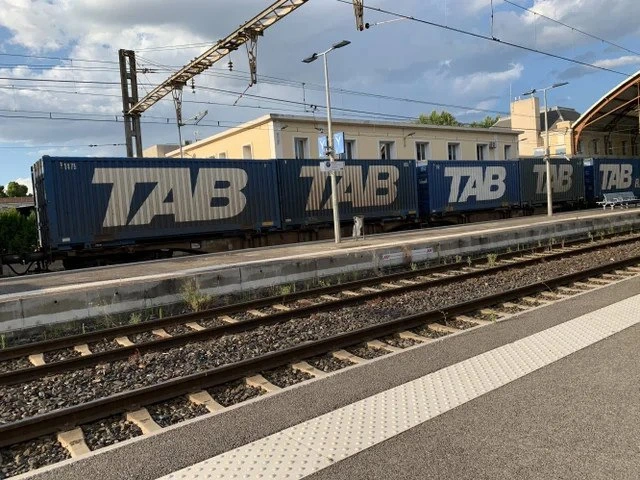
The meme turns that keypress into physical cargo. Instead of one Tab, there is a whole train full of TAB labels. That visual exaggeration matches the feeling of pressing the key again and again when the terminal refuses to guess what you mean.
This connects to everyday developer work because command lines are full of exact names: directories, scripts, branches, containers, services, and flags. Autocomplete saves time, but when it fails, you suddenly realize how many names you rely on the machine to remember for you.
Level 3: Completion Cargo
The image shows a train platform with freight containers labeled:
TAB
Repeatedly. A whole line of them. Paired with the post text, When you are desperately trying to autocomplete the command on a terminal, the joke is not subtle: the developer is not pressing Tab once; they are unloading an industrial shipment of Tab keypresses onto the shell.
In a terminal, tab completion asks the shell to fill in the rest of a command, file name, branch name, package name, host name, or other token based on what has been typed so far. In shells such as Bash or Zsh, completion can be extremely powerful, especially when tools install custom completion scripts. It can also become a tiny ritual of denial: type three letters, hit Tab, get nothing useful, hit Tab again harder, as if the shell was withholding the answer out of spite.
The senior-developer pain is that completion is only as good as the context it can infer. If there are multiple matches, stale completion caches, missing plugins, slow network-backed directories, ambiguous subcommands, or a CLI with weak completion support, the terminal may respond with a giant list, a beep, or nothing at all. That is when the user starts mashing Tab like repetition is a debugging strategy. Naturally, this always happens during a live demo or while trying to remember the exact Kubernetes incantation that worked yesterday.
The classification's TabsVsSpacesDebate angle is still present as ambient developer culture: TAB is a loaded word in coding standards, editors, and formatting arguments. But the image's trainload of TAB containers plus the metadata caption specifically points to autocomplete desperation. The freight train makes the quantity visible. One keypress is a hint. A rail shipment is a cry for help.
The best part is how ordinary the photo is. No elaborate caption is needed because developers already understand the muscle memory. git che<Tab>, kubectl get po<Tab>, ssh prod-<Tab>, wait, why are there 147 matches, who named these hosts, and why is the one you need called something nobody remembers? Somewhere in the distance, another container marked TAB rolls into view.
Description
The image is a photo of freight containers on a train stopped by a railway platform under overhead power lines. Several blue containers display large white text reading "TAB," repeated across the train cars. There is no other meme caption or visible developer text. The joke relies on recognizing "TAB" as the indentation character and turning an ordinary train into ammunition for the long-running tabs-versus-spaces formatting debate.
Comments
1Comment deleted
Some teams ship by rail because the indentation policy already derailed the sprint.