
Y Combinator Podcast Lobsters Meme Explained
The meme frames four Y Combinator podcast hosts in escalating lobster costumes around a pro studio table. The deep dive unpacks YC, VC content marketing as deal-flow top-of-funnel, and how institutional seriousness plus absurdist founder culture makes the bit land.
Level 1: The Principal in the Chicken Suit
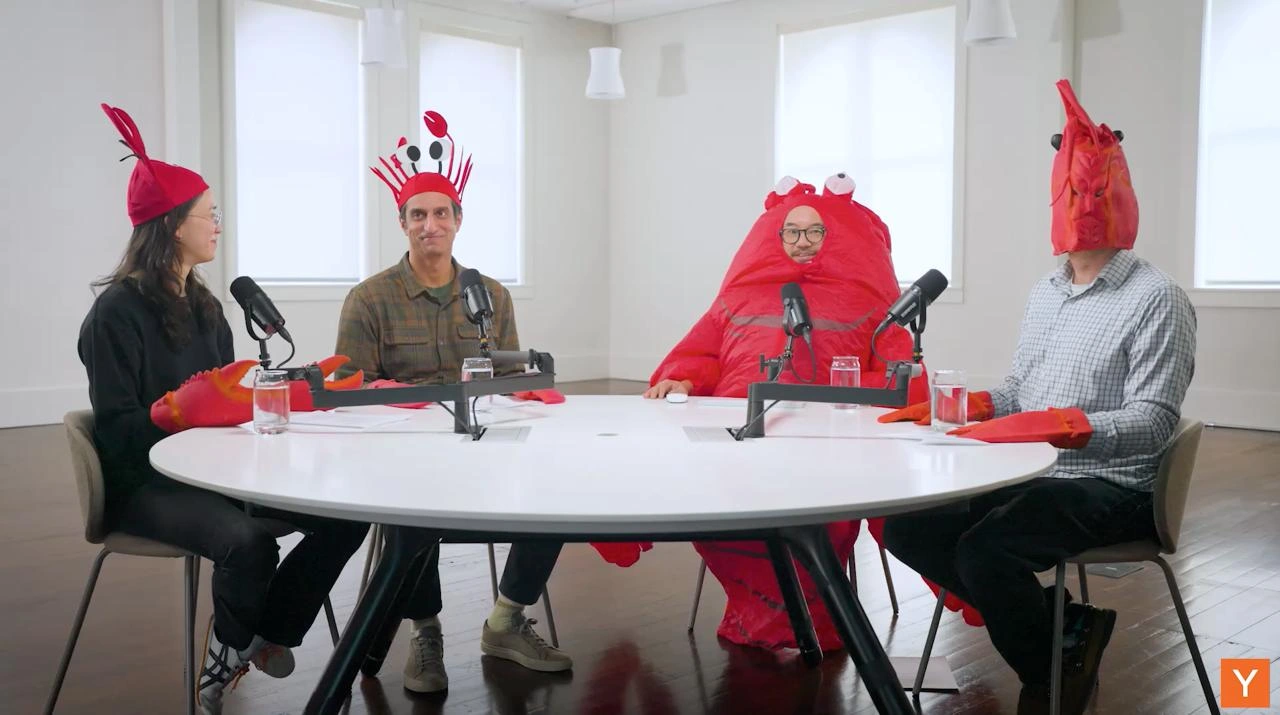
You know how it's funny when your school principal shows up to the Halloween assembly in a full chicken costume but still reads the morning announcements in their normal serious voice? That's this picture. These four people are famous, important advisors who help build big companies, sitting in their fancy studio with expensive microphones — and they're all dressed as lobsters, each one committed to the costume a little more than the last. Nobody is laughing or winking at the camera. They're just... being lobsters, professionally. The funny part is the total seriousness: the more normal everyone acts, the harder the lobster suits hit.
Level 2: Why Investors Run Podcasts At All
Some context for the parts of this image that aren't shellfish:
- Y Combinator (YC) is the most famous startup accelerator: it gives early companies a small investment and three months of intensive mentorship, in exchange for equity. Airbnb, Stripe, Dropbox, and Reddit all went through it. That orange
Ybadge is one of the most recognized logos in tech. - The podcast format you're seeing — round table, boom-arm microphones, multiple cameras — is how venture firms now do marketing. Instead of buying ads, they publish startup advice, AI commentary, and founder interviews. The audience is future applicants; the content is the pitch.
- The costumes are almost certainly a Halloween-episode tradition. Tech companies love the "we're serious but not too serious" register: it humanizes people whose day job is rejecting 99% of the founders who apply to them.
If you're early in your career, the useful takeaway is that personal and corporate branding in tech runs on this exact contrast trick — competence delivered casually. The same hosts in suits saying the same sentences would get a fraction of the clicks. Four lobsters discussing seed rounds? That gets screenshotted into meme channels, which is precisely how this image reached you.
Level 3: Commitment Gradient as Org Chart
The richest detail in this frame isn't that four Y Combinator podcast hosts are dressed as lobsters — it's that they're dressed as lobsters to four wildly different degrees. Left to right around the pristine white table: a small lobster beanie with claw gloves (minimum viable costume), a spiky lobster-crown hat over a perfectly normal flannel (business on the bottom, crustacean on top), a full inflatable lobster suit with googly eyes (all-in, Series B of costume commitment), and a man whose entire head is sealed inside a fabric lobster mask while wearing an otherwise standard checked shirt — which is somehow the most unsettling option. Anyone who has ever attended a "costumes encouraged" team event will recognize this exact distribution. It's a live demo of the adoption curve YC partners normally draw on whiteboards: skeptic, pragmatist, early adopter, and the one person who read "encouraged" as "mandatory."
The deeper layer is what this says about VC content marketing. Y Combinator's podcast output is, functionally, top-of-funnel deal flow: be the firm founders parasocially trust, and the best teams apply to you first. The deadpan staging — professional Shure broadcast microphones on boom arms, water glasses, soft-lit white loft, the orange Y logo in the corner — signals that nothing about the production was compromised for the bit. That's the joke's engine: institutional seriousness running at full spec while every participant is a lobster. It's the same comedic mechanism as a postmortem written in perfect corporate prose about an outage caused by someone microwaving fish near the server closet.
And the channel caption — "average startup office workspace in 2026" — lands its own punch: after a decade of nap pods, kombucha taps, and "bring your whole self to work," full crustacean cosplay during a serious AI-trends discussion reads less like satire and more like a plausible roadmap item. Founder culture has been absurdist for years; the lobsters just made it legible.
Four VCs in lobster suits discussing your seed round: proof that pattern-matching founders by appearance was never part of the algorithm
The agent got shell access, so naturally the founders did too.
they're a bit rusty
Claw in 1997: ☝️ Claw in 2026: this.