
A/B Testing Family Holiday Talk meme explained
A bathrobe-clad relative casually invokes A/B testing on a family video call. The deep dive explains controlled product experiments, stakeholder buzzword use, and the comic gap when developer jargon collides with holiday conversation.

Level 1: Which Pie Wins?
Imagine you and your family are trying two different pies on Thanksgiving – one pumpkin pie and one apple pie – to see which one everyone likes more. That’s like a simple experiment: half the family eats a slice of pumpkin (that’s “Group A”) and the other half eats apple (that’s “Group B”). Later, you check which pie was more popular. This is basically what A/B testing means in tech, just with websites or apps instead of pies. Now picture your grandpa, in his comfy robe, proudly saying, “It’s like A/B testing!” while comparing the pies. It’s funny because Grandpa is using a fancy tech idea during a casual family chat. It’s as if you heard someone use a big science word while eating dinner. The joke is that the family conversation suddenly felt like a work meeting, but in a silly, sweet way. Everyone laughs because we love that Grandpa is trying to speak your language, even if it sounds a little out of place. In the end, it’s a warm kind of humor: two different worlds – family life and tech talk – accidentally mixed together, just like tasting two pies to pick a favorite.
Level 2: Tech Talk at the Table
For a newer developer or someone not steeped in this context, let’s break down why this scenario is amusing. A/B testing is a practice where you compare two versions (Option A vs Option B) of something—say, a web page design or a feature—to see which performs better. It’s like a science experiment for products: you show half the users version A, the other half version B, and measure outcomes (clicks, sign-ups, etc.) to decide which version is more effective. It’s a cornerstone of modern product development and testing strategies. Now, imagine explaining this at a family gathering. The older relative in the meme was on a holiday video call (picture a Zoom chat during Thanksgiving) and proudly says, “You know like A/B testing.” They’re taking a complex tech concept and dropping it into casual conversation, likely to show they’re hip to what their engineer family member does. It’s adorable, but also a bit off-key – like someone using a fancy word incorrectly after overhearing it. In software teams, a peer review usually means colleagues examining each other’s code or ideas to catch mistakes and share feedback. Here, the phrase “impromptu A/B testing peer review” suggests that what should’ve been a normal family chat has turned into a spontaneous review or discussion of technical work, as if the relative is suddenly acting like a teammate critiquing an experiment plan. This is funny because Thanksgiving is supposed to be time off, yet the work jargon has followed the developer home! It highlights a classic miscommunication: the relative is a non-technical stakeholder (basically, someone interested in the product but not coding it) trying to engage with technical terminology. The tags like CommunicationBreakdown and StakeholderExpectations come into play because in the tech world, we often struggle to get non-tech stakeholders to understand concepts like A/B tests – sometimes they get it hilariously wrong. The meme resonates with developers (hence the tag RelatableDeveloperExperience) because many of us have experienced family members asking what we do and then latching onto a term like “cloud” or “algorithm.” We appreciate the effort, but it can lead to comical exchanges. The comfortable robe and home setting in the image underline how out-of-place this jargon is: it’s as if Grandpa decided to talk about your complex product experimentation work while still wearing bedroom slippers. In short, this meme is poking fun at the relatability of explaining tech to family: it rarely goes as expected, and sometimes Aunt Mary or Grandpa Joe throws your own buzzwords back at you in wild ways!
Level 3: Data-Driven Dinner Table
At the highest level, this meme humorously spotlights the clash of tech jargon with everyday family life. It’s Thanksgiving, and instead of turkey talk, an older relative casually drops a reference to A/B testing over a video call. For veteran developers, the absurdity is clear: A/B testing is a rigorous product experiment method, yet here it is tossed out in a cozy, bathrobe-clad chat. The scene feels like an impromptu meeting where a well-meaning but non-technical stakeholder tries to speak the team's language. Seasoned engineers recognize this instantly as a communication breakdown (albeit a comical one) similar to those they've seen at work. The relative is essentially acting like a product manager who just learned a buzzword. We’ve all been there – a stakeholder or client enthusiastically demands, “We should do A/B testing on the homepage!” after skimming an article, without grasping the complexity. Here that dynamic invades a holiday call, turning a family moment into a surprise peer review of tech concepts. It’s funny because it’s relatable: devs often find themselves explaining technical decisions to non-tech folks, and sometimes those folks echo back half-understood terms. The shared pain lies in that earnest but off-target use of terminology; it triggers memories of real meetings where someone says “We’ll just pivot to a microservice, simple!” and you muster a polite smile. In this meme, the older relative’s confident “You know like A/B testing” is both endearing and cringy, echoing every situation where we’ve had to translate developer-speak into plain English (or vice versa). The comfortable setting (soft daylight, bathrobe, grandma/grandpa vibes) colliding with a specific product experimentation term highlights the eternal gap between builders and end-users. It’s a lighthearted reminder that our cutting-edge testing methodologies can sound absurd outside the tech bubble. (As an aside, the poster’s comment about Clean Code being “net negative” adds a dash of spicy opinion only a battle-scarred dev would drop – implying that overzealous adherence to buzzwordy best-practices might cause more confusion than clarity, much like our relative wielding tech lingo out of context.) For experienced devs, all these layers land perfectly: it’s a family reunion meets sprint retrospective, and naturally, hilarity ensues.
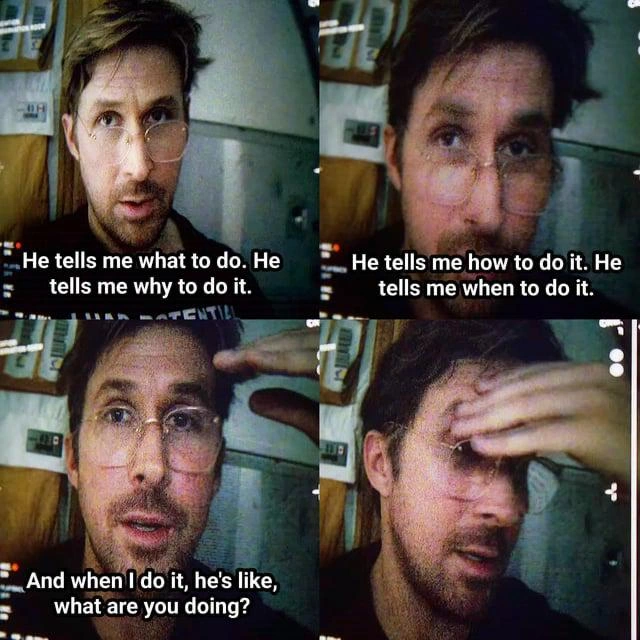
Nothing says "rigorous experimentation" like Grandma asking if variant B still comes with cranberry sauce
After 20 years in the industry, you'd think we'd have solved string escaping, but here we are still explaining to junior devs why their API returns '{"data": "{\\\'valid\\\': false}"}' and watching the light leave their eyes as they discover the seventh circle of escape character hell
Ah yes, the classic JSON string - where every quote becomes a philosophical debate between your code and the parser, and you find yourself in an infinite recursion of backslashes trying to escape the escape characters. It's like Inception, but instead of dreams within dreams, it's strings within strings, and the only way out is to question whether you should have just used Protocol Buffers in the first place. Bonus points if you've ever had to JSON.stringify() a string that's already JSON, creating a matryoshka doll of serialization that makes you wonder if this is what Dante meant by the ninth circle of hell
Every time someone says, “You know, like account settings,” an architect spawns RBAC roles, GDPR consent flows, audit logs, and a migration plan - then gets told it should be a single checkbox
Translation of "you know, like a… setting": please turn my indecision into a tenant‑aware feature flag with per‑user overrides, a 5x QA matrix, and its own entry in the on‑call runbook
Stakeholder specs: 'You know, like a JSON string.' Cue the schema drift and six-month Protobuf migration
https://www.computerenhance.com/p/clean-code-horrible-performance
Explain plz, I feel stupid …
The line could be blurry but if performance is key, do what performance requires. For everything else, write good readable code.
Anything was net negative for everything
Oh boy then you havent seen 7zip source code
No not the uncle Bob slander :(