
Pair Programming Ship It Meme Explained
Two cats pose like the Titanic bow scene—eyes closed, paws out. In a developer context the dive reads them as pair programming (driver and navigator) at the 'ship it' moment, then walks through safer release practices and pairing trade-offs.
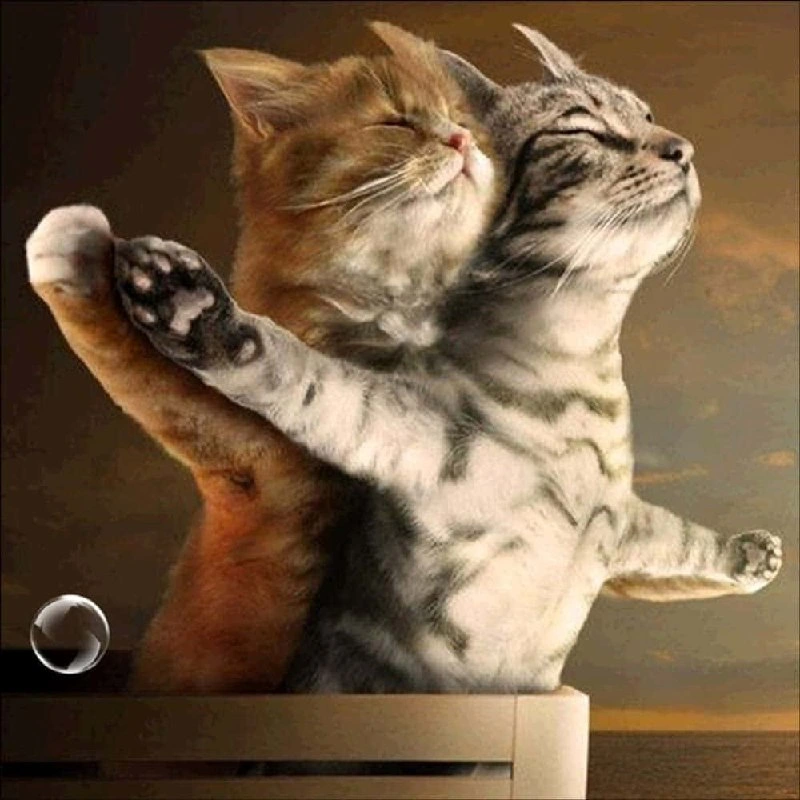
Level 1: Two Cats Set Sail
It is like two friends building a kite together and then running outside with their eyes closed because they are so proud it finally flies. The front friend holds it, the back friend helps guide, and both celebrate as if they are in a movie. The funny part is that they are copying a famous ship scene where the audience knows trouble is ahead, so their huge confidence feels sweet, triumphant, and just a little dangerous.
Level 2: Driver, Navigator, Deploy
Pair programming is a practice where two developers work together on the same change. The driver writes or edits the code. The navigator reviews what is happening, thinks ahead, checks assumptions, and helps choose the next move. They switch roles so both remain engaged and both understand the result.
For example, while the driver implements an API endpoint, the navigator might notice that an error case is missing, search the project for an existing convention, or suggest a smaller design. The conversation catches problems before they become review comments hours later. Pairing is especially helpful for unfamiliar code, tricky debugging, risky production changes, and onboarding—but it is not necessary for every routine task.
To ship software means to make it available to users, usually by deploying it to a production environment or publishing a release. A safe path might look like this:
- Write the change and its tests.
- Have automated checks build and test it.
- Review and merge it.
- Release it to a limited group or environment.
- Watch real behavior and expand the rollout.
- Reverse or repair it quickly if signals worsen.
The image turns those two definitions into a pun. The cats form a pair, and they are physically on a ship. Their blissful pose represents the satisfaction of finally releasing work after a difficult session. Knowing the movie adds comic danger: viewers understand that “we are flying” is not the same as “the voyage will end well.”
The cats also make the technical idea friendly. Software collaboration can sound like a rigid process with assigned roles, but at its best it is simply two people paying attention to the same problem, sharing discoveries immediately, and preventing each other from sailing confidently in the wrong direction.
Level 3: Full Steam to Prod
The developer reading depends on a double metaphor that the image permits rather than states. There is no caption, code, laptop, or deployment screen—only two cats reenacting the bow scene from Titanic. In a developer-meme collection, however, a literal ship invites the command ship it, while the closely stacked cats resemble pair programming. The front tabby becomes the driver, the orange cat becomes the navigator, and their synchronized outstretched paws turn a code review into a grand cinematic romance.
“Ship” is software-industry shorthand for releasing a change to users. It compresses a complicated process—builds, tests, reviews, migration planning, rollout, monitoring, and support—into one satisfyingly decisive verb. The visual makes that confidence wonderfully reckless. Both cats have their eyes closed, faces lifted into the wind, and attention directed anywhere except toward the horizon. The source scene comes from a story whose ship is famous for what happens after the euphoric bow sequence. It is therefore equally readable as release-day joy and as the last serene moment before the incident channel wakes up.
The pair-programming interpretation adds a second set of engineering tensions. In healthy pairing, one person is the driver, controlling the keyboard and handling the immediate implementation, while the navigator watches the broader design, catches errors, asks questions, and anticipates the next step. The roles should rotate. The rear cat’s close position maps neatly onto constant review, while the shared pose suggests unusually strong alignment: no argument over naming, no passive-aggressive comment about test coverage, just two contributors majestically merging into main.
Real pairing is less photogenic because it exposes thought in real time. Its benefits can include rapid feedback, shared ownership, knowledge transfer, and fewer local blind spots. Its costs include sustained concentration, scheduling difficulty, social fatigue, and the danger that one person dominates while the other becomes an audience. Two engineers looking at one screen are not automatically pairing, just as two cats standing at one bow are not automatically qualified maritime staff.
The Titanic reference also sharpens a deployment lesson: confidence is not a rollout strategy. A mature release process assumes that a change can fail despite good developers and green tests. It uses layers such as:
- automated checks in continuous integration;
- small, reversible changes rather than one enormous launch;
- feature flags or canary releases to limit exposure;
- database migrations designed for mixed old-and-new versions;
- observability that shows errors, latency, and user impact;
- a rollback or roll-forward plan with a named decision-maker.
Those controls are the engineering equivalent of keeping watch while enjoying the view. They do not remove risk; they shorten the distance between “something is wrong” and “we have contained it.” The cats’ closed eyes make the absent monitoring especially funny. Apparently the dashboard looked calm because nobody opened it.
There is a softer joke in the image’s matching-profile-picture aesthetic. The silver and orange cats mirror one another closely enough to form a pair but remain visibly distinct, much like collaborators who share context without becoming interchangeable. Pair programming works best when both people can challenge the direction. Perfect agreement throughout a session may mean excellent flow, or it may mean the navigator stopped navigating several commits ago.
Because the picture contains no words, none of these developer meanings is exclusive. It is plainly a cat-based pop-culture parody first: warm brown sunset, ocean horizon, pale railing, front cat leaning outward, rear cat pressed close, and both pairs of forelegs spread in imitation of the film’s romantic pose. “Pair programming reaches the ship-it phase” is a clever contextual caption for it, not hidden text in the image. That distinction matters when classifying memes: a visual metaphor can support an interpretation without proving the creator intended it.

The most effective social engineering payload: a cat photo so adorable your threat detection model classifies it as 'must_open' with 99.9% confidence
Pair programming finally reaches the "ship it" phase.