
Tech Debt Rewrite Urge Meme Explained
A comic shows a developer rewriting a chaotic green machine, then gloating about deleting it. The deep dive explains tech debt, rewrite risks, accidental requirements, and why pride often lands before the migration checklist.
Level 1: The Messy Old Machine
This is like replacing an old, noisy, patched-up machine in the garage with a shiny new one. You feel proud and cannot wait to throw the old one away. The joke is that the old machine may be ugly, but it might also be doing important little jobs nobody remembers until it is gone.
Level 2: Refactor Or Rewrite
Refactoring means improving the internal structure of code without changing what it does for users. You might rename confusing functions, split huge files, remove duplication, or simplify logic. The goal is cleaner code with the same visible behavior.
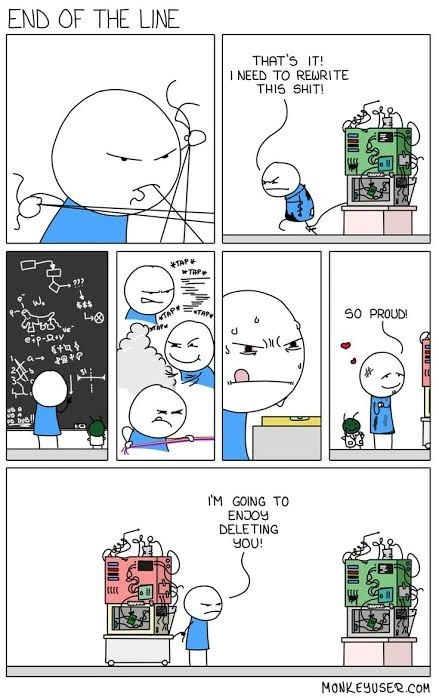
A rewrite is more extreme. Instead of carefully improving the old code, you build a replacement system. That can feel better because you get a clean start. The red machine in the comic represents that clean new version: planned, modern, and emotionally satisfying.
The green machine represents legacy code. Legacy code is not just "old code." It is code that people are afraid to change because they do not fully understand it, there are few tests, or it connects to many other things in surprising ways. That is where SpaghettiCode and CodebaseChaos enter the joke: one small fix can pull on a dozen hidden wires.
Early-career developers often meet this lesson the hard way. The old system looks terrible, so replacing it seems obviously correct. Then the replacement has to match every weird behavior users rely on. Suddenly the "bad" old code was not just bad; it was also a record of business rules nobody wrote down anywhere else.
The meme is funny because it captures both sides. The developer's frustration is real, and the desire to delete the old mess is real. But the industry has enough rewrite scars to know that pride arrives before the migration checklist.
Level 3: Rewrite Revenge Arc
The comic is titled:
END OF THE LINE
The developer starts by glaring at a battered green machine and declaring:
THAT'S IT! I NEED TO REWRITE THIS SHIT!
Then come the familiar stages: staring at a chaotic blackboard, typing with grim focus, sweating at the monitor, and finally standing beside a shiny red replacement while saying:
SO PROUD!
The final panel lands because the developer does not say "the new system has achieved feature parity" or "we have reduced operational risk." He faces the old green machine and says:
I'M GOING TO ENJOY DELETING YOU.
That is the emotional truth of many LegacySystems and TechDebt projects. A rewrite often begins as engineering work, but after enough years of duct-taped behavior, undocumented dependencies, and production mysteries, it becomes personal. The old component is no longer just code; it is the thing that ruined weekends, blocked simple changes, and made every estimate sound like a legal deposition.
The senior-level joke is that this victory pose is both understandable and dangerous. Rewriting a component can be the right move when the model is wrong, the architecture is unsalvageable, or the old system blocks necessary change. But a full rewrite also carries the classic hidden risk: the ugly system may contain years of accidental requirements. The strange green box might be handling retry logic, data cleanup, legacy customer formats, or one cursed edge case from 2014 that still pays invoices.
This is why the comic's title, "end of the line," is funny in a slightly grim way. The developer thinks the line ends with deletion. In real software maintenance, the line often continues through migration plans, compatibility shims, rollback paths, data validation, observability, stakeholder signoff, and discovering that "unused" feature flags were load-bearing after all. Refactoring is surgery; revenge deletion is surgery performed while muttering at the patient.
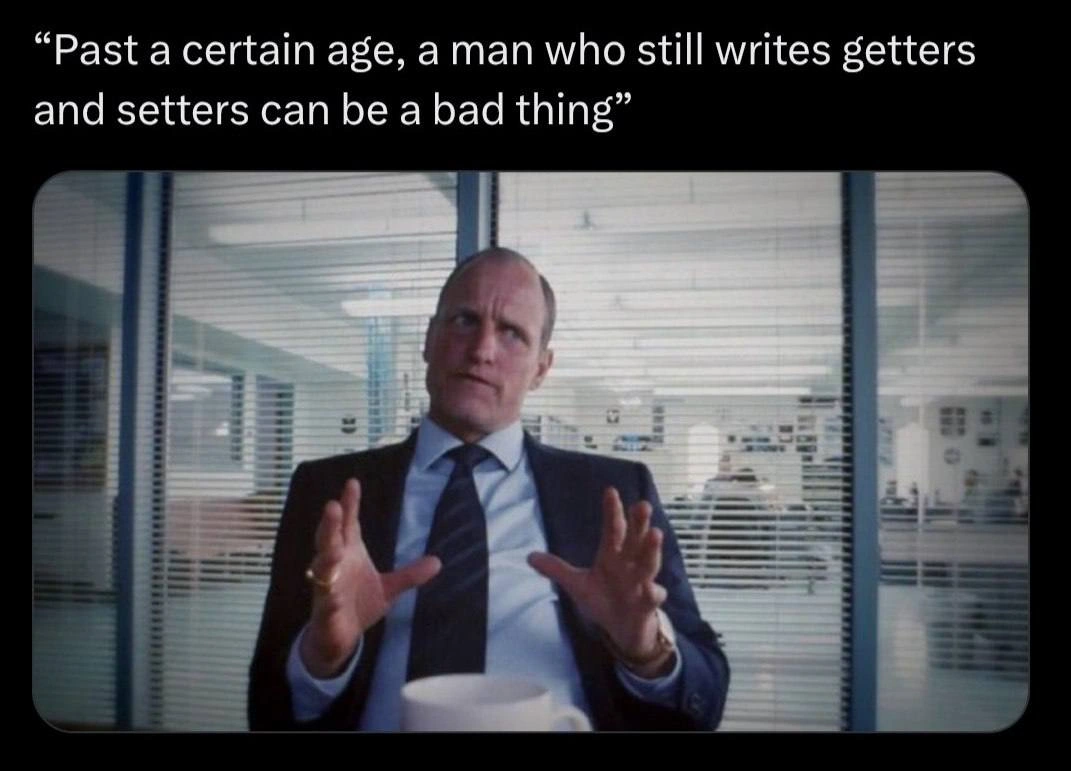
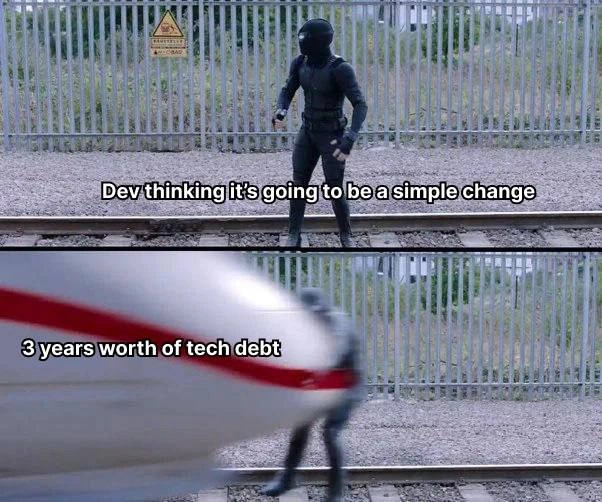
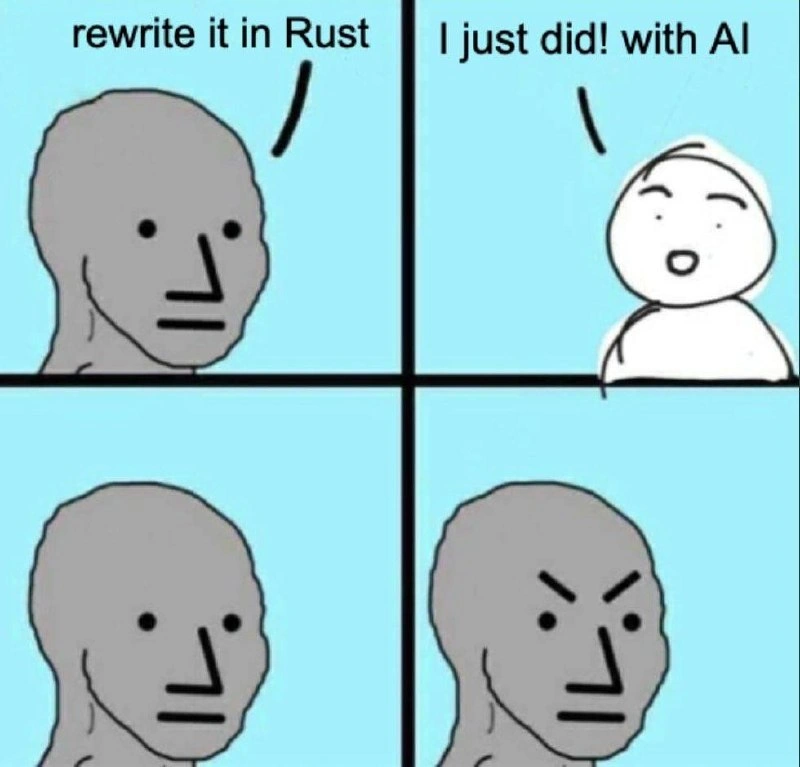
Every rewrite starts as architecture therapy and ends with someone discovering the deleted monster was also handling billing retries.
usually refactoring ends up like same shit code, but now In Very Well Separated Modules
and performance decrease due to all the added abstraction :^)
And it seems that if you chose correct technology for task that you know and understand, you can make maintainable and performant application
Currently I'm dealing with android app made by idiots and I'm slowly refactoring garbage they made
I'm not in the chat, admin 🙃 Know the technology you use and RTFM