
Tech Debt Blast Radius Meme Explained
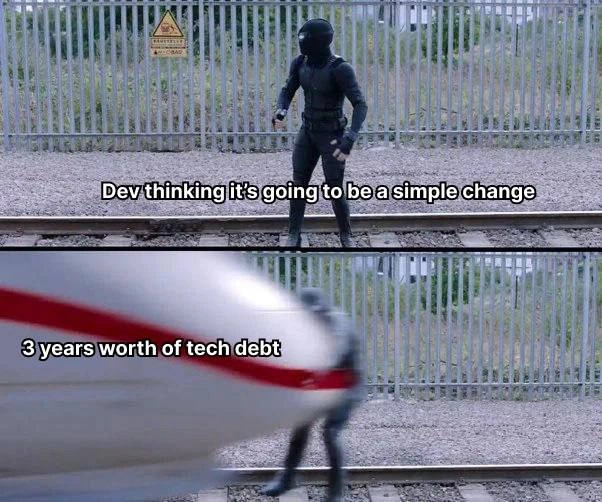
A developer casually waits for what looks like a tiny change, then gets flattened by years of accumulated technical debt. The dive defines debt as deferred cost, shows how small requests explode into blast-radius work, and why experienced engineers fear the phrase quick fix.
Level 1: The Tiny Fix Trap
It is funny because the programmer thinks the job will be small, then a huge old problem crashes into them. It is like opening a closet to move one box and discovering that everything inside was stacked badly for years, so the whole pile falls on you at once.
Level 2: One Line, Many Consequences
Technical debt means compromises in a codebase that make future work harder. It can include messy structure, missing tests, unclear ownership, duplicated logic, outdated dependencies, or behavior that only exists because something broke once and nobody had time to clean it up.
The meme shows a developer expecting a simple change, then getting hit by "3 years worth of tech debt." The joke is that old problems often stay hidden until someone touches the wrong part of the system. A small UI change might require backend changes. A backend change might affect reporting. A reporting change might expose bad data. Suddenly the "simple" task involves half the product.
For junior developers, this is one of the big lessons of real codebases. The code you see in one file is not always the whole story. Before changing it, you often need to understand tests, deployments, database migrations, old bugs, customer workflows, and why the strange existing behavior might be load-bearing.
Level 3: Blast Radius Express
The top caption says:
Dev thinking it's going to be a simple change
The bottom caption delivers the impact:
3 years worth of tech debt
That is not a metaphor so much as an incident report with better cinematography. The developer is standing casually near the tracks because the requested change sounds harmless: rename a field, add a flag, tweak a validation rule, move one button, update one dependency, support one more region. Then the accumulated weight of past shortcuts arrives at full speed.
Technical debt is not just ugly code. It is deferred cost. It is the undocumented behavior nobody remembers, the service that depends on a side effect, the database column used by three jobs and one spreadsheet, the integration test that was disabled "temporarily," the migration that worked once in staging in 2023, and the TODO that has achieved legal adulthood in spirit. When a codebase carries enough of that, a simple change is never evaluated by its diff size. It is evaluated by its blast radius.
The brutal part is that the debt was usually rational when created. A deadline mattered. A customer was blocked. The team lacked ownership clarity. The architecture was "temporary." The refactor had no visible business value. So the shortcut shipped, then another shortcut connected to it, then someone built analytics on top, then a workflow grew around the bug, and eventually the entire product depended on the rails being exactly where they were. Naturally, the change request says "should be easy."
This is why experienced developers fear the phrase "quick fix." The work is rarely the visible change; the work is archaeology. You trace call paths, read stale docs, interrogate logs, discover hidden consumers, update tests that encode old assumptions, negotiate rollout risk, and explain to management why the one-line change has a two-week estimate. The train in the image is funny because every maintainer has heard it coming and still had to stand there holding the ticket.
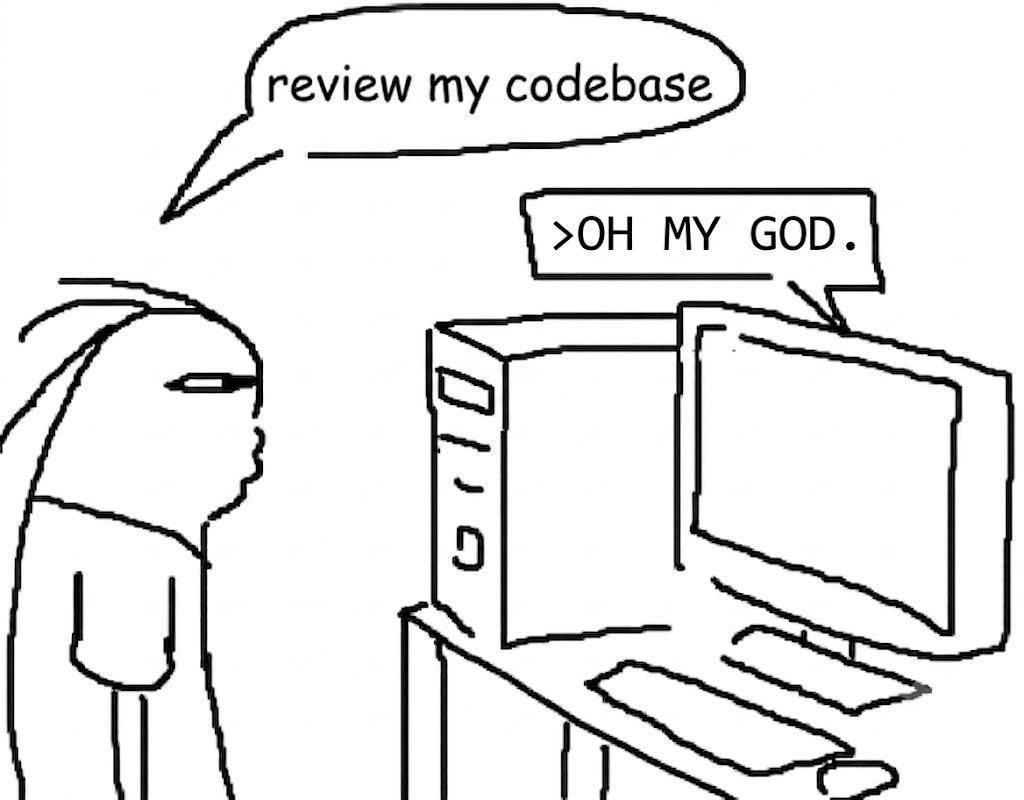
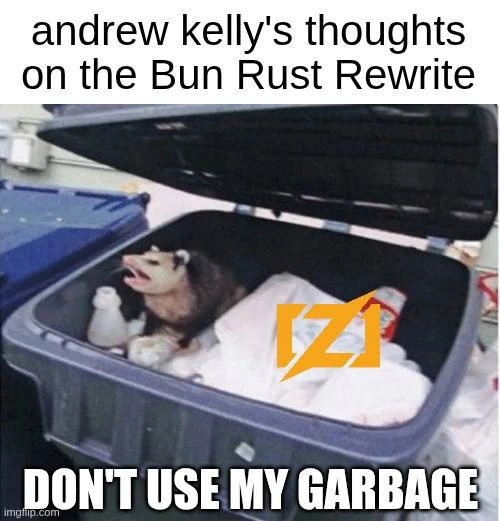

The change was one line; the blast radius was apparently stored in a monorepo nobody had indexed since 2021.
The ticket was one line; the dependency graph was an oncoming train.
Why the limited reaction emojis?
Say no to AI say yes to junior developers in critical infrastructure