
E2E Encryption vs Privacy Meme Explained
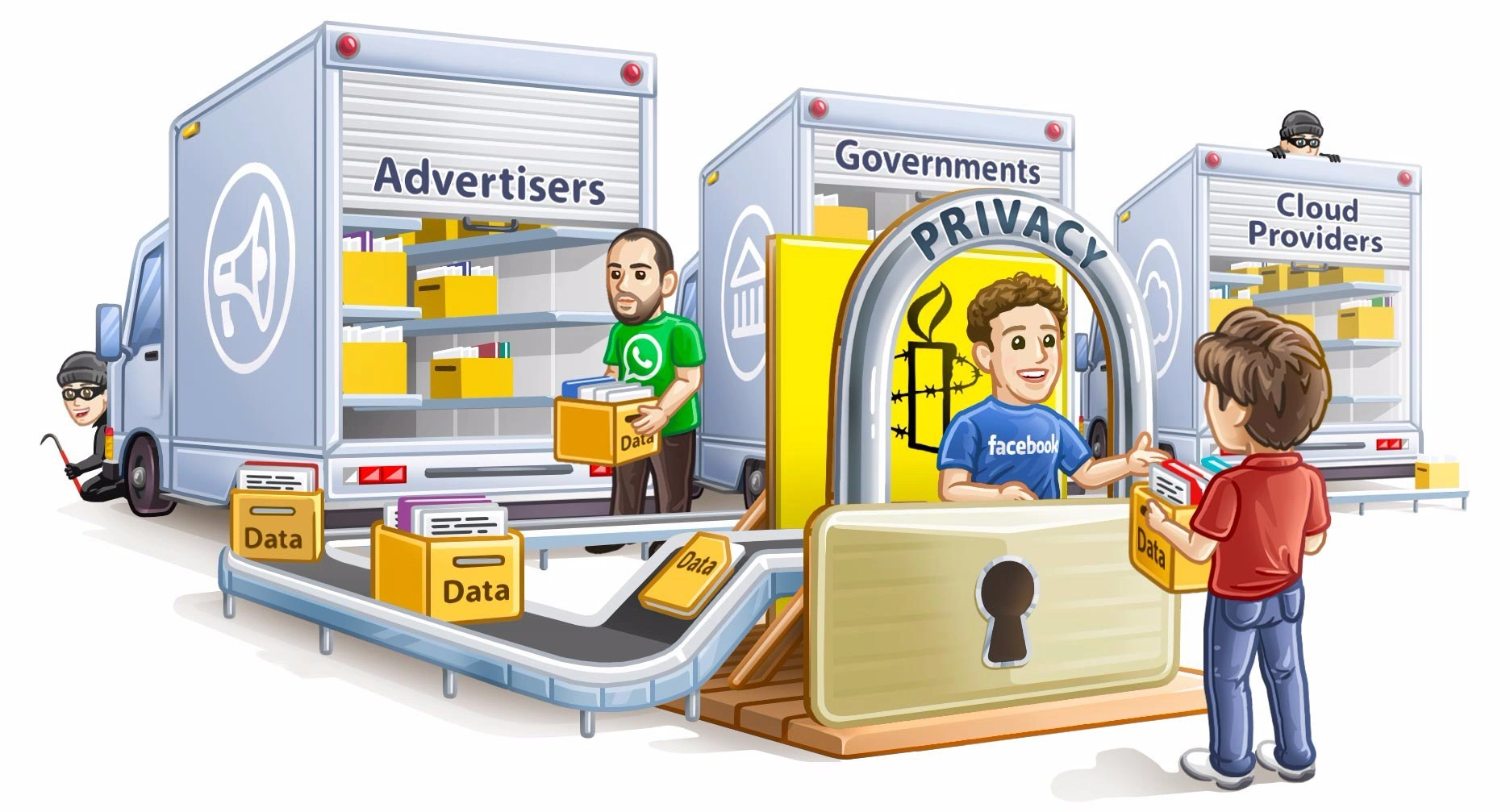
A cartoon shows a Facebook-branded privacy counter with a huge padlock while data boxes roll toward trucks for advertisers, governments, and cloud providers. The deep dive explains that end-to-end encryption protects message content but is not the whole privacy story—metadata, backups, and back-end flows still matter.
Level 1: The Fancy Privacy Booth
This is funny because it is like a store with a huge sign saying "PRIVATE" at the front desk while workers quietly carry your boxes out the back to different trucks. The lock looks comforting, but the joke is that privacy depends on where all the boxes go, not just on the shiny lock people show you.
Level 2: Locked Door, Open Loading Dock
End-to-end encryption means a message is encrypted on the sender's device and decrypted on the recipient's device. In a strong design, the service provider cannot read the message content while it travels through its servers. That is valuable and should not be dismissed.
But metadata is data about the communication rather than the message text itself. Examples include phone numbers, device details, IP address, timestamps, contact patterns, group membership, app version, and whether a message was delivered. Metadata can expose habits and relationships even when the message content remains private.
The image uses boxes labeled Data to show that a privacy promise can cover one part of the system while other parts still move information around. Advertisers suggests commercial profiling and measurement. Governments suggests legal demands and surveillance concerns. Cloud Providers suggests backups and infrastructure. The WhatsApp shirt ties the joke to messaging apps where users often hear "encrypted" and assume "nothing else can leak."
For developers, this is a familiar design lesson: a system's real privacy properties come from all its components, not the most impressive feature on the landing page. Authentication, logging, analytics, backup storage, customer support tools, abuse reporting, business APIs, and mobile permissions all participate. One strong lock does not secure a building with an open loading dock.
Level 3: The Conveyor Threat Model
The cartoon shows a cheerful counter labeled:
PRIVACY
The person behind it wears a facebook shirt, while a user hands over a box labeled:
Data
Around that polished privacy booth, the important action happens on the conveyor belts. More boxes labeled Data move toward trucks marked Advertisers, Governments, and Cloud Providers. A person in a WhatsApp shirt carries another data box, and masked thieves lurk near the trucks. The giant padlock in front promises safety, but the surrounding logistics network says, "Please ignore the supply chain."
The technical bite is that privacy is not the same thing as message encryption. A messaging product can use end-to-end encryption for message contents while still collecting or processing account data, device information, usage logs, contact relationships, business-interaction data, abuse reports, cloud-backup material, and service metadata. None of those categories require reading the message body to be sensitive. Who talked to whom, when, how often, from what device, and through which business integration can be deeply revealing.
That is why the Cloud Providers truck matters. Backups, sync, and recovery are where pristine security stories usually meet user convenience and start negotiating. Users want their chat history restored when a phone dies. Companies want the feature to be easy. Security people want keys and storage boundaries to be explicit. Product teams want all three by Friday. The result is often a careful design with caveats, optional settings, and enough edge cases to keep incident response employed.
The Advertisers and Governments labels push the joke into SurveillanceCapitalism and SecurityTheater. The cartoon is not saying every box is literally handed to every party in the same way. It is satirizing the trust gap: companies market privacy with front-door symbolism while users worry about back-end data flows, legal requests, business analytics, third-party processors, and platform incentives. The padlock is UI. The conveyor belt is architecture. Guess which one gets the marketing budget.
The masked thieves add the final uncomfortable layer: once data exists, it becomes a target. Even when a company intends to protect it, breach risk, misconfiguration, insider access, weak client devices, compromised accounts, and hostile integrations remain part of the threat model. In privacy engineering, "we do not read your messages" is an important claim. It is not the end of the conversation.

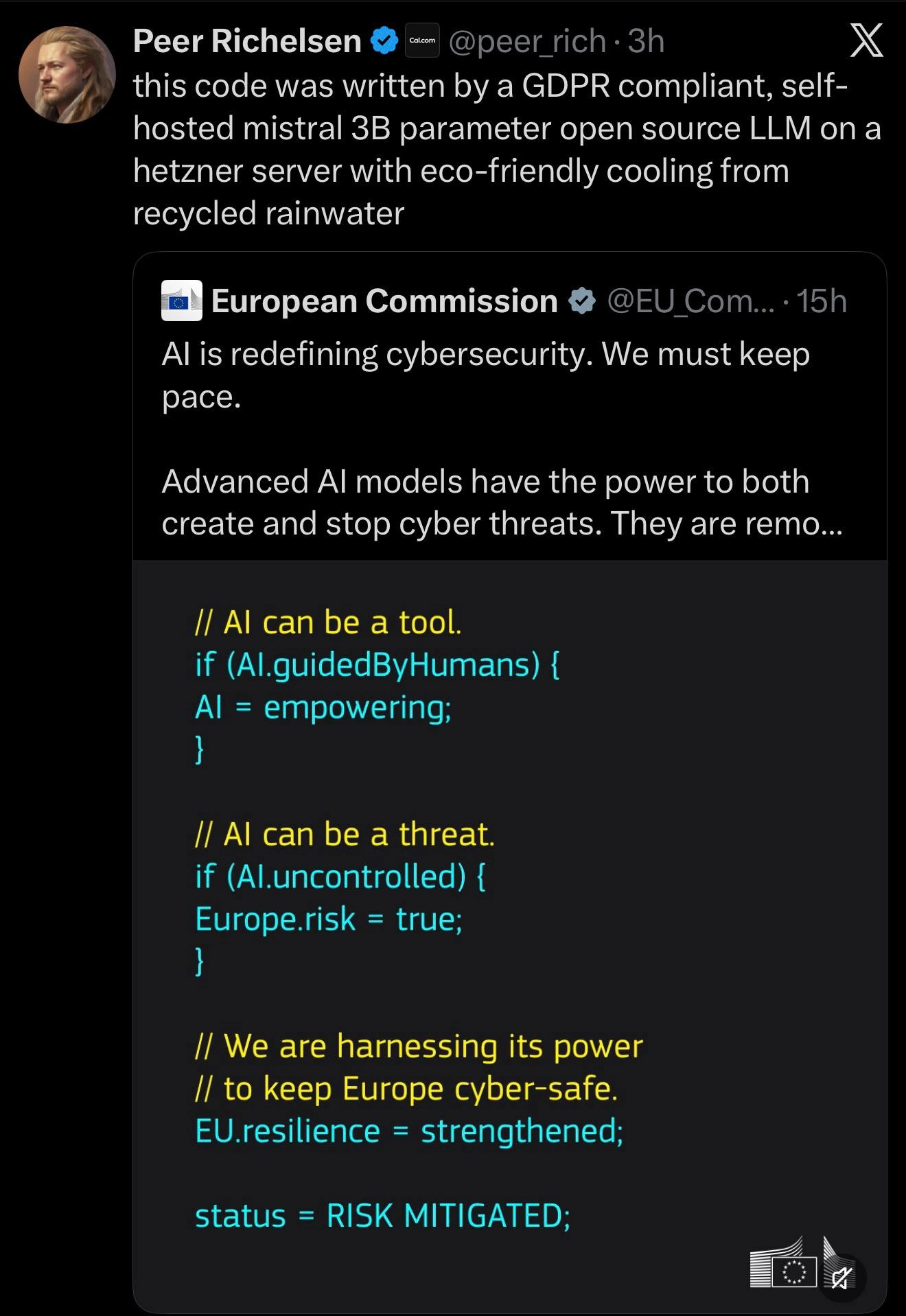

That padlock is doing excellent UI work while the conveyor belt handles the actual data architecture.
The next article is: "Why Telegram Will Never Be Secure" spoiler alert it stores user messages on its servers
It's like hearing Microsoft talking shit about Apple Yeah sure they might have a point but just sounds cringe
Also, it seems funny to me when Durov talks about FBI backdoors, implying Telegram 100% backdoor free. But he can't prove it since the backend itself is not open-source, it's only the client.
Telegram shared data with german authorities over 25 times. The we shared zero bytes is bullshit.
Telegram now is more like a social network/messenger hybrid
But it's not by any means "private" or "secure"
What's next? Panama papers? Harlem shake? I'm here for the new content, not three-years-old stuff
Well in a couple of years Whatsapp will have to open its APIs in Europe, that will solve A LOT of problems
Without exposing a bit of real data?
And btw European data can't go into USA servers, it's against the GDPR
To me that's gdpr working
Because as a data owner you need to ensure gdpr rules so you're liable also if one of your providers is violeting them, rightfully so
Article is more than 3 years old 🤔
OTP is not an encryption ;). Besides, anything actually proven to be safe is good enough, like Signal or GPG over email. It’s just that Telegram has never shown that we can trust it
Yup, exactly. Not an encryption
Yeah, it’s an encryption technique for key exchange. Not an encryption
Because those you can compile and audit
I really don’t want to go into this basic security conversation. If you want to trust Telegram, that’s fine. Just try to understand why nobody on ITSec scene cannot recommend it and why nobody that actually needs to care about privacy like journalists use it for serious things
Because there’s a big difference between leaked by default (coz somehow stored on the 3rd party server in the way which allows decryption) and when data presented in decrypted form only on device and targeted attack required to get that data. When plain data stored by 3rd party there’s not a lot you can do to secure it When it’s stored on your device - there’s a plenty of options how to secure it. And plenty of options how to attack you too, of course. But all of them are much more complicated than asking your friend from **classified** to extract that data from service provider