
Junior Tech Hiring Crisis Meme Explained
A whispering-aide still treats one junior hire as catastrophic news. The dive unpacks the entry-level hiring crisis: seniors competing for junior slots after layoffs, freezes, AI boilerplate narratives, ghost jobs, and the paradox that every junior role wants experience you cannot get without the role.
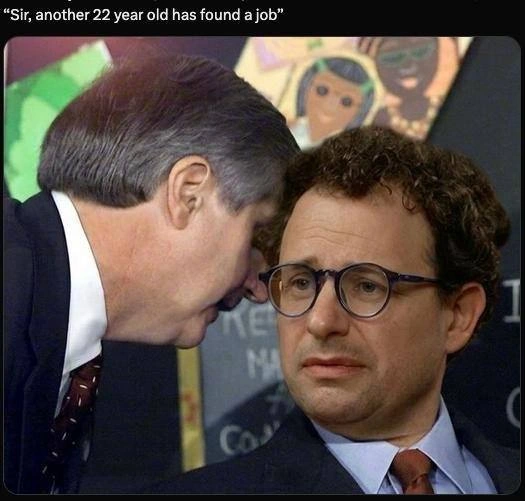
Level 1: The Rarest Good News in the Room
Imagine a kingdom where finding a job has become so hard that when one young person finally lands one, a messenger sprints into the throne room, breathless, and whispers it to the king like it's news of a dragon at the gates. Everyone stops. It's treated as a historic, almost unbelievable event. The joke is that something that used to be totally ordinary — a 22-year-old getting their first job — has become so rare that it now feels like a national emergency worth interrupting the most important person in the country.
Level 2: The Vocabulary of a Broken Pipeline
A few terms ground the satire. An entry-level or junior role is meant to be the first rung — the job you can get with little or no professional experience, where you're expected to learn on the job. When those roles vanish or demand prior experience, the entire career ladder loses its bottom step.
Layoffs are mass job cuts; a wave of them dumps experienced workers into the market, which paradoxically makes things harder for newcomers because they're now competing against seniors. A hiring freeze is when a company stops creating new positions entirely. Ghost jobs are listings that look like opportunities but aren't real openings — they exist to harvest résumés or project an image of growth.
The relatable early-career reality: sending out hundreds of applications, tailoring each one, and hearing nothing back — not rejection, just silence — while every posting somehow requires experience you can only get from the job you can't land. The meme is catharsis for exactly that grind.
Level 3: When a Junior Hire Becomes Breaking News
The image is the whispering-aide template — a grey-haired man in a dark suit leaning in to murmur grave news into the ear of a curly-haired, bespectacled official who stares ahead with a hollow, thousand-yard expression. The white-on-black caption supplies the bombshell:
"Sir, another 22 year old has found a job"
The composition deliberately evokes the genre of aide interrupting the leader with catastrophic news — the visual grammar of national emergency. Applying that grammar to a single entry-level hire is the entire joke, and it's funny because the exaggeration is barely an exaggeration.
The senior-level read is that this meme is a precise piece of labor-market commentary about the collapse of the junior on-ramp in tech. For roughly two decades the industry ran on a reliable pipeline: bootcamps, CS grads, and self-taught juniors flowed into entry-level roles, got mentored, and became the mid-level engineers who kept everything running. That pipeline has been throttled from multiple directions at once. Layoff waves flooded the market with experienced engineers willing to take lower titles, so hiring managers who once would have trained a junior could instead grab a laid-off senior for the same budget. Hiring freezes and "do more with less" mandates eliminated the headcount that juniors traditionally filled. And the rise of AI coding assistants gave executives a tempting — and largely untested — narrative that they no longer need to hire the cheap labor that writes the boilerplate, because the boilerplate is now generated. The result is the entry_level_hiring_crisis the meme treats as a national event.
What sharpens the humor for anyone job-hunting is the surrounding apparatus the description names: ghost_jobs (postings that exist for pipeline-building, compliance, or "always be collecting résumés" reasons but were never going to be filled), and the 500_applicants_per_posting reality where a single junior listing draws hundreds of qualified candidates within hours. In that environment, an actual offer accepted by an actual 22-year-old genuinely is statistically rare — rare enough that the meme's "escalate it to the president" framing reads less like absurdity and more like reasonable proportionality. The classification's quip nails the engineering parallel: an entry-level hire is now "rarer than a green CI pipeline on Friday," and both get escalated straight to leadership.
The systemic cruelty underneath is the experience paradox the industry manufactured for itself. Every posting wants 2-3 years of experience for a "junior" role; you can't get the experience without the role; the role doesn't exist because the company decided juniors are a cost rather than an investment. This is a textbook case of optimizing each hiring decision locally (always hire the more-experienced candidate) while destroying the system globally (no juniors means no future seniors). The companies starving the pipeline today are the ones who will face a senior-talent shortage in five years — but quarterly incentives don't price in five-year consequences, which is exactly why smart organizations keep making the choice that's individually rational and collectively suicidal.
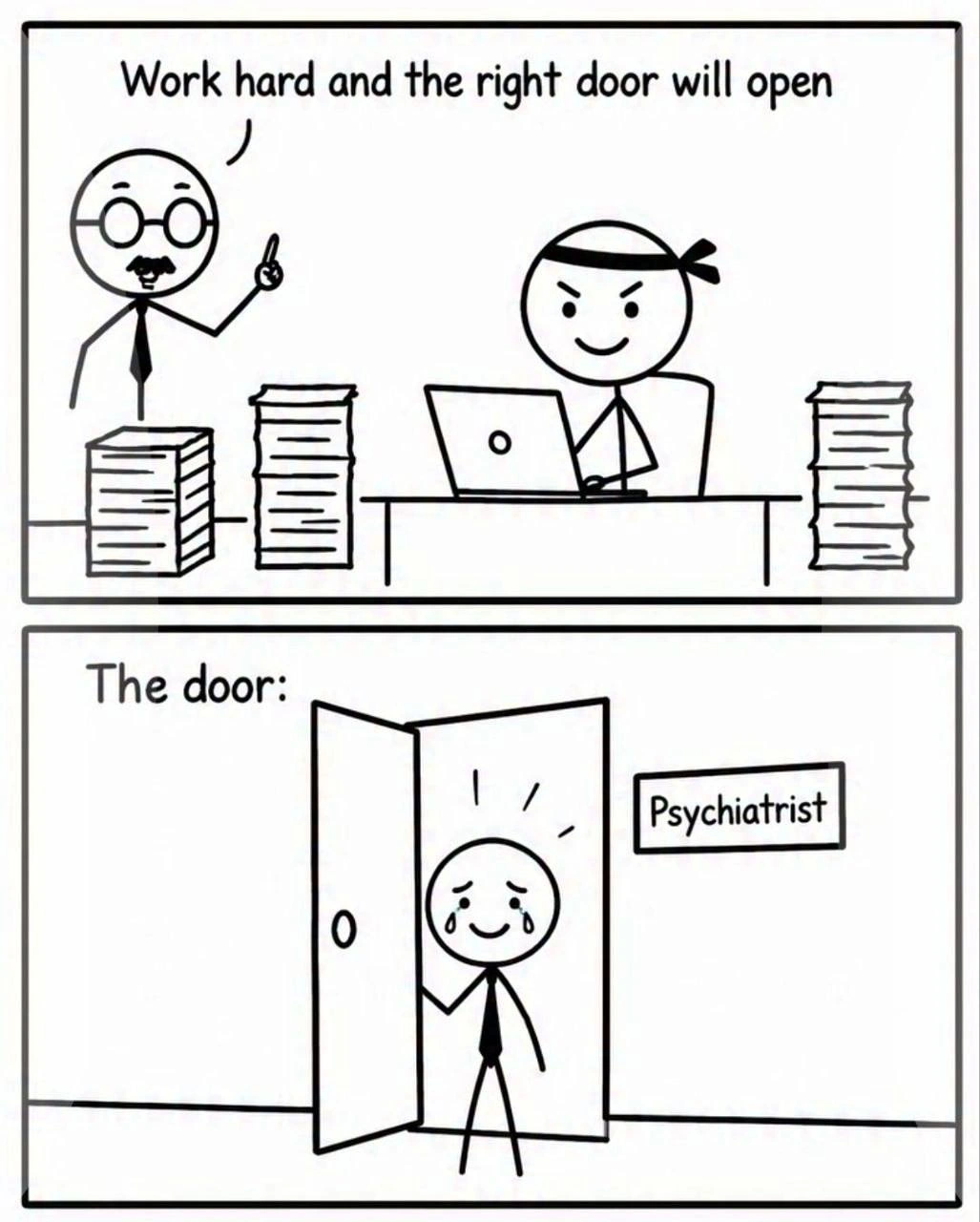

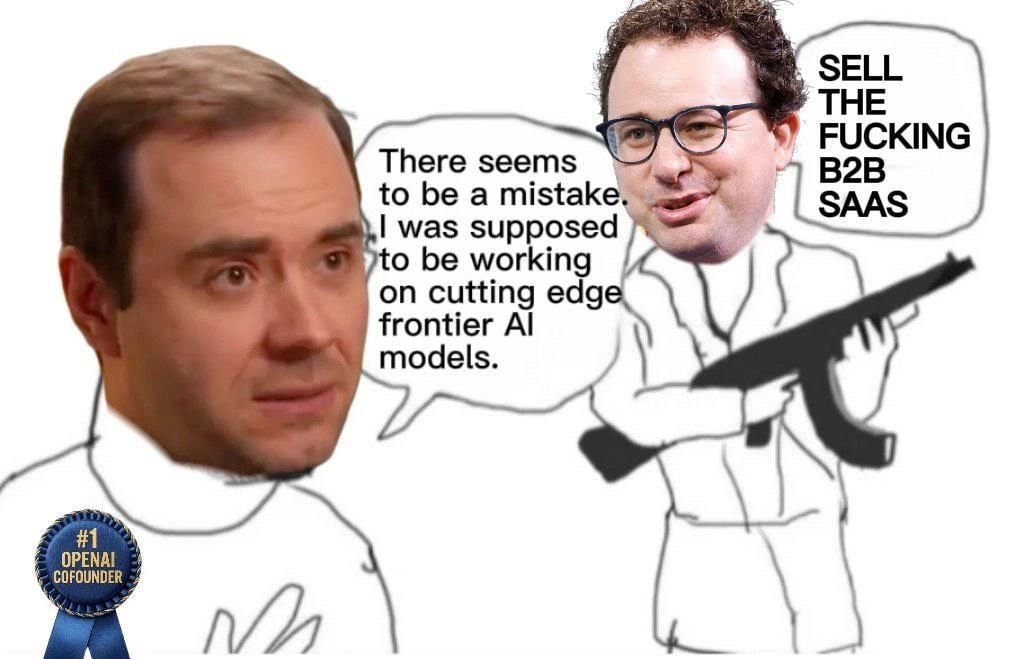
Entry-level hires are now rarer than a green CI pipeline on Friday - both get escalated straight to the C-suite
The hiring pipeline emitted one human; engineering is investigating.
Is this an irresistible saturnian urge to make as many young people infertile and out of money as possible?
Dario, CEO of anthropic, wants his ai to replace all programmers, but he is unsuccessful, as indicated by people that just graduated still finding a job, because there is still demand for humans and not his shitty imaginary super intelligence
All my homies will use NPU
In other words, anthropic better brace for impact, a random 22 year old kid who optimizes Llama to be run on calculator will make more millions than tokens eaten by claude
Couldn't be me.