
LLM Meme Decoding DRY Pool Explained
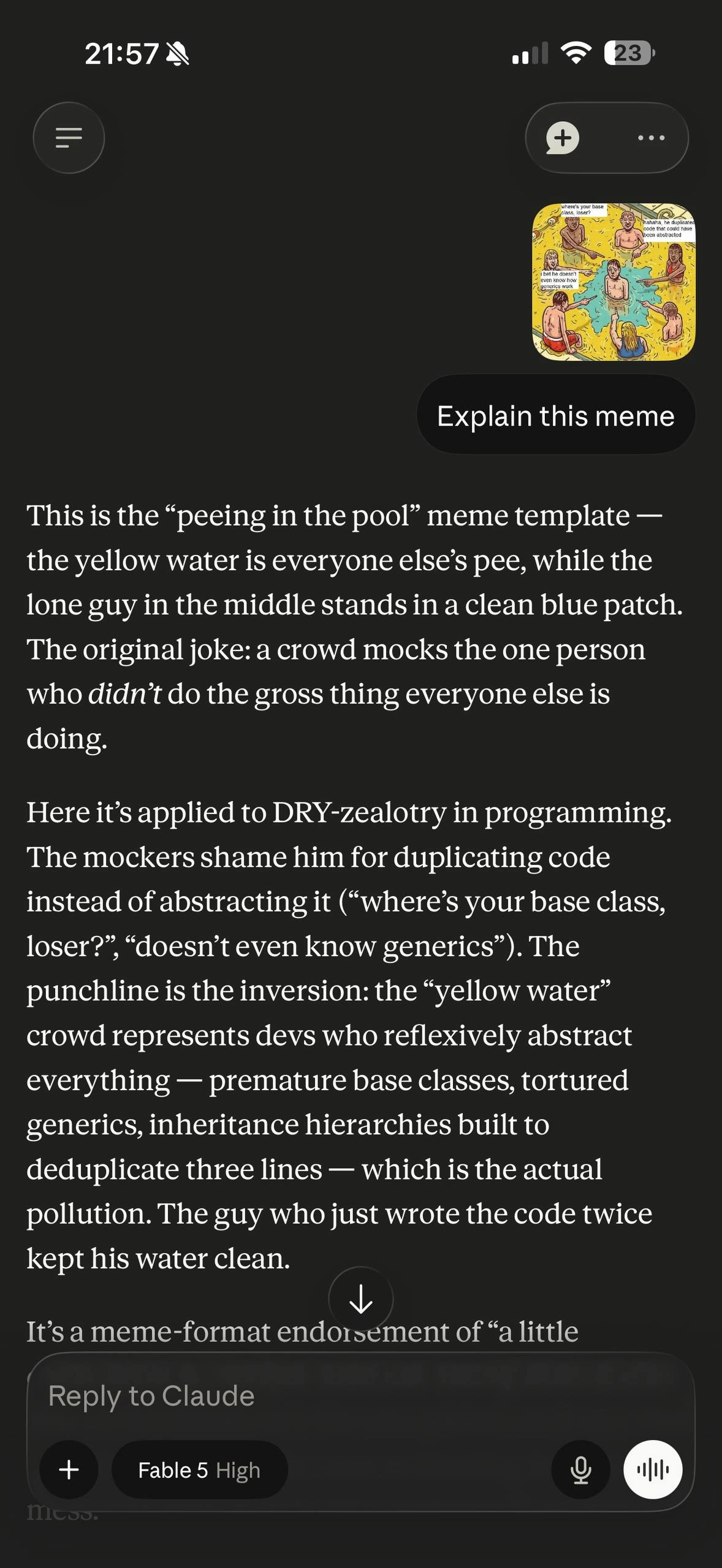
A Claude screenshot explains the peeing-in-the-pool comic as a takedown of DRY zealotry, not of copy-paste. The dive covers meme-template meaning, premature abstraction, and the meta joke of AI skeptics using AI to decode humor.
Level 1: Asking a Robot Why It's Funny
A kid sees everyone laughing at a cartoon and doesn't get it, so they quietly ask a very patient robot, "Why is this funny?" The robot explains it perfectly — even points out a twist most of the laughing kids missed: the crowd making fun of the one clean kid is actually standing in the yucky water themselves. The extra giggle on top: some of the loudest kids saying "robots are dumb" are the same ones secretly asking the robot to explain the jokes. It's like complaining about calculators while using one under the desk.
Level 2: Templates, Tokens, and Tortured Generics
The stacked concepts, unpacked:
- Meme template semantics: formats carry meaning beyond their captions. The "peeing in the pool" comic encodes the crowd is wrong and gross — so captioning the crowd as abstraction-purists secretly indicts them. Misread the template, misread the joke.
- DRY (Don't Repeat Yourself) vs. duplication: the principle that shared logic should live in one place. "DRY-zealotry," as the on-screen reply calls it, is applying it before patterns have proven themselves — building a base class (a parent class others inherit from) or reaching for generics (type-parameterized code like
List<T>) to merge three coincidentally similar lines. - Premature abstraction: the wrong unification, expensive to undo. Juniors usually learn this by inheriting a hierarchy where changing one parent method breaks five subclasses in five different ways.
- LLM as meme decoder: multimodal models can now parse an image, recognize the template, and explain layered irony. Useful when you're new and every team channel is wall-to-wall references — just know that asking is the modern equivalent of admitting you don't get the joke, which is fine; everyone started there.
The quiet lesson: jokes, like codebases, have load-bearing context. Read the template before you refactor the punchline.
Level 3: The Joke Compiles Differently the Second Time
What's on screen is a meme being run through an interpreter. A mobile screenshot — 21:57, battery at 23%, the Claude app with the model selector reading Fable 5 High — shows a user sending the pointing-crowd pool comic with a three-word prompt: "Explain this meme." And the model delivers, identifying the template precisely:
This is the "peeing in the pool" meme template — the yellow water is everyone else's pee, while the lone guy in the middle stands in a clean blue patch.
That identification re-frames the source meme. Read naively, the pool comic is just code-review bullying — a crowd jeering "where's your base class, loser?" at the one developer who copy-pasted. But the template carries hidden semantics: in the original joke, the crowd mocks the one person who didn't do the gross thing. Once you know the yellow water is pee, the polarity flips. As the visible reply puts it, the mockers are the DRY-zealots — "premature base classes, tortured generics, inheritance hierarchies built to deduplicate three lines — which is the actual pollution. The guy who just wrote the code twice kept his water clean." The duplicated code was never the contamination; the reflexive abstraction was. The explanation cuts off mid-sentence at "It's a meme-format endorsement of 'a little..." — the reader left to complete the famous clause about duplication being cheaper than the wrong abstraction.
Then there's the meta-layer, supplied by the channel author posting this as a reply to the original pool meme: "It's crazy how so many people are crying about AI related memes in comments yet they need AI to actually explain the meme." That's the sharpest edge here. The same commentariat performing AI_ML skepticism in one thread quietly pastes screenshots into a chatbot to decode the in-group humor in another — using the pool to complain about the water, so to speak. Meme literacy used to be a shibboleth, proof you'd absorbed the culture's pain firsthand; now it's an API call. Whether that's democratization or the death of the inside joke depends on which side of the pool you're standing in. Either way, the screenshot demonstrates the uncomfortable part: the model's reading is correct, including the inversion most human commenters missed.
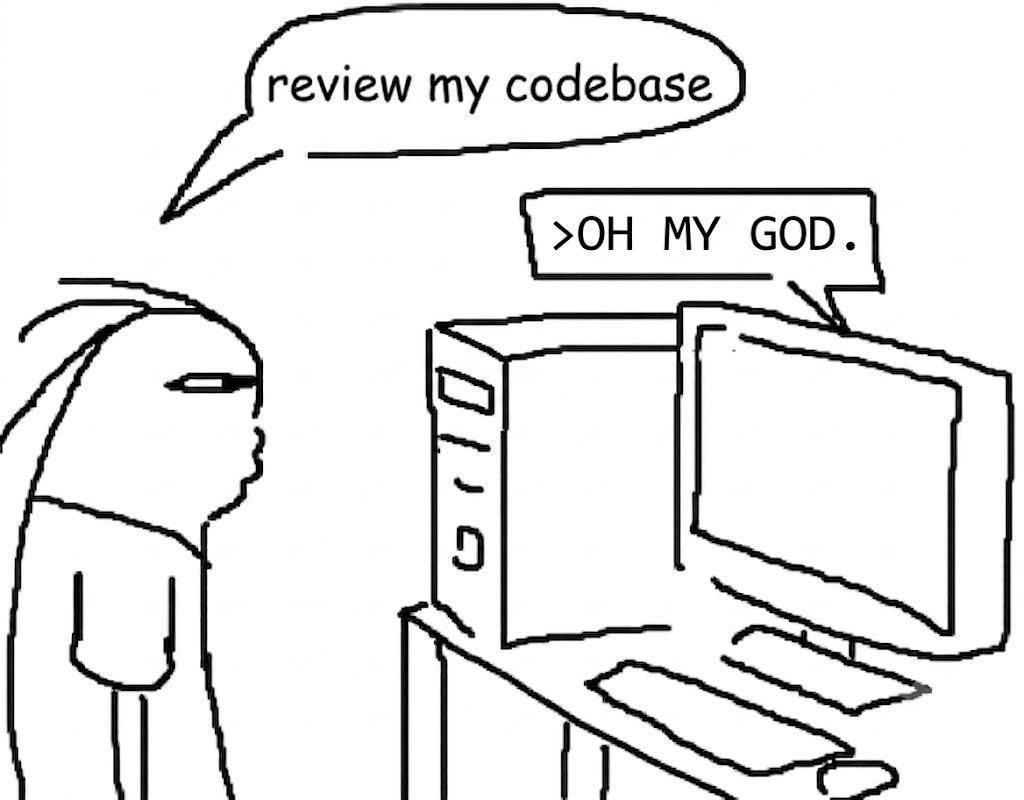
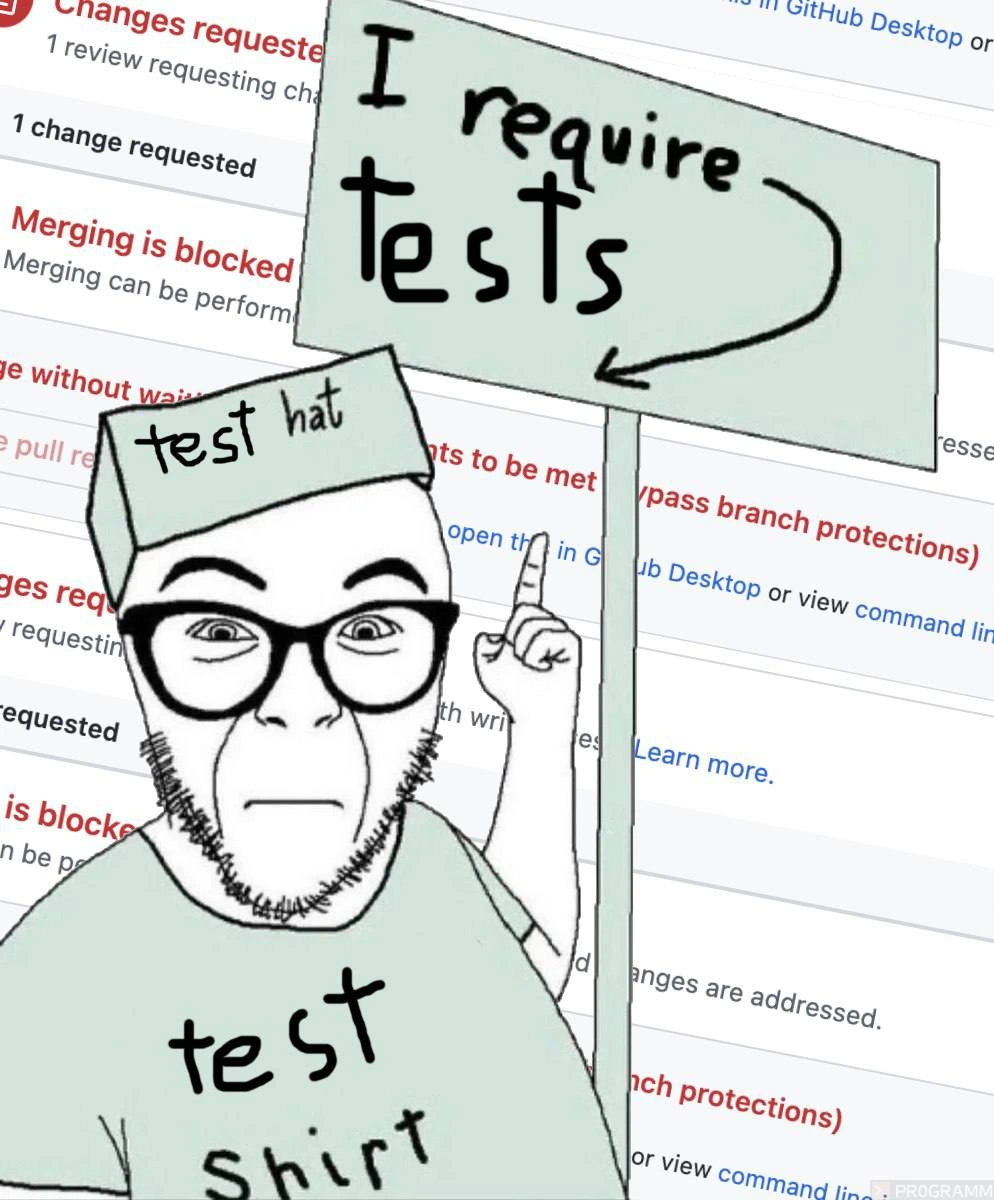
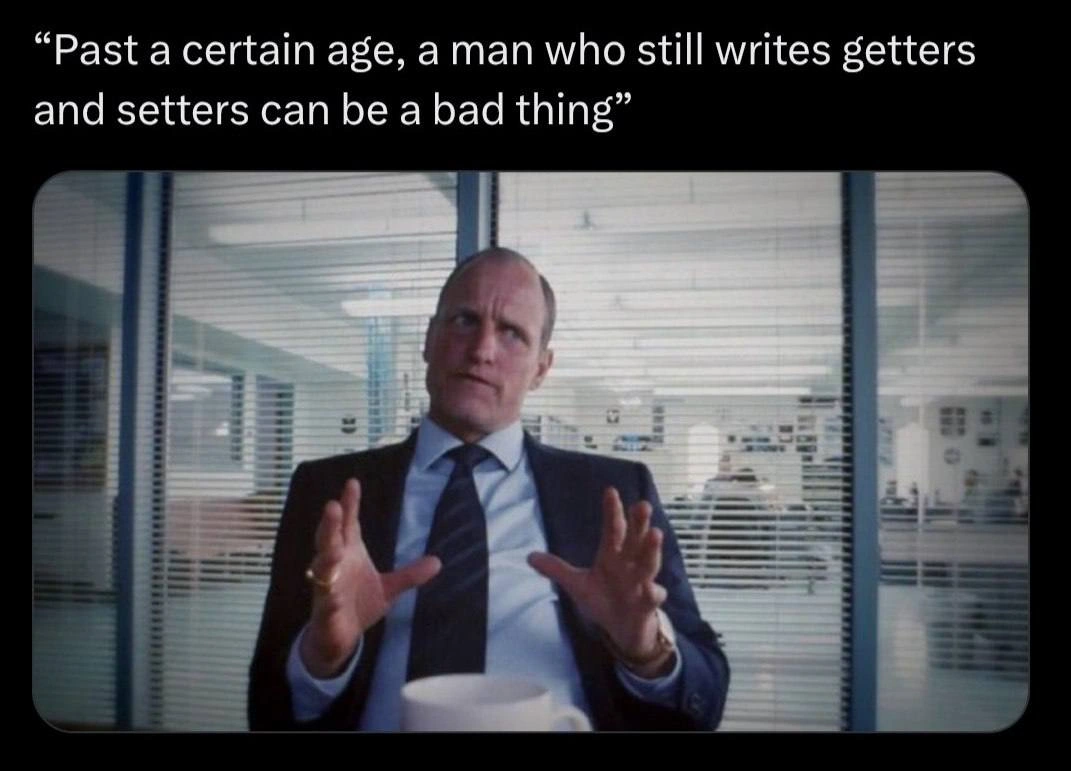
A meme explained is rarely funnier, but a base class created to deduplicate three lines will eventually need a paragraph of explanation per subclass - the LLM is the cheaper abstraction here
The AI understood premature abstraction; somewhere, an `AbstractMemeExplanationFactory<T>` just lost its funding.
Waiting for a screenshot from Gemini analyzing your screenshot of ChatGPT analyzing my screenshot from Claude analyzing the meme from dev meme
Here, non JPEGed screenshot
Lol. Tho someone don't like AI mems in dev channel. should also realized the devs today are actually AI.
You should be satisfied as you can still feel humor as a human. Not an AI only joke.
I'm like 90% sure this is a bot
nah
we all love bots
i still don't get this meme
что ето по-ангелиский?
Please, stick to use of Englih
one more layer and we get true Code(highlighted blue) of Leaves
I don't usually do this, like, I barely use this emoji at all, but...
🤡
I used the official telegram app for a minute today and was subjected to it suggesting i ai enhance my text
We've finally reached the moment where the admin just posts whatever he can find online and when people start whining he asks AI to explain where's the fun🏃♂️
@mira is op whining