
The Butterfly Effect of a One-Line Code Change
Description
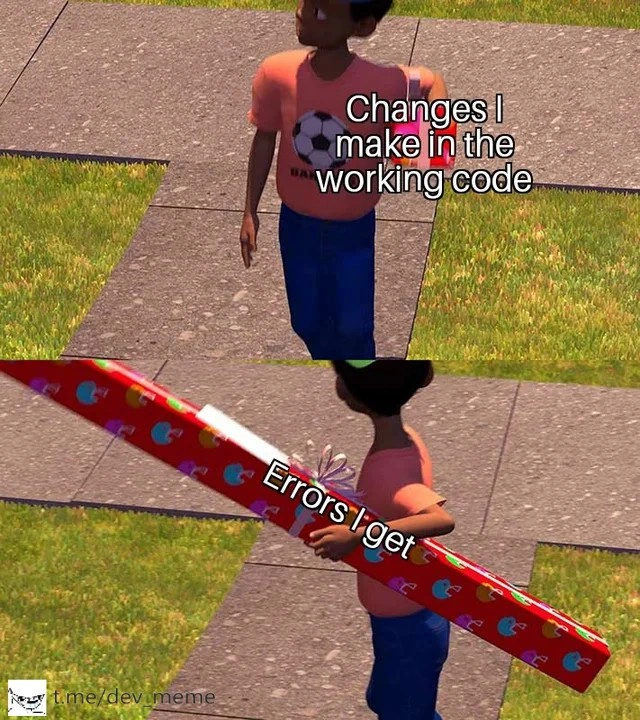
A two-panel meme using a scene from an animated movie. In the top panel, a 3D-animated character is shown holding a small, manageable gift-wrapped box. The text overlay reads, 'Changes I make in the working code'. This represents a seemingly minor and contained modification. In the bottom panel, the same character is now struggling to hold a ridiculously long, oversized, and unwieldy gift-wrapped box, illustrating a dramatic increase in size and complexity. The text here says, 'Errors I get'. The humor comes from the stark and disproportionate contrast, a relatable experience for any developer who has made a small, innocent-looking change only to be met with a massive, cascading flood of unexpected errors, build failures, and broken tests. It perfectly visualizes the 'butterfly effect' in complex or brittle codebases, where one tiny tweak can have catastrophic and far-reaching consequences


Comments
7Comment deleted
The fastest way to discover all the hidden architectural dependencies in a legacy system is to change one variable name and watch the CI/CD pipeline burn
Tweaked one boolean in the 2009-era auth service; CI responds with a gift-wrapped 5-GB stack trace, eight failing microservices, and a gentle reminder that “stateless” is just a state of denial
After 20 years in this industry, I've learned that 'working code' is just code whose bugs haven't been discovered yet - and touching it is like performing surgery with a chainsaw while the patient is running a marathon
Ah yes, the classic 'change one CSS padding value and somehow break the authentication service' scenario. This meme perfectly encapsulates what every architect fears: that innocent-looking three-line refactor in a 'stable' module that somehow triggers a distributed transaction deadlock across four time zones, causes the cache invalidation strategy to enter an infinite loop, and makes the monitoring system alert that the database is now convinced it's a teapot. It's the production equivalent of quantum entanglement - touch one variable, and suddenly services you've never heard of are throwing stack traces in languages your company doesn't even use. The skateboard's absurd size ratio is actually a conservative estimate; in reality, that error log would need its own S3 bucket and a dedicated Elasticsearch cluster just to store the first hour of exceptions
One-line tweak to the “working” util; CI gift-wraps 600 failures - apparently its fan-out graph mirrors our org chart
That tiny refactor touched a 'stable' module; turns out it was the monolith's global singleton of chaos and our regression suite is mostly integration theater
Refactoring working code: O(1) lines touched, Ω(explosive) bugs unleashed