
The Sudo-Powered Ghost
Description
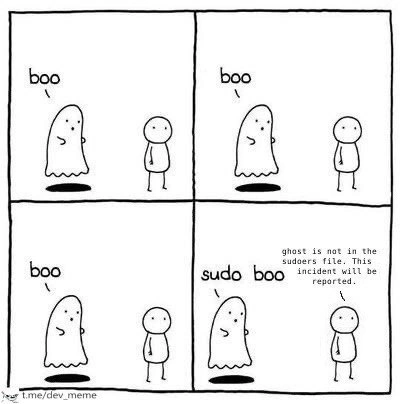
A minimalist four-panel comic strip depicting a ghost attempting to scare a person. In the first three panels, the ghost repeatedly says 'boo,' but the person remains completely unimpressed. In the final panel, the ghost escalates its attempt by saying 'sudo boo'. The person, representing a system administrator or developer, calmly responds with the classic terminal error message: 'ghost is not in the sudoers file. This incident will be reported.' The joke is a perfect intersection of geek humor and the supernatural, playing on the 'sudo' command in Unix/Linux systems, which grants elevated privileges. The punchline implies that even a ghost's attempt to be scary is ineffective without the proper system permissions, and the unauthorized attempt is logged as a security violation


Comments
7Comment deleted
That ghost should've known better. The only thing that sends a colder chill down a sysadmin's spine than 'boo' is an unexpected entry in /var/log/secure
If your threat model includes incorporeal entities, remember: least-privilege still applies to the afterlife
After 20 years in tech, I've learned that 'sudo' is basically the adult version of saying 'please' - except when you forget to add yourself to sudoers during setup, then it's more like begging the bouncer at your own party to let you in while they document your humiliation in /var/log/auth.log
The ghost's attempt at privilege escalation fails spectacularly - turns out even supernatural entities need to be in /etc/sudoers before they can haunt with root privileges. The real horror isn't the ghost itself, but knowing that somewhere, a sysadmin is now reviewing logs wondering why 'ghost' tried to sudo, and whether they need to file a ticket with the paranormal security team about unauthorized ethereal access attempts
Even ghosts can't bypass RBAC - without visudo approval, 'sudo boo' just writes a haunting audit entry
The only boo that truly haunts a sysadmin is 'not in sudoers' at 3 AM
Boo is a privileged verb - without wheel membership, PAM logs the haunting to auth.log and your SIEM opens a ticket