Skip to content
DevMeme
812 of 7435
An Unlikely Alliance on Class Structure
DesignPatterns Architecture Post #919, on Dec 18, 2019 in TG

An Unlikely Alliance on Class Structure

Why is this DesignPatterns Architecture meme funny?

Level 1: We Both Sort Things

Imagine two people who seem completely different finding out they share a quirky hobby: they both love sorting things into groups. One person always organizes all their stuff into neat categories – they might line up their toys by type or arrange their books by kind. The other person is always grouping people in their head – for example, thinking about who is in charge on a team and who follows, almost like making an imaginary ranking of friends. Even though one is doing it with objects and the other with people, they both get really into this idea of putting everything into neat groups and hierarchies.

Now picture them realizing they both have this funny habit. They get excited and do a big celebratory handshake because it’s so surprising and cool to find out someone else shares your odd obsession. It’s silly because you wouldn’t expect these two individuals to have anything in common at all, but here they are bonding over their love of organizing and classifying stuff. In simple terms: both just really, really like putting things into categories, and that unexpected shared passion is what makes the situation so funny to us.

Level 2: Class Consciousness 101

Let’s break down the joke more simply. Object-oriented programming (OOP) is a programming style where we organize code by using classes. A class in programming is like a blueprint or template for creating objects. It defines a type of thing by bundling data and functions that belong together. For example, a programmer might have a class called Car that defines what a car is and what it can do (properties like color, and methods like drive() or honk()). From that class, you can create many individual car objects (instances), each with specific values (one car might be red, another blue, but both follow the blueprint).

A big part of OOP is thinking carefully about how classes relate to each other. One key concept is inheritance, which means you can create a new class that automatically inherits (receives) attributes and behaviors from an existing class. It’s like how in real life a child might inherit certain traits or property from a parent. In code, for example, you might have a general class Vehicle and then a class Truck that inherits from Vehicle. This means Truck gets all the general features of Vehicle (like having wheels, an engine, etc.) without you writing that code again, and then Truck can add more specific features (maybe carryCargo()). We call Vehicle the parent class (or base class) and Truck the child class (or subclass). If you draw it out, you get a class hierarchy – a tree-like structure showing which classes inherit from which. (Picture a family tree, but for code: perhaps Vehicle at the top, with branches down to Car, Truck, Motorcycle classes that all extend from it.)

Another way to build complex things in OOP is composition. Instead of saying "A Manager is a kind of Employee (and inherits all its traits)", with composition you might say "A Manager has an Employee (as a part)". In practice, that could mean a Manager class holds an Employee object inside it and delegates some work to that employee object. Composition is like building with LEGOs – you combine pieces – whereas inheritance is more like modeling an animal species classification (where a Dog is a Animal). There’s often a design question of when to use inheritance versus composition; experienced developers like to remind newcomers to “favor composition over inheritance” when possible. That guideline exists because overusing inheritance (making very deep family trees of classes) can make code hard to maintain, a bit like a complicated bureaucracy. Composition keeps things more flexible by assembling objects without strict parent-child class ties. This ongoing inheritance vs composition debate is essentially about how to achieve code reuse and organize logic without causing a mess.

When we talk about design patterns or software architecture, we’re talking about common ways to structure classes and their interactions in larger programs. For instance, the Factory Pattern is a recipe for how one class can be dedicated to creating other objects (like a factory making products), and the Singleton Pattern is about ensuring there’s only one instance of a certain class. These patterns, taught in many programming courses and books, are basically tried-and-true solutions to organizing classes to solve particular problems. If you’re a junior developer, you might have encountered examples like an Animal base class with Dog and Cat subclasses, or an Employee class with a subclass Manager. Exercises like these drill in the concept of class hierarchies and design. Over time, you learn why a clear class structure is important: it makes the code easier to understand, extend, and maintain. If class design is done poorly, you can end up with confusing, tangled code where a change in one place unexpectedly breaks something elsewhere. That’s why developers can become a bit obsessed with getting class structure right – it saves a lot of pain during debugging and adding new features.

Now, on a very different track, let’s explain the Marxist side. Marxists are followers of the ideas of Karl Marx, a 19th-century thinker who studied how society works. Marx looked at history and economics and concluded that society is largely driven by conflicts between social classes. Social classes are groups of people defined by their role in the economy – for example, the working class (people who labor in factories, offices, etc., and earn wages) versus the capitalist class (people who own factories, companies, land – the ones who hire workers and earn profit). Marxists talk a lot about how these classes are structured in society (this is the class structure: who has power, who doesn’t) and how these groups struggle or conflict with each other (class struggle). In Marx’s theory, the history of society is a history of class struggles – like the working class eventually rising up against the ruling class to change the system. Terms like bourgeoisie (the owners, the wealthy class) and proletariat (the workers) come from Marxism and describe the major classes in a capitalist society. Essentially, Marxists spend a lot of time analyzing who’s on top, who’s at the bottom, and how that hierarchy can change – they are also fixated on hierarchy and relationships, but in social terms.

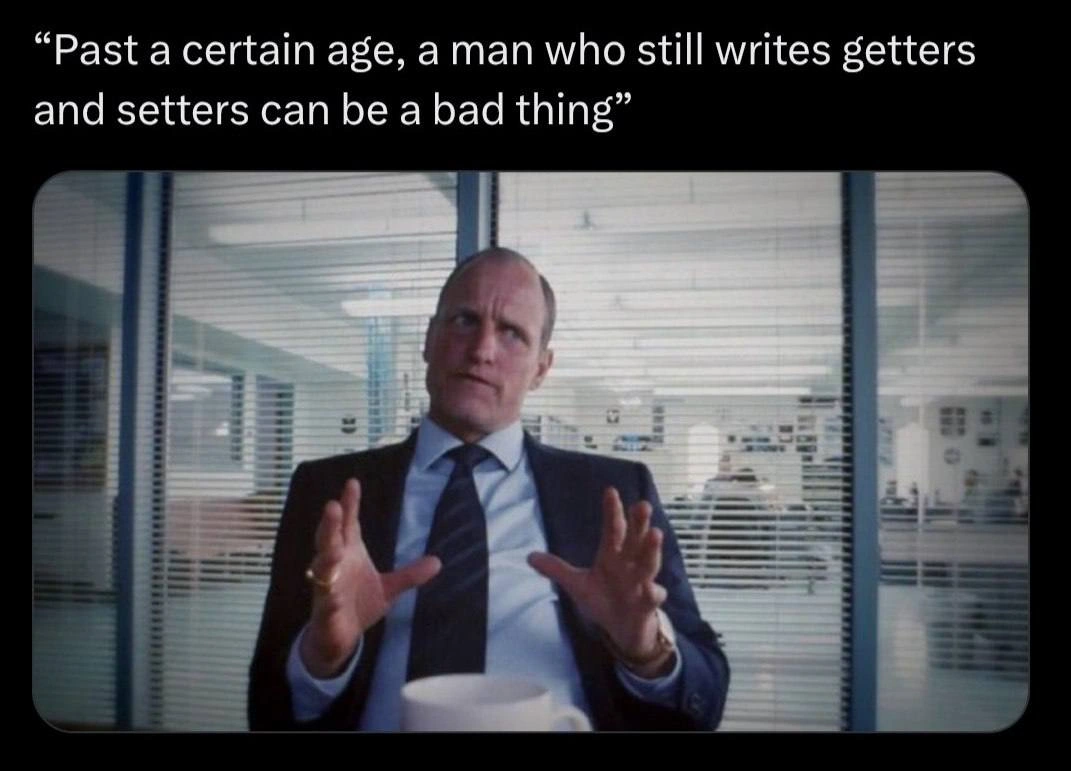
So, given those two definitions, here’s why the meme is funny: it jokes that object-oriented programmers and Marxists have something in common – an obsession with class structure! Of course, the word class means something very different in each context, but the phrase fits both perfectly. This kind of joke is all about a play on words (a pun). The meme uses the popular "Epic Handshake" format – two muscular arms from different sides coming together in agreement – to visually say “Group A and Group B unite over X.” In the text above the clasped hands, “Thinking about class structure” is the shared passion. The left arm is labeled “Marxists” (political folks thinking about social classes) and the right arm is labeled “Object-oriented programmers” (tech folks thinking about programming classes). It’s an amusing juxtaposition because normally you wouldn’t lump together a coding geek and a socialist theorist, right? But here we see they do share a very niche mental fixation: both love breaking the world down into classes and analyzing the heck out of those classes’ relationships! For a developer who has spent days modeling an object model for an app, the joke lands well — we do sometimes catch ourselves over-structuring things, almost like academics philosophizing about society. And if you’ve ever taken a class on software design right after a history or economics class, the overlapping language (class, hierarchy, structure, inheritance) is striking. It’s a nerdy connection to spot, and that’s exactly why it’s meme-worthy.

To really drive home the wordplay, let’s compare the key terms side by side:

Term In OOP (Programming) In Marxism (Society)
Class A blueprint or definition for objects (a type of thing in code, like class Car defines what a Car can do) A group of people with a similar role or status in society (e.g. the working class or the upper class)
Inheritance A mechanism for a class to automatically get traits (properties/methods) from a parent class (like Truck inherits from Vehicle) The transfer of wealth, property, or titles from one generation to the next (e.g. a wealthy family passing money down to their children)
Hierarchy An organizational chart of classes in a system (like a family tree of classes: a base class at the top and subclasses below it) A ranking of groups from highest to lowest in society (for example, upper class at the top and lower class at the bottom)

In programming, talking about a class hierarchy might mean sketching a diagram of Animal -> Mammal -> Dog to show which class inherits from which. In Marxist theory, analyzing the class hierarchy means describing how, say, the capitalist class sits above the working class in terms of power and wealth. The meme finds humor in the fact that the same phrase “class structure” so perfectly applies to both scenarios! It’s a perfect nerd crossover joke. Developers find it funny and relatable because many of us have been that programmer intensely reorganizing class diagrams (maybe over-engineering things a bit), which isn’t too far in spirit from a scholar intensely charting out social classes. Both involve a lot of theorizing about how different groups relate and which position is above or below which. The absurdity of comparing writing code to critiquing capitalism is what makes it comedic. In a way, it’s poking fun at programmers for how seriously we sometimes take our design patterns and architecture, to the point where we accidentally sound like we’re discussing some grand theory of society. The meme gives a light-hearted reminder: hey, obsessing over structure is not just a coder thing – even political theorists do it! And that unexpected connection is what makes people crack a smile.

Level 3: Bourgeois Base Classes

At the highest level, this meme hilariously ties together two worlds that normally never meet: Marxist social theory and object-oriented programming (OOP). The handshake image (a nod to the 'Epic Handshake' meme from Predator) shows "Marxists" and "Object-oriented programmers" gripping hands over a shared obsession: "Thinking about class structure." In Marxist political philosophy, "class structure" means the hierarchy of social classes (think bourgeoisie vs proletariat – the wealthy class versus the working class). In OOP, "class structure" refers to the hierarchy of software classes (think base classes vs derived classes – parent classes and their subclasses in code). It's a brilliant double entendre that tickles senior devs because, let's face it, both groups can dive ridiculously deep into analyzing hierarchies and relationships. They may be pondering completely different things, but the mental exercise of structuring layers is an obsession they share.

Seasoned software engineers recognize the joke because they've been in endless architecture discussions about how to structure code classes: Should we refactor this into an abstract base class with multiple subclasses? Are we following the SOLID principles for good class design? Is our inheritance tree too deep? These are near-religious debates in programming circles. Meanwhile, Marxists have their own intense discussions about social class hierarchies and power structures: Who owns the means of production? How do the upper classes maintain control over the lower classes? The humor pops out from this unlikely kinship: the software architect and the social theorist are both guilty of overthinking how things (or people) are grouped and ranked! The meme is winking at us, saying “look, both types of nerds overanalyze class structure.”

The parallel in terminology is delicious. Inheritance in OOP is when a class acquires properties and behaviors from a parent class (like class Manager extends Employee in code), whereas in society, inheritance means wealth or status passed down by your family. Both forms of inheritance can create rigid structures if overused. In fact, experienced devs often caution “prefer composition over inheritance” – essentially advising to avoid overly stratified class hierarchies in code. It’s like the coding equivalent of promoting a more egalitarian system instead of a strict monarchy of classes. When your codebase has a God Object or one monolithic superclass that dictates everything, it starts to feel like an oppressive ruling class lording over peasant objects. 😅 This meme plays on that comically apt comparison. Senior developers smirk because it’s painfully relatable – some codebases we've seen have more layers of bureaucracy than an actual society!

Consider how an overly OOP-heavy project can inadvertently mimic a class-divided society. We've all seen those enterprise codebases where there's an AbstractFactoryManager at the top of the pyramid, a bunch of mid-tier Manager classes in the middle, and then the humble worker classes at the bottom doing all the real work. It’s basically a corporate org chart transcribed into code. The meme slyly evokes the bourgeoisie–proletariat divide: the high-level framework classes (the “ownership” or controller classes) end up delegating toil to the low-level classes (the “worker” objects) who do the grunt work. This is the kind of tongue-in-cheek analogy that makes veteran devs laugh and groan — because we’ve refactored such class pyramids in our careers, essentially leading a little “class struggle” in the code to flatten an over-engineered hierarchy. The battle between inheritance vs composition in programming can feel like an ideological conflict: do we stick with traditional class lineage (status quo) or do we revolutionize the design by breaking things into simpler, collaborating parts?

And then there’s the whole OOP theory canon – volumes of literature akin to ideological tomes. The SOLID principles (Single Responsibility, Open/Closed, Liskov Substitution, Interface Segregation, Dependency Inversion) are basically a manifesto for structuring classes and their interrelations (with an almost revolutionary zeal for how to organize code “correctly”). The famous Gang of Four design patterns book? That’s our encyclopedic guide of best practices for class design and object collaboration, as dense to a junior dev as a political economy textbook is to an average reader. In other words, in their own domains, both the Marxist and the senior OOP dev passionately geek out over how things are organized into classes and who inherits what from whom.

The punchline is that, despite coming from opposite ends of the intellectual spectrum, Marxists and OOP programmers find camaraderie in this hyper-focus on class structure. The meme essentially says: “Look, we obsess over the same thing!” It’s a clever cross-disciplinary nod that resonates with experienced programmers who appreciate both a good wordplay and some self-deprecating humor about our profession’s tendencies. After all, who else spends entire afternoons drawing complex class diagrams or mapping out societal class hierarchies? The juxtaposition is both absurd and spot-on. We can practically imagine a programmer and a social theorist high-fiving and exclaiming, “Down with chaos, everything must be neatly categorized into classes!” In the end, the meme leaves us with a final cheeky thought: Marxists dream of a classless society, and perhaps OOP devs secretly dream of a class-less codebase (one with fewer convoluted classes or maybe shifting to simpler paradigms). Both are striving for a kind of utopia free of overbearing structures. 😉 It’s this kind of layered humor that makes the meme golden for those in the know.

Description

This meme utilizes the 'Epic Handshake' format, which depicts two muscular arms - one Black, one white - clasping hands in a powerful agreement. The arm on the left, belonging to a person in a white shirt, is labeled 'Marxists'. The arm on the right, from a person in a red shirt, is labeled 'Object-oriented programmers'. The central point of their handshake is captioned 'Thinking about class structure'. The humor is a sophisticated pun based on the term 'class structure'. For Marxists, it refers to the hierarchy of social classes in a society (e.g., bourgeoisie, proletariat). For object-oriented programmers, it refers to the design and organization of classes in a codebase. The meme creates a hilarious and unexpected bridge between political theory and software engineering, two completely disparate fields, based on this shared terminology
Comments

7
Anonymous ★ Top Pick The key difference is that in OOP, a 'Worker' class can inherit directly from the 'Bourgeoisie' base class, and we call that 'good architecture'
  1. Anonymous ★ Top Pick

    The key difference is that in OOP, a 'Worker' class can inherit directly from the 'Bourgeoisie' base class, and we call that 'good architecture'

  2. Anonymous

    Both camps agree that abolishing the bourgeoisie is simpler than refactoring a God-object into an abstract base class

  3. Anonymous

    Both groups spend years arguing about inheritance, but only one of them can actually override their parent's methods without starting a revolution

  4. Anonymous

    When your Marxist friend starts ranting about class struggle and inheritance, and you realize you've been having the same conversation about your Java codebase - except their revolution involves seizing the means of production while yours involves refactoring a God object that's been exploiting worker threads for years

  5. Anonymous

    Favor composition over inheritance, comrades - or risk a proletarian uprising in your diamond problem hierarchies

  6. Anonymous

    Wild that both debate inheritance - developers get the fragile base class problem; the other crowd gets generational wealth

  7. Anonymous

    After years of debugging 8‑level inheritance, I’m pro‑abolition too - abolish base classes and seize the means of instantiation

Use J and K for navigation