
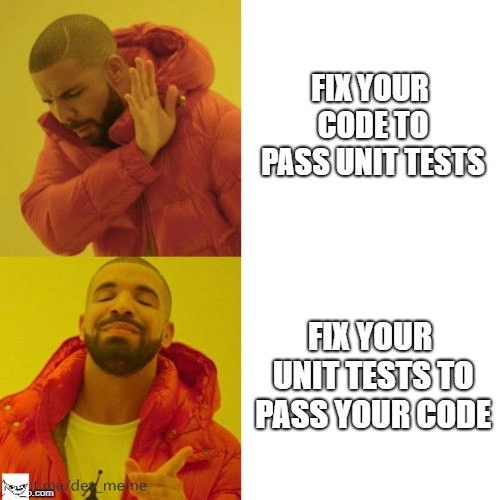
The Art of Making Unit Tests Agreeable
Description
A classic 'Drake' meme format with two panels. In the top panel, the rapper Drake is shown with a look of disapproval, hand raised in a 'no' gesture. The adjacent text reads, 'FIX YOUR CODE TO PASS UNIT TESTS'. In the bottom panel, Drake has a pleased, knowing smile. The text next to him reads, 'FIX YOUR UNIT TESTS TO PASS YOUR CODE'. A watermark for 't.me/dev_meme' is in the bottom-left corner. This meme satirizes a common anti-pattern in software development. The correct and disciplined approach when a unit test fails is to debug and fix the application code. The humorous, lazy, and often-tempting shortcut is to simply modify the test itself to accept the code's incorrect behavior, creating a 'green' build without actually fixing the underlying issue. It's a cynical nod to the pressures of deadlines and the human tendency to choose the path of least resistance, even if it leads to technical debt
Comments
7Comment deleted
Why argue with your code when you can just gaslight the unit test into believing it was wrong all along?
Career milestone: replacing every assertEquals() with assertDoesNotThrow() and calling it “realigning tests with the business roadmap.”
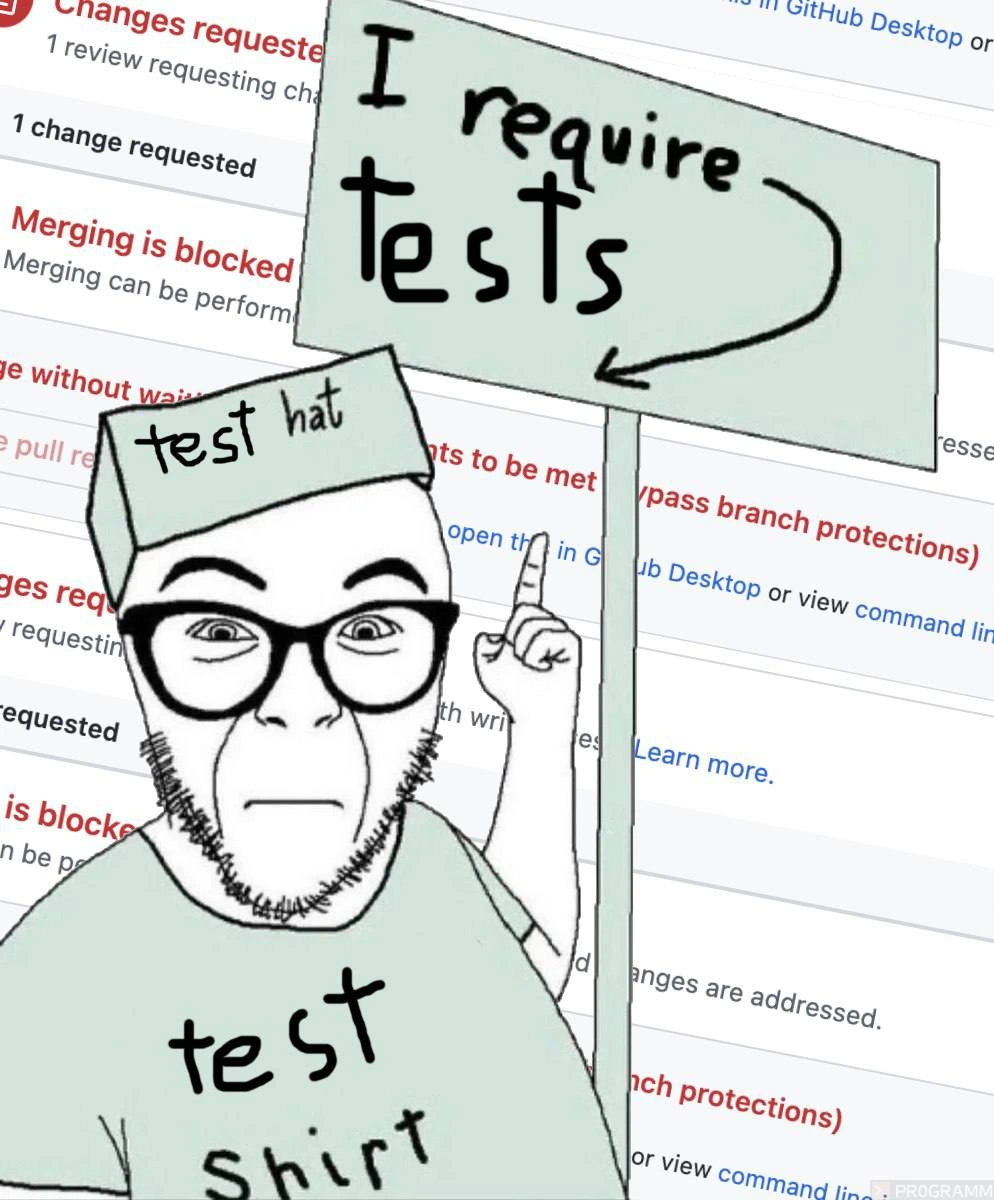
The same developer who insists on 100% code coverage in PR reviews has a personal project with a single test that just asserts true === true
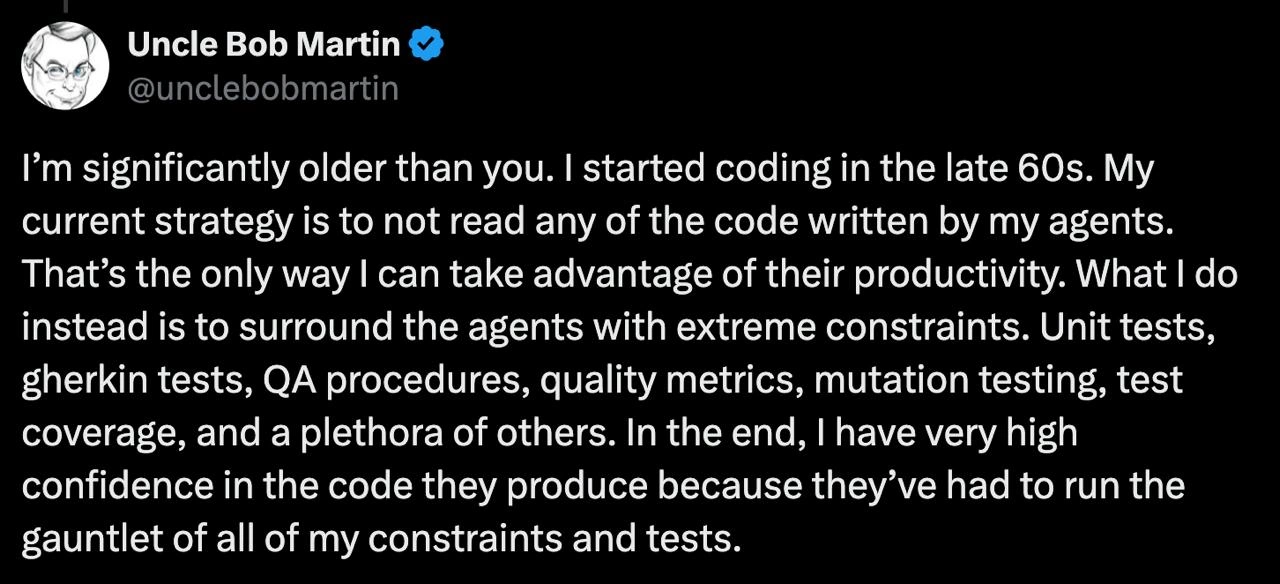
Ah yes, the classic 'make the tests pass' strategy - where 'pass' is interpreted very liberally. It's like debugging by commenting out the assert statements: technically the CI pipeline goes green, but you've just transformed your test suite from a safety net into a participation trophy. Senior engineers know this is how you end up with 100% code coverage and 0% confidence in your deployments - the tests become elaborate theater, performing their green checkmarks while the production bugs wait patiently in the wings for their Friday 5 PM debut
TDD zealots weep left, battle-scarred architects nod right - because refactoring tests is the tech debt no one audits
When tests assert implementation details, refactors become felonies - we update snapshots, loosen the mocks, and pray mutation testing isn't enabled
Modern TDD: red → re-baseline the snapshots → green - because nothing fails once you redefine “expected.”