
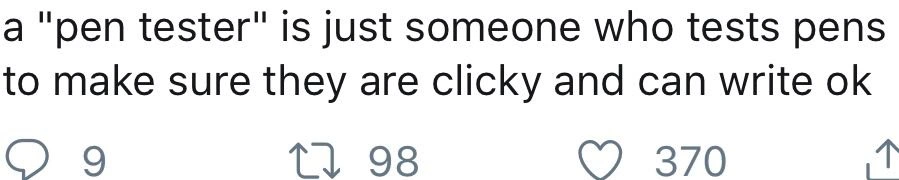
When non-tech folks define “pen tester” literally in security conversations
Description
The image is a cropped screenshot of a tweet-style post on a white background with light-gray Twitter UI icons beneath it. The tweet text reads: “a 'pen tester' is just someone who tests pens to make sure they are clicky and can write ok”. Below the text are the standard reply, retweet, and like icons showing counts of 9 replies, 98 retweets, and 370 likes, rendered in Twitter’s pale blue and gray color scheme. The humor comes from a literal misinterpretation of the cybersecurity role “penetration tester,” conflating it with physically testing ball-point pens for clickiness and ink flow. For developers and security engineers, the joke highlights how specialized jargon can be misunderstood outside the infosec community, underscoring the importance of clear communication about security roles
Comments
7Comment deleted
Execs bragged we finally did a “pen test” - procurement delivered two pallets of ballpoints and compliance closed the ticket, while the red team still has root on prod shaking their heads
Wait until they hear about our "white hat" hackers who just test if fedoras match different outfit combinations
Honestly more rigorous than some pentest reports: at least the pen QA includes a reproducible click test instead of a rebranded Nessus scan PDF
This perfectly captures the moment when you're explaining your job at a family gathering and realize you should've just said 'cybersecurity' - because now Aunt Karen thinks you have the world's most boring QA job, and honestly, after your third consecutive 16-hour shift trying to exploit a zero-day in production, testing if a Bic clicks properly sounds like a vacation
We asked for a pentest; procurement shipped a carton of clicky pens - /admin still returns 200 without auth
Pen tester's CVE: Critical Vulnerability Exposed - ink evaporates post-prod deployment
Procurement misread “pentest” and hired someone to QA our Bic; the findings still mapped to OWASP: ballpoint injection, Sharpie persistence, and wet-signature privilege escalation