
Languages Post #1109 · source on Telegram
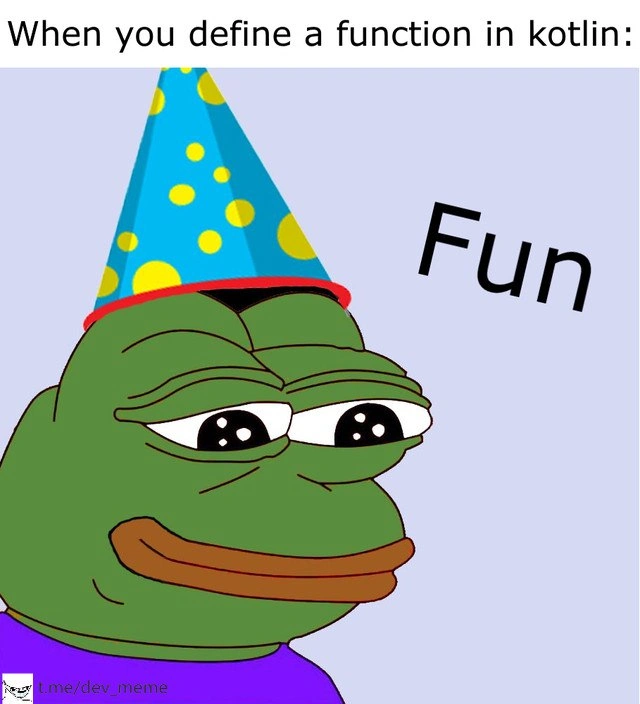
When Kotlin’s 'fun' keyword makes every function definition unexpectedly fun
Description
The meme has a white banner at the top with black text that reads, "When you define a function in kotlin:". Centered below, the familiar cartoon frog character wears a blue cone-shaped birthday hat decorated with yellow dots, all set against a light lavender background. To the right of the frog, the single word "Fun" is printed in large, tilted, bold black letters. A tiny watermark "t.me/dev_meme" sits in the lower-left corner. Visually, the joke exploits the Kotlin language keyword "fun" - used to declare functions - by literally portraying it as a celebratory moment, highlighting a playful language quirk that resonates with developers who appreciate concise syntax and wordplay in programming language design

More like this
More like this in Languages →
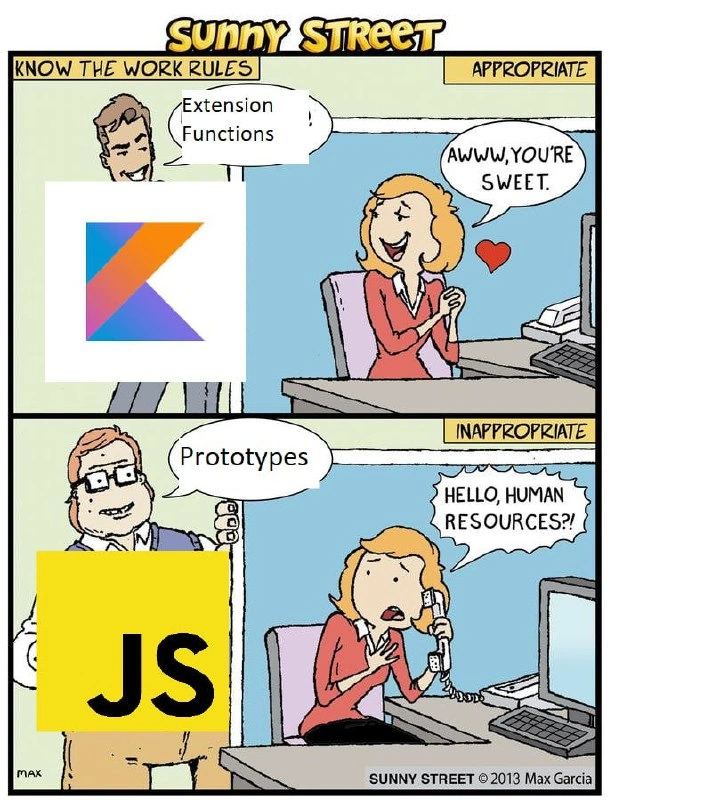
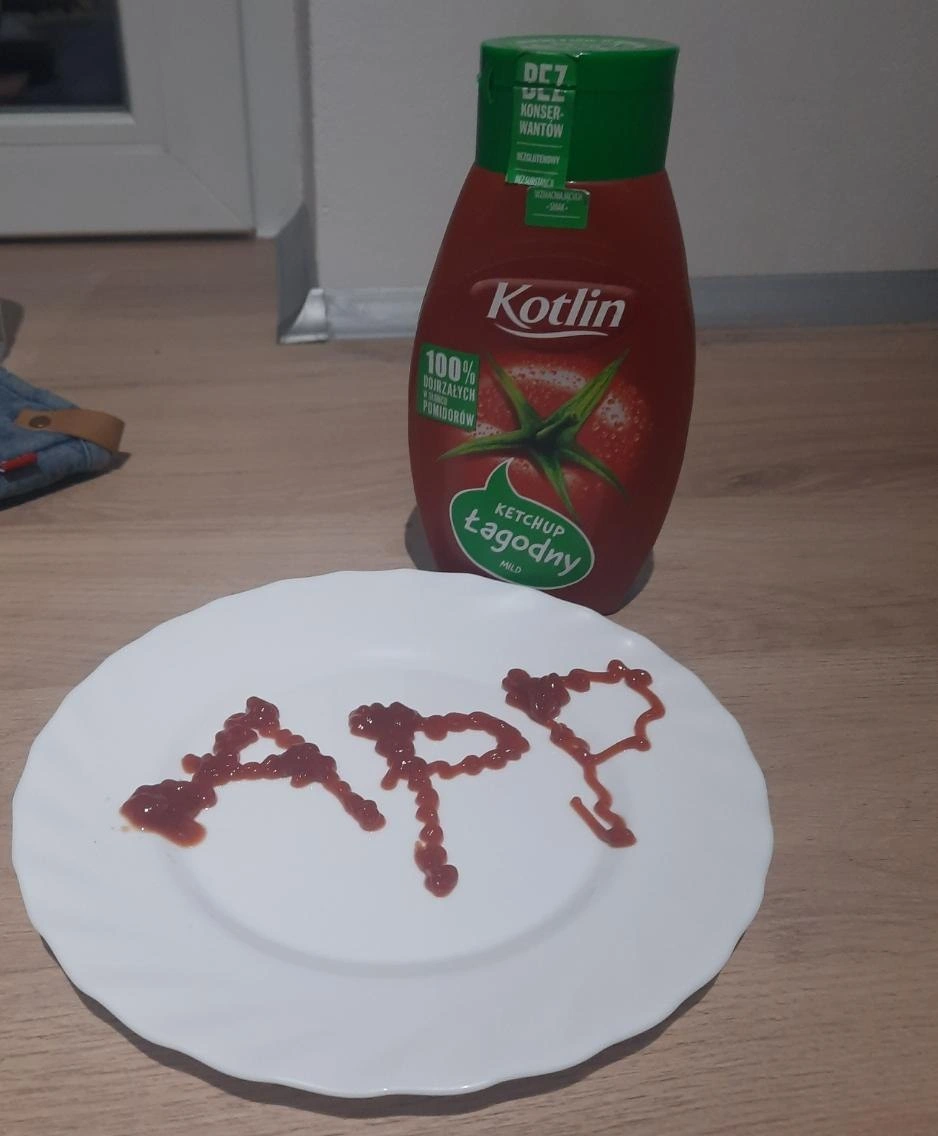
Use J and K for navigation
Comments
6Comment deleted
Kotlin makes you prefix every method with “fun,” but once it’s inline, suspend, reified, and an extension on a sealed generic, the only thing still having fun is the compiler
After 15 years of explaining why Java's verbosity is actually "enterprise-ready documentation," you switch to Kotlin and realize the real enterprise pattern was Stockholm Syndrome all along
Kotlin's designers knew exactly what they were doing when they chose 'fun' over 'function' or 'def' - it's the only language where your code reviews can legitimately start with 'this fun isn't fun enough.' Meanwhile, Java developers are still typing 'public static void' and wondering why their standups feel so formal
Kotlin calls it “fun”; the minute your suspend fun touches a Java callback, it becomes resumeWith(Exception)
Kotlin's 'fun': syntactic joy that inevitably funnels into Java interop regret
Kotlin guarantees at least one ‘fun’ per file - the rest waits behind a seven‑minute Gradle sync, a kapt round, and an IDE cache rebuild