
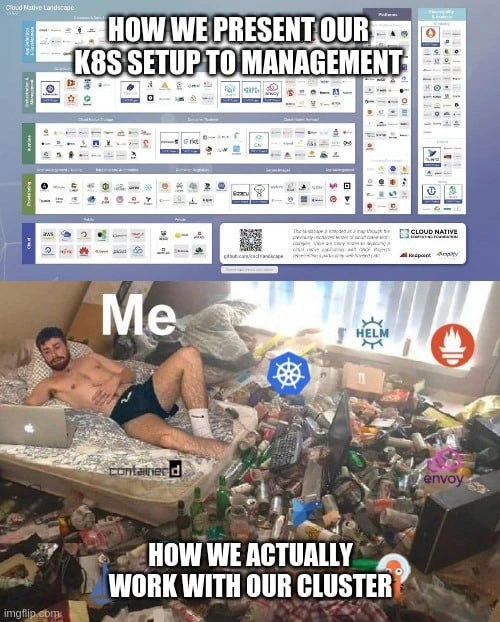
Kubernetes Architecture: Presentation vs. Reality
Description
A two-panel meme contrasting idealized system architecture with operational reality. The top panel is captioned, 'HOW WE PRESENT OUR K8S SETUP TO MANAGEMENT,' and displays the notoriously complex and sprawling Cloud Native Landscape diagram, implying a well-organized, comprehensive system. The bottom panel, captioned, 'HOW WE ACTUALLY WORK WITH OUR CLUSTER,' shows a starkly different scene: a shirtless man ('Me') lying on a mattress with a laptop in a room completely buried in trash, empty cans, and discarded items. Logos of key cloud-native technologies - Kubernetes (k8s), Helm, Prometheus, containerd, and Envoy - are photoshopped into the mess. The humor stems from the relatable disconnect between the clean, abstract architectural diagrams shown to stakeholders and the messy, chaotic, and often ad-hoc reality of building and maintaining such complex systems. For experienced engineers, it's a perfect visual metaphor for the technical debt and operational complexity that hides behind polished presentations
Comments
7Comment deleted
The architecture diagram is the test environment; the messy room is the production cluster at 3 AM during a Sev-1 incident
If your PowerPoint architecture slide has more uptime than the cluster it describes, you might be doing SRE theatre
We show executives the CNCF landscape like it's a well-organized garden, but our actual K8s cluster is more like trying to conduct an orchestra while the musicians are all containers that randomly restart, the sheet music is written in YAML, and someone keeps force-pushing to the Helm charts repo at 3 AM
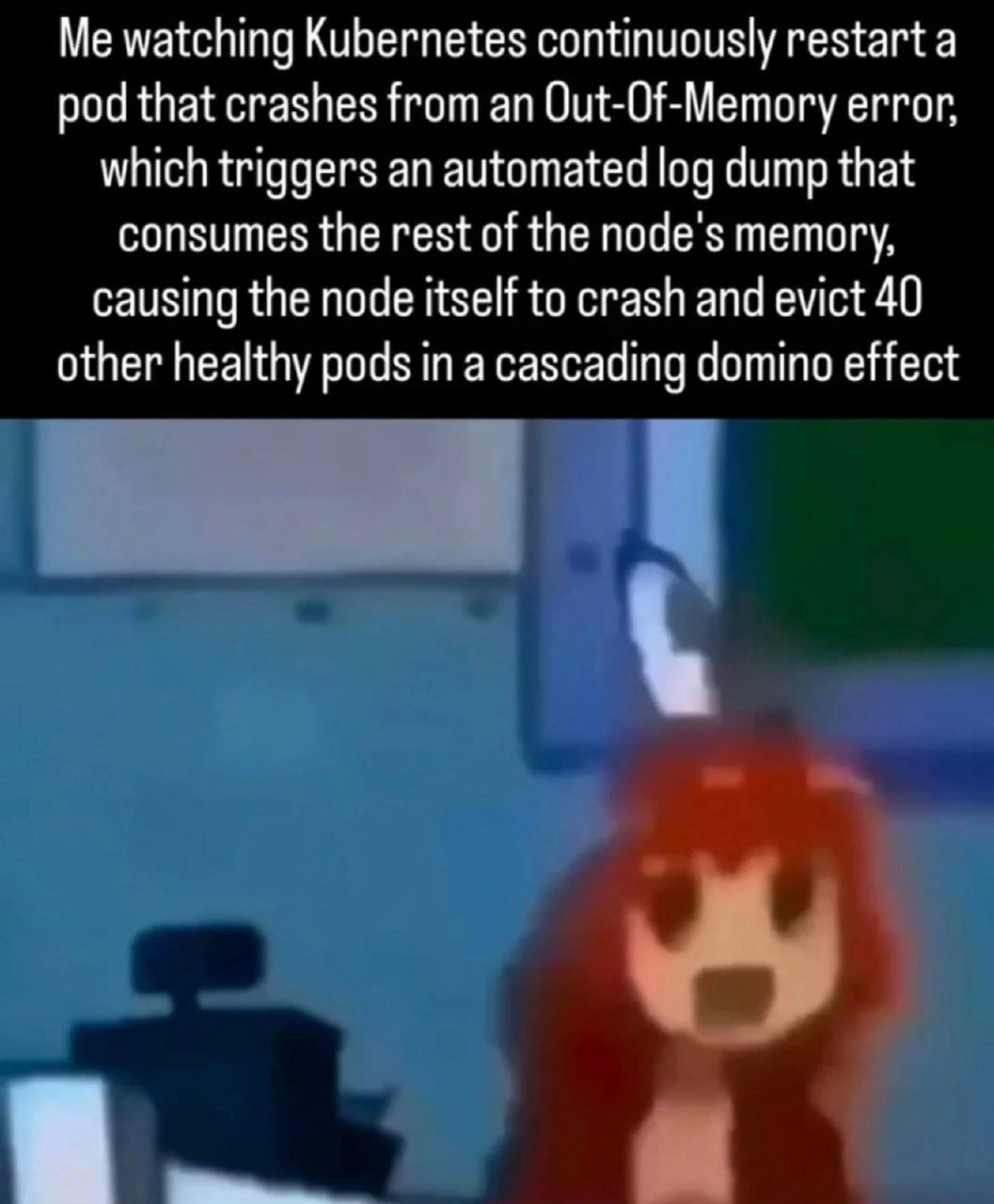
The CNCF landscape has more tools than a Harbor Freight, but somehow we're still debugging why our pod is stuck in CrashLoopBackOff at 2 AM with nothing but kubectl logs, Stack Overflow from 2019, and the faint memory of that one Slack thread where someone said 'just increase the memory limits.'
Management sees a Kubernetes utopia in Grafana; we live the etcd reconciliation loops and zombie pod purges in sweatpants
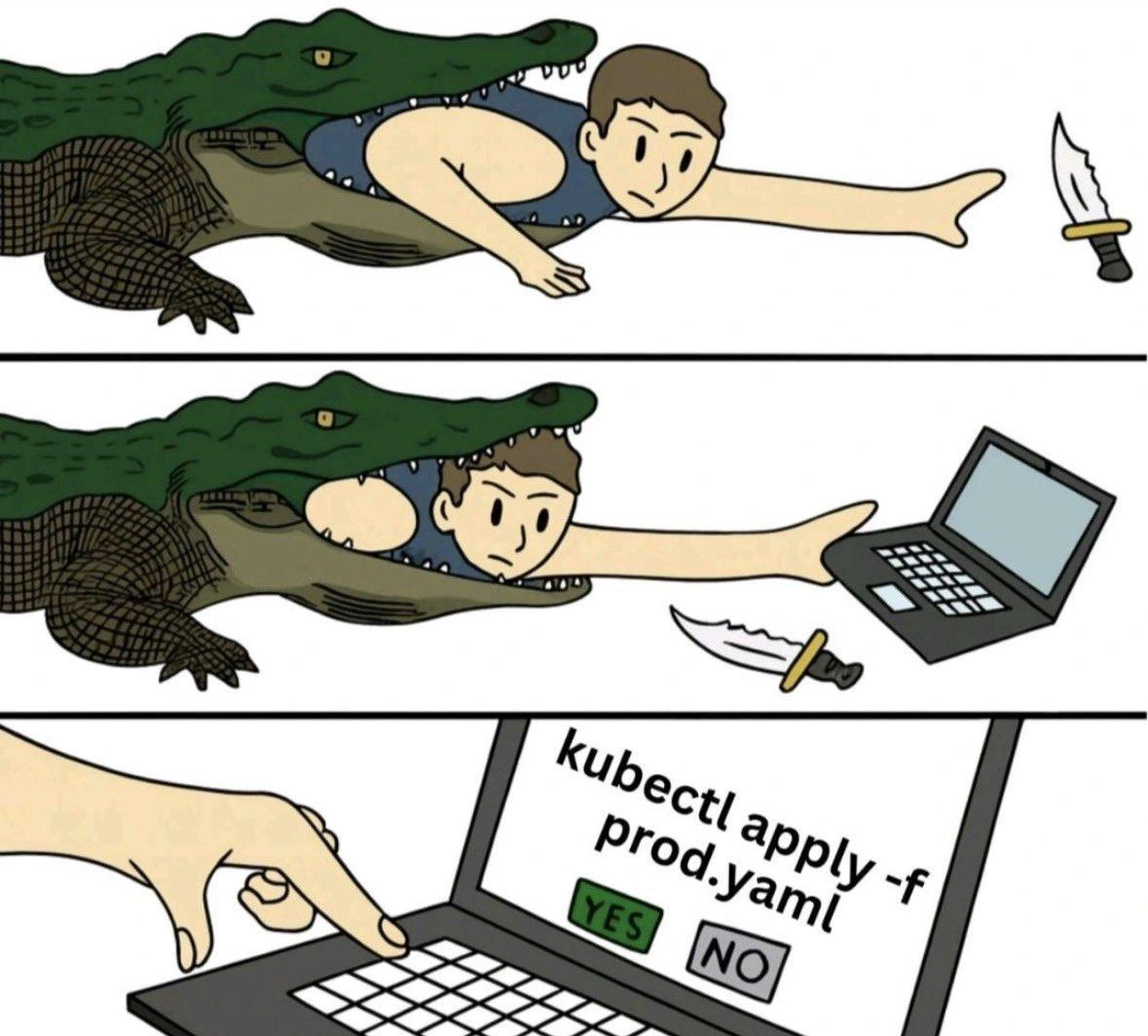
To execs: “CNCF‑aligned platform with service mesh and SLOs”; to reality: kubectl apply -f values.yaml, port‑forward Prometheus, and hope that CrashLoopBackOff is a bad readinessProbe - not my performance review
Our deck shows a full service mesh; in prod it’s a single kubeadm control plane on a noisy t3.large, three Helm releases glued by a 500-line values.yaml, Prometheus alerts permanently “temporarily silenced,” and Envoy only there because the chart wouldn’t install - SLA powered by hope