Skip to content
DevMeme
4988 of 7435
The Only Linux Tech Support You Need
DevCommunities Post #5455, on Sep 15, 2023 in TG

The Only Linux Tech Support You Need

Why is this DevCommunities meme funny?

Level 1: Just Read It

Imagine you ask your older friend how to build a complicated LEGO set, and instead of showing you step by step, they toss you the instruction booklet and say, “Figure it out!” This meme is just like that, but in the world of computers. A new person is asking for help with Linux (a computer system), and the experienced person basically says, “Here’s the manual, just read it.” It’s funny because the expert would rather hand over a thick book of instructions than spend time explaining. It’s a bit like a teacher who, when a student asks a question, just points at the textbook with a smile. The joke highlights how experts sometimes refuse to “spoon-feed” answers – they prefer the learner try to help themselves. So the meme shows Drake (the guy in the pictures) saying “no” to giving an easy explanation, and happily saying “yes” to telling them to read the manual. It’s poking fun at that tough-love approach: instead of gentle help, the newbie gets a nudge to read the instructions on their own. In simple terms, it’s saying: sometimes the “help” you get is just being told to help yourself!

Level 2: Terminal Tough Love

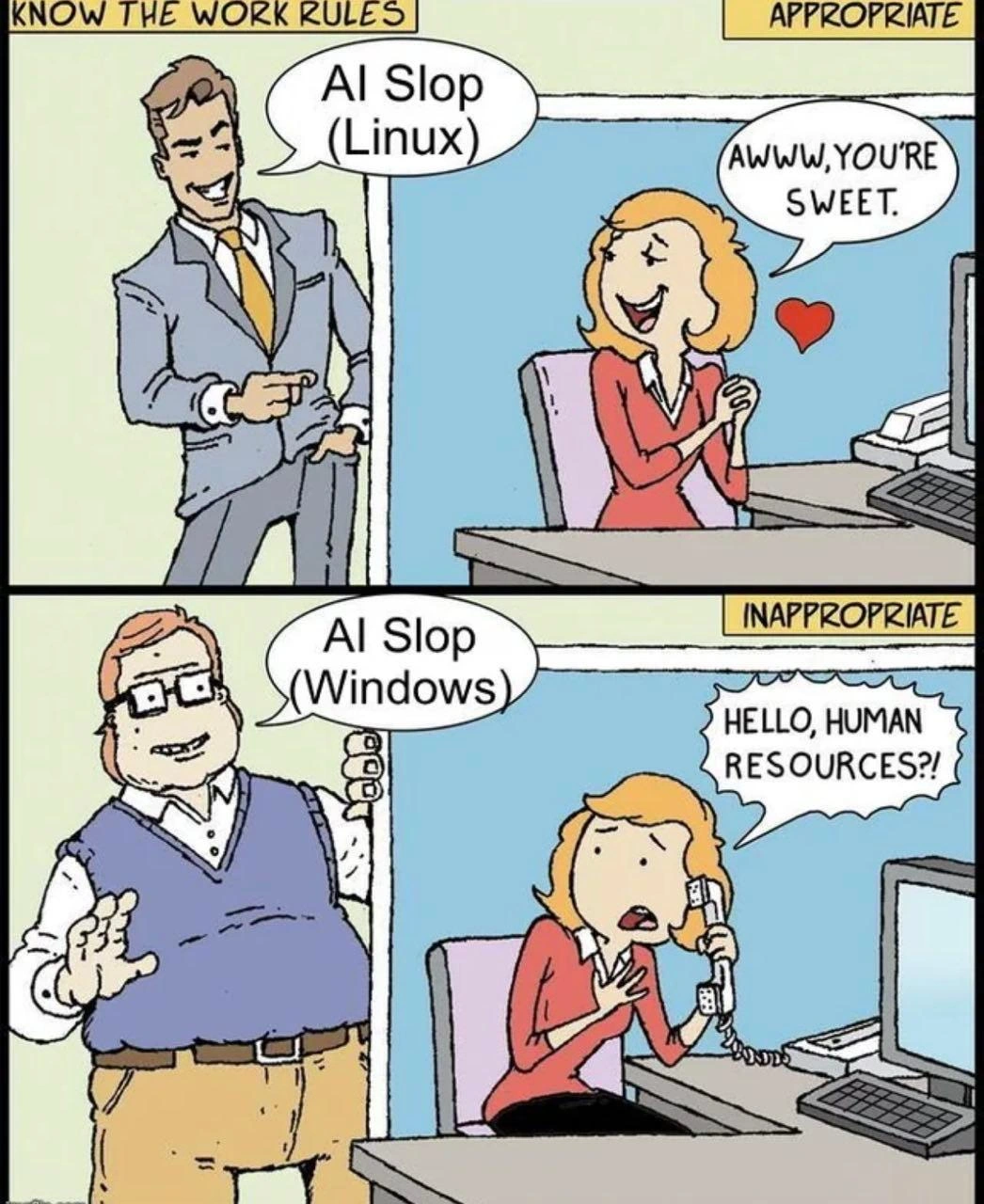
Let’s break this down. The meme uses the popular Drakeposting format (two panels with Drake rejecting in the first and approving in the second). In the top panel caption, he’s turning away from “explaining the solution to a problem to a new GNU/Linux user.” This means our Drake-character (standing in for a seasoned Linux admin) does not want to personally walk a newbie through fixing their issue. In the bottom panel, Drake is happy and pointing to “RTFM!” – a bold directive to the newcomer. RTFM is an acronym that stands for “Read The Fing Manual.”* (The “F” is a not-so-polite emphasis – sometimes cleaned up as “Read The Fine Manual” in polite company). In essence, it’s telling the user: “the answer is in the documentation, go read it.”

Why is this funny to developers? It’s highlighting a real LearningCurve in the Linux world. Linux (or more formally GNU/Linux) is an operating system that relies heavily on the Command Line Interface (CLI) – that text-based terminal where you type commands. Every command in Linux usually comes with a manual page (often accessed by typing man <command> in the terminal). These man pages are like reference sheets: they list what the command does, what flags or options it accepts, and examples of usage. For example, if you type man ls, it will show you the manual for the ls command (which lists directory contents). This manual will tell you that using ls -a will show hidden files, among many other details. The manual is thorough but quite concise and a bit cryptic for beginners. It assumes you know some jargon and command syntax.

Now, in many DeveloperCommunity forums, Q&A sites, or chat rooms (like old-school IRC channels or modern Linux subreddits), newbies often ask questions that the veterans feel are “basic” or already answered by these manuals. A “seasoned Linux admin” – someone who has used Linux for years, likely in a server or sysadmin role – might have seen the same question dozens of times. For them, the quickest reply is a brusque “RTFM.” It’s basically saying: “The solution to your problem is already written in the manual, please go read it instead of expecting me to explain.”

Think of typical scenarios:

  • A new user asks: “How do I copy files in the terminal?”
    Answer from veteran: “RTFM for the cp command.” (They expect the user to run man cp and figure it out).
  • New user: “My shell is giving me an error I don’t understand.”
    Veteran: “Did you RTFM?” (Implying the explanation of the error is in the documentation).
  • New user: “What’s the command to search for text in files?”
    Veteran: “RTFM grep.” (In other words, use the grep manual page which explains how to search in files).

This approach is often called “tough love” in tech forums (or as the tag says, forum_tough_love). It means the experienced users believe they’re helping in the long run by pushing newcomers to help themselves. It’s not exactly friendly, but it’s common, especially in more old-school communities. They assume that by forcing new folks to read the available Documentation, they’ll learn not just the immediate answer but also how to find answers on their own next time. It’s like a strict teacher refusing to just give the homework answers, and instead pointing you to the textbook chapter. In the context of GNU/Linux onboarding (getting started with Linux), this can be a hurdle: the documentation is comprehensive but can be overwhelming for beginners. That’s why some newbies feel frustrated when told “RTFM” – it comes off as dismissive.

The meme’s humor comes from recognizing this cultural habit and exaggerating it. Drake’s happy face saying RTFM! is basically an experienced admin’s inner cheer when they can avoid a long explanation by just dropping that acronym. The Drake meme format amplifies the contrast vividly:

  • First frame: No thanks to patient explanation. (Drake is like “nope” ✋)
  • Second frame: Yes to telling them to read the manual. (Drake is pointing "exactly!" 👍)

It’s a simple image that instantly communicates the joke to anyone who’s been on a tech forum or helpdesk where this happened. And since it’s tagged with Linux and CLI, it specifically targets those scenarios with Linux commands and terminal issues. The tag man_page_supremacy even hints at the idea that in Linux culture, man pages (manuals) are considered the supreme source of truth – more valued than personal advice. In other words, if it’s not in the man page, it might as well not exist, and if it is in the man page, you shouldn’t be asking others about it.

For a newer developer or someone not familiar with this environment, here’s some quick context: GNU/Linux refers to the combination of the GNU project’s software and the Linux kernel – basically the kind of Linux you run on servers or PCs (distributions like Ubuntu, Fedora, etc.). These systems come with built-in documentation accessible via the man command. So when someone says “RTFM,” pragmatically they mean “use the man command or official docs to find your answer.” The meme is a tongue-in-cheek way of saying that experienced folks can be a bit tired of answering the same questions and would prefer if beginners utilize existing docs. It’s both a genuine advice (because learning to read documentation is a crucial skill) and a bit of a snub (because it lacks the personal, guiding touch a newbie might hope for). In any case, if you’re new to Linux and someone tells you “RTFM,” now you know: they want you to open up that terminal manual page or guide and figure it out yourself. It’s tough love at best, and just plain tough at worst.

Level 3: Man Page Supremacy

In the top panel of this meme, Drake (in his orange jacket) waves off "explaining the solution to a problem to a new GNU/Linux user". In the bottom panel, he points approvingly at “RTFM!”. This flips normal helpdesk etiquette upside-down. The joke is that a seasoned Linux administrator (Drake’s persona here) would rather drop the one-liner RTFM than walk a newbie through a fix. It’s a snapshot of classic RTFM culture in open-source: why hand-hold when the manual has all the answers? The meme exaggerates this DeveloperCommunity habit using the famous Drake format (him rejecting one thing, embracing another) to highlight a very real tech support attitude. Drake’s smug grin in the second panel pretty much is that veteran admin feeling clever about replying with a manual reference instead of a detailed explanation.

This is poking fun at the unwritten rule in many CLI and sysadmin communities: the manual page is gospel. It’s a bit of man page supremacy. Instead of spoon-feeding solutions, gurus direct newcomers to the official docs or man pages. Why? Partly because every Linux command (ls, grep, tar, you name it) comes with a meticulously written man page that already documents all the options and usage. Telling someone "RTFM" is shorthand for "the answer is in the manual, just read it yourself". For example, if a novice asks, “How do I search text in files on Linux?”, a grizzled admin might respond: “RTFM for grep – implying “open the grep manual page, it’s all there.” It’s a mix of efficiency, frustration, and a dash of elitism: the assumption that everyone should navigate those terse docs like a rite of passage.

This attitude has deep roots in GNU/Linux onboarding dynamics. Historically, Unix and Linux culture prides itself on self-service learning. Manuals have been around since the '70s, originally as printed booklets and later as the man command’s output in terminals. Seasoned admins grew up with these, sometimes literally reading (and memorizing) entire man pages to master the OS. Veteran CLI users often consider reading documentation the proper way to learn — they did it in their day, so newbies should too. It’s a badge of honor among the old guard: “I survived reading man bash front-to-back, so can you.” When our meme’s Drake says “RTFM!”, he’s channeling that crusty old sysadmin vibe: the manual was good enough for me, kid, it’ll be good enough for you. 😏

From a senior engineer’s perspective, this meme is painfully on-point. We’ve all seen basic questions flood forums and IRC: “How do I list files in a directory?”, “What’s the command to unzip tar.gz?”, or the legendary “How do I exit vim?” After you’ve answered "ls -a", "tar -xzvf", or ":q!" for the hundredth time, you get pretty cynical. You start defaulting to replies like “Check the manual” or dropping the infamous acronym. It’s a form of forum tough love: veterans think they’re encouraging self-reliance (and saving themselves time) by refusing to hand out easy answers. The Drake meme nails the humor here — the top panel (Drake disgusted) is “ugh, explaining step-by-step yet again? no thanks,” and the bottom (Drake pleased) is “oh yes, I’ll just say RTFM and call it a day.” It’s simultaneously a chuckle at how unhelpful that is and a nod of recognition, because every experienced Linux user either knows someone like this or is someone like this on a bad day.

Of course, beneath the humor is a real friction: new users often find man pages intimidating – they’re dense and assume you already know certain Unix conventions. Shouting RTFM can feel like a gatekeeping wall to a newcomer. But in the eyes of a battle-hardened sysadmin, it’s a necessary initiation. Why waste time typing out instructions that already exist in canonical form? As the saying goes (in every grumpy admin’s heart), “Give a person an answer, you fix their problem for a day. Teach them to read the manual, you fix their setup for life.” In other words, RTFM is the ultimate tough love documentation approach. The meme gets a laugh because it distills that whole dynamic into two punchy panels. It’s DocumentationHumor with a sharp edge: the kind that makes experienced devs smirk and newbies roll their eyes (once they have RTFM’d enough to get the joke).

Description

A classic two-panel 'Drake Hotline Bling' meme format with a yellow-orange background. In the top panel, the rapper Drake, wearing an orange puffer jacket, holds up a hand in a gesture of disapproval. The text to the right reads: 'Explaining the solution to a problem to a new GNU/Linux user'. In the bottom panel, Drake is smiling and pointing in a gesture of approval. The text to the right simply says: 'RTFM!'. A small watermark 'imgflip.com' is visible in the bottom left corner. The meme satirizes a common and often criticized aspect of the Linux community culture, where experienced users impatiently dismiss newcomers' questions with the acronym 'RTFM' ('Read The F***ing Manual') instead of providing direct help. It highlights the community's strong emphasis on self-learning and personal research, which can sometimes come across as hostile or un welcoming to beginners
Comments

30
Anonymous ★ Top Pick Telling a new user to 'RTFM' is the most efficient way to delegate a task directly to the original author of the software
  1. Anonymous ★ Top Pick

    Telling a new user to 'RTFM' is the most efficient way to delegate a task directly to the original author of the software

  2. Anonymous

    Sure, you could spoon-feed the answer - but then who’s going to grep the man pages at 3 AM during the next outage?

  3. Anonymous

    After 20 years in tech, I've learned that 'RTFM' is just senior engineer speak for 'I had to suffer through cryptic man pages written in 1987, and so should you' - though honestly, half the time the manual references another manual that references a mailing list from 2003

  4. Anonymous

    The eternal paradox of Linux communities: we want more adoption and diversity, yet our first instinct when someone asks 'how do I...' is to respond with 'RTFM' and a link to a 20-year-old man page written in the passive voice by someone who assumed you already understood the problem. Then we wonder why desktop Linux market share hasn't moved past 3%. At least the documentation is comprehensive - assuming you can parse the arcane syntax, understand the historical context of why three different config file formats exist for the same daemon, and already know what you're looking for

  5. Anonymous

    RTFM: the original idempotent operation - run it once, and users either learn or self-select out of production

  6. Anonymous

    RTFM is a great time-saver - if you optimize for your own P99 latency and ignore system throughput; show them man -k, tldr, and the Arch Wiki once, and your ticket queue finally scales

  7. Anonymous

    Classic scalability hack: replace O(n) hand-holding with a constant-time ‘RTFM’ pointer - until the amortized cost returns as repeat tickets, shadow IT, and pager fatigue

  8. @sylfn 2y

    what if there are no manuals for the problem? "KDE2 patch for FreeBSD" "legacy proprietary nvidia drivers on new kernels" "outdated localized manuals (who uses them anyway)" "manpages are wrong, irrelevant or even outdated sometimes"

    1. @RiedleroD 2y

      Moodle

    2. @purplesyringa 2y

      then you make the user write their own userland

      1. @sylfn 2y

        then just make the user write their own os

  9. @purplesyringa 2y

    yeah, if only there was a way to use windows without sponsoring the corporate machine...

    1. @RiedleroD 2y

      if only…

      1. @purplesyringa 2y

        yeah well you're still supporting it with your private date

        1. @RiedleroD 2y

          there's some tools to help with that, but my main OS is linux anyway, so…

          1. @RiedleroD 2y

            "the best way of using windows is not to" - me, right now

            1. @sylfn 2y

              how would you open a window

              1. @sylfn 2y

                irl of course

                1. @RiedleroD 2y

                  I don't 😎

                  1. @sylfn 2y

                    have you ever touched grass?

                    1. @RiedleroD 2y

                      yeah with silk touch, why?

                      1. @sylfn 2y

                        i see you are a man of culture as well

                    2. @RiedleroD 2y

                      also in pokemon

              2. @RiedleroD 2y

                I don't. I have a tabbed …window…manager… uhhh ignore that

                1. @sylfn 2y

                  lmao

                2. @chupasaurus 2y

                  Reject modernity, return to getty

                  1. @RiedleroD 2y

                    reject modernity, return to woods ooga booga. wayland? yeah, there's a way in this land. it goes to my friend, fred

                    1. @chupasaurus 2y

                      getty is literally woods

                      1. @RiedleroD 2y

                        literally me frfr

  10. @WhatTheTea 2y

    msys2?

Use J and K for navigation