When a Stranger Cares Deeply About Your Company's Drama
Why is this CorporateCulture meme funny?
Level 1: Cheering from the Sidelines
Imagine you have a friend who’s a huge fan of a basketball team. One day the team’s coach gets fired, and your friend reacts like the world is ending – crying, yelling, and posting all over social media about how the team will collapse without that coach. It’s almost like he thinks he’s on the team. You gently remind him, “Hey, you don’t even play for that team.” But he stands up, chest puffed out, and says something dramatic like, “This team is nothing without its coach!” That’s exactly what’s happening in this meme. The guy is acting like an overzealous sports fan – but instead of a sports team, it’s a tech company called OpenAI. He’s cheering from the sidelines, defending the company as if he’s part of it, even though he’s not actually on the “field.” The joke is funny because we all understand it’s a bit silly (and kind of sweet) to care that much about something you’re not actually involved in. It’s poking fun at how people can treat a company’s drama like it’s their own problem, just like a superfan freaking out over a game even though they aren’t one of the players.
Level 2: Not on the Org Chart
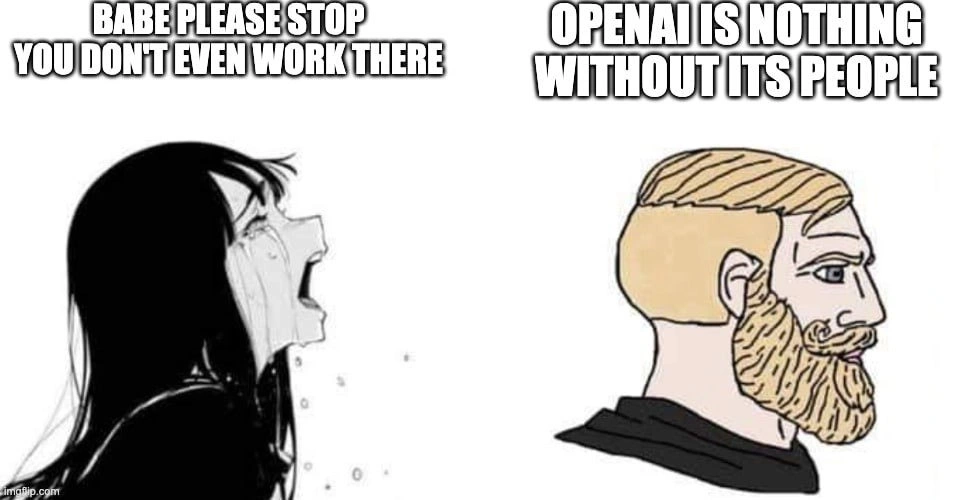
This meme uses a popular Chad vs. crying girlfriend format to lampoon a recent tech uproar. On the right, we see the Chad character – a blond, bearded cartoon guy known in memes for being confidently unfazed. He’s saying, “OpenAI is nothing without its people,” a grand statement of support for OpenAI’s employees. On the left is an anime-style crying girlfriend (often drawn in black-and-white), tears flying as she begs, “Babe, please stop, you don’t even work there.” The girlfriend represents a voice of reason and reality. She’s basically telling him: “Calm down, you’re acting like an OpenAI employee, but you aren’t one.” The humor comes from this juxtaposition – his epic loyalty versus her blunt reminder.
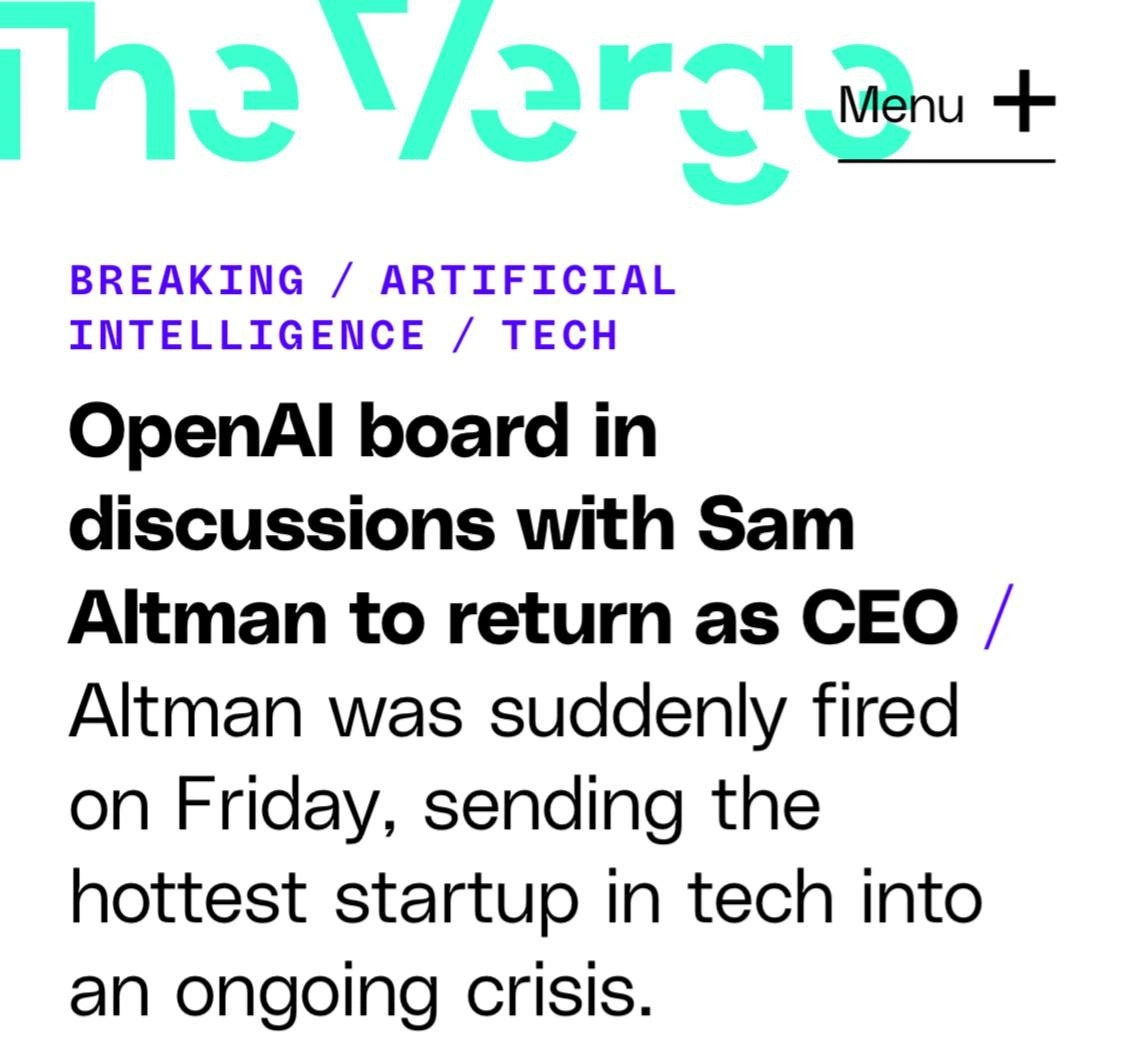
OpenAI is the company behind ChatGPT and other advanced AI models. In November 2023, they had a big leadership crisis: the board of directors (the group that oversees the company’s management) suddenly fired OpenAI’s CEO. A CEO (Chief Executive Officer) is the person running the company day-to-day, so this was a shocking move. This event created an industry drama that everyone talked about. Many OpenAI employees were upset and the tech world followed the story closely. Even though most developers had no connection to OpenAI internally, they were glued to the news and reacting online. This meme references how people on developer Twitter (the community of software developers on Twitter/X) went into overdrive commenting on the situation. It was almost as if they were dealing with a serious problem in their own company. When a critical system goes down at work (a production outage), engineers drop everything to fix it. Here, instead of debugging code, outsiders were frantically posting opinions and refreshing news feeds about OpenAI’s boardroom battle.
Let’s clarify some terms and context:
- Parasocial relationship: a one-sided emotional relationship. Usually this term describes fans feeling personally connected to celebrities or public figures who don’t actually know them. A parasocial tech fandom means developers feel deeply invested in a tech leader or company without being part of it. In this meme, the Chad has a parasocial devotion to OpenAI and its CEO – he cares almost as if he’s on the team.
- AI hype cycle: refers to the excitement and buzz around artificial intelligence reaching a fever pitch. A hype cycle is how new technology often gets overhyped, then faces a reality check. In 2023, AI was at that peak hype, so emotions around OpenAI were very intense. Many people saw OpenAI as the leader of the AI revolution, so any threat to it felt personal to them.
- “OpenAI is nothing without its people.” This phrase in the meme is what the Chad says. It’s emphasizing that the true value of OpenAI lies in its team (the researchers, engineers, and staff). Interestingly, during the real OpenAI crisis, the employees themselves made this point: they believed the company’s worth came from them and threatened to leave en masse if leadership didn’t change course. The Chad is parroting that sentiment in full earnestness. He’s basically siding with the employees against the board.
- “Babe, please stop, you don’t even work there.” This is the girlfriend’s line. She’s pointing out the absurdity of her boyfriend’s behavior. From her perspective, it makes no sense for him to be so emotionally involved in a company’s internal problems when he’s not employed there. The use of “Babe” and “please stop” shows she’s pleading with him to snap out of it, almost like he’s in a frenzy.
- Org chart: short for organizational chart, it’s a diagram that shows who works where in a company, basically the company’s internal hierarchy. When we say someone is “not on the org chart,” we mean they’re not part of that organization at all. Here, the girlfriend is reminding him he’s not on OpenAI’s org chart – he’s not in the company.
- Loyalty oaths and hot takes: On tech social media, some developers were making almost loyalty pledges, like tweeting “I stand with OpenAI’s team” or “I’ll follow Sam Altman (the CEO) wherever he goes.” These are what the description calls loyalty oaths – public declarations of support. Hot takes are quick, spicy opinions people share, often without a lot of filter. During the OpenAI saga, Twitter was full of hot takes about who was right, why it happened, and what should happen next.
- Corporate culture meets fandom: This phrase means treating a company like it’s a sports team or a celebrity fandom. Typical corporate culture involves employees caring about their company’s mission and values. But here, people outside the company were acting like fans. This non-employee brand loyalty is unusual in how strong it was. It’s not every day that you see people who have no official role speak about “their” company with such passion. It’s akin to how some folks have intense loyalty to tech brands (like the classic Apple vs. Android fan battles), but taken to an extreme with a company’s internal leadership issue.
In simpler terms, the meme is highlighting a real event (OpenAI’s leadership crisis) and making fun of how some developers reacted. The guy in the meme is the embodiment of those overly passionate followers on social media. He’s treating the situation like an all-hands-on-deck emergency, proclaiming rallying cries. The girlfriend is the outsider perspective saying, “Chill out, none of this actually involves you.” It’s a commentary on tech hype and how people can get carried away by the drama of industry trends even when they’re just spectators.
Level 3: Production Outrage
To an experienced engineer, this meme captures the absurdity of parasocial tech fandom during the OpenAI board saga. In mid-November 2023, OpenAI’s executive shake-up (the board suddenly ousting CEO Sam Altman) turned into a public drama. Developer Twitter reacted as if a critical system went down in production. The meme’s Chad vs. crying girlfriend format exaggerates that devotion. On the right, the stoic blond Chad declares with unwavering conviction, “OpenAI is nothing without its people.” On the left, his distraught girlfriend sobs, “Babe please stop, you don’t even work there.” This juxtaposition is a punchline for those who watched outsiders treat OpenAI’s internal meltdown like a personal emergency. It’s skewering the intense non-employee brand loyalty that erupted during the openai_board_drama – where devs with zero stake acted like on-call responders to a 3 AM outage.
Seasoned devs will recall how social media lit up with hot-takes and impassioned threads about the leadership crisis. It felt like an incident post-mortem unfolding in real time, except the people furiously updating weren’t even on the org chart. The meme nails this irony: the Chad represents the armchair warriors who pledged allegiance to Team OpenAI (or specifically to Sam Altman) despite not being employees. His line, “OpenAI is nothing without its people,” echoes the rallying cry from within the company – something actual OpenAI staff said as they threatened to quit. Hearing it from a random developer on Twitter becomes AI humor: he’s basically cosplaying an OpenAI insider. Meanwhile, the crying girlfriend is the voice of reality, begging him to remember “you don’t even work there.” It’s a satirical look at parasocial_devotion in tech, where folks become emotionally entwined with companies as if they’re favorite sports teams or MMORPG guilds.
Why is this so relatable (and cringe-funny) to senior engineers? Because we’ve seen industry hype cycles before. When a technology is at peak hype – and few things were more hyped in 2023 than AI – people start to identify with the brand behind it. Here, OpenAI’s meteoric success with ChatGPT built a fanbase that acted like shareholders (or cult followers) during the crisis. The result was an online spectacle: outsiders monitoring every twist of the corporate saga with the intensity of a DevOps team watching a crashing server. Some devs even tracked the exiled CEO’s flights like they were monitoring ping times on a downed service. It’s corporate culture meets fandom: the boardroom soap opera had geeks treating Slack leaks and CEO face-offs like an incident status page update. The meme’s humor comes from that overzealous Chad energy – the guy doesn’t get a paycheck from OpenAI, but he’s rallying others as if his own production environment were on fire.
Let’s break down the contrast the meme is poking at. In a real production outage, employees have to jump in and fix things under stress. In this parasocial outage, random devs jumped in with opinions and moral support under self-induced stress:
| Actual Employee Crisis 🛠️ | Twitter Bystander Crisis 💻 |
|---|---|
| On-call engineer wakes up at 3 AM to fix a broken system. | Dev wakes up at 3 AM to tweet about “broken trust” at OpenAI. |
| Checks real production logs and error dashboards. | Checks CEO’s Twitter feed and flight tracker for news. |
| Joins an incident war-room chat with the team. | Joins a Twitter Space or Discord to dissect board gossip. |
| Works on a code hotfix or rollback to restore service. | Crafts a 10-tweet thread on corporate governance and #IStandWithSam. |
| Has actual skin in the game (job, stock, on-call duty). | Stake in game = 0. Just adrenaline and FOMO-fueled loyalty. |
The table above captures why the meme resonates: the Chad on the right is basically a Twitter “incident responder” with no actual ticket or pager. For veteran engineers, it’s a darkly humorous reflection on how the AI hype cycle turned technical observers into overzealous partisans. We chuckle (or wince) because we’ve learned not to hitch our identity to a vendor or CEO – after surviving enough busted product promises and industry_trends fizzling out, you get a bit jaded. Yet here we are watching a wave of people role-play as OpenAI’s unpaid PR team, complete with emotional anguish. It’s both funny and telling: hype can blur the line between user and fanatic. In the end, the girlfriend’s plea is the reality check we all need: remember to separate your personal life from the corporate drama, especially if “you don’t even work there.”
Description
A two-panel meme using the 'Babe, Please Stop' or 'Crying Wojak vs. Chad' format. On the left, a black-and-white drawing of an anime-style girl is shown crying, with the caption above her reading, 'BABE PLEASE STOP YOU DON'T EVEN WORK THERE'. On the right, the stoic, blonde-haired 'Chad' character looks forward resolutely, with the caption 'OPENAI IS NOTHING WITHOUT ITS PEOPLE'. The meme satirizes the intense emotional investment from the broader tech community in the November 2023 OpenAI leadership crisis. It humorously portrays an outsider to the company passionately defending the employees' importance, while a loved one questions the intensity of this secondhand drama. It perfectly captures the feeling that the OpenAI saga became a spectator sport for the entire tech industry
Comments
7Comment deleted
My partner doesn't understand my obsession with the OpenAI drama. I explained that watching a board try to delete the CEO of a $90 billion company is the most exciting episode of 'Silicon Valley' we've had in years
If only the OpenAI governance repo enforced CODEOWNERS, half of Twitter wouldn’t keep submitting unsolicited PRs to the org’s existential crisis
When you've spent 20 years architecting distributed systems but your LinkedIn hot takes about OpenAI's governance structure get more engagement than your actual contributions to open source
The irony here cuts deep: OpenAI's entire value proposition rests on having the world's best ML researchers, yet their organizational decisions keep proving that those researchers are more fungible than the models they train. It's the ultimate 'bus factor' scenario, except the bus is a self-driving Tesla and half the team already has offers from Anthropic
Treat dependencies like code: pin versions, not people - otherwise your production stack is semver’d to a LinkedIn org chart
Talent exodus: the only weights that fork to competitors without a merge conflict
You can rsync the checkpoints and budget for more H100s; you can’t rsync the tacit knowledge that keeps evals green and prod quiet at 03:00