Skip to content
DevMeme
3034 of 7435
The Great Disconnect: Developer Dreams vs. HR's 'Ideal' Office Pod
RemoteWork Post #3349, on Jun 29, 2021 in TG

The Great Disconnect: Developer Dreams vs. HR's 'Ideal' Office Pod

Why is this RemoteWork meme funny?

Level 1: Park vs Classroom

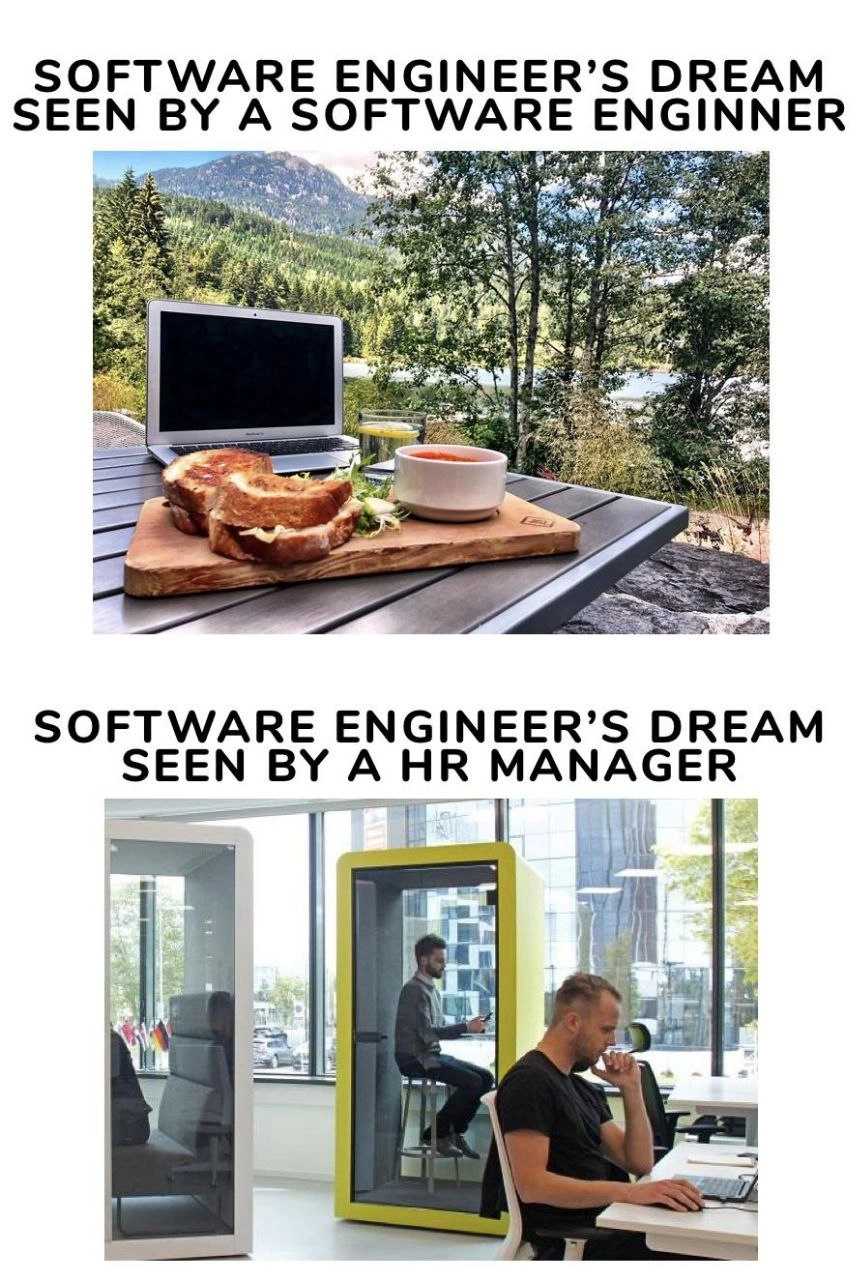
Imagine you have to do your homework and you get to choose where. You might dream of doing it outside at the park, sitting on the grass or at a picnic table under a tree. You’ve got your favorite sandwich and a bowl of soup with you, and you can see a lake and mountains in the distance. It’s quiet except for birds singing, and you feel really happy and free. That’s like the software engineer’s own idea of the perfect place to work – out in nature, cozy and peaceful.

Now think about what your teacher or parents might think is the best place for you to do homework. They might imagine a super nice classroom or study room. It has big windows and lots of light, a cool new chair and desk, maybe even a little sound-proof corner where you can sit if you need it quiet. In their mind, this is the ultimate awesome study spot because it’s organized and they can keep an eye on you while giving you “nice” things. But here’s the funny part: your idea and their idea are totally different! You’re thinking “I’d be so happy doing my work out at the park!” and they’re thinking “They’d be so happy in this fancy classroom we made!” They both call it the “perfect place to work,” but one is outside in nature and the other is inside under adult supervision. It’s amusing because it shows a big mix-up: the person doing the work (the kid or the engineer) just wants a bit of freedom and a comfy fun spot, while the person in charge (the teacher or HR manager) imagines something more controlled and company-provided. It’s like each one has a different daydream, and seeing them side by side makes us laugh at how far apart they are.

Level 2: Mountains vs Glass Walls

Let’s break down the meme in simpler terms. We have two pictures, each with a caption describing how a “software engineer’s dream” is seen from two different viewpoints. In the top picture, labelled “Software Engineer’s Dream seen by a Software Engineer,” we see what an engineer imagines as their perfect place to work. It’s pretty idyllic: a laptop sits on an outdoor table overlooking a beautiful lake and mountains surrounded by a forest. On the table next to the computer, there’s a delicious-looking grilled cheese sandwich and a bowl of soup, plus a glass of water. This setting is calm, private, and scenic – basically the engineer is working remotely in the heart of nature. No office walls, no coworkers walking up unexpectedly – just a peaceful environment. The engineer probably thinks, “If I could work here every day, I’d be so happy and productive.” This represents the common developer wish to have flexibility to work from anywhere, especially somewhere comfortable or inspiring. It’s the ultimate RemoteWorkCulture fantasy: doing your programming while maybe listening to birds or enjoying a lake breeze, with your favorite lunch right beside your laptop. For many developers, this kind of setup means better focus and a happier mood, because they’re free from typical office distractions. This image reflects an emphasis on individual comfort and a love of nature – we might say it’s the engineer’s dream of “work-life blend” where work doesn’t feel like a cage.

Now, in the bottom picture, captioned “Software Engineer’s Dream seen by a HR Manager,” the scene is very different. Here we’re inside a modern office building. It’s an open-plan office, meaning a large open space with desks where people work together (instead of separate private offices or high-walled cubicles). The office has huge windows letting in lots of light and a stylish, clean design. There’s a developer sitting at a desk with a laptop, looking like he’s thinking or writing code. A big eye-catching element is this bright yellow booth that looks a bit like a phone booth or a tiny room – and indeed, there’s another person (possibly another engineer) sitting on a stool inside that booth, talking on the phone or maybe video conferencing. This booth is a soundproof pod often found in modern tech offices: since open offices can be noisy, companies install these small closed pods so you can take a private call or focus without noise. The presence of the phone booth office pod tells us that this is one of those “cool” contemporary workplaces that HR might design to make the office more comfortable.

So why is this the “software engineer’s dream” according to the HR manager? Because from the HR perspective, they think employees want a fancy, well-equipped office. HR (which stands for Human Resources, the department that handles employee well-being, hiring, policies, etc.) often tries to create a work environment that they believe will attract and satisfy workers. For example, an HR manager might say, “We’ve made this awesome collaborative space with a lot of perks. This is every engineer’s dream workplace!” In their eyes, the perfect workspace is still in the office but jazzed up with modern features:

  • Open-plan layout for easy collaboration and a sense of community.
  • Trendy phone booths or quiet pods so you can concentrate or have private conversations when needed.
  • Bright natural light from big windows, plants, maybe colorful furniture – all those Silicon Valley-style perks.

The joke here is that the HR manager’s idea of paradise is completely different from the engineer’s own idea. The engineer imagines being far away from any office building, out in nature (perhaps working from a cabin or a lakeside cafe). The HR manager imagines the engineer being in a polished corporate environment that’s designed by the company. In other words:

  • Engineer’s dream: True freedom, like “I can take my work wherever I want – even a mountain lake!”
  • HR’s dream (for the engineer): “We’ve created a hip office so you won’t even remember you wanted to leave.”

This highlights a common theme in DeveloperCulture and modern workplace humor: developers often joke that they’d rather work from home or from some exotic location, but management still tries to herd everyone back to the office by making offices “fun”. It’s a bit of a tug-of-war in real life. After many developers experienced working from home successfully, they realized they don’t need the office to be productive – sometimes they even get more done away from the commotion. However, some ManagerExpectations and company policies still favor having people in one place. HR and executives might worry about maintaining teamwork, company culture, or just accountability. So instead of fully embracing remote work, some companies offer a middle ground: “Look, you can wear casual clothes, sit wherever you want in the office, and use our cool phone booths or nap pods. We have free snacks and a great view from the 10th floor. Isn’t that just as good as working from that lake?” They genuinely think they’re giving engineers the best possible setup – a kind of compromise between freedom and oversight.

The DeveloperHumor punchline is that these two visions are poles apart. The engineer in the first image is basically off the grid (aside from a laptop and presumably Wi-Fi). That scenario screams independence and trust – the company trusts the engineer to work from anywhere, and the engineer in turn is happy and motivated. In the second image, despite the fancy trappings, the engineer is very much on the grid – physically in the company space, likely under some form of supervision or at least surrounded by company presence. Sure, the office has a funky phone booth (the bright yellow box) and an open layout, but it’s still the office. It’s like HR is saying, “This is what we think your dream work setup is,” but many engineers would shake their heads and say, “No, that’s what you want, not me.”

To put it simply, the meme is comparing dream vs. reality (or at least two different realities):

  • From the engineer’s own view: “My dream workspace is me being a digital nomad, coding from a lakeside retreat with grilled cheese and soup for lunch.” It represents RemoteWorkCulture at its most ideal – work anywhere you feel happy.
  • From the HR manager’s view: “The engineer’s dream workspace must be our cutting-edge office where we’ve provided everything: open space, sunlight, and even special booths for focus.” It represents how CorporateCulture often interprets “freedom” as “freedom within our curated environment.”

This resonates with a lot of people in tech because it’s a relatable developer experience. Many developers have expressed the desire to work remotely (whether from home, a coffee shop, or someplace scenic) because they find they can concentrate better or have a better work-life balance. However, they often encounter company policies or bosses who say, “We have an amazing office, why wouldn’t you want to be here?” Sometimes management just doesn’t understand that what motivates them (seeing the team together, a fancy office space) isn’t what motivates the developers. That gap in understanding is exactly what this meme is poking fun at.

In terms of WorkplaceReality, neither side is “wrong” per se – it’s just a big difference in perspective. The HR manager is tasked with things like team cohesion, maintaining company culture, and sometimes they think more in terms of fairness and proximity. They might worry that if everyone is scattered, communication suffers or people feel less attached to the company. So their solution is to innovate within the office: make it so nice that employees want to come in. The engineer, on the other hand, might feel that no matter how nice you make the office, it can’t beat choosing their own perfect spot to work. For one engineer that might be a lakeside table, for another it might simply be their home office with their own chair, pets around, and no commute. MisalignedExpectations like this often lead to tongue-in-cheek memes exactly like this one. Both pictures are labeled “Software Engineer’s Dream” but what a night-and-day difference between them – that’s why it’s funny and a bit ironic. The meme is basically saying: “Ask an engineer their dream, and ask HR what they think the engineer’s dream is – you’ll get two wildly different pictures!”

Level 3: Open Air vs Open Plan

At the highest level, this meme highlights a classic RemoteWork culture clash between what developers really crave and what corporate management thinks they crave. In the top panel, a software engineer envisions their perfect workspace as literally unplugging from the office — a laptop on a patio overlooking a serene lake and forested mountains, with a grilled cheese sandwich and hot soup at hand. This is the engineer’s nirvana of Developer Experience (DX): coding in peace, immersed in nature, free from fluorescent lights and office buzz. It’s the ultimate expression of autonomy and focus. No open-office din, no impromptu “quick question” drive-bys – just deep work with a side of comfort food and a killer view.

Contrast that with the bottom panel: how an HR (Human Resources) manager supposedly visualizes the very same “software engineer’s dream.” Here we see a trendy, open-plan office layout with floor-to-ceiling windows flooding the space with light. Front and center is a bright yellow phone booth office pod – a tiny soundproof cubicle where an employee sits, presumably to work quietly or take calls away from the open-floor commotion. Another developer sits outside at a standard desk, laptop open, looking mildly concentrated (or possibly distracted by the surrounding activity). To HR, this setup – a chic office with quirky amenities – is the pinnacle of a “flexible” modern workspace. It’s the kind of shiny office you’d see in corporate brochures touting Workplace of the Future™, complete with collaboration zones and privacy pods.

The humor lies in the misaligned expectations: the engineer’s idea of “work from anywhere” literally means anywhere (why not write code by a lake if you can?), whereas the HR/manager perspective of “flexible work” often means within the office but with a few novel perks. It’s a satirical jab at CorporateCulture. Managers love to say, “We support remote work, just come into our cool office whenever you want!” – which, of course, defeats the purpose. The meme exaggerates this disconnect: to the dev, remote work means actual remote, possibly sipping coffee in the wilderness with stable Wi-Fi; to HR, it means designing an office space that feels a bit like not-office (open layout, faux privacy pods, maybe some indoor plants by the window) but is still under HQ’s roof. It’s like HR hears “perfect workspace” and thinks, “Let’s add more glass and colorful furniture!”, while the engineer is thinking, “Give me Wi-Fi in the woods and leave me alone.”

From a seasoned developer’s perspective, this is painfully relatable. Many companies tout “flexible work arrangements” post-2020, but some interpret that as “you can sit on the office patio or use a phone booth – aren’t we progressive?” rather than truly letting employees work from a cabin in the mountains. There’s a bit of dark humor here rooted in real industry patterns: after the grand remote-work experiment (e.g. during the 2020 pandemic), a lot of engineers discovered they were more productive and happier working from home or from exotic locations. Meanwhile, many managers grew anxious about “maintaining company culture” and started investing in flashy offices to lure people back in. They advertise features like soundproof pods, quiet rooms, nap pods, free lunch, or game areas – all the WorkplaceHumor clichés. The second panel’s “productivity pod” is the perfect emblem of this. The cynic in a senior developer might note the irony: corporations design fun offices with phone booths so you can concentrate – essentially admitting the open office is so noisy you need a glass closet to get anything done. “We destroyed your private office, so here’s a tiny HR-approved cubicle with a door – happy now?”

This juxtaposition also riffs on the concept of distributed work vs. centralized control. A truly distributed team doesn’t care where each engineer is working – be it a lakeside lodge or a home office – as long as the job gets done. But some companies still equate productivity with physical presence. They’re stuck in an old mindset that if they can’t see you at your desk, you must not be working. So their idea of an engineer’s “dream” is that high-end office environment where they can keep an eye on everyone while claiming it’s for the employees’ benefit. It’s a subtle form of corporate ManagerExpectations: “Of course you’d rather be here with the team, right? Look, we even got a cool phone booth for private calls!” Meanwhile, developers are rolling their eyes, because what they actually asked for was the freedom to not be in that office at all.

Technically, this reflects a core element of DeveloperExperience_DX: control over one’s work environment. Great DX isn’t just about which programming language or dev tools you use – it also includes the physical and cultural environment you work in. An engineer in a joyful, low-stress setting (like our hypothetical lakeside patio) can get into flow state and produce better code. But in a noisy open-plan, interruptions and context-switching are constant – hence the need for those escape pods. Studies and countless real-world anecdotes have shown that open offices often reduce productivity for tasks requiring concentration (like programming) due to noise and lack of privacy. Yet here we are, with HR gleefully installing phone booths as a band-aid on the very problem they created. The meme nails this absurdity with a side-by-side visual.

In essence, the top image (the remote_nature_view) stands for freedom, trust, and personal comfort. The bottom image (the open_plan_office with the phone booth) stands for structured, company-curated comfort. It’s a satirical take on the ongoing tug-of-war in RemoteWorkCulture: engineers argue “I can be effective anywhere, just give me a laptop and internet,” while some managers counter “We’ve made the office so cool, why would you ever need to be elsewhere?” The DeveloperHumor here comes from that grain of truth every coder knows: a peaceful environment of our own choosing is the real “software engineer’s dream,” and no amount of neon-colored office pods will change our mind about that.

Description

A two-panel meme contrasting different perspectives on the ideal work environment for a software engineer. The top panel, labeled 'SOFTWARE ENGINEER'S DREAM SEEN BY A SOFTWARE ENGinner', shows a tranquil, idyllic scene: a laptop (a silver MacBook Air) sits on an outdoor table next to a meal of grilled cheese and a bowl of soup, overlooking a stunning mountain and lake landscape. The setting is lush with green trees, suggesting peace and a perfect work-life balance. The bottom panel, labeled 'SOFTWARE ENGINEER'S DREAM SEEN BY A HR MANAGER', depicts a modern, sterile open-plan office. An employee works at a desk in the foreground, while another is seated inside a small, brightly colored, glass-walled 'focus pod' or 'phone booth'. This meme humorously critiques the corporate world's interpretation of a 'great work environment,' contrasting the engineer's desire for genuine freedom and remote work with HR's often superficial solutions like trendy office furniture that still enforces a controlled, on-site presence
Comments

19
Anonymous ★ Top Pick HR offered a 'Zen Room' with a nature mural. My MacBook with a 10-hour battery and a mobile hotspot offers a 'Zen Mountain Range'
  1. Anonymous ★ Top Pick

    HR offered a 'Zen Room' with a nature mural. My MacBook with a 10-hour battery and a mobile hotspot offers a 'Zen Mountain Range'

  2. Anonymous

    Asked for lakeside WFH; HR shipped an open office and a glass phone booth, proudly announcing, “Congrats, you’re now literally running in a single-tenant Kubernetes pod.”

  3. Anonymous

    After 20 years of optimizing distributed systems, I find it ironic that HR insists my code reviews need the ambient noise of someone's loud Zoom call from a $15,000 phone booth that's somehow both soundproof and acoustically transparent

  4. Anonymous

    The engineer dreams of async work from a mountain lake with O(1) commute time, while HR optimizes for 'collaborative synergy' by implementing a distributed system of soundproof pods - proving once again that management's idea of 'remote flexibility' is just localhost with extra steps and a yellow frame

  5. Anonymous

    HR keeps deploying focus pods like we’re Kubernetes; throughput would actually scale with fewer meetings and a high‑bandwidth VPN, not glossy containers

  6. Anonymous

    Asked for async remote; HR shipped focus pods - on-prem human container orchestration

  7. Anonymous

    Devs dream of async remote scaling to lake views; HR deploys synchronous pods with full-spectrum tracing

  8. @azizhakberdiev 5y

    Dream workplace you mean?

  9. Deleted Account 5y

    Haha, true...

  10. @kitbot256 5y

    It is almost impossible to work from the upper picture's conditions. I tried.

    1. @digital_insanity 5y

      Possible but not for long Usually just before realization that it sucks in many ways that you never knew

      1. @kitbot256 5y

        Well the obstacles I can think of now are: sun wind birds mosquitos slow internet small screen shitty keyboard uncomfortable chair people I came there with So personally if I were working from a forest place I would probably be working from a locked room inside the house and not from outside.

        1. @digital_insanity 5y

          I'd also add feeling that you supposed to rest in such places but you work instead And all reasons you wrote are true ofc

          1. @RiedleroD 5y

            rest is for the weak

            1. @kitbot256 5y

              this is a myth sold to you by your employer. They is the only one who is benefiting from this approach. Everybody else we wish you a happy burning out.

              1. @RiedleroD 5y

                I'm unemployed lol

                1. Deleted Account 5y

                  Nice

  11. @kitbot256 5y

    It is cool to be in, but if you want to get something done... nah

  12. @digital_insanity 5y

    Cubicles are better than openspace tho

Use J and K for navigation