Skip to content
DevMeme
238 of 7435
The O'Reilly Guide to Triggering Developers with Buzzwords
IndustryTrends Hype Post #290, on Apr 1, 2019 in TG

The O'Reilly Guide to Triggering Developers with Buzzwords

Why is this IndustryTrends Hype meme funny?

Level 1: Magic Pixie Dust

Imagine you’re playing with a normal toy, and someone runs up excitedly asking if you powered it with magic pixie dust because that’s the new cool thing they heard about. Pretty silly, right? You’d probably laugh or get a bit annoyed, thinking, “Why would I even do that? It works fine without any magic!” That’s basically what’s happening in this joke. The question “Does your app use a Quantum ledger?” is like asking if a regular bike has a rocket engine just because rockets are the hot topic of the day. It sounds fancy and impressive, but it doesn’t make any sense for the situation – and that mismatch is what makes it funny. Developers hear a question like that and feel the same as you would hearing about pixie dust or rocket engines in ordinary things: it’s a mix of “Oh no, not this again” and “Ha, that’s absurd.” The meme is showing a pretend book cover about using big fancy words to annoy programmers, poking fun at how people sometimes throw around cool-sounding ideas (like “quantum” anything) even when they don’t fit. It’s basically saying: some folks treat new tech buzzwords like magic solutions for everything, and it drives the people who actually build stuff a little crazy – and that can be pretty comedic to see.

Level 2: Buzzwords 101

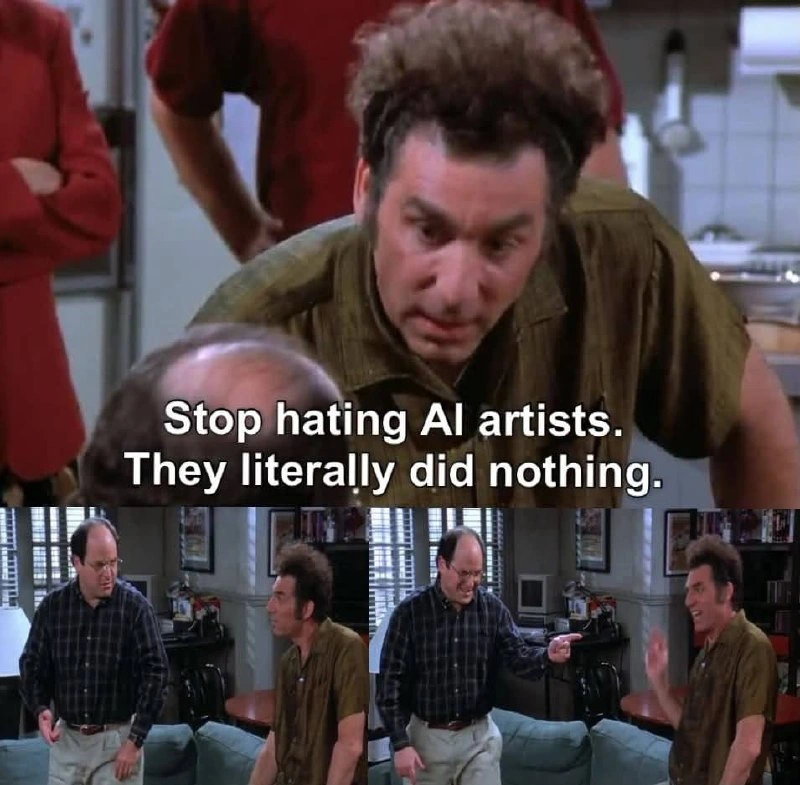
Let’s break down what’s going on here in simpler terms. The meme looks like a cover of a programming book, the kind published by O’Reilly Media (famous for their white covers and drawings of animals). But instead of a serious topic like “Learning Python” or “JavaScript: The Definitive Guide,” it’s a fake title: “Triggering developers”, with a snarky subtitle “The Definitive Guide.” And at the very top, it jokingly asks: “Does your app use a Quantum ledger?” This is not a real question you’d find in a normal conversation – it’s deliberately ridiculous, mashing up buzzwords to poke fun at tech hype.

What’s a buzzword? In tech (and really any industry), a “buzzword” is a catchy term that a lot of people start using, often without a clear understanding, just because it sounds innovative or is suddenly popular. Buzzwords can be real technologies or concepts, but they get thrown around so much that they become more hype than substance. For example, words like “blockchain”, “AI” (Artificial Intelligence), “IoT” (Internet of Things), or “microservices” have each been the cool term of the year at some point. Everyone from CEOs to recruiters starts peppering these words into conversations. This leads to what developers jokingly call “Buzzword Bingo.” That’s a pretend game where you have a bingo card filled with trendy words and you secretly mark a square each time someone uses one in a meeting or talk. If you get five in a row – BINGO! – it means the discussion was as predictably buzzword-laden as you expected. It’s a way to laugh at how people sometimes focus on fancy terms over actual practical solutions.

Now, “Quantum ledger” is not an established tech term you’ll find in textbooks – it’s pretty much a made-up combo of two buzzwords: quantum computing and ledger (in the context of tech, “ledger” usually refers to a distributed ledger, like a blockchain used in cryptocurrencies). Let’s decode those:

  • Quantum computing is a cutting-edge field of computing based on quantum physics. Unlike regular computers that use bits (0 or 1), quantum computers use qubits which can be 0 and 1 at the same time (in a superposed state). In theory, this could let quantum computers solve certain problems MUCH faster than normal computers. It’s a real technology under development (Google, IBM, and others are working on it), but it’s extremely specialized – not something you just plug into a web app for instant magic. Not to mention, quantum computers are very experimental, require specialized hardware (often super cold temperatures), and are nowhere near common in everyday software engineering.

  • A ledger in software usually means a system of record-keeping. A distributed ledger often refers to blockchain technology – basically a database that’s append-only (you can only add, not easily delete or change entries) and shared across many computers so that no single party owns it. It’s the tech behind Bitcoin and other cryptocurrencies. Each entry (block) is cryptographically linked to the next, making an immutable chain of data – hence the name blockchain. It’s great for certain use cases like digital money or tracking assets without a central authority, but a few years back it turned into a buzzword that was applied to everything. We heard jokes like “Will blockchain fix this?” about totally unrelated problems.

So, a quantum ledger isn’t a standard term – it’s more like someone took “quantum computing” and “distributed ledger” and smashed them together to sound super advanced. It would imply some kind of futuristic blockchain that uses quantum computing principles. In reality, there’s no widely-adopted thing as a quantum ledger that apps use. It’s just hype-speak. If someone earnestly asked “Does your app use a quantum ledger?”, it would sound utterly out of place – as if they have no idea what your app does but they want to name-drop something trendy and impressive. That’s why it’s funny: it’s a nonsense question, a bit like asking “Does your car run on rocket fuel and AI?”.

Now, about the O’Reilly book parody: O’Reilly Media’s books are iconic in developer circles. They often have titles like “_____ in a Nutshell” or “Mastering _____”, and many have subtitles like “The Definitive Guide” to indicate a comprehensive resource. The covers feature detailed illustrations of animals (often somewhat random or symbolic choices). In this meme, the creator has mimicked that style perfectly – there’s a black-and-white drawing of a moth in the middle, a design with white and a dark red/maroon block, and even a fake publisher logo “O RLY?” that resembles the real O’Reilly logo. The twist is in the content: Triggering developers isn’t something you’d find in a bookstore; it’s the theme of an inside joke. And “O RLY?” with a question mark is internet slang for “Oh, really?” – indicating disbelief. (Picture someone raising an eyebrow and saying “Oh REALLY?” – that’s the tone.)

The phrase “Triggering developers” refers to causing an intense reaction in software developers – in this case, triggering means making them annoyed or upset (in a tongue-in-cheek way). Developers get “triggered” by this because the question is a perfect example of what annoys them: tech conversations driven by buzzwords rather than actual needs or realities. It suggests that if your app isn’t using the latest trendy tech (no matter how irrelevant or unproven), then you’re behind the times. This is a frustrating mindset for engineers who prefer choosing tools based on practicality and proven results, not hype.

The subtitle “The Definitive Guide” adds to the joke. Usually that subtitle implies the book thoroughly covers every aspect of a topic. Here it’s implying the book will thoroughly cover how to irritate programmers with hype. Of course, that’s facetious – you don’t really need a guide for that; anyone who’s sat in enough status meetings could do it! It’s a playful way to say “there are so many ways to drive developers crazy with buzzwords that we could write a whole book on it.” The fact that an animal (the moth) is on the cover is part of mimicking the O’Reilly style. There isn’t an obvious link between moths and quantum computing or ledgers (except maybe the earlier-mentioned historical “moth = first computer bug” anecdote, which is an Easter egg for those who know it). Mostly, it’s there to make the spoof look convincingly like a real tech book at first glance – which then makes the ridiculous title stand out even more.

So, putting it together in plain terms: This meme is joking that someone made a serious-looking book about how to push developers’ buttons using trendy tech buzzwords. The question at the top is an example of the kind of cringe-inducing, hype-fueled remarks that would achieve that. It resonates with the programming community because many of us have encountered people who throw around terms like “quantum computing” or “blockchain” without understanding them, just because they’re trendy. It’s a lighthearted way of saying, “Ugh, these hype terms drive us nuts – to the point we might as well have a field guide for them.”

And yes, the context (like the post being on April 1st) confirms it’s all in jest. Tech communities often do parodies and satirical posts on April Fool’s Day – it’s practically a tradition for companies to announce fake products with absurd combinations of buzzwords on that date. This meme fits right in with that tradition, teasing the tech hype cycle where yesterday’s “revolutionary innovation” quickly becomes today’s meme material.

Level 3: Buzzword-Driven Development

This meme hits senior developers right in the irony cortex by parodying an O’Reilly tech book cover – traditionally a hallmark of serious, well-respected programming knowledge – and instead emblazoning it with the most egregious buzzword bingo bait imaginable. The top query, “Does your app use a Quantum ledger?”, is exactly the kind of question that makes experienced devs audibly groan. It’s a perfect example of buzzword-driven development culture, where suddenly every project proposal or clueless stakeholder meeting includes whatever fad term they picked up from a TED talk or a glossy airline magazine. Seasoned engineers have sat through cycles of this: “Does it use Big Data?”, “Can we add blockchain?”, “Are we doing AI?” – and now the ultimate combo meal of hype, quantum ledger. Each time, you can practically hear a collective eye-roll from the developers in the room.

This fake book cover brilliantly weaponizes that experience. O’Reilly Media’s real books are known for their classic white cover, an old-school engraving of an animal, and titles like “Something Something: The Definitive Guide”. Here we have “Triggering developers” as the bold title, with the deadpan subtitle “The Definitive Guide”. The implication is tongue-in-cheek: as if there’s a manual for driving developers up the wall by spouting nonsense. The moth illustration in the center is a cheeky touch – O’Reilly covers usually feature a random animal, and a moth might be a sly nod to the famous old-school debugging story where a moth caused a computer failure (the original "software bug"). Whether intentional or not, it fits the theme: these buzzwords are as pesky as moths fluttering around our code.

The spoof publisher logo “O RLY?” at the bottom left is the icing on the cake. Read out loud it says “Oh, really?”, which is exactly the sarcastic disbelief a veteran dev would respond with upon hearing “We should integrate a quantum ledger into our mobile app.” It also riffs on the internet “O RLY?” owl meme from the mid-2000s – a classic sassy comeback to dubious claims. This double-layer of parody (both tech book and internet meme) signals to in-the-know developers that this is pure satire. And fittingly, it was posted on April 1st, April Fool’s Day, the tech world’s favorite occasion for prank product announcements and spoof jargon. 🚩 Of course a “Quantum ledger Definitive Guide” would be an April Fools gag – it’s practically a requirement to have one outrageous buzzword announcement on that date.

The humor works because it’s industry irony at its finest. We’ve all seen the Tech Hype Cycle churn through trends: one year every startup pitches had to mention “social-mobile-cloud”, the next year it was “Big Data”, then “IoT” and “machine learning”, then blockchain was the universal solution for everything, and now quantum computing is the latest magic word. The meme mashes two of these – quantum computing and distributed ledgers – into one absurd proposal. It’s like getting a “two-for-one” on your Buzzword Bingo card. (Seasoned devs joke about playing Buzzword Bingo in meetings: you mark off a card when terms like “synergy”, “blockchain”, “AI”, or “at scale” get mentioned – “quantum ledger” would be the rare phrase that fills your card instantly and wins the game!).

Importantly, Triggering developers captures the developer frustration that arises when non-technical decision-makers latch onto trending concepts without understanding the implications. A senior engineer reading this imagines that all-too-familiar scenario: a high-level manager or a client excitedly asks, “So, does our app leverage quantum ledger technology? I hear it’s the next big thing!” The engineer’s face twitches as they struggle to explain that, no, their e-commerce webapp does not need a quantum-entangled blockchain running on a cryogenic mainframe – and that adding one won’t magically solve their business problems. The book title suggests there’s a definitive guide to pushing all a programmer’s buttons, and step 1 is exactly that kind of question. It’s funny because it’s true – we’ve all been in that meeting where someone tries to drop a flashy term to sound cutting-edge, unintentionally revealing they have no idea what they’re asking for.

In dev communities, this meme serves as a cathartic in-joke. Sharing it on Slack or Reddit is our way of collectively sighing and laughing at the absurdity. It says, “Yeah, we’ve seen this movie before.” By parodying an authoritative tech book, it also pokes fun at how quickly the industry pumps out “Definitive Guides” or conference talks on any hot topic – even when there’s not much definitive to say yet. A veteran coder will chuckle at the notion that someone like Rory Preddy (the author name shown) has ostensibly compiled the end-all guide to irritating developers with trend-chasing jargon. It’s satire with a side of truth: in a world where there really are books and consultants for every fad, maybe someone could slap together a guide on using hype to drive engineers up the wall!

All in all, this level of the joke lives in the shared experiences of developers who’ve survived multiple hype waves. It’s a gentle reminder (with some bite) that despite all the industry trends, solid engineering isn’t about chasing every new shiny term. And if you want to see a room full of programmers cringe-laugh in unison, just ask with a straight face if their app uses a quantum ledger. Triggering developers, indeed – mission accomplished.

Level 4: Superposition of Buzzwords

At the bleeding edge of tech hype, “Quantum ledger” mashes together two complex domains that truly mix like oil and water. In quantum computing theory, a bit isn't just 0 or 1, but can exist in a superposition of states (both 0 and 1 until observed). Meanwhile, a digital ledger (like a blockchain) is supposed to be an immutable sequence of records – definite, unambiguous history carved in stone. The meme’s absurd question “Does your app use a Quantum ledger?” imagines a world where someone blithely suggests combining these, oblivious to the underlying contradictions. Consider the implications:

  • Observation vs Immutability: In a quantum system, observing data can literally change it (thanks to the observer effect in quantum mechanics). But a ledger’s whole point is to preserve data exactly as recorded. A quantum ledger sounds like a paradox – would looking at a transaction change its value? Schrödinger’s balance sheet, anyone? Until you peek, your account is both overdrawn and solvent. 😏
  • Cryptography Under Siege: Much ledger technology (e.g. blockchains) relies on cryptographic algorithms for security (signatures, hashing). True quantum computers threaten those algorithms – for instance, Shor’s algorithm could factor large numbers, undermining RSA and ECC, which secure many ledgers. So a genuine quantum computer is more likely to break a blockchain’s security than magically enhance it. A “quantum ledger” might need completely new post-quantum cryptography, a serious research area, not a buzzword to toss around.
  • No Faster Escape from Physics: Distributed ledgers face the harsh laws of distributed systems (think CAP theorem and network latency). Slapping quantum on the label doesn’t grant a free pass around the speed of light or eliminate consensus problems. Entangled qubits won’t teleport your transaction to all nodes instantly – quantum mechanics is powerful but it doesn’t nullify the fundamentals of information theory and network constraints. The hype fools assume “quantum” means instant and infinite, but seasoned engineers know there’s no such thing as magically bypassing latency or consistency challenges.

In short, the phrase “quantum ledger” sounds like someone took two hot buzzwords and glued them together without understanding either. It tickles the seasoned engineer’s dark humor because we recognize the deep complexity behind each term – complexity that marketing hype papers over. The meme highlights this by presenting buzzword alchemy as though it were an authoritative tech book. The cynical laugh comes from knowing that solving realtime distributed consensus with quantum effects isn’t as simple as slapping qubits onto a blockchain – if anything, the quantum realm introduces more headaches. Ultimately, this level of humor lives in the gap between genuine computer science challenges and the absurd optimism of buzzword-driven hype. It’s a nod to those who know enough theory to cringe whenever someone treats “quantum + X” as a silver bullet.

Description

This image is a parody of a classic O'Reilly technical book cover, instantly recognizable to developers. It features a white background with a detailed, black-and-white scientific illustration of a Death's-head hawkmoth. At the bottom, a bold red rectangle contains the main title in a white serif font: "Triggering developers", with a subtitle below it in quotes: "The Definitive Guide". Instead of the familiar 'O'REILLY' logo, it reads 'O RLY?', a nod to the early 2000s internet meme. The author is listed as 'Rory Preddy'. At the very top of the cover is the ultimate trigger question: "Does your app use a Quantum ledger?". The humor is layered for experienced engineers. It expertly mimics a trusted educational format to deliver a payload of pure satire. The phrase 'Quantum ledger' is a nonsensical combination of two major tech hype trends (Quantum Computing and Blockchain/Distributed Ledger), perfectly encapsulating the kind of technically illiterate but dangerously confident question developers often field from management, marketing, or clients. It's a commentary on the absurdity of buzzword-driven development
Comments

8
Anonymous ★ Top Pick The first chapter of 'Triggering Developers' is just a single sentence: 'Let's circle back on the synergy of your microservices architecture, but from a blockchain perspective.'
  1. Anonymous ★ Top Pick

    The first chapter of 'Triggering Developers' is just a single sentence: 'Let's circle back on the synergy of your microservices architecture, but from a blockchain perspective.'

  2. Anonymous

    Our new quantum ledger keeps each transaction simultaneously ACID and eventually consistent - right up until the CEO observes it and the wavefunction collapses into a Sev-1

  3. Anonymous

    The only quantum entanglement in your startup is between your marketing promises and your actual PostgreSQL database

  4. Anonymous

    'Does your app use a Quantum ledger?' is the perfect interview question: anyone who answers yes is disqualified, and anyone visibly twitching gets the staff engineer role

  5. Anonymous

    Nothing triggers a senior architect faster than asking if their battle-tested ACID-compliant RDBMS should be replaced with a quantum ledger. It's the technical equivalent of suggesting blockchain for your todo app - except now with the added mystique of quantum mechanics that nobody on the team actually understands, including the consultant who proposed it

  6. Anonymous

    “Quantum ledger” is my favorite stakeholder requirement - simultaneously a blockchain, AWS QLDB, and a spreadsheet, collapsing into Excel the moment you ask for a use case

  7. Anonymous

    "Quantum ledger" is marketing's way of asking for global linearizability and zero‑latency append‑only writes; engineering ships a Postgres table with a trigger - Schrodinger's transaction collapses at SELECT

  8. Anonymous

    Quantum ledger: transactions in superposition - both confirmed and failed until some VC observes them

Use J and K for navigation