Skip to content
DevMeme
3407 of 7435
QA Uses the Weird Lane
QA Post #3740, on Sep 24, 2021 in TG

QA Uses the Weird Lane

Why is this QA meme funny?

Level 1: Try It Wrong

This is like building a toy ramp and saying, "Cars go down this way," then a friend immediately throws a car sideways at it to see whether it breaks. It looks silly, but that friend is helping you find the weak spots. The joke is that testers use software in weird ways on purpose because real people will eventually do weird things by accident.

Level 2: Testing The Weird Path

In software, quality assurance means checking whether a product behaves correctly before users rely on it. A simple test might confirm that a login page works when someone enters the right username and password. That is useful, but it is only the easy lane.

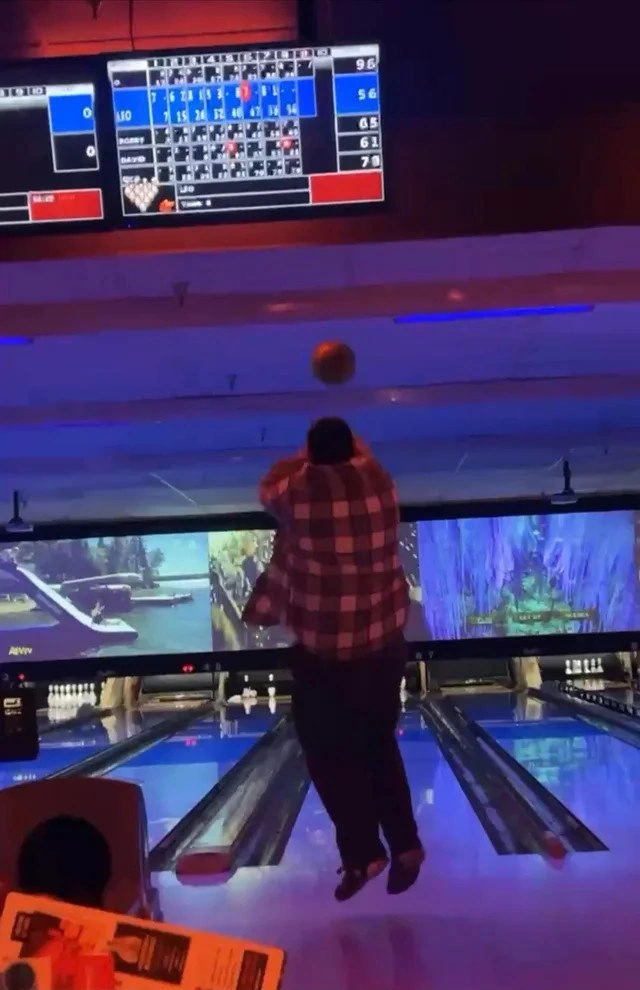
The image shows someone using a bowling setup in a strange way. That maps to testing because testers deliberately try unusual actions:

  • Entering empty, huge, or invalid values
  • Clicking buttons in the wrong order
  • Refreshing halfway through a payment
  • Disconnecting the network during a save
  • Uploading files with unexpected names or formats
  • Trying actions without the right permissions

These are called edge cases because they sit near the boundaries of what the software expects. They matter because bugs often hide at those boundaries. A program may work perfectly for normal input and then fail badly when it gets something unexpected.

The joke is that from the outside, testers can look like they are using the product incorrectly. But that is the point. If a system only works when everyone behaves perfectly, it is fragile. Good testing checks whether the software can handle mistakes, surprises, and hostile input without crashing, corrupting data, or confusing the user.

Level 3: The Happy Gutter

There is no overlaid meme text in the image itself. The post caption supplies the punchline:

How testers use the code

Visually, someone is at a bowling alley, but they are not rolling the ball down the lane in the expected way. They appear to be launching it awkwardly above the lane area, toward the machinery and scoreboards rather than along the polished path designed for ordinary play. That is the entire QA metaphor: developers build a lane, document where the ball should go, and testers immediately ask what happens if the ball enters from orbit.

The humor works because software teams often confuse the intended workflow with the possible workflow. A product spec says the user will click Next, enter a valid email, upload a reasonably sized file, and wait patiently. Real users paste a novel into the email field, double-click while offline, rotate the phone during checkout, upload a corrupted 4 GB image named final_final_REALLY_FINAL.png, and then hit back because the spinner looked lonely. QA's job is to discover that reality before customers do it with money attached.

The bowling alley is a good visual metaphor because the environment is heavily guided. Lanes, gutters, pins, return machines, screens, and approach markings all imply the "correct" use. Good UI has the same quality: buttons invite clicks, forms guide input, validation nudges people back on track. But a robust system still needs to survive strange input, interrupted flows, repeated actions, malicious payloads, missing dependencies, and plain human creativity. The tester is not using the lane wrong; the tester is verifying whether the lane's assumptions are strong enough.

This is where edge-case handling and bug hunting become less glamorous than the slogans. A happy-path demo proves the system can work when the world cooperates. Testing asks whether it fails cleanly when the world does not. That includes boundary values, invalid states, permissions, race conditions, timeouts, retries, browser quirks, accessibility tools, and workflows nobody put in the Figma file because the meeting was already running long.

The meme also hints at the ancient developer-QA tension. Developers sometimes experience testers as people who "break" the code, as if a bug only becomes real when someone has the poor manners to notice it. Testers experience developers as people who built a bowling alley and then act surprised that balls have momentum. The healthier version is obvious: QA is not sabotage; QA is a controlled rehearsal for the weirdness production will perform without asking.

Fuzz testing is the automated cousin of this image. Instead of carefully following intended input patterns, a fuzzer throws lots of unexpected data at a program to find crashes, hangs, security issues, or inconsistent behavior. In other words, it keeps hurling bowling balls at odd angles until the hidden assumptions start making expensive noises.

Description

The image shows a bowling alley with glowing lanes, scoreboards overhead, and a person in a plaid shirt throwing a bowling ball in an awkward, unconventional way. There is no overlaid meme text visible in the image itself, but the sibling metadata caption says, "How testers use the code." The joke maps software testers to someone using a bowling lane in a way the designers probably did not intend, exposing weird behavior outside the happy path. Technically, it points at QA, edge-case discovery, and the gap between expected user flows and real-world interaction.

Comments

1
Anonymous ★ Top Pick QA does not follow the happy path; QA checks whether the happy path has bumpers, gutters, and undefined behavior.
  1. Anonymous ★ Top Pick

    QA does not follow the happy path; QA checks whether the happy path has bumpers, gutters, and undefined behavior.

Use J and K for navigation