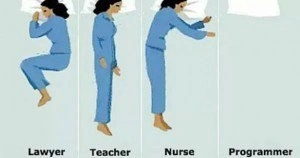
Programmer Sleep Position: 404 Not Found
Why is this MentalHealth meme funny?
Level 1: When Sleep Wins
Imagine you stay up way past your bedtime playing your favorite game or reading a book with a flashlight, and you just zonk out right there in the middle of it. You wake up with the game controller or the book on your face. Kinda funny, right? That’s basically what’s happening in this meme. It shows a programmer (a person who writes computer code) who worked so long and so late that they fell asleep face-first into their pillow (as if it were their keyboard).
The joke is comparing how different people sleep. The first three—lawyer, teacher, nurse—are sleeping in normal, comfortable ways (curled up or on their side, even one standing because teachers are jokingly always on their feet!). But the programmer is shown doing a dramatic faceplant. It’s like if you’ve ever seen someone so exhausted that they literally fall asleep at the table or desk. It’s funny in a cartoon way because it’s an exaggerated, silly image, but it also says, “Hey, programmers work such crazy hours that they don’t even make it to a normal bed position.”
Think of it like a kid fighting sleep: you know how sometimes kids insist they’re not tired, keep playing, and then suddenly they’re asleep on the floor with toys all around? The programmer here is that kid, but with a computer. They fought sleep all night to keep coding and sleep won in the end. We find it funny because we recognize that kind of over-the-top tiredness. It’s a simple human moment: anyone who’s pulled an all-nighter or stayed up too late can relate to suddenly nodding off. The meme just puts it in a job context and says, “Programmers do this a lot.”
So, the big idea in plain terms: the programmer worked so hard and so long that they just collapsed from tiredness — plop! face down. It’s humorous exaggeration, showing how too much work and not enough sleep can turn anybody into a knock-out sleeper. You don’t even need to know about programming to get the laugh: it’s funny because the poor programmer is sleeping in the goofiest way, more exhausted than the lawyer, teacher, or nurse. It reminds us that no matter what you do, if you don’t rest, eventually you’ll fall asleep anywhere, even in the middle of doing something. In short, the picture is saying: programmers often sleep like someone who lost a battle with sleep — instantly and face-down — because they’ve been up all night coding. And that’s a mix of funny and a little bit true!
Level 2: Burnout Crash Course
Let’s break down the meme for those newer to the developer world. We have four labeled pictures showing how people in different jobs might sleep. The Programmer is shown literally falling asleep on the spot, face-first into a pillow (imagine someone asleep on their keyboard). This dramatizes a common piece of developer humor: the idea that programmers stay up so late coding that they eventually just conk out from exhaustion. It’s comparing professions in a playful way to say, “programmers don’t have normal sleep patterns.”
Sleep deprivation is a key term here. It means not getting enough sleep, and it’s something many coders have experienced, especially when working under tight deadlines or during hackathons (intense coding events that often last through the night). New developers sometimes think pulling an all-nighter (staying awake all night to code) shows dedication. You might even feel a rush fixing a bug at 2 AM or finishing a project as the sun rises. But consistently doing this leads to burnout — that’s when you’re not just tired for one day, but chronically exhausted, emotionally drained, and less effective because you’ve been overworking for too long. Developer burnout is a serious topic in the industry right now (hence the category MentalHealth for this meme). Companies are starting to realize that being a workaholic (working non-stop like an addict) is bad for both the programmer and the product.
The cartoon is basically a joke about developer lifestyle and how it can wreck your sleep schedule. In the image, the lawyer, teacher, and nurse have more “ordinary” sleep poses (curled up, standing, lying on the side). But the programmer is face-down, arms stretched out as if reaching for a keyboard. This suggests she fell asleep literally in the middle of working. If you’re new to coding, picture times when you’ve studied or gamed so hard that you doze off in an awkward position — that’s the joke here, applied to writing code. There’s even a running joke with programmers about sleeping under your desk or keeping a pillow in your office for overnight coding sessions. Big tech companies sometimes provide nap pods or couches in the office, a cheeky acknowledgment that people might end up sleeping at work when crunching on a project.
Some technical references are hiding in our analysis: when we say “3AM core dump” or “fatal exception,” we’re comparing a human crashing to a computer program crashing. A core dump is what happens when a program fails and the system dumps out debug info. The meme’s programmer slumping over is like a human version of that – the body saying “I give up” and dumping into sleep. Another term, sleep debt, might come up in conversations around this topic. That’s the idea that if you skip sleep, you accumulate a sort of “debt” that eventually has to be paid (you’ll need extra rest later, or your body will force you to crash). In coding terms, it’s like ignoring small bugs (lack of sleep) until they accumulate into a big system crash (burnout breakdown).
For a junior developer, it’s important to recognize these patterns early. Maybe you pulled some late nights during a school project or your first big coding assignment. Remember how groggy and disoriented you felt the next day? In a real job, one all-nighter might not be the end of the world, but if it becomes a habit, it hurts both your code and your health. There’s a famous saying, “works on my machine,” that developers joke about when code fails anywhere else. But here’s a twist: code might “work” at 3 AM on your machine when you’re bleary-eyed, only to break in the morning because of a mistake you missed. Why? Because extreme fatigue makes you overlook errors. The meme humorously hints that a programmer’s idea of sleep is basically passing out from exhaustion. It’s funny, but also a gentle lesson: Work-Life Balance matters. No one is at their best coding while half-asleep. The tag WorkLifeBalanceTips implies that, yes, we should remember to actually go to bed at a reasonable hour (at least sometimes!).
To put it simply, this meme uses a funny picture to highlight a real tech-world issue: late night coding and its consequences. If you’re a new coder, take it as both a joke and advice. The joke is that programmers can be so caught up in their work that they end up sleeping face-down on a keyboard. The advice is hidden in the humor: try not to be that programmer! Everyone, from juniors to seniors, needs rest. Your brain is like a computer’s CPU — it can overheat if you run it non-stop. Unlike a computer, you can’t just swap out a fresh battery or stick yourself in the freezer (please don’t!). So while you might love coding into the night (many of us do because we get “in the zone”), remember that real productivity also means knowing when to hit the sleep() function in real life. Yes, there’s literally a sleep() command in many programming languages (which pauses execution), and clever devs often joke about how they wish they could call that on themselves. In the end, balancing your time is a skill just like debugging. Consider this meme a humorous Work-Life Balance warning wrapped in a cartoon.
Here’s a lighthearted pseudo-code snippet inspired by the meme:
while project.deadline_is_close():
code()
coffee() # keep the coder running with caffeine
if bug_found_at_2am:
fix_bug() # heroically fix the bug late at night
# After loop ends (project delivered or time's up):
collapse(face_first_into_pillow) # programmer finally crashes
In this fake code, the collapse at the end is the programmer’s crash when everything is done (or when they just can’t stay awake anymore). It’s a playful way to illustrate the cycle: work, work, work… then thud. The meme’s punchline is basically that final collapse() call.
Level 3: The 3AM Core Dump
In the first three panels of this meme, our pajama-clad hero (a lawyer, a teacher, a nurse) sleeps in relatively normal poses. Then comes the Programmer panel: she’s sprawled out face-down, arms reaching forward as if she literally fell unconscious mid-keystroke. This absurd desk sleep pose hits close to home for many in tech. It’s a nod to those late-night coding marathons where a developer stays up through sheer will (and caffeine) until the body just crashes—much like a server hitting a fatal exception and dumping core at 3 AM. The humor here is that programmers often joke about "I'll sleep when the code works," and this cartoon shows the inevitable result: the code finally works (maybe), and the programmer is face-first into the pillow (or more likely, the keyboard).
This meme cleverly exaggerates how different jobs handle exhaustion. Lawyers curl up (perhaps due to stress), teachers can almost sleep upright (ever met a teacher who’s mastered power-napping between classes?), nurses catch rest on their side during a calm moment. But the programmer? They don’t even make it to a normal sleeping position—they just collapse. It’s an indictment of workaholic culture in software engineering. Other professions certainly work hard, but tech has a notorious streak of sleep deprivation heroics. The comparison suggests that coding life isn’t as cushy as outsiders think—DeveloperLifestyle often involves weird hours, midnight deployments, and on-call pages that turn your sleep schedule upside down. This profession comparison resonates with developers because many of us have been there: one deployment away from nodding off on the desk, sporting keyboard imprints on our face like battle scars.
The humor is laced with uncomfortable truth: in software, burning the midnight oil is sometimes worn as a badge of honor. Ever heard developers humble-brag about an all-nighter? “We crushed that bug at 4:45 AM!” It’s DeveloperHumor that belies a real problem. Chasing an urgent bug fix or a last-minute feature, we pretend human limitations don’t apply—just like a while-loop with no exit condition. The result is “DeveloperBurnout”: the body eventually forces a hard stop. The cartoon’s programmer is essentially a visual punchline for that moment of surrender. The image paints what seasoned devs know too well: after 18 hours in front of glowing screens, you don’t go to bed; you pass out.
From a senior engineer’s perspective, this meme is funny-sad because it’s too real. We laugh, then nervously recall the time we pushed a 2AM deploy. (Sure, we fixed the production issue, but we also introduced a new bug at 3AM because we were too tired to see straight.) It highlights the cycle of diminished DeveloperProductivity: push yourself beyond limits, produce sloppy code, spend the next day (if you’re awake) cleaning up the mess. In theory, we know that a good night’s rest is key to mental health and better code quality. In practice, tech deadlines, on-call rotations, and sudden incidents ignore the clock. The unspoken industry norm—especially in startups or game development—is that real dedication means working until you literally drop. This cartoon takes that to the literal extreme for comedic effect.
Why do smart people keep doing this? Partly because of workaholic_culture and misguided heroics. There’s the myth of the “10x programmer” who codes all night, or the pressure of a crunch mode where managers reward superhuman effort. Junior devs see veterans talk about past death marches (multi-night coding binges) like war stories, so it feels almost like a rite of passage. And if you love coding, it’s easy to lose track of time — one minute you’re refactoring a tricky function after dinner, next thing you know the birds are chirping and your head’s on the desk. LateNightCoding can be a seductive trap. The irony is that after a certain hour, you’re coding on diminishing returns. Past midnight, bugs spawn in your code faster than you can fix them. It’s like your brain’s garbage collector stops running, leading to a massive memory leak of mistakes. Many of us have merged a 3AM pull request only to spend the next week dealing with the fallout. The meme’s humor is in how dramatically it illustrates this common experience: not with a lecture, but with a cartoon programmer literally keeling over.
On a darker note, this CodingHumor carries a gentle warning about MentalHealth. The programmer’s flat-out posture pokes fun at burnout, but it’s also uncomfortably accurate about the endgame of sustained overwork. Tech communities these days talk a lot about WorkLifeBalanceTips precisely because of this. We joke about “sleep is just a kernel module that hasn’t loaded”, but chronic exhaustion is no joke. The meme format (comparing jobs) suggests that maybe programmers need to start sleeping more like normal humans and less like broken robots. A senior dev looking at this might chuckle, then forward it to the team with a note: “Don’t be this person. Get some rest!” In summary, the meme is funny to us because it exaggerates a reality we know too well: code might run 24/7, but programmers can’t, at least not without eventually doing a faceplant worthy of a cartoon.
Description
A four-panel meme illustrating the sleeping positions of different professions. The first three panels show an overhead view of a woman in blue pajamas sleeping. The first panel, labeled 'Lawyer', shows her in a fetal position. The second panel, 'Teacher', shows her sleeping straight on her side. The third, 'Nurse', shows her on her back with arms outstretched. The fourth panel, labeled 'Programmer', is conspicuously empty, showing just a pillow and an empty bed. The humor is derived from the stereotype that programmers have notoriously poor sleep schedules due to demanding deadlines, late-night coding sessions, or being on-call for production issues. The empty bed implies the programmer is not sleeping at all, but is likely still awake and working at their computer

Comments
8Comment deleted
A programmer's sleep schedule isn't a schedule, it's a distributed system with no consensus algorithm. Sleep may or may not be achieved, and state is inconsistent across nodes
Lawyer: graceful shutdown. Teacher: idle wait. Nurse: scheduled sleep. Programmer: unhandled SIGSEGV - core dumped straight onto 0xPILLOW
The programmer's posture is just their body trying to match the indentation level of the deeply nested callback they've been debugging for three hours
The programmer's sleep schedule is like their documentation: everyone agrees it should exist, and nobody has ever seen it in production
The progression is accurate: lawyers sleep soundly after billing hours, teachers dream of summer break, nurses catch sleep between rounds, and programmers? Well, that empty bed perfectly captures the moment between 'just one more commit' at 2 AM and the 6 AM production alert. The bed isn't even warm anymore - it's just a decorative piece of furniture that occasionally reminds you what horizontal rest used to feel like, back before you learned what a distributed system failure cascade looks like at 3:47 AM on a Saturday
Programmer sleep posture: sleep() is a blocking call; we run async on coffee, mock the pillow, and let PagerDuty handle retries
Programmer sleep posture is exponential backoff - try 1s, get paged; 2s, get paged; eventually consistent with caffeine, never with the SLO
Normals wake linearly; programmers need escape velocity to break bed's event horizon after last night's prod incident