Skip to content
DevMeme
5937 of 7435
Captain Taiwan and His Shield of Silicon
Hardware Post #6501, on Jan 7, 2025 in TG

Captain Taiwan and His Shield of Silicon

Why is this Hardware meme funny?

Level 1: Superhero Show & Tell

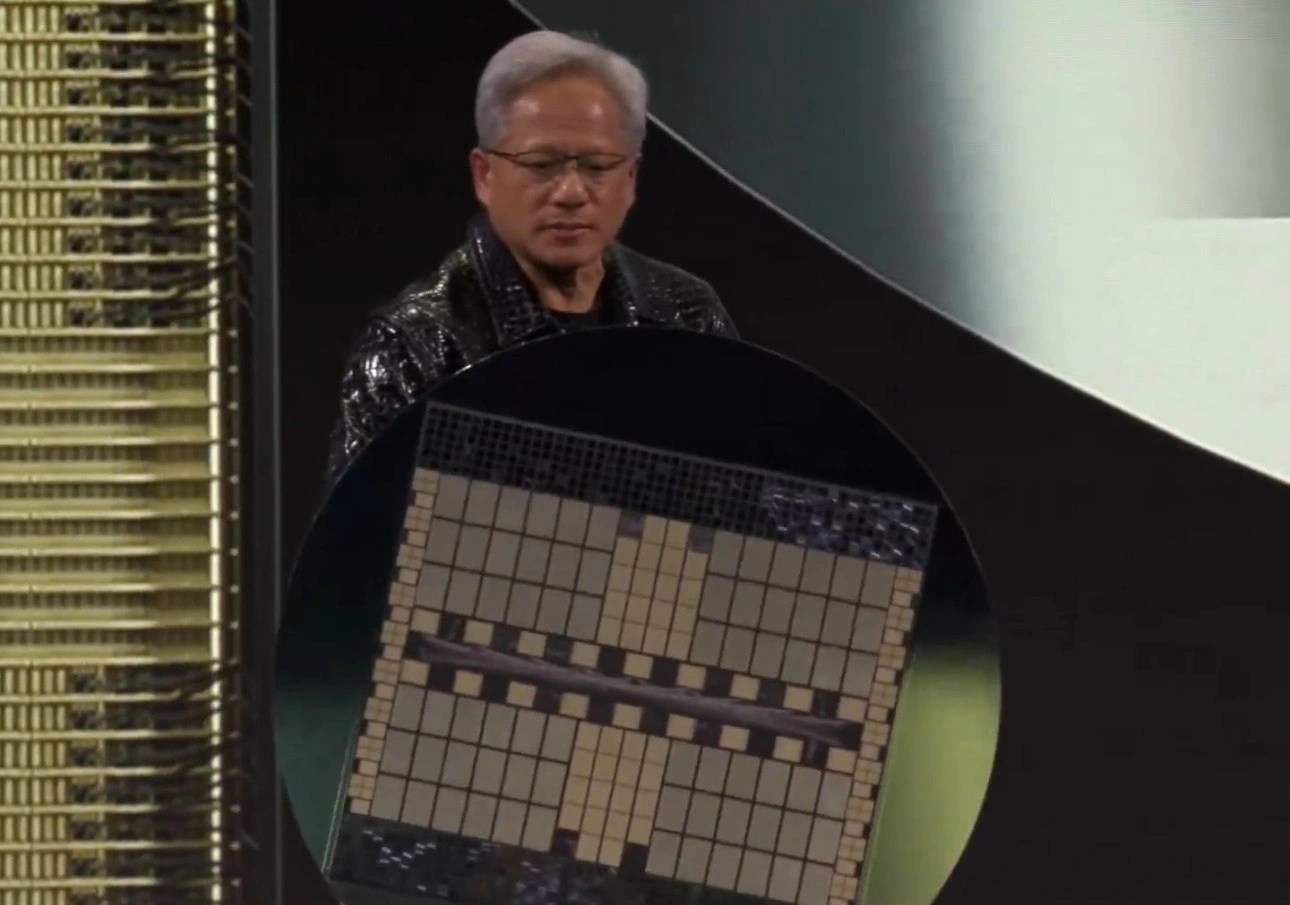
Imagine you’re at a school show-and-tell, and one kid walks in like a superhero, wearing a cool shiny jacket and holding something really huge and round that looks like a big pizza pan or a giant cookie. He says, “This is going to make all our computers super smart and super fast!” That’s basically what’s happening here, but in real life with a tech boss on a stage. The man on stage is proudly holding up a big disk (that disk is actually full of tiny computer brains printed on it!) and telling everyone how this new invention will give computers a lot more power to think and learn. He’s kind of like a superhero showing off his new shield or gadget. The audience is clapping and excited because it’s a very dramatic promise — kind of like saying “with this new super-tool, we can do magical things in technology!”

It’s funny and impressive at the same time: funny because he’s literally using this giant round thing as a prop, almost like a character in a movie showing off a power-up, and impressive because, well, that round thing is real high-tech stuff. In simple terms, he’s saying “look, we made a really big and powerful computer chip, and it’s going to help us build smarter robots and programs.” The reason people find it amusing is that he’s so showy about it — just like a kid extremely proud of a science project, or a superhero posing with their emblem. It makes everyone watching feel the excitement, even if they don’t know all the tech details. The nickname “Captain Taiwan” just adds to the superhero vibe, since he’s originally from Taiwan and standing there like a captain leading the charge in new technology. So, the core of the joke is: this tech leader is doing a high-energy show-and-tell with a giant “computer brain,” and it’s both kind of adorable (in a geeky way) and awesome because it promises a big leap forward for our gadgets.

Level 2: Monster GPU Explained

In this meme scene, a tech company leader is showing off a giant computer chip to an audience. The person on stage (wearing the cool shiny leather jacket) is actually famous in the tech world for introducing new GPUs. A GPU (Graphics Processing Unit) is a special kind of computer processor originally made for handling graphics in video games, but it turns out GPUs are also extremely good at doing the kind of math needed for MachineLearning and DeepLearning (the stuff behind AI). So nowadays, GPUs are like the engines that power most AI software – the better the GPU, the faster you can train an AI model or have it make predictions.

The big round object he’s holding is a silicon wafer. That’s what chips are made on in the factory. Imagine a pancake of silicon on which dozens or even hundreds of little rectangular chips are printed in a grid pattern. Normally, after making them, the manufacturer cuts the wafer into those individual chips (kind of like breaking a big chocolate bar into squares) which then get packaged into the processors you put in a computer. The reason he’s flaunting the whole wafer is to show the sheer scale of their new GPU technology. It could be that each of those tan rectangles on the wafer is one GPU chiplet – a small chip that’s part of a larger puzzle – and the darker lines crossing the wafer are the highways connecting them together. Chiplet architecture means instead of one huge chip, you design it as many smaller chips that work together as one. This helps because making one gigantic chip can fail more often (one tiny flaw and the whole big chip is faulty), whereas many smaller chips are easier to make without defects. Then you link the small chips with super fast connections so they act like a single big chip. It’s a bit like building a supercomputer not by one huge piece, but by connecting many small pieces really closely. The interconnect channel (that darker stripe) is likely how these chiplets talk to each other at high speed, sharing data so that the whole wafer can perform huge computations in sync.

Now, why is he calling it “monster compute gains”? In tech-speak, that means this new hardware is a lot more powerful than what came before. For example, if the previous GPU could do X billion calculations per second, this one might do 10X billions per second. For people training AI models, that could cut down their training time massively – what took a week might now finish in a day or two. This wafer full of chips is essentially one big AI accelerator, built for crunching numbers in parallel. It probably has specialized units called Tensor Cores, which are designed to do the specific math (matrix multiplications, etc.) that DeepLearning algorithms need, at insane speeds. Tensor Cores are why we specify “tensor_core_gpu” in the tags – they’re a major feature of modern AI-focused GPUs.

Those tall gold-colored structures on the side of the stage look like a stack of datacenter GPU modules or some kind of server cooling rigs. In a datacenter (which is like a big building full of computers powering cloud services), GPUs are installed by the dozens in big racks. They produce a lot of heat (imagine how hot a gaming PC gets, then multiply it by 100 for these big guys), so they use chunky metal fins and fans or water cooling to keep them from overheating. Seeing them on stage is giving the presentation some industrial tech flair – it’s not just one chip, it’s implying “we’re going to deploy many of these in giant servers.” It sets the tone that this is meant for serious, large-scale use (think self-driving car training, big AI models like ChatGPT, etc.), not just a normal laptop.

The whole presentation is an example of a hardware release hype. “Hype” means there’s a lot of excitement and bold claims around something. Tech companies do this to get everyone – developers, customers, the media – excited about their new product. The presenter is essentially saying “this new GPU is a huge deal, it’s going to make AI much faster and better.” Given the tags like AIHype, the community finds this both exciting and a little amusing, because of course they’re going to promise the moon during a keynote. There’s even a playful nickname here: “Captain Taiwan.” This refers to the presenter himself – he’s originally from Taiwan, and since Taiwan is also where many advanced chips are manufactured (TSMC, the world's leading chip fab, is located there), the meme humorously crowns him a captain or superhero of tech from Taiwan. The round wafer in his hand makes him look a bit like Captain America with his iconic shield, so calling him Captain Taiwan is a fun twist. It’s said with affection, highlighting that this person is seen as a hero figure in the world of Hardware for always bringing out the next big thing.

So, in summary, what you’re seeing is a tech CEO at a keynote showcasing a brand-new GPU by literally showing the wafer it’s built from. He’s claiming huge performance improvements (the “monster compute gains”) primarily for AI/ML workloads. The design likely uses chiplets (multiple smaller chips working together) to achieve a very large effective chip, which is a cutting-edge approach in hardware design right now. The spectacle of it – leather jacket, giant wafer, big server modules on stage – is all part of drumming up excitement. And the meme-makers are having a little fun with it, essentially saying, “Here comes our hero, Captain Taiwan, showing off his latest superpowered gadget to save the day for AI developers everywhere!”

Level 3: Leather-Clad Hype Show

On an industry level, this meme captures a familiar scene: the CEO of a major GPU maker (yes, that’s NVIDIA’s Jensen Huang with the silver hair and trademark black leather jacket) unveiling a new flagship AI_gpu_chip with theatrical flair. It’s become a bit of a running joke in tech circles how these keynotes play out. The lights are dim, the backdrop is grand, and out comes the presenter holding the latest monster GPU or a shiny silicon_wafer, promising jaw-dropping performance gains for DeepLearning and MachineLearning tasks. It’s half technical briefing, half rock concert for nerds. The humor here is partly in the hardware_release_hype: each generation of AI accelerator is marketed as a revolutionary leap — “monster compute gains” are promised, bar charts skyrocket, and phrases like “datacenter accelerator that will redefine AI” echo around. Experienced devs have seen this cycle: today’s “unbelievable performance” becomes tomorrow’s baseline, and we’re always somehow still hungry for more.

The meme’s caption, “Captain Taiwan,” cleverly riffs on this showmanship. The presenter is holding the round wafer like Captain America’s shield, striking a hero pose. And given that Jensen Huang is originally from Taiwan (and the chips are fabricated there too, thanks to TSMC), calling him Captain Taiwan is a playful nod to him being a tech superhero from the land of silicon. It emphasizes how he’s almost a comic-book figure in these presentations — leather jacket as his cape, wafer as his vibranium shield — defending the promise of ever-faster AI computation. It’s a tongue-in-cheek way to say “Here comes our hero, saving AI engineers from slow training times yet again!”

For senior developers and hardware enthusiasts, this image is peak AIHype culture. We chuckle because we recognize the mix of genuine innovation and marketing exaggeration. Yes, that wafer likely holds something incredible — perhaps the first GPU composed of multiple chiplets, or an enormous new tensor_core_gpu that can train colossal neural networks faster than ever. But we also know the fine print: those “X times faster” claims often come with caveats (specific batch sizes, model types, or precision tricks). It’s funny because the physical size of the reveal matches the grandiosity of the claims. Instead of just telling us numbers, he’s literally waving a dinner-plate-sized silicon disc to wordlessly say “this is HUGE, folks.” It’s show-and-tell for tech executives, and we love to be entertained by it.

There’s an industry inside-joke here about the relentless GPU arms race. AI models (like GPT, image generators, etc.) have an insatiable appetite for compute, and companies like NVIDIA respond by creating ever-bigger, power-hungrier chips. The audience of devs and engineers is excited – who wouldn’t want training times cut from weeks to days? – but also wryly aware that these shiny new toys cost as much as a sports car and draw enough electricity to power a house. Seasoned folks remember times they’ve drooled over specs in a keynote, only to realize the real-world throughput also depends on things like memory bandwidth, I/O speed, and whether your code can even utilize those new Tensor Cores efficiently. (“Sure, this GPU can do 1 petaflop… if your matrix multiply is bigger than a city block and uses at least 16 GPUs in parallel,” as one might quip on Slack.)

Another layer of humor is the scale on display. The gold finned modules in the background look like a stack of high-end GPU server units (perhaps an entire rack of accelerators). It’s a visual reminder that deploying “monster compute” isn’t trivial — you don’t just have a chip, you have an HVAC-sized problem of cooling and powering it. Devs who’ve managed datacenter deployments know that a new ultra-fast GPU often means planning for more heat extraction, stronger power feeds, and maybe a budget approval from finance that makes your eyes water. So there’s a bit of “Oh boy, here we go again” laughter: the future has arrived, and it comes with a colossal bill.

Yet, despite the cynicism, there’s genuine excitement too. Every time Jensen (a.k.a. “Captain Taiwan”) holds up a new silicon marvel, it does end up enabling things that were previously impractical. Think about how GPUs made DeepLearning go from academic curiosity to world-changing applications in a decade. Experienced engineers in the audience nod because they remember the first time they ran a neural net on a GPU and saw a 50x speedup, or the thrill of fitting a model that previously wouldn’t fit in memory. So when he boasts about “monster compute gains,” part of us is skeptically smirking, and part of us is the kid in a candy store. The meme nails this duality: the presenter’s grandstanding posture and enormous wafer prop are both inspiring and a little comical. It’s a perfect snapshot of tech industry theatrics, where hardware launches feel like blockbuster movie premieres — complete with our star, the leather-jacketed GPU guru, promising that this shiny disc will unlock the next era of AI magic.

Level 4: One Wafer to Rule Them All

At the cutting edge of HardwareEngineering, this meme hints at an almost sci-fi level of chip design: using an entire silicon wafer (the large round disc used to make chips) as a single super-chip for AI/ML. The image shows what looks like a wafer-scale processor composed of many smaller tiles — those tan rectangular blocks are chiplets arranged in a grid, all linked by a darker central crossbar interconnect. In plain terms, it’s like a chiplet architecture on steroids: dozens of smaller GPU dies stitched together to behave as one monstrous GPU. This is a radical way to get “monster compute gains,” pushing beyond the size limits of a single chip by combining multiple dice on one substrate.

Why go to such extremes? Traditional chips are limited by the reticle size in fabrication (the maximum area a chip design can be printed in one piece on a wafer). If you try to make one giant chip beyond those dimensions, the process literally can’t project the circuit pattern in one shot. Also, the bigger a single chip, the more likely a tiny defect ruins it (manufacturing yield drops exponentially with area). So engineers started breaking the design into smaller chiplets that can be made separately with better yield and then fusing them with ultra-fast interconnects. It’s a bit like overcoming a wall by building many small chips and connecting them like LEGO bricks, instead of betting on one huge fragile slab. Advanced packaging technologies (like silicon interposers with thousands of microscopic wires, or even connecting chips directly on a wafer) allow these chiplets to communicate almost as if they were one contiguous megachip. The dark band in the wafer he’s holding looks like a high-bandwidth data highway joining all the pieces — essentially a network-on-chip running across the wafer. This lets the whole assembly operate as a unified GPU with deep learning horsepower far beyond a single die GPU.

This approach is often called wafer-scale integration. It was a holy grail in Hardware design circles for decades: using an entire wafer as one giant processor. Historically it was deemed impractical due to fabrication limits and defect rates. But modern techniques and enormous demand for AI compute have resurrected the idea. One notable example in real life is the Cerebras Wafer-Scale Engine, which packs an astounding number of compute cores on one wafer by tolerating some defective areas and routing around them. Likewise, the wafer here likely contains an array of GPU “tiles” with a fabric linking them, possibly paired with stacks of HBM (High Bandwidth Memory) for data. The towering gold-finned modules on the side of the stage likely represent the massive cooling and power delivery such a behemoth requires — essentially datacenter accelerator units built to harness this wafer’s compute. We’re talking about on the order of trillions of transistors working in concert, delivering unreal amounts of matrix-math crunching for AI. It’s the kind of hardware you’d find in the top tier of supercomputers or cloud data centers enabling next-gen MachineLearning models.

From a theoretical perspective, this is what happens as we hit the limits of Moore’s Law and Dennard scaling: instead of clock speeds doubling (they can’t, due to power/heat), we double up the silicon real estate. AI workloads are embarrassingly parallel – they scale well with more processing cores – so just throw more cores at the problem by making the chip (or chip ensemble) bigger. Of course, then you must deal with communication latency between chiplets, memory coherence, and insane power density. Solutions involve exotic high-speed links between chiplets (think on-die fiber-optic or advanced NVLink fabric) and careful partitioning of tasks so each tile works on local data as much as possible. Essentially, it’s like building a mini distributed cluster but shrunk down onto a single wafer – a distributed system on silicon. The fundamental humor (and awe) here is that we’ve reached a point where holding up an entire wafer filled with computing tiles is a legitimate product demo for “AI compute”. This is bleeding-edge tech: the kind that makes hardware geeks giddy about tensor core counts and memory bandwidth, even as it laughs in the face of former constraints. It’s both absurd and amazing – a real-life “Silicon Voltron” where many smaller chips unite to form one giant GPU hero.

Description

The image shows Jensen Huang, CEO of NVIDIA, on stage during what appears to be a product keynote. He is wearing his signature black leather jacket and looking down at a large, circular object displaying a massive, intricate computer chip. In the background, a rack of servers, possibly part of a supercomputer like the DGX, is visible with its distinctive gold-colored design. The image captures a moment of technological revelation, a common occurrence at NVIDIA events where new, powerful GPUs or AI accelerators are unveiled. The caption provided, 'Captain Taiwan', is an fan-bestowed nickname for Huang, referencing his Taiwanese heritage and his superhero-like status in the semiconductor industry. It likens him to a figure like Captain America, and the giant chip to his powerful shield, symbolizing NVIDIA's technological dominance and its role in arming the world with computational power


Comments

17
Anonymous ★ Top Pick Ah, the annual unveiling of the hardware that will make my team's carefully optimized CUDA kernels obsolete and the CFO's cloud budget evaporate on contact
  1. Anonymous ★ Top Pick

    Ah, the annual unveiling of the hardware that will make my team's carefully optimized CUDA kernels obsolete and the CFO's cloud budget evaporate on contact

  2. Anonymous

    “Monoliths are bad,” they said. So he fab-dropped a single wafer with 100 billion transistors and called it “microservices, but in hardware - just scale the coolant.”

  3. Anonymous

    Jensen holding that B200 like it's Captain America's shield, except this one protects your startup from having to actually optimize your code

  4. Anonymous

    When your CEO literally holds the entire datacenter budget in his hands and you realize each of those dies costs more than your annual cloud spend. This is what 'thinking at scale' looks like when you're not just horizontally scaling containers - you're scaling the actual silicon substrate itself. Meanwhile, your team is still arguing about whether to use 2 or 4 CPU cores for the microservice

  5. Anonymous

    Nice wafer; now if only our NVLink islands didn’t force NCCL all-reduce to take a PCIe layover

  6. Anonymous

    Jensen cradling more uncooked tensor cores than your K8s cluster has schedulable pods - yield not guaranteed

  7. Anonymous

    Reticle limits taught silicon to do microservices before we did - now your LLM training job is bound by NVLink topology and the CFO’s patience

  8. @Broken_Cloud_1 1y

    crazy to see political jokes here

  9. @azizhakberdiev 1y

    To yourself for joking about social credit system of CCP. Also -900 aura, bro fell of hard, no cap on god frfr

    1. @Qaaqqaaqwe 1y

      There's no such thing. This dumb rumour has fooled so many people. TransUnion credit is even worse than that.

      1. @RiedleroD 1y

        trans union? sign me up /j

        1. @Broken_Cloud_1 1y

          cool

          1. @RiedleroD 1y

            I was meaning to ask - you're chinese, right? how are trans rights in your country?

            1. @Broken_Cloud_1 1y

              not really good, we are facing pressure from parents, schools etc

              1. @RiedleroD 1y

                oof

              2. @RiedleroD 1y

                what about legally though, is it possible to get HRT and change name & gender?

                1. @Broken_Cloud_1 1y

                  legally possible

Use J and K for navigation