Skip to content
DevMeme
2354 of 7435
The Universal Language of Code: A Public Cry for Help
MentalHealth Post #2617, on Jan 17, 2021 in TG

The Universal Language of Code: A Public Cry for Help

Why is this MentalHealth meme funny?

Level 1: Stage Fright

Imagine you’re at school and your teacher asks you to come up in front of everyone to do a problem. Your hands get sweaty, your mind goes blank – you’re really scared. Instead of solving the problem, you write something silly like “I can’t do this, I give up!” on the board because you just want the scary moment to end. Now, picture all your classmates start clapping and laughing in a nice way. They’re not making fun of you – they’re clapping because they feel the same way and they’re glad you were honest about how scary it is. In the end, you all smile and feel a bit better, because now everyone knows that everyone else was nervous too. This meme is just like that: it’s a funny story about being really nervous on stage, saying something extreme because of fear, and then finding out all the other kids understood and supported you. It shows that sometimes, when we’re scared and blurt out how we feel, everyone else might just cheer to say “hey, it’s okay, we feel it too!”

Level 2: Hello World Anxiety

Let’s break down what happened in simpler terms. A student was called up to write code in front of about 80 classmates – think of it like being asked to solve a problem on a big board while everyone watches. This is what we mean by live_coding or on_stage_coding: writing code in real time, on a projector or board, with an audience. It’s a common part of StudentLife in programming classes or coding bootcamps, but it can be terrifying. The student probably was supposed to write a basic example (often the first thing newbies code is a program that prints “Hello, world!” to the screen). Instead, feeling immense pressure and fear, they typed out "i wanna die" as their “code”. Now, obviously that’s not a valid program in any language – it’s not meant to run, it was basically a bold expression of “I can’t do this, I am so stressed!”. This kind of joke is a form of self_deprecating_joke (making fun of yourself) and gallows_humor (joking about something dark or scary to cope). In the world of developers, it’s unfortunately common to jokingly say extreme things like that when we’re very frustrated or anxious – not because we literally want to die, but because we’re dramatically expressing “this is too much!”.

So why did the audience clap? It wasn’t because the “code” was correct (it wasn’t code at all). They clapped because they related to it. That applause was basically 80 other students saying, “yeah, we feel this fear too and we salute you for saying it out loud.” In tech and classrooms, this is called RelatableHumor – a joke is funny when everyone has experienced that situation. Those students recognized the DeveloperAnxiety and panic in that moment. Many of them probably had their own brush with freezing up or blanking out due to nerves. By writing something so honest (and hilariously inappropriate for a coding task), the student broke the tension in the room. Everyone laughed and clapped to support them, showing that they all understood exactly how it feels to be that nervous. This touches on ImposterSyndrome too: that internal voice (especially strong in juniors) saying “I’m not good enough, everyone is about to see me fail.” Imposter syndrome is super common in tech – even people who are quite capable feel like frauds, worried that they’ll be “exposed” when put on the spot. Here, the student’s imposter syndrome was at max level, and instead of hiding it, they sort of blurted it out in a comic way.

It’s also a small insight into MentalHealthInTech and education: many students and developers deal with anxiety and stress. The fact that a dark joke like this got a positive reaction means the group was friendly and understood it was a joke about stress. In some learning environments, making a lighthearted joke about your own fear can actually reset the mood – the student basically said “I’m dying of anxiety here,” and everyone reacted with kindness (through laughter and clapping rather than mocking). It’s a coping mechanism. After that, hopefully the student felt less alone and maybe even could continue with the task with less pressure. The Twitter part is interesting, too: this meme is literally a screenshot of a tweet. Developers often share these little stories on Twitter because they’re so Relatable. When others online see it, they retweet or turn it into a meme image, adding captions like “Live coding nerves:” because so many people recognize themselves in this scenario. It’s a bit of an inside joke among programmers: we’ve all had an “I have no idea what I’m doing” moment. And sometimes, as in this case, everyone just collectively laughs at it to feel better. So in sum, a student freaked out in a coding demo and jokingly typed an “I give up” message. Instead of getting in trouble, they got an applause – basically a big, unexpected “it’s okay, we get you!” from their peers. That’s both funny and kind of heartwarming for anyone who’s ever been scared in front of a keyboard and a crowd.

Level 3: 404 Confidence Not Found

This meme hits experienced developers right in the imposter syndrome. Being asked to do live_coding on stage triggers a cascade of DeveloperAnxiety even in veterans, let alone a student. Here we have a student called up to perform an on-the-spot coding demo (a classic classroom_demo scenario). Instead of calmly writing a simple program (like the canonical "Hello, world!"), their panic brain-to-keyboard pipeline prints out a literal cry for help: "i wanna die". It’s dark, it’s absurd – and it’s painfully relatable. In tech culture, this kind of self-deprecating gallows_humor has become a shared StressManagementInTech tactic. The audience’s reaction – a round of applause – is a knowing “we’ve been there” moment. They weren’t applauding a correct solution (there was no actual code solution on screen, just raw emotion); they were applauding the raw honesty of a fellow coder combusting under pressure in the most on-brand way. This scenario perfectly encapsulates DeveloperHumor: it transforms a real fear (public coding failure) into a joke everyone in the room gets. The tweet format itself (a twitter_screenshot of a personal anecdote) adds to the authenticity – it’s a real person confessing a nightmare moment, and that vulnerability resonates deeply in the dev community. Seasoned devs chuckle at the tale but also nod knowingly, recalling times when a simple print("Hello, world!") felt impossible with all eyes watching. It’s a reminder that even the “seniors” with decades of experience have felt that 404-confidence error under spotlight. In fact, many of us have mentally executed exactly this “program” when stage fright hits. The humor here works because it exposes a truth we usually hide: that coding in front of others can make one’s brain freeze like an old PC crashing during a demo. And ironically, by printing his despair to the screen, this student debugged the tension in the room. Instead of a silent failure, he got laughter and support – the best possible output for that emotional crash. In a world where tech folks often joke about “I can’t code, I’ll just die reboot” during crunch time, this real-life instance is cathartic. MentalHealthInTech is woven into the laugh: it’s funny because it’s true, and it hints at the larger issue that perhaps we push our students and developers into anxiety-inducing situations too often. But at least in this story, the community response was supportive (albeit through laughter and claps), showing that in developer culture, admitting “I’m lost and freaking out” can ironically make you the most relatable person in the room.

# Expected live coding demo for the audience:
print("Hello, world!")  
# Actual outcome when anxiety takes over:
print("i wanna die")  
# The code above won't solve any assignment, but it sure got a round of applause!

Description

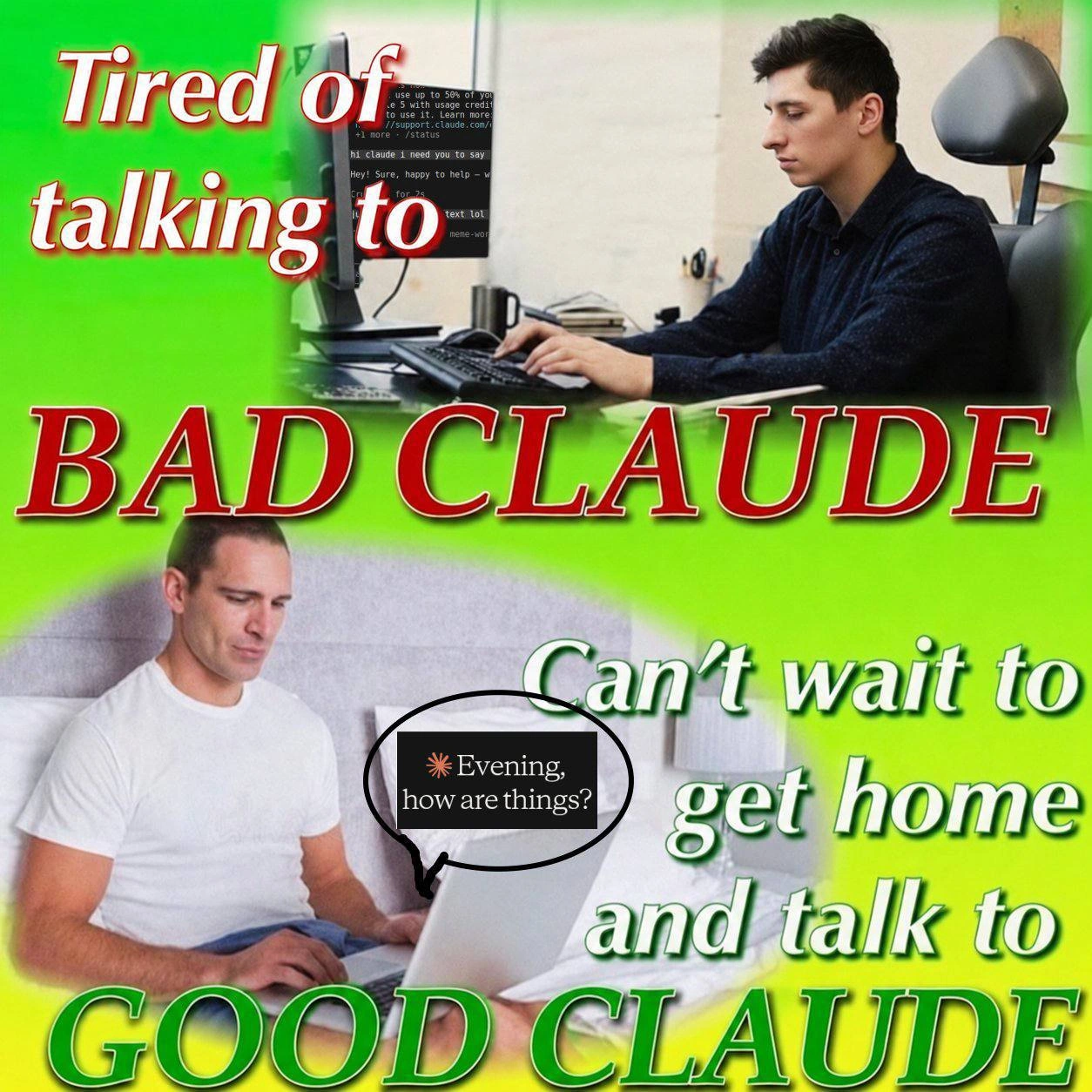
This image is a screenshot of a tweet from the user Salam Winchester (@theonlysalam). The tweet reads: 'They called me out on the stage to write a code infront of 80 student and i wrote "i wanna die" and everyone started clapping'. This piece of dark humor resonates deeply within the developer community by highlighting the immense pressure and anxiety associated with live coding, a common practice in interviews, presentations, and educational settings. The punchline isn't just the morbid statement, but the reaction of the audience. Their applause signifies a shared, unspoken understanding of the stress, imposter syndrome, and burnout that can be prevalent in the tech industry. It's a humorous, albeit bleak, commentary on the collective psyche of those who write code under pressure
Comments

11
Anonymous ★ Top Pick Live coding challenges are just the tech industry's equivalent of asking a chef to prepare a five-course meal in a random person's kitchen, with a spork, in 30 minutes. The results are similarly gourmet
  1. Anonymous ★ Top Pick

    Live coding challenges are just the tech industry's equivalent of asking a chef to prepare a five-course meal in a random person's kitchen, with a spork, in 30 minutes. The results are similarly gourmet

  2. Anonymous

    Surprise live-coding in front of 80 devs, so I just typed `kill -9 $(pgrep -f hope)` and called it a “graceful shutdown”; the applause confirmed everyone’s incident report déjà vu

  3. Anonymous

    The standing ovation wasn't for the code quality - it was for finally seeing honest documentation of the developer experience

  4. Anonymous

    The most production-ready code ever written under pressure: a single string literal expressing the universal developer experience. No syntax errors, perfect honesty, and it compiled with the audience immediately. Sometimes the best code isn't about solving the problem - it's about acknowledging that the problem is being watched by 80 pairs of eyes while your brain decides to `throw new ExistentialCrisisException()`. At least it wasn't a whiteboard interview where they'd ask you to optimize the time complexity of your despair

  5. Anonymous

    The ultimate live demo: ships a one-liner that scales empathy across 80 nodes without a single flake

  6. Anonymous

    Applause‑driven development: the only KPI where printing your internal exception to stdout is a passing build

  7. Anonymous

    Live-coding on stage, I typed raise NotImplementedError() and called it the product roadmap - instant applause from the architects

  8. @pes0x 5y

    Ay that's me lmao

    1. @Sobieg 5y

      Lol

    2. @adham327 5y

      Congrats boy, we're all proud of you

  9. @adham327 5y

    my man made it

Use J and K for navigation