When the Lunar New Year hongbao becomes an Avalanche subnet airdrop
Why is this Blockchain meme funny?
Level 1: Grandma Goes Crypto
Imagine it’s New Year’s time and normally your grandma or uncle would hand you a little red envelope with some money as a holiday gift. That always feels nice and warm, right? Now picture this: instead of a paper envelope, your family says, “We sent you a special coin on the computer!”. You open your phone, and in your digital wallet (kind of like a bank app for magic internet money) you see you’ve got some new coins that someone dropped in there for you. It’s like finding video game coins in your account as a present.
How would that feel? It’s both cool and a bit funny. Cool because, wow, you got a gift through the internet that has value, and it’s all techy and new. Funny because it’s so different from the usual tradition – it’s as if your grandma decided to become a tech wizard overnight! Instead of saying “here’s $10, go buy yourself a treat,” she might say “here’s 100,000 of my special tokens, maybe they’ll be worth something someday!”.
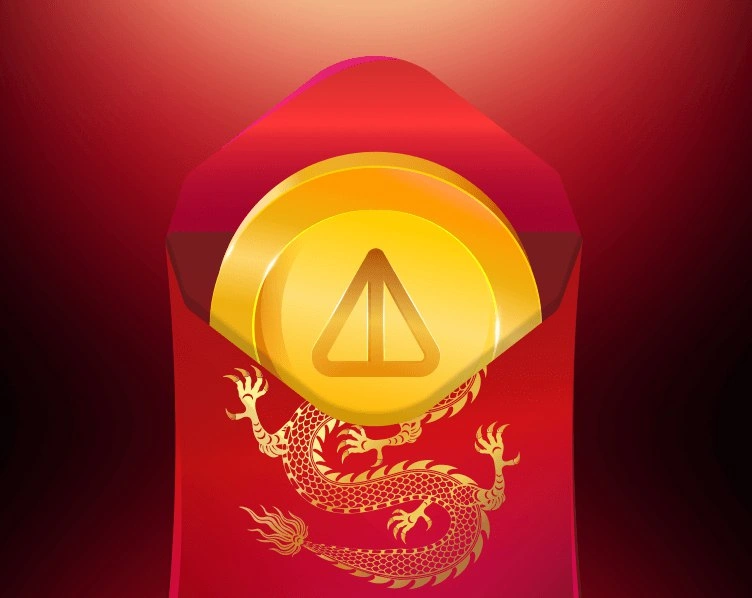
The meme is joking about exactly this scenario. It’s comparing the old-school way of giving holiday money (red envelopes) to a high-tech way (crypto airdrop). An airdrop is basically like sprinkling free coupons or tokens to lots of people at once from the sky – but digitally. So, in simple terms, the picture shows a red envelope (so you know it’s a New Year’s gift) but inside is a shiny gold crypto coin. The text is saying that giving out that envelope has turned into an “Avalanche subnet airdrop,” which is just a fancy way to say “we’re handing out new crypto coins as gifts on this particular online network called Avalanche.”
Why is it funny? Think of it like this: instead of your family giving you real money that you can hold, they’re giving you imaginary internet money that could someday buy you something… maybe. It’s poking fun at how everything is becoming digital and high-tech, even our holiday traditions. It’s like if on Halloween, instead of actual candy, houses started giving out codes to download free candy in a video game. Kids might love it or be confused, adults would chuckle at how times have changed. In the same way, “Grandma goes crypto” is a humorous idea – she’s still giving you a blessing and a gift, but now she’s using blockchain and smart contracts to do it! The heart of it is: new technology is mixing with old traditions, and that contrast makes us smile. After all, a gift is a gift, whether it’s dollar bills in a red envelope or digital coins in your online wallet – it’s the thought (and maybe the hype) that counts!
Level 2: Digital Hongbao 101
Let’s break down the key concepts and elements for someone newer to blockchain or the cultural reference:
Lunar New Year Hongbao: A hongbao (紅包), also known as a red envelope, is a traditional gift given during Lunar New Year (and other celebrations) in Chinese and other East Asian cultures. It’s a festive red packet containing cash. For example, parents and grandparents give hongbao to children, or bosses to employees as a New Year bonus. Red symbolizes luck and prosperity, and the act of giving money in a beautiful envelope is a way to send good wishes (and some spending money!) for the new year.
Avalanche (AVAX) Blockchain: Avalanche is a modern blockchain platform and cryptocurrency, similar in purpose to Ethereum (smart contract platform) but designed for higher speed and scalability. Its native coin is AVAX (that’s the gold coin in the image with the triangular Avalanche logo). Avalanche’s claim to fame is quick transaction finality (often under a second) and a unique architecture with multiple chains and sub-networks. Think of Avalanche like a highway system for crypto: where Ethereum is a busy single highway, Avalanche built many parallel lanes and even side roads (subnets) so cars (transactions) can drive without jam.
Avalanche Subnets: A subnet in Avalanche is basically a custom blockchain that can run its own applications or even its own rules, but still connected to the Avalanche ecosystem. For instance, a gaming company might launch a subnet for their game’s transactions, so it doesn’t get slowed down by or interfere with other traffic. Subnets are to Avalanche what perhaps “apps” are to an app store – each subnet can be very different, one might be DeFi, another for NFTs, etc., yet all use Avalanche tech under the hood. In this meme, the phrase “Avalanche subnet airdrop” suggests that instead of giving a gift on the main Avalanche network, someone created a whole new mini-network (subnet) to distribute a new token as gifts. It’s like not just giving a present, but creating a whole new universe for that present!
Cryptocurrency Airdrop: An airdrop is a common practice in the crypto world where developers of a new crypto token give away some of those tokens for free to a community. It’s typically a marketing move: to spread awareness and get people holding their coin. Sometimes airdrops are given to existing holders of another coin (e.g., “if you had Ethereum on date X, you get 10 of our new tokens”), or to people who sign up, or even as random drops to active users of some platform. It’s called “airdrop” because it’s like dropping samples from the sky to everyone – no effort needed from the receiver aside from grabbing it. In a technical sense, an airdrop might be implemented by a smart contract that anyone can call to claim their allotted tokens, or the project might directly send tokens to known wallet addresses.
The Red Envelope vs. Airdrop analogy: The meme compares a physical red envelope of cash to a digital crypto giveaway. Both are free gifts of money/value, one is just done by hand in person, the other by code over the internet. During Lunar New Year, people get excited to open red envelopes; in crypto, enthusiasts get excited to receive free tokens via airdrop. The meme image literally shows a coin coming out of a red envelope – the coin has Avalanche’s logo, hinting the envelope’s “cash” is actually crypto. It’s implying: what if your next Lunar New Year gift was some AVAX or some new Avalanche-based token dropping into your crypto wallet?
Tokenomics and “Notcoin”: Tokenomics refers to the economic design of a crypto token (supply, distribution, incentives). Here, “Notcoin” seems to be a mock token name. The offer “100,000 Notcoin” likely means each participant could get 100k of these tokens. That sounds like a lot, but new tokens often have huge total supplies (millions or billions in circulation), so giving 100k each isn’t unbelievable in crypto land. The joke is also in the name: Notcoin sounds like “not a coin” – suggesting it might be worthless or a scam. Many newbies have learned the hard way that not every free token ends up valuable; some are basically play-money or require you to do something (like pay fees or buy premium services) that defeats the purpose of “free”.
Telegram Premium Bonus: Telegram is a messaging app very popular in the cryptocurrency community. Projects use Telegram groups to build communities, post announcements, and support users. A lot of airdrop announcements and crypto campaigns happen on Telegram. The mention of “Extra bonus for Telegram Premium ⭐️” indicates that if a user has Telegram’s paid premium subscription (or perhaps is a member of a Telegram Premium group), they get extra Notcoin. This is poking fun at how crypto promotions often encourage joining their channels or even upselling something. It’s like if a company said, “We’ll give you a free sample, but if you’re a VIP member you get two!” It’s a somewhat shady growth tactic: tie the freebie to the user doing something that benefits the project (here, possibly subscribing to a service or an exclusive group).
Now, let’s connect the dots in simpler terms. The meme is saying: blockchain people have turned the act of giving New Year’s money into a high-tech process. Instead of handing out cash in person:
- They create a new crypto token (e.g., Notcoin) on an Avalanche subnet (a mini blockchain just for this token).
- They announce an airdrop: “We’ll give everyone some of these tokens for free, claim yours now!”
- They tie it to social media gimmicks (like the Telegram Premium bonus) to get traction. It’s both a celebration of new technology – look, we can do gift-giving at internet scale! – and a lighthearted critique – did we really need to complicate something as simple as a red envelope?.
To make it crystal clear, here’s a comparison between a traditional hongbao and a crypto airdrop hongbao:
| Traditional New Year Hongbao | Crypto Airdrop Hongbao |
|---|---|
| Physical red envelope with cash inside | Digital wallet receives crypto tokens (no envelope) |
| Given by a person you know (family, friend, boss) | Given by a project/team (could be anonymous devs) |
| Personal and limited in scope (one-to-one gifting) | Broad and automated (one smart contract to many) |
| Cash has stable value (e.g., 100 Yuan is 100 Yuan) | Token value is volatile or unknown (100k Notcoin? 🤔) |
| No strings attached, a pure gift | Might require joining a group or other tasks |
| Celebratory tradition, cultural significance | Promotional event, community-building tactic |
Reading the meme text “Notcoin Gift 🏴☠️ … Available activations: 8,788,797” might be confusing, but it’s mimicking how these airdrop posts look: they often state total tokens or number of participants to create FOMO (fear of missing out). “Available activations” implies perhaps up to 8,788,797 people can activate/claim this gift – which is ridiculously high, another sign it’s more parody than real. It’s like saying “unlimited supply, everyone can get one!” – not something you’d see in a normal personal hongbao, where the giver has a limited stack of envelopes.
In essence, this level of analysis is explaining that the meme is blending FinTech innovation (digital currency on Avalanche) with a cultural practice (Lunar New Year gifting). If you’re new to either concept: just picture your favorite holiday where people give gifts; now imagine those gifts are given out as digital coins online instead of physical items. It’s both exciting (new tech way to celebrate!) and a bit comedic (so over-engineered, isn’t it?). The crypto folks are basically saying: “We love this tradition so much that we implemented it on the blockchain and gave it a twist with our own tokens.”
Level 3: Lucky Money 2.0
On a more practical level, this meme humorously juxtaposes a centuries-old tradition with bleeding-edge blockchain trends. In many Asian cultures, during Lunar New Year elders give children and younger folks a hongbao – a red envelope stuffed with cash – as a symbol of luck and good fortune. It’s a warm, personal tradition: crisp bills, the red color for prosperity, maybe a festive dragon motif on the envelope (just like the gold dragon art we see in the image). Now enter the world of cryptocurrency and airdrops: here projects “give away” free tokens to early adopters or the community, often as a promotional stunt. It’s usually done via a smart contract or a blockchain transaction, not by hand. The meme title “When the Lunar New Year hongbao becomes an Avalanche subnet airdrop” is basically saying “Imagine if instead of giving physical money, people start giving out crypto tokens on the Avalanche network as the New Year gift!” – Lucky Money 2.0 indeed.
Why Avalanche specifically? It’s one of the hot newer blockchain platforms (often mentioned alongside Ethereum, Polkadot, Solana) and it gained notoriety for its subnet capability. A subnet on Avalanche is like a spin-off blockchain – a project can launch its own tailor-made ledger (with its own token economics, rules, even its own virtual machine) yet still rely on Avalanche’s underlying infrastructure. In mid 2020s crypto hype, Avalanche subnets were marketed as the next big thing: “Have your own chain for your DApp/game, no need to clog the main network!” This led to a flurry of new subnets, each often accompanied by – you guessed it – new tokens and airdrop campaigns to attract users. The meme plays on this hype: an avalanche of airdrops around the Lunar New Year. It’s timely too – this post was made around Lunar New Year 2024, when crypto circles were abuzz with promotions targeting holiday revelers (some platforms even did “Chinese New Year airdrops” with themes like tigers, rabbits, dragons depending on the zodiac). So the meme is extremely on-the-nose: it’s both a pun (Avalanche – avalanche of gifts) and commentary on how blockchain folks will tokenize ANYTHING, even a beloved holiday custom.
Let’s appreciate the elements in the image and text and why they tickle a developer’s funny bone:
- The Red Envelope Visual: A shiny red packet with a golden Avalanche coin peeking out. Red envelopes signify real cash gifts; replacing the cash with a crypto coin (bearing Avalanche’s logo) is instantly recognizable to those in the know. It screams “your gift is now digital”. The dragon and festive styling aren’t just random – they root the scene in Lunar New Year vibes. For devs and fintech geeks, it’s a mashup of Tradition X Technology. Kind of like seeing Santa Claus delivering NFTs instead of toys – equal parts absurd and “well, this is 2024…”.
- Avalanche (AVAX) Logo: Avalanche’s logo is a red triangle-ish icon, seen on the gold coin. Avalanche has branded itself with red-themed everything (its main token is AVAX). Using Avalanche here hints at fast, scalable tech handing out the goodies. Unlike Bitcoin or Ethereum, Avalanche pushes sub-second transaction finality and high throughput – valuable if you’re distributing to many people at once. The meme might also be subtly referencing Avalanche’s push into the Asian market or its popularity in certain crypto communities that overlap with Lunar New Year celebrations.
- “Notcoin Gift 🏴☠️ 100,000 Notcoin… Extra bonus for Telegram Premium ⭐️”: This text block is styled like an airdrop announcement one might see on crypto forums or Telegram groups. It’s dripping with satire. Notcoin is a fictitious token name (literally saying it’s not a coin – a wink at the countless altcoins with nonsensical names). Promising 100,000 tokens sounds super generous, but that’s typical in shady airdrops – they’ll offer huge numbers because the token’s actual value per unit is microscopic (100k of nothing is still nothing 😅). “Available activations: 8,788,797” suggests they’re claiming up to ~8.7 million people can partake – an absurdly high number, lampooning how scammy airdrops boast about massive supply or participant counts. And the kicker: Extra bonus for Telegram Premium. This pokes fun at how these airdrop schemes often come with strings attached: Join our Telegram channel! Follow us on Twitter! Buy our premium membership for perks! The meme pirate flag (🏴☠️) next to “Notcoin Gift” cheekily flags this as pirate booty or a bit of a scam. It’s a tongue-in-cheek way to say: “Here be free coins… or maybe just fool’s gold.” For a developer or tech insider, this whole blurb is a riff on the growth-hack culture in crypto – giving away tokens to drive user engagement metrics, much like a startup giving referral bonuses. It’s the digital equivalent of a carnival barker: “Free money, step right up (just sign up for our thing)!”
The humor works on multiple levels for industry folks. It highlights the Hype in IndustryTrends_Hype: we’ve seen waves of trends (ICO boom, DeFi yield farming, NFT drops), and Avalanche subnets + airdrops were part of one such wave. Every new blockchain promises to revolutionize something, and enthusiastic communities will tie those promises into real life events and memes. The mental image of an auntie saying “Download this crypto wallet, I’ve airdropped you some lucky tokens!” is hilarious because it’s both far-fetched and slightly plausible in our hyper-digital world. It also reflects how fintech and crypto often appropriate cultural concepts: e.g., fintech apps turned hongbao into flashy in-app animations of money transfers (WeChat’s digital red envelopes are enormously popular). Now crypto is one-upping that with decentralized airdrops – no central app, just code spreading the wealth peer-to-peer on blockchain.
For seasoned devs, there’s an extra chuckle in how complicated the back-end of this “simple” gesture is. Handing someone a red envelope is trivial; orchestrating an airdrop to potentially millions involves writing a secure smart contract, testing it rigorously (you don’t want a bug that lets someone drain the whole pot), dealing with gas fees or network congestion, and guarding against sybil attackers or bots trying to grab extra shares. It’s a Rube Goldberg machine version of gift-giving. The meme doesn’t show all that, but we feel it. There’s an implicit contrast: one’s a heartfelt family custom, the other’s a high-tech giveaway run on a decentralized network. Both spread wealth in their own way, but the latter comes with patch notes and maybe a few all-nighters debugging distribution scripts.
To sum up the senior perspective: this meme is funny because it captures a cultural crossover powered by tech hype. It’s New Year’s altruism meets blockchain promotional gimmick. Developers who lived through crypto crazes recognize the pattern: “Of course they’re turning red envelopes into token airdrops… and of course it’s on the latest hyped network (Avalanche) with all the buzzwords (subnets, smart contracts)!” It’s a loving jest at our industry’s tendency to reinvent the wheel – or in this case, reinvent the red envelope – in the name of decentralization and innovation. And just like every hyped trend, there’s a mix of genuine enthusiasm and a bit of eye-roll at how over-the-top it can get (8 million participants? really?). In a way, the meme also says: Tech may evolve, but giving gifts (and maybe showing off a little while at it) is a constant! Only now, the gifts come with fancy cryptographic wrapping paper.
// A playful pseudo-smart-contract snippet for a hongbao airdrop on Avalanche
mapping(address => bool) public claimed;
uint256 public constant HONGBAO_AMOUNT = 1000 * 1e18; // Each person gets 1000 Notcoin (for example)
function claimHongbao() external {
require(!claimed[msg.sender], "Already grabbed your envelope!");
claimed[msg.sender] = true;
_transfer(address(this), msg.sender, HONGBAO_AMOUNT);
// If we had a bonus for Telegram Premium, we'd check a list of premium users and send extra here 😂
}
(Above: Imagine a smart contract function that gives out a fixed Notcoin “lucky money” to each address once. It’s the digital analog of handing each cousin the exact same envelope with maybe a cheeky extra for the ones who did chores (= premium members). In real life, the contract might have a list or Merkle root to limit to 8,788,797 activations, as the meme text jokes.)
Level 4: Byzantine Hongbao Problem
At the deepest level, this meme touches on distributed consensus and token distribution mechanics, wrapped in cultural symbolism. The Avalanche blockchain isn’t just a random choice – it’s known for a novel consensus protocol (the Avalanche family of algorithms: Snowflake, Snowball, Avalanche) that diverges from classical Byzantine Fault Tolerance (BFT) methods. Traditional BFT consensus (imagine generals coordinating an attack time) requires heavy agreement round(s); Avalanche’s approach is more like gossip in a village: nodes keep randomly sampling each other’s opinions (preferred transaction outcome) until a clear majority emerges and locks in. This metastable consensus can reach finality quickly with high probability. It’s as if small flurries of agreement suddenly coalesce into an unstoppable avalanche of consensus. Why does this matter here? Because distributing a “hongbao” to millions via a decentralized network demands such scalable, efficient agreement – you can’t hand out digital coins reliably if the network of validators can’t agree on who got what gift! Avalanche’s protocol ensures the ledger agrees on all these new transactions (airdrop claims) fast, so your crypto hongbao doesn’t double-spend or vanish in a fork.
Now consider Avalanche Subnets: these are like custom mini-blockchains running under Avalanche’s umbrella. Each subnet can define its own rules, tokens, and validator set, while still benefiting from Avalanche’s blazing-fast consensus mechanism. In theoretical terms, it’s a sharded or modular architecture – akin to running parallel universes of blockchains that can intercommunicate. This design nods to distributed systems theory on scalability: rather than one monolithic chain handling everything (which can bottleneck, as seen on Ethereum during CryptoKitties or DeFi booms), subnets spread the load. Each subnet achieves consensus among its own validators (solving a smaller Byzantine generals problem locally), yet all are united by the overarching Avalanche platform. This is conceptually similar to cloud microservices vs one big server – many specialized parts cooperating, which is complex but powerful.
What about the airdrop itself? That hints at smart contract automation and cryptographic distribution schemes. Airdrops at scale often use Merkle trees or claim contracts: the token issuer creates a Merkle root representing all eligible recipients and their allocations, and each user proves their inclusion with a Merkle proof to claim their coins. This is a beautiful application of cryptography – no need to individually sign 8 million transactions; one on-chain root and per-user proofs do the trick. It’s a trustless algorithmic version of “checking your name off a list” to get your gift. In Avalanche’s case, high throughput and low latency mean even if we did something brute-force like transferring tokens to millions of addresses, it could handle the avalanche of transactions where slower chains might choke. The meme’s scenario of “hongbao becomes an Avalanche subnet airdrop” encapsulates this cutting-edge tech: a cultural ritual now supercharged by decentralized algorithms. Computer science meets tradition – consensus protocols ensure everyone sees the same ledger of gifts (solving a digital “Byzantine hongbao” problem), and smart contracts enforce fair distribution (no nephew grabs two envelopes 🎁). All the fancy math and system design ultimately enable this seemingly whimsical idea: millions of digital red envelopes flying through cyberspace without a single bank or elder handing out cash by hand.
Description
The image shows a glossy, deep-red envelope styled like a traditional Lunar New Year hongbao. A detailed gold dragon illustration curls across the front. Peeking out of the open flap is a shiny gold coin whose face bears a triangular icon resembling the Avalanche (AVAX) blockchain logo. The backdrop is a radial red-to-black gradient that spotlights the envelope, evoking festive yet high-tech vibes. Visually it fuses centuries-old gift-giving tradition with modern crypto tokenomics - an implicit nod to how smart-contract airdrops are replacing cash-stuffed envelopes among the blockchain crowd
Comments
6Comment deleted
Sure, grandma - just scan the QR, sign the EIP-712, bridge to the C-chain, and pay the gas fee; it’s exactly like slipping a crisp 100-yuan note into the envelope… minus the 12 confirmations
When you're the senior engineer who volunteered to be on-call during Lunar New Year thinking it would be quiet, but instead of lucky money in your hongbao, you get a P0 incident from that 'stable' legacy system that only three people understand - and they're all on vacation in different time zones
When the PM says they're giving you a 'gift' by moving the deadline up a week, but what you actually receive is a production incident wrapped in technical debt with a bow made of breaking changes. At least with a real hongbao, you know exactly how much pain you're getting upfront - this one compounds with interest every sprint
HR's year-end hongbao: a gleaming △ whispering 'PIP incoming, refactor your trajectory.'
Marketing promised a red packet; engineering shipped claim() with Merkle proofs, EIP‑712 signatures, sybil scoring, and a reentrancy guard - happy Year of the Gas Spike
Nothing says “decentralized” like a red packet that needs a Merkle proof, a bridge, and enough AVAX gas to buy the envelope