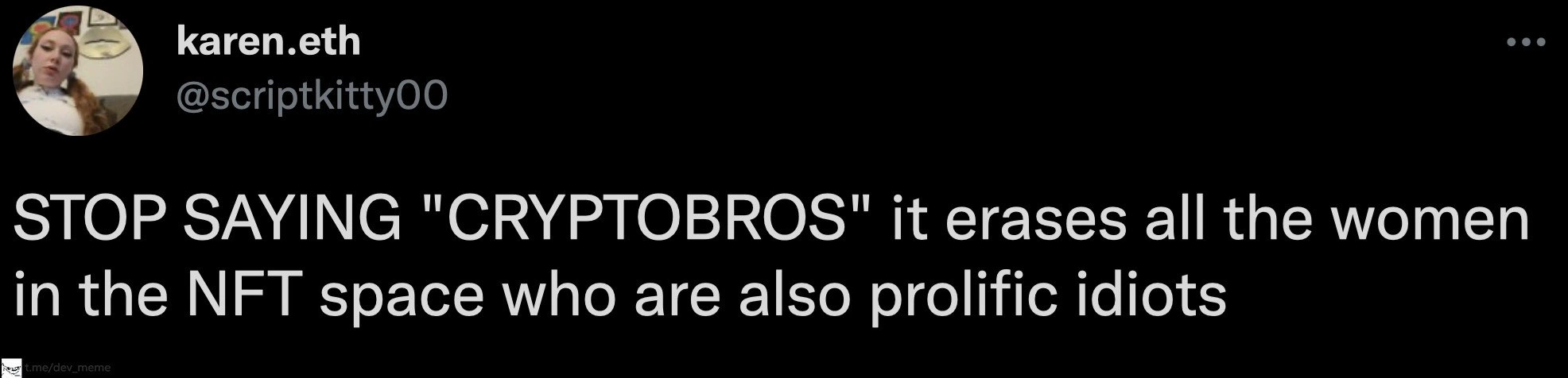
Run like a crypto bro is cornering you with NFT pitch decks
Why is this Blockchain meme funny?
Level 1: Run from Boring Talk
Imagine you’re at school and there’s a kid who just won’t stop talking about his new video game. He keeps following you around, explaining every character and every level in extreme detail, even though you didn’t ask and you really just want to go play on the swings. He’s so excited about it that he doesn’t notice you’re getting bored. You’d probably feel like running away to escape all that talking, right?
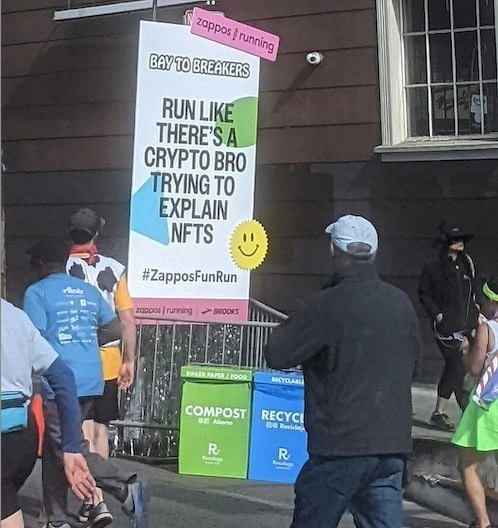
That’s exactly what this funny sign is saying, but with a tech twist. It says to run as if someone is trying to explain something called “NFTs” to you and won’t stop. In simple terms, an NFT talk can be really boring or annoying if you’re not interested – kind of like that kid’s endless video game story. So the sign is a joking way to make people run faster: run like you’re trying to get away from a long, boring explanation. Even if you don’t know what NFTs are, you do know what it’s like when someone talks your ear off about something you don’t care about. This sign takes that feeling and turns it into a silly motivation to sprint. It’s like saying, “Pretend a really pushy person is trying to sell you something you find super dull – now run!”
Level 2: Dodge the NFT Pitch
Let’s break down what’s going on in this meme in simpler terms. The sign says, “Run like there’s a crypto bro trying to explain NFTs.” This is a playful message to runners. It basically means: “Run as fast as you would if someone was trying to corner you and give you a long talk about NFTs!” Now, why is that funny to developers? Because lately, tech folks have been inundated with people talking about blockchain, cryptocurrency, and especially NFTs – sometimes to an annoying degree.
First, some definitions: NFT stands for Non-Fungible Token. That sounds fancy, but it just means a unique digital item that you can own, kind of like a one-of-a-kind collectible card, but digital. It lives on a blockchain, which is a special kind of database spread over many computers (so no one person controls it). NFTs became super popular for things like digital art. Suddenly everyone from artists to celebrities were selling these tokens (like a certificate) tied to digital pictures or music. And their prices exploded – you probably heard news stories of simple cartoon images selling for millions. This led to a huge buzz that NFTs were the next big thing on the internet, part of a broader trend often called Web3 (the idea of a more decentralized web using blockchains).
Now, a crypto bro is a joking term for a person (often a young guy in this stereotype) who is really into cryptocurrency and NFTs. Picture someone who might corner you at a party to excitedly tell you about the Cryptocurrency they just bought or the new NFT project they’re into. They might call themselves an “entrepreneur” or “blockchain evangelist”. The term “bro” hints that this person can be a bit pushy or oblivious to others not caring. They often have endless enthusiasm for these digital assets and sometimes assume you want to hear all about it (even if you don’t). For example, a crypto bro might start explaining how you have to get into Bitcoin or how NFTs are revolutionizing art – even if you just met them. It’s kind of like that friend who got into a new hobby and won’t talk about anything else.
Pitch decks are another piece of the puzzle: a pitch deck is basically a slide presentation, usually used by startup people to pitch (propose) their idea to investors or anyone who’ll listen. So if someone has an NFT project or a crypto startup, they often create a pitch deck full of bullet points and charts trying to prove how amazing their idea is. In our context, saying “with NFT pitch decks” suggests the scenario of an overly eager person armed with slides or arguments trying to sell you on their NFT idea.
Now, imagine you’re a developer (or anyone in tech) and you’ve been hearing this stuff non-stop for months. By June 2022, NFTs and crypto were everywhere in tech conversations – it was the hot new thing. Some people truly believe in them, and some are just trying to make a quick buck, but either way, a lot of developers got tired of the hype. We call it BlockchainHype when something is talked about as if it will solve everything. Many developers began to roll their eyes when yet another meeting or friend started with, “So I’ve been investing in this new NFT collection…”.
So this sign is tapping into that feeling. It was spotted at Bay to Breakers, which is a famous annual footrace in San Francisco. Bay to Breakers is known for being fun and wacky – people dress up in costumes, there are funny signs, and it’s more of a party run than a serious race. The sign’s top even says “Bay to Breakers” and has a sponsor logo (Zappos, a shoe retailer). The sponsors put up humorous messages to motivate runners. In this case, the motivation is comedic: run faster or else you’ll get stuck listening to an NFT explanation! It’s a joke that a lot of tech workers running that race would understand instinctively (since San Francisco has a big tech scene).
To a junior developer or someone new to this world, it helps to know why an NFT explanation might be something you’d want to avoid. It’s not that NFTs themselves are evil or anything; it’s that the discussions around them got really overwhelming. Imagine every time you log onto your social media or go to a meetup, someone is trying to convince you that this new thing (NFTs) is going to change the world and that you should invest your time or money into it. Even if you find the technology mildly interesting, hearing the same excited pitch again and again gets old fast. Developers started joking about “NFT fatigue” – being tired of the topic.
So “run like there’s a crypto bro trying to explain NFTs” translates to “pretend someone is about to bore you with a long NFT talk – that feeling of “ugh, not again!” is your fuel to run faster.” It’s a humorous way to encourage runners, especially those in the tech community, by referencing something culturally relevant. It also lightly pokes fun at the crypto bros themselves – suggesting that their zeal can be so off-putting that people would literally sprint away to avoid hearing their spiel.
The presence of those green COMPOST and blue RECYCLING bins in the photo is likely just because the city provided bins during the event (gotta keep those race areas clean!). But some people might chuckle that the bins are right under the sign about crypto bros and NFT pitches. It unintentionally implies “this is trash, recycle it” about the pitches – albeit that’s just a cheeky coincidence. The bright yellow smiley face sticker on the sign helps signal it’s all in good fun. The whole vibe is a playful jab at a trend that many in the industry found both ubiquitous and tiring.
In summary, this meme is tagging into industry trends and the hype around them. Blockchain and NFTs were an IndustryTrend_Hype at the time – lots of excitement, not always a lot of substance. If you’re a newer developer, you might be super curious about blockchain and that’s cool! But you’ve probably also seen people online saying cringe-y things like “wen moon?” or “buy my NFT”. This sign is basically the seasoned developers saying, “Ha, yeah, we’ve had enough of that spiel – time to run!” It teaches an important cultural nuance: in tech, it’s good to be excited about new things, but if you become that guy who only talks in buzzwords and tries to rope everyone into the latest fad, people might secretly (or literally, in this joke) run the other way.
Level 3: Escape Velocity from Hype
For those of us who’ve been around the tech block a few times, this meme hits like cold water on a groggy morning: refreshing and a tad shocking in its accuracy. The sign reads, “Run like there’s a crypto bro trying to explain NFTs”, and every senior engineer can practically feel that scenario. It pokes fun at the BlockchainHype culture that peaked around 2021, where you couldn’t attend a conference, open Twitter, or even enjoy a team lunch without someone enthusiastically steering the conversation toward NFTs and cryptocurrency. The humor comes from relief and commiseration: we’ve all been cornered by that one guy in the office or at a meetup who just discovered NFTs and thinks he’s unlocking the secrets of the universe (usually via a 50-slide pitch deck). The meme turns that social exhaustion into motivation: run faster — escape! In physics terms, achieve developer escape velocity and break free from the gravity of the latest trend-chaser’s spiel. 🏃♂️💨
The industry pattern here is hype cycles on overdrive. We’ve seen it before: first it was “everything needs to be cloud”, then “everything needs AI”, and at the height of Web3 mania it was “let’s put everything on the blockchain”. The crypto_bro stereotype emerged from this fever pitch: typically a hyper-enthusiastic (often newbie) tech dude who swears NFTs (unique blockchain tokens) are the key to wealth, revolutionizing art, gaming, real estate – you name it. He’s got pitch decks on deck (no pun intended) to convince you, complete with charts of skyrocketing token prices and buzzwords like decentralize and disrupt. Senior devs have heard this all before. We know the pattern: bold claims, maybe a kernel of truth in the tech, but slathered in get-rich-quick energy and missing details on actual implementation. This sign cleverly satirizes that relentless evangelism. It basically says: Imagine the most obnoxious sales pitch scenario you can — now channel that adrenaline to run faster. It’s funny because it’s true; nothing triggers a flight reflex in a tired developer quite like someone starting with “Have you heard about this new NFT project? Let me explain…”.
Consider the real-world scene: the Bay to Breakers race in San Francisco is famous for its party vibe and crazy costumes, but here we have a down-to-earth geeky joke on a giant sign. Sponsored by a running shoe retailer (Zappos) and a shoe brand (Brooks), the sign’s message is on-point for a city where Blockchain meetups once overflowed with enthusiasts. Even the placement is rich in subtext. The sign towers above compost and recycling bins – a coincidence, sure, but a cynic might quip that it’s a subtle suggestion of what to do with those NFT pitch decks (compost them, recycle them – just don’t take them home!). The whole thing screams industry fatigue: we’re collectively recycling last year’s tech hype into this year’s in-joke. And the big smiley-face sticker slapped next to the text? That’s the cheeky grin of every developer who’s so done with hearing about “non-fungibles” for the 100th time. It’s as if the sign itself is in on the joke, winking at us: “This is ridiculous, right? Now run, you fools!” (shout-out to Gandalf).
This meme also hints at the psychological side of dev life. We often feel a bit chased by new trends – today it’s NFTs and metaverse, yesterday it was microservices and Kubernetes (and yes, sometimes it was always DNS). There’s an underlying commentary on burnout: even fun runs — meant to be leisure – aren’t safe from tech trends. The #ZapposFunRun tagline anchors it in a marketing event, but rather than some generic “you can do it!” slogan, they chose a phrase that resonates specifically with tech folks. That gives a nod to how ubiquitous the NFT hype had become: even shoe marketers bet that your motivation might be “Please, no, not another NFT talk!” This implies a universally recognizable exhaustion among developers. We’re laughing, but only to keep from crying at how spot-on it is.
And let’s not forget the pitch deck pursuit dynamic. A pitch deck is basically a slideshow that startup folks use to sell you on their big idea. Now picture a self-proclaimed crypto guru with a laptop or a stack of flyers who literally won’t let you leave the conversation – it’s almost a horror-movie scenario for a developer just trying to enjoy their day. We joke that encountering such a person triggers the same response as seeing a bear in the woods: don’t fight, just run. The meme nails this shared experience: avoidance. It’s the same energy as hitting “Decline” on a meeting invite about “Synergizing Blockchain Solutions” or quietly walking out of a conference talk when the Q&A turns into someone shilling their coin. In code, it’s something like:
# Pseudocode for handling an incoming NFT explanation in the wild
while crypto_bro.is_explaining_nfts():
runner.increase_speed(5) # add 5% extra speed to outrun the monologue
That loop represents every developer’s internal logic when confronted with BlockchainHype in a conversation. 😉 It’s a humorous exaggeration, of course – most of us don’t literally sprint away from a boring tech pitch (imagine the stand-ups if we did!). But emotionally, it feels like we want to. Just like code tries to handle an exception by escaping the block, we handle an incoming NFT sermon by escaping the vicinity. The truth beneath the laugh is that technologists value their time and sanity. We thrive on innovation, sure, but we have a low tolerance for buzzword bingo and high-pressure hype with little substance. So this sign resonates: it validates that urge to flee from the noise. In a world where every week there’s a “revolutionary” new framework or fad, choosing what to tune out is a survival skill. Here, the meme suggests that listening to a crypto bro’s NFT pitch is not mission-critical – better to achieve that escape velocity and save your energy (literally, for the race and metaphorically, for real tech work). It’s gallows humor for the over-pitched engineer’s soul.
Level 4: Proof-of-Workout
In the blockchain underbelly of this joke, there’s some serious tech powering those three-letter buzzwords. An NFT (Non-Fungible Token) isn’t just a JPEG with a price tag – it’s a cryptographic entry on a distributed ledger. Beneath the hype, there’s elegant math and computer science ensuring that each token is unique and verifiable. Think public-key cryptography and digital signatures: when someone “owns” an NFT, it means their private key can produce a signature proving ownership of a one-of-a-kind token ID. This token is recorded on a blockchain like Ethereum, which uses a consensus algorithm (historically Proof-of-Work, now shifting to Proof-of-Stake) to agree on who owns what. That consensus mechanism solves a classic distributed systems conundrum (the Byzantine Generals Problem), allowing a network of computers to agree on a single source of truth without trusting each other. It’s as if all the runners in a race have to repeatedly agree on who’s in the lead – and an NFT is a special racing bib number that nobody else can copy, thanks to cryptography.
From a theoretical perspective, non-fungible just means unique and indivisible. One Bitcoin is interchangeable with another (fungible), but one NFT isn’t equal to another – each has distinct identity data (often a link or hash pointing to a file). Ensuring that uniqueness on a global scale involves hashing algorithms and Merkle trees under the hood: every new NFT and transaction is baked into a block with a cryptographic hash linking it to the previous block. This chain of hashes (hence blockchain) makes the ledger tamper-evident – change one detail and the hashes break, revealing the meddling. It’s brilliant computer science: decentralized consensus and cryptographic immutability. So when that crypto bro corners you to “explain NFTs,” in an ideal world you’d hear about one-way hash functions, smart contracts like ERC-721, and maybe even a nod to how Ethereum gas fees spike from all those token minting sprees. But let’s be honest: he’s probably skipping the part about elliptic curve signatures and Merkle roots and jumping straight to “bro, it’s the future of art – and you gotta invest.”
The irony seasoned engineers savor is that all this sophisticated cryptography and distributed computing is often distilled into cartoon apes selling for millions. The fundamentals are groundbreaking – a globally synchronized database without a central authority, essentially a solution to a decades-old computer science puzzle. Yet the way it manifests in pop culture is people frantically trading procedurally-generated cat pictures. It’s a long way from Turing awards and whitepapers to meme-worthy hype. This mismatch between the technical genius of the underlying system and the shallowness of many NFT pitches is exactly why a developer might literally run for the hills (or the finish line) when someone starts yet another breathless explanation. After all, you didn’t sign up for a full seminar on cryptographic ledgers mid-jog – especially not one wrapped in a sales pitch for the latest monkey JPEGs digital collectibles.
Description
Street-level photo from the Bay to Breakers race shows several runners in colorful jerseys passing a tall white sign fixed to a building. The sign, topped with a pink 'zappos running' logo, reads: 'BAY TO BREAKERS' and in larger bold lettering: 'RUN LIKE THERE’S A CRYPTO BRO TRYING TO EXPLAIN NFTS'. A yellow smiley-face sticker is attached beside the text, and the bottom includes '#ZapposFunRun' plus small 'zappos running' and 'brooks' sponsor marks. Below the sign sit green 'COMPOST' and blue 'RECYCLING' bins, anchoring the scene in a typical race-day environment. The gag riffs on the relentless Web3 sales pitch culture, turning developer exhaustion with NFT evangelism into a literal sprinting incentive - perfectly capturing blockchain-hype fatigue familiar to senior engineers
Comments
6Comment deleted
Proof of work is easy - proof you can outrun a 40-minute NFT elevator pitch is the real consensus algorithm
The same energy that makes someone explain NFTs unprompted is what drives them to rewrite the entire codebase in Rust without asking anyone first
The sign perfectly captures the universal developer experience: you'd rather run 7+ miles through San Francisco than endure another unsolicited explanation of how NFTs will revolutionize digital ownership, complete with whiteboard diagrams of smart contracts and passionate hand gestures about decentralization. It's the 2020s equivalent of avoiding the guy at the party who wants to explain their startup idea - except now they're armed with Ethereum gas fees and IPFS architecture diagrams
Nothing boosts cardio like dodging an “it’s not the JPEG, it’s the token” pitch that 302s to a centralized CDN - pure off‑chain acceleration
Production throughput best practice: announce a 45‑minute ‘tokenomics 101’ and watch even legacy knees achieve horizontal scaling
The one sprint where even your ERC-721 metadata can't outrun the 'but what's the utility?' question