Area 51's greatest treasure: a smart compiler
Why is this Compilers meme funny?
Level 1: The Punctuation Fairy
Imagine you’re writing a bunch of sentences but you keep forgetting to put a period at the end of each one. Every time you do that, your teacher stops grading your work and says, “There’s a mistake here!” Now, normally, you’d have to go back and add all those missing periods yourself and then hand in your work again, hoping you didn’t miss any. Kinda annoying, right?
Now picture this: you discover a special magical friend — let’s call them the Punctuation Fairy 🧚 — who secretly follows along as you write and automatically pops a period at the end of every sentence you forget to finish. You write your essay, accidentally leave out a few periods, but when you turn it in, there are no angry red marks because the Punctuation Fairy fixed all the tiny mistakes for you! You’d probably feel super happy and relieved. You might even do a little happy dance because you avoided getting in trouble for those silly mistakes.
In this meme, programmers are basically dreaming about that kind of helper, but for computer code. In coding, forgetting a little symbol (like a semicolon, which is kind of like a period for code) can cause the whole program to stop working. It’s a really common oopsie that makes coders go “d’oh!” 🙃 Normally, the computer just says “Error! You forgot something!” and you have to fix it. But the joke here is pretending we found a magical computer program (hidden away in a secret place like Area 51, where all the sci-fi magic is imagined to be) that will fix these punctuation mistakes for us automatically.
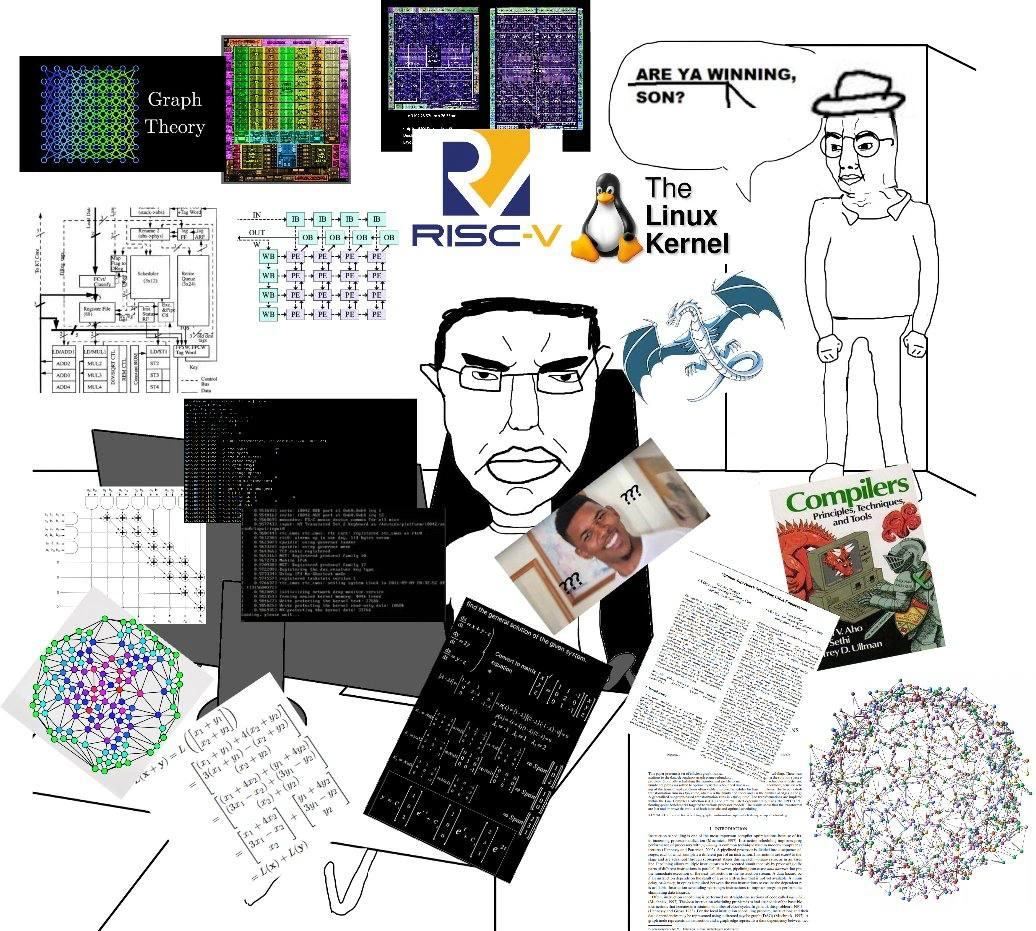
The picture shows people dancing like crazy at a party — that’s how overjoyed these coders would be if such a magic compiler (the special program that checks code) existed. It’s funny because it’s such a big celebration over such a small thing being fixed. But anyone who’s been frustrated by a tiny missing piece can relate: when the problem finally gets solved, even if it was small, you feel like celebrating! Essentially, the meme is saying: “Wouldn’t it be awesome if our tools took care of the small stuff so we can just have fun?” And the answer, judging by those dance moves, is a big yes!
Level 2: Syntax Saviors
Let’s break down the scenario for those newer to coding. In many programming languages (especially in the C family like C, C++, Java, C#, and even JavaScript), every statement must end with a semicolon (;). Think of it like a period at the end of a sentence, but for code. It tells the computer “I’m done with this instruction, move on to the next.” If you forget that semicolon, the compiler (the program that checks and translates your code into something the machine can run) gets confused. It’s as if you wrote “Hello my name is” and never finished the sentence — the compiler is left hanging, wondering “your name is... what?!” In programming terms, a missing semicolon usually triggers a syntax error during compilation, and the compiler will refuse to turn your code into an executable until you fix the issue. You might see an error message like “SyntaxError: missing ';' before statement” or something along those lines, depending on the language. This is a super common mistake, and every developer does it from time to time, especially when they’re first learning or just typing fast.
Now, imagine how amazing it would feel if the compiler could just say, “Oh, I see you forgot a semicolon here — no biggie, I added it for you. Carry on!” In real life, compilers don’t typically do this; they expect you to correct the code. But the meme is fantasizing about a tool or compiler so advanced that it auto-corrects this little typo for you. It’s like spell-check or autocorrect, but for code punctuation. Auto semicolon insertion as a feature is actually not completely unheard of: for example, JavaScript will automatically insert semicolons in certain cases behind the scenes, and some newer languages or tools try to reduce the need for manual semicolons. But in strict languages like Java or C++, if you miss one, you’re definitely going to get an error and have to fix it yourself.
The top caption of the meme reads: “when you raid area 51 and find compiler that automatically adds semicolons where missing:” — this sets up a very silly, over-the-top scenario. To unpack that, you need to know about the Area 51 raid part: around September 2019, there was a viral joke/event about a bunch of people planning to “raid Area 51” (a secret U.S. Air Force base often associated with UFO folklore) to uncover alien secrets. It was all tongue-in-cheek internet humor; people weren’t actually going to do it seriously, but it generated tons of memes about finding alien technology. Here, the meme jokes that among those secret sci-fi treasures, there’s a miraculous compiler that aliens or the government have been hiding — one that fixes the dreaded missing semicolon automatically. Pretty ridiculous, right? That’s the fun of it.
The image itself shows two men dancing with absolute joy at what looks like a party. They’re crouching, fist-pumping, mid-groove — basically celebrating like there’s no tomorrow. The text above basically answers the question “how would developers react if they found such an amazing compiler?” The answer: they’d break into a wild dance because this is like a dream come true for anyone who’s been annoyed by trivial compiler errors. It’s exaggeration for comic effect: no one would literally dance that hard over a compiler feature... or would we? 😉 (After dealing with many frustrating bugs, sometimes even a small win does feel worthy of a victory dance!).
This also sneaks in a bit of commentary about code quality and tools. We have linters and IDEs now that can automatically format code and even add missing semicolons when you save the file (for example, tools like Prettier or ESLint in fix mode for JavaScript). So the idea isn’t completely alien (pun intended) – it’s just that here it’s portrayed as an otherworldly discovery. For a newcomer, the key takeaway is: Missing semicolons are a common, pesky mistake in coding, and the thought of a magical tool fixing them for you can bring tears of joy to a programmer’s eyes. The whole thing is a lighthearted way to say, “I wish my tools were smart enough to save me from my own little errors.” And the Area 51 angle just makes it absurd and thus meme-worthy.
So if you’re new to coding, know that forgetting a ; is like forgetting to lock the door — easy to do, but the system will complain immediately. And while we have lots of helpers and autocomplete features in modern coding, ultimately you still need to write correct syntax. This meme taps into that wishful thinking: what if the compiler had our back and fixed it for us? You can see why that idea would make developers want to party: it’s one less headache in our daily work! In summary, it’s mixing a pop culture moment (Area 51 raid) with a programmer’s inside joke (the infamous missing semicolon error) to create a humorous scenario that both tech folks and meme connoisseurs can chuckle at.
Level 3: Raiders of the Lost Semicolon
From a seasoned developer’s perspective, the humor in this meme is spot-on. It mashes up the absurd hype of “raiding Area 51” (one of 2019’s biggest internet inside jokes) with one of the oldest C-family language pain points: the missing semicolon error. Every programmer who has worked in languages like C, C++, Java, or C# has experienced that mini heart-attack when the compiler throws a fit, only to discover it was just a lone ; missing somewhere. It’s a rite of passage in coding. We’ve all spent 5 minutes staring at an angry compiler output, checking logic and syntax carefully, and then finally noticing that tiny omitted character at the end of a statement. Ah, the classic “forgot a semicolon” facepalm! 🤦♂️
Now, industry veterans also know that compilers are deliberately strict. That pedantry (though annoying when you’re in a hurry) is what prevents bigger problems. A missing semicolon can make the parser interpret code in a completely wrong way. For example, in C++ if you accidentally put a > without a semicolon before it, the compiler might think you’re writing a template definition rather than closing a generic list — the error messages can spiral into nonsense because of one little missing token. So in real life, the compiler stopping you with an error is actually a blessing, forcing you to fix the code to exactly what you intended.
That said, the fantasy of a tool that simply fixes such trivial mistakes for you is tantalizing. Experienced devs often joke about how our IDEs and build tools have gotten smarter over time. Modern IDEs will highlight a missing semicolon immediately (often with a red squiggly line) and some can even auto-insert the semicolon when you press a shortcut or format the document. Linters and formatters (like ESLint with auto-fix for JavaScript, or clang-format for C++) can resolve these issues on save. But notice: these are development tools around the compiler — none of them push the “just compile it anyway” button when code is syntactically invalid. There’s always that requirement that source code ultimately has all the right pieces before it truly compiles.
So why are the two middle-aged guys in the photo dancing like it’s the best day of their lives? Because this scenario is tapping into a deep developer wish-fulfillment: imagine discovering a secret, cutting-edge compiler (hiding in some government lab) that completely eliminates one of the most frustrating compile-time errors. It’s the mythical “dream compiler feature” we’ve all joked about. The dancing is an exaggeration of how jubilant we would feel if such a thing existed. It’s funny because it’s true – the relief of solving a stubborn bug or error can indeed make you want to jump out of your chair and celebrate. Seasoned engineers might not literally bust a move in the office, but internally we’re dancing when a tough issue gets resolved or, in this case, when we realize we won’t have certain issues at all!
The “Area 51 raid” reference dates this meme to late 2019, when a tongue-in-cheek Facebook event went viral urging people to storm the secretive Area 51 base in Nevada to "see them aliens." The tech community riffed on this with memes about stealing futuristic tech. Here, that futuristic tech is an alien compiler that fulfills a coder’s wildest dream: no more pesky syntax errors for missing punctuation. It’s a perfect blend of pop culture and geek humor. Veteran devs get the double reference: the craziness of the Area 51 meme itself and the equally far-fetched idea that a compiler could be both omniscient and forgiving enough to mend our code.
On a more serious note, experienced developers recognize a subtext: is stricter always better? Languages like Python proved you don’t need semicolons at end-of-line at all; others like Rust or Kotlin took away some historical pain points by design. So the industry has gradually been moving away from some of these pitfalls. But no mainstream language or compiler will auto-correct your code’s syntax on the fly in the final build — that’s a line we haven’t crossed, partly out of caution. The meme just imagines, what if we did? The sheer glee on the dancers’ faces says it all: life would be just a bit easier, and we’d have one less reason to tear our hair out during late-night coding sessions. It’s a shared laugh at both our own forgetfulness and the uncompromising nature of our tools. As any battle-scarred programmer would agree, finding out the only thing wrong with your code was a missing semicolon is cause for celebration — mostly relief that it wasn’t something far more insidious! In that spirit, you can almost hear the DJ at this “dev rave” drop the beat as soon as the compile succeeds. Time to dance because the build is green! 🎉
Level 4: Extraterrestrial Error Recovery
At the deepest technical level, this meme hints at a fantasy in compiler design that almost sounds like alien technology: a compiler sophisticated enough to automatically insert missing semicolons and continue as if nothing went wrong. To appreciate why this is extraordinary, we need to understand how compilers normally read code. Most modern compilers use a formal grammar (often specified in Backus–Naur Form or similar) to parse source code. These grammars define that statements in many C-family languages must end with a semicolon token (;). The compiler’s parser is like a strict grammar teacher — if it doesn’t see a semicolon where the rules say one should be, it gets confused and throws a syntax error. This rigidity is by design: it prevents ambiguity in understanding the code’s structure.
Now, could a compiler be smart enough to realize a semicolon is missing and just "patch" it in? In theory, yes — compilers can employ something called error recovery. Academic compiler construction texts (think the classic Dragon Book) describe strategies for a parser to recover from errors: one approach is to insert a likely missing token or delete an unexpected token and see if parsing can continue. In fact, certain compiler generators (like YACC/Bison or ANTLR) allow grammar rules for common mistakes, enabling the parser to guess a missing semicolon and carry on. However, there’s a big difference between recovering to report multiple errors and actually producing an executable program with auto-corrected code. A real compiler doesn’t usually auto-fix your source because blindly inserting a semicolon could change what the program means or mask deeper bugs. It’s like an autocorrect that might fix typos in a text message — useful for trivial mistakes, but risky for anything subtle.
Interestingly, some languages do implement a form of automatic semicolon insertion as part of their design. JavaScript is a famous example: its parser will insert semicolons in certain situations (like at line breaks) according to the language specification. This is a designed feature to make the language more forgiving, but it’s also notorious for causing odd bugs (for instance, an return statement on one line and a value on the next line can be misinterpreted because JavaScript sneakily inserts a semicolon after return). Other languages like Go and Swift have eliminated the burden of manually typing semicolons by treating line breaks as statement terminators or by invisibly inserting semicolons during lexical analysis. These are deliberate language design choices rather than compilers reading your mind on the fly.
So why is the idea of a compiler automatically patching missing semicolons seen as almost science fiction (or in meme-speak, something you’d find hidden in Area 51)? Because building a truly self-healing compiler ventures into tricky territory. It requires the tool to accurately guess the programmer’s intent whenever there’s a mistake. In the realm of program correctness (and theoretical computer science), that’s a hard problem — potentially undecidable in the general case — since the compiler would need to consider multiple interpretations of malformed code. There’s ongoing research into automated program repair and AI-assisted coding (where an IDE or tool suggests fixes for bugs), but mainstream compilers remain intentionally strict. They prefer to be pedantic guardians of syntax, stopping at the first error rather than risk compiling something unintended.
To illustrate the normal behavior versus our dream scenario, consider a simple C example:
#include <stdio.h>
int main() {
printf("Hello, world") // Oops, missing semicolon here!
return 0;
}
A standard C compiler would choke on this. The parser expects a ; after the printf statement. The result? A compile error like:
error: expected ‘;’ before ‘return’
This error is the compiler basically saying “I was expecting a ; but I hit the next line (return) and got confused.” A human developer sees this, facepalms, and quickly inserts the missing semicolon to appease the compiler’s strict grammar rules. Now imagine our hypothetical Area 51 super-compiler running the same code. Instead of erroring out, it would internally say, “Ah, I see you forgot a semicolon. No worries, I added it for you,” and the code would compile and run. The output would still be “Hello, world”, and our dancing developers wouldn’t even know a typo had occurred.
The reason veterans find this concept both hilarious and wild is because it upends decades of expectation that we developers must meticulously attend to these tiny details. In practice, compilers just don’t fix our code for us like that. An alien compiler artifact that could smoothly patch up our SyntaxErrors without breaking a sweat feels like a gift from an advanced civilization 😄. It’s the ultimate code quality tool: one that not only points out our mistakes but fixes them silently, letting us move on to celebrating the results. Given the complexities of programming language theory and compiler implementation, such a tool is almost mythical — hence the joke that you’d have to raid a secret government base to get your hands on it.
Description
The meme uses the "Storm Area 51" trend from 2019. The top text reads, "when you raid area 51 and find compiler that automatically adds semicolons where missing:". Below the text is a photograph of several people dancing with chaotic, joyful abandon at an indoor event, likely a party or reception. The central figure is a man in a white shirt and tie, crouching and looking ecstatically at the camera, while another man in a blue shirt dances enthusiastically beside him. The technical joke centers on the long-standing frustration in many programming languages (like C++, Java, and classic JavaScript) where a missing semicolon is a frequent and annoying syntax error. The idea of a compiler smart enough to automatically insert missing semicolons is presented as a piece of alien-level, advanced technology, whose discovery would warrant such a wild celebration. It's a relatable pain point for any developer who has wasted time on such a trivial mistake
Comments
7Comment deleted
Finding a compiler that perfectly handles missing semicolons is like finding a JIRA ticket with a clear, concise, and complete set of requirements. Both are rumored to exist at Area 51, but no one has ever seen one in the wild
If this alien compiler ships to prod, half of our CI pipelines turn from red to green - and the other half finally fail on the real logic errors we’ve been hiding behind stray punctuation
Wait until you realize JavaScript already has ASI and we still spend half our careers arguing about whether to use it or enforce semicolons with a linter that adds them anyway
The irony is that JavaScript already has Automatic Semicolon Insertion (ASI), yet we still argue about whether to use them explicitly. Meanwhile, C++ developers are still debugging segfaults caused by that one missing semicolon after a class definition - a compiler that truly understood intent would be worth raiding Area 51 for, though it would probably just introduce subtle bugs by 'fixing' intentional syntax patterns
A compiler that auto-inserts semicolons is DWIM with root on your AST - hilarious until it ‘fixes’ a for(;;)
Area 51's real black magic: ASI that doesn't ghost your 'for(;;){}' into an IIFE nightmare
An auto-semicolon compiler is just ASI with root privileges; wait until it inserts one after 'return' on a newline and your function quietly returns undefined in prod