The Trojan Horse Pull Request: Minor Styling Fix, Major Refactor
Why is this CodeReviews meme funny?
Level 1: Small Gift, Big Surprise
Imagine your friend says, “I have a little present for you, it’s just a tiny decoration for your room.” You happily take the gift, because who wouldn’t want a nice little decoration? But later you find out that inside that small present, your friend actually hid a bunch of unexpected surprises – like a wind-up toy that zooms around knocking things over and maybe even a little pet that you didn’t know about! You thought you were getting one simple, harmless thing, but you ended up with a whole lot of other stuff going on in secret.
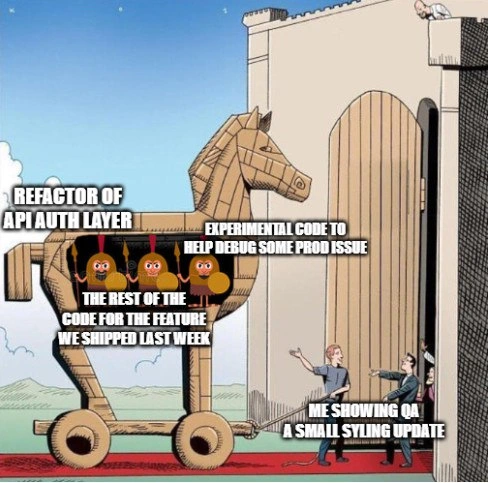
That’s what’s happening in this picture. The tester (QA) thinks they’re just getting a small, safe change (like a tiny decoration for the software). But the developer actually packed a bunch of hidden changes inside it (like sneaking toys or animals in the gift). It’s funny because the tester is about to say “Sure, bring it in!” not knowing there’s chaos hidden inside. It’s like a prank: someone says “Here’s a nice wooden horse statue for you” but inside the statue there are sneaky things waiting to come out and cause trouble. We laugh because we know a secret that the poor tester doesn’t: this “small update” is actually a big surprise in disguise!
Level 2: Under the UI Radar
Let’s break down the meme’s scenario in simpler terms and explain the components for those newer to development. The image uses the Trojan Horse from Greek mythology as a metaphor. In the myth, Greek soldiers hid inside a giant wooden horse to sneak into the city of Troy. In this meme, the wooden horse represents a Pull Request (PR) – which is basically a package of code changes a developer wants to merge into the codebase. The developer (pulling the horse) is telling QA, “Hey, it’s just a small styling update,” implying the PR only contains a minor visual tweak. Styling update usually means a change to how the app looks (for example, changing a font size or button color with CSS). A small styling fix is typically low-risk; it shouldn’t affect how features work under the hood.
However, this “small update” PR is a Trojan horse because inside it are hidden compartments of code changes that are much bigger and unrelated to styling. The meme explicitly labels those hidden changes:
- “Refactor of API Auth Layer” – API stands for Application Programming Interface, essentially the part of the software that handles requests, and the auth layer is the authentication logic (how users log in, validate tokens, etc.). Refactoring means rewriting or restructuring existing code without changing its external behavior (ideally). A refactor of the auth layer could involve significant code changes in how users are verified. That’s a big deal: if you refactor login code, you must be careful because a mistake could prevent all users from logging in or open a security hole. In plain terms, this is a major code overhaul disguised inside the PR. It’s like hiding a whole new lock mechanism inside what was supposed to be just a paint job on the door.
- “Experimental code to help debug some prod issue” – Prod means production, the live environment where real users are. When there’s a tricky bug in production, developers sometimes add debug code or logging to gather more information about the issue. It might be something as simple as
console.log("Reached here")or a temporary bypass that assists in debugging. It’s called experimental because it’s not meant as a permanent solution; it’s a quick way to diagnose a problem. This kind of code isn’t usually meant to ship to users, or if it is, it should be removed later. In our meme, the developer left this diagnostic code inside the PR without highlighting it. That’s like slipping a temporary Band-Aid fix into a code update. If nobody notices, that code could end up running in production, possibly causing noise (like extra logs) or even performance issues. Think of it as a chef secretly adding a bunch of chili powder to a recipe just to see if the food critic detects a flavor issue – it’s only for testing, but now all diners will taste it if not removed. - “The rest of the code for the feature we shipped last week” – This implies there was a feature released last week that wasn’t fully completed. Maybe due to deadline pressure, some pieces of it were left out or not finished on time. Now the developer is including the remaining parts of that feature in this PR. In a perfect world, they would have a separate update or at least clearly state, “This PR completes Feature X from last week.” But instead, they are hiding it. For a newcomer: a feature is a functionality or feature set in the software (maybe a new user profile section or a new report). If “the rest of the code” is coming now, it means last week’s deployment had an incomplete feature (which is a bit of a project management issue). By sneaking it in, the dev is treating it like, “Oh, just consider this part of the small fix,” even though it could be entirely new functionality that also needs testing. This is often how feature creep happens – more and more gets tacked on beyond what was originally planned, sometimes without proper visibility.
So the developer has essentially combined three different types of changes (UI styling change, a significant backend logic refactor, and finishing a feature + debug code) into one PR but is only telling QA about the smallest one (the styling). Let’s clarify some of these terms and why this is problematic:
- Pull Request (PR): When using a version control system like Git (common on platforms like GitHub or GitLab), a pull request is a request to pull your changes into the main code. It’s a way to signal “I’ve made some changes, please review and merge them.” PRs usually have a title and description, and reviewers (other devs, and sometimes QA or managers) look at the changes (the diff) to approve or request modifications. Here the PR’s title/description is misleading – it only mentions a “small styling update,” not the other stuff.
- Code Review: This is the process where team members examine the PR’s code changes. The goal is to catch bugs, ensure code quality standards are met, and that the changes make sense. A key best practice in code reviews is focus: a PR should ideally do one thing (or a closely related set of things) so it’s easier to review. Huge PRs with multiple unrelated changes are hard to understand and review properly. In this meme, the PR violates that principle big-time. It’s mixing front-end cosmetic changes with back-end logic changes – a reviewer would have to context-switch a lot to review it. If a newbie developer is reading this, know that combining unrelated changes in one PR is considered bad practice because it can hide problems. This meme is basically a dramatization of that.
- Quality Assurance (QA): QA refers to the people or processes that test the software to assure quality. QA engineers/testers will verify that new changes work and that existing functionality hasn’t broken (regression testing). If QA is told “this update only changes how the site looks (styling),” they might just do a quick UI test – check if the style looks right and perhaps ensure nothing obviously broke visually. If something deeper changed (like auth logic), they wouldn’t know to test login, user roles, or security flows this time. The meme’s humor comes from QA being kept in the dark about those deeper changes. QA personnel stand at the “gate” ready to accept the horse, i.e., ready to approve the changes into the product, unaware of the danger inside.
- Hidden Complexity: This phrase means there’s more going on than meets the eye. In software, a change that looks simple can hide complex impacts. Here it’s literal – complexity is being hidden intentionally by the developer. To a junior dev: imagine you fix a typo on a webpage, but at the same time you also upgrade the web framework version without telling anyone. The typo fix is trivial, but the framework upgrade is complex and might break things. That’s hidden complexity.
- Feature Creep: This is when additional features or requirements keep creeping (sneaking) into a project beyond what was originally planned. It often results in bloated scope and can lead to quality issues if those extras aren’t managed properly. In the meme, adding “the rest of the feature we shipped last week” into a PR for a styling update is a form of feature creep – they’re extending the scope of this update to include more features.
- Technical Debt: This refers to the concept of doing things in a quick, sub-optimal way which you’ll have to fix later (like taking on debt that you must pay back with “interest” in the form of extra work or problems down the line). Leaving part of a feature incomplete (to ship on time) incurs technical debt – you owe the system that missing piece. The experimental debug code is also technical debt if left in the codebase, because it’s not a proper solution, just a quick fix. The meme shows these bits of debt being dragged along hidden in the horse. It’s humorous because the developer is trying to “pay back” some debt (finish the feature, fix the bug) without anyone noticing the withdrawal from the quality bank, so to speak.
- Regression Bugs: A regression is when something that used to function correctly stops working after a change. Sneaking a major auth change can cause regressions in authentication (e.g. maybe password reset or token renewal breaks unexpectedly). Because the change wasn’t tested properly (since QA didn’t know), these bugs could slip into production. That’s why such hidden changes are scary in real life. In the meme context, people find it funny because they imagine the chaos after deployment: “We thought we only changed a button’s style, but now users can’t log in! Oops!” That scenario is funny in a facepalm way once you’re past the panic.
For a junior developer or someone new to professional coding, the meme’s message is essentially: don’t do this! It’s showing an exaggerated example of what not to do when making code changes. Each part of that Trojan horse would ideally be its own task:
- If you need to refactor the auth layer, that should be a dedicated branch/PR with lots of testing.
- If you have leftover feature code from last week, integrate it openly and get it properly tested.
- If you added debug code, remove it or flag it clearly before merging, or at least mention it so people know it’s temporary diagnostic stuff.
Mixing all that with a “small styling fix” and not telling anyone is like putting sneaky_changes into production. It’s risky and generally frowned upon. But the reason it’s a joke is that it does happen in real workplaces, especially under pressure or with inexperienced teams. I remember as a young developer accidentally creating a PR like this because I had branched off the wrong base: I thought I was only committing one small change, but my branch included commits from another unfinished feature. My tech lead was like, “Why does this CSS change PR have 15 file changes?” 😅 – an embarrassing moment, but I learned to always double-check what I’m including.
In summary, Level 2 explanation: the meme uses the Trojan Horse analogy to warn against hiding big, important code changes inside a PR described as a tiny fix. QA is depicted as the unsuspecting party who will get a nasty surprise when those hidden changes cause problems. It’s a humorous reminder about good CodeQuality and CodeReviews: always be transparent about your changes, and always review what’s actually in a PR, not just what the title says. That tiny “style update” might be carrying an army of bugs with it!
Level 3: Scope Creep Stowaways
This meme nails a classic code review anti-pattern: sneaking in large, risky changes under the guise of a trivial update. Here, a developer is dragging a giant “Trojan Horse” pull request labeled “Small Styling Update” to the gate (QA’s codebase). Inside that innocent-looking PR, however, lurk stowaways: a full refactor of the API authentication layer, some experimental debug code left in for a production issue, and even the leftover code for last week’s feature that didn’t make it into production. Experienced devs are immediately cringing (and laughing) because this scenario is a CodeReviewPainPoints legend. It’s the perfect storm of HiddenComplexity and TechnicalDebt being wheeled past unsuspecting QA.
Why is this funny to seasoned engineers? Because it’s alarmingly real. We’ve all seen a pull request (PR) that was supposed to be a tiny UI fix balloon into a monster once we opened the diff. The humor comes from the absurdity and audacity of it: the PR title says “just a small CSS tweak” while the actual code changes read like a novella of unrelated modifications. It’s a Trojan Horse gambit—smuggle huge changes past code reviewers and testers by hiding them behind something innocuous. Everyone in software has either witnessed or (gulp) attempted this sneaky_changes maneuver:
- Piggybacking: The developer bundles a critical auth refactor and a hotfix for production into the same commit as a minor style change. Perhaps they thought “why split into three PRs when one will do?”. It’s an efficient way to bypass lengthy reviews or additional QAProcess cycles—just not a quality way.
- Trust Exploitation: Reviewers and QA might trust the PR description. If it says “minor styling,” a busy teammate might rubber-stamp approve it without digging deep. QA might only do a superficial check of the UI. The meme personifies QA as the city guards happily accepting the horse without suspecting what’s inside. This plays on real CodeQuality lapses where human trust and fatigue let HiddenComplexity slip through.
- Deadline and Pressure: There’s an implied backstory: “the feature we shipped last week” wasn’t fully done (we shipped under pressure), and there’s a lingering prod bug needing debug code. Rather than properly scheduling these changes, the developer crams them in now. This smells of TechnicalDebt coming home to roost. It’s a bit of FeatureCreep too — extending last week’s feature on the sly. Seasoned devs recognize this pattern from crunch-time crunchiness: deliver something now, clean up later. Only here “later” never got its own PR; it’s hiding in the Trojan commit.
The refactor of API auth layer is the crown jewel of risky changes to hide. Rewriting authentication logic is non-trivial: it can break login, session management, token validation, you name it. In a sane process, an auth refactor would be its own well-tested branch, thoroughly reviewed due to security impact. Sneaking it in under a style update is downright devious (and begging for RegressionBugs). QA will test if the button color looks right, but won’t realize they should re-test the entire login system — until users can’t sign in after deployment. It’s the stuff of on-call nightmares: “How did changing a CSS class bring down our login service at 2 AM?!” 😱
The experimental debug code is another landmine. Typically, debug code in production is a quick-and-dirty way to log information or bypass something to troubleshoot an issue. It’s meant to be temporary. If left in and not communicated, it could, for example, log sensitive info or degrade performance. Here it’s lurking, labeled plainly inside the horse. In practice, that might be something like a stray console.log(user.password) or a bypass of a check — a QA nightmare if it makes it to prod unnoticed. It’s hilariously tragic to hide a TestingHumor “temporary hack” in a PR that no one will scrutinize closely.
Then we have “the rest of the code for the feature we shipped last week.” This implies the previous release went out incomplete — maybe some non-vital parts or improvements were deferred. Instead of doing the right thing (finishing that work in a dedicated update), the dev guerrilla-deploys it now. This is classic TechnicalDebt repayment done the wrong way. It often happens when management says “Ship it now, we’ll refine later,” and later becomes an ad-hoc stealth insertion. Senior engineers chuckle (or groan) at this because they’ve been in those post-release scrambles where half the feature is in prod and the other half is in your local commit stash. The meme exaggerates the scenario for effect: it’s not one hidden change, but three distinct chunks of scope creep all rolled into one PR.
From an organizational perspective, this Trojan Horse PR highlights broken processes:
- Poor PR discipline: Best practice says a pull request should have a clear, focused purpose. Mixing a style fix with an auth overhaul and a bug patch defies that. It’s an anti-pattern that makes code reviews ineffective. No reviewer likes a grab-bag commit; it’s hard to reason about and nearly impossible to test properly.
- Lack of oversight: If a developer can even attempt this, it might mean code reviews are rushed or QA isn’t looped in on what changed. Perhaps the team measures PR count more than PR quality, or they’re in a hurry to close tickets. The humor cuts at the truth: sometimes teams do let things slide, and then act surprised when something breaks.
- Communication failures: The dev clearly isn’t communicating honestly about what’s in the update (labeling it “small styling update” is a lie of omission). In real life, this could be due to fear of pushback (“If I mention the auth refactor, the PR will get stuck in review for days, so I just won’t mention it”). It’s ironically relatable - smart engineers know they shouldn’t do this, yet the pressures of deadlines or tedious approval processes can tempt even good folks to hide complexity under an easy banner.
The meme is hilarious in a gallows humor way because every experienced developer and tester has lived through the fallout of a Trojan Horse pull request. It might be a junior dev who unintentionally included extra commits because they branched incorrectly, or a rogue senior who thought they could slip something past the team. In either case, the result is usually the same: RegressionBugs coming out of nowhere, frantic debugging sessions, and everyone asking “How did this get past QA?!”. The joke’s punchline is implicit: it got past QA because QA was shown a wooden horse labeled “nothing to see here.”
To really paint the picture, imagine the diff from this “small styling update” PR:
*** Changes in styles.css (UI tweak) ***
- .submit-button { margin: 8px; }
+ .submit-button { margin: 10px; } /* trivial styling change */
*** Changes in auth_service.js (hidden refactor) ***
- if (token.isValid()) {
- grantAccess(user);
- }
+ // Refactored authentication logic:
+ if (AuthService.verifyToken(token)) {
+ AuthService.grantAccess(user);
+ }
*** Added in auth_service.js (hidden debug code) ***
+ console.log("DEBUG: user login attempt =", user.id);
*** Changes in featureX_module.js (finishing last week's feature) ***
+ export function newFeaturePart() {
+ // ... implementation of the part we missed last release ...
+ }
You can see how one line of CSS change is innocently sitting on top, while dozens of lines of auth logic and a whole new function for the leftover feature are tacked beneath it. A casual reviewer might see that CSS change at the top of the diff, assume the rest is similarly trivial, and miss the magnitude of what’s below. CodeReviewPainPoints 101!
So at Level 3, the humor resonates because it highlights a worst-practice in development: hiding FeatureCreep and major RefactoringNeeded changes inside something that would normally get minimal scrutiny. It’s like an inside joke among developers and QA: “Remember that time a ‘one-line change’ broke the whole login system?” Sure we do—and we laugh to keep from crying. In summary, this meme is a tongue-in-cheek reminder that no matter how clever you think you are by sneaking in changes, the code will tell the truth eventually (usually at 3 AM on Saturday, when you’re on call). It’s funny because it’s true, and also painfully true, which makes it even funnier.
Description
This meme uses the classic Trojan Horse illustration to depict a deceptive software development practice. A developer, labeled 'ME SHOWING QA A SMALL SYLING UPDATE' (with 'styling' misspelled), is shown pulling a giant wooden Trojan horse towards the gates of a city where QA personnel are waiting. The horse itself, representing the pull request, is secretly loaded with major, high-risk changes. A label on the horse's head reads 'REFACTOR OF API AUTH LAYER'. Another on its side says 'EXPERIMENTAL CODE TO HELP DEBUG SOME PROD ISSUE'. Peeking out from inside are soldiers, labeled 'THE REST OF THE CODE FOR THE FEATURE WE SHIPPED LAST WEEK'. The humor lies in the relatable, albeit dangerous, act of bundling significant architectural changes, experimental code, and incomplete features into a commit disguised as a trivial visual tweak. This is done to bypass the rigorous scrutiny that such major changes would normally attract from the QA team or in a code review. For senior developers, this is a painfully funny representation of technical debt, deadline pressure, and the occasional temptation to cut corners, which they know from experience can lead to disastrous production failures
Comments
11Comment deleted
The PR description says 'Fixes button alignment,' but the dependency graph changes look like a Jackson Pollock painting. It's not a Trojan Horse if the horse is on fire before it even reaches the gates
Changed button-color PR: +1 in styles.css, +12,437 in auth-v2/. Diff filters hide whitespace, not horse legs
After 20 years in this industry, I've learned that 'small styling update' is code for 'I rewrote half the backend but if I tell you that, we'll be in meetings until Q3' - and honestly, sometimes that's the only way to fix the architectural decisions made by the CTO's nephew's blockchain startup acquisition from 2017
Every 'chore: minor CSS tweak' commit message is load-bearing for at least one auth refactor and two reverted features
Ah yes, the classic 'just a CSS tweak' pull request that somehow touches 47 files across 8 services. Inside that innocent styling update lurks a complete OAuth2 flow rewrite, some 'temporary' debug logging that queries production at 10Hz, and that feature we soft-launched last Tuesday but never told anyone about. QA sees a button moved 3 pixels left; the blast radius includes every authenticated endpoint. Ship it Friday at 4:45pm - what could possibly go wrong? At least when Troy fell, they didn't have to write a postmortem explaining why a color change took down the payment gateway
Rule of thumb: if the PR title says “minor CSS tweak” but touches the auth middleware and enables a temp prod debug flag, you’re A/B testing your rollback strategy
QA rubber-stamps 'styling tweak'; meanwhile auth layer gets refactored and prod hacks ship unchecked - perf gains or apocalypse roulette?
Every ‘tiny styling change’ PR is a monorepo Trojan horse: an auth refactor, prod debug hooks, and last week’s feature ‘behind a flag’ - which somehow defaults to true
done (ping deleted) Comment deleted
Party is proud of you. Chinese communists give you one neko-wife Comment deleted
classics Comment deleted