The Absurdity of Micro-Optimization: When Saving Kilobytes Breaks Everything
Why is this Containerization meme funny?
Level 1: Burning House for a Spider
Imagine you live in a big house and you notice a tiny spider in one room. The spider is really small – it’s not hurting anyone, just sitting in a corner. Now, instead of gently taking the spider outside or even ignoring it, you decide to burn down your entire house to get rid of the spider. Sure, the spider is gone... but so is your house! You’ve destroyed something huge and important just to fix a teeny-tiny “problem.” That’s what’s happening in this joke. The computer’s user deleted a super important folder (basically part of the computer’s brain) just to free up a minuscule amount of space (something so small it’s like a few grains of sand). It’s an incredibly silly trade-off. We find it funny because it’s such an over-the-top reaction – a huge, crazy action for an almost unnoticeable benefit. It’s like using a sledgehammer to crack a peanut: way too much force for something that required a gentle touch. The meme makes us laugh and shake our heads, because no one in their right mind would burn down a house over a spider, just like no sensible person would wreck their system to save a few kilobytes of space.
Level 2: Disk Space Overkill
Let’s break this down in simpler terms. Alpine Linux is a super lightweight version of Linux often used for Docker containers. Think of Alpine like a stripped-down OS on a diet – it has just the basics needed to run, so it’s very small in size. Developers love using Alpine as a base for containerized apps because smaller images mean faster downloads and less bloat. For example, an Alpine-based Docker image might be tens of megabytes, whereas a more typical base (like Ubuntu) could be a few hundred megabytes. In the world of Containerization, that size difference is a big deal for efficiency. Alpine achieves this slim profile by using tiny tools (BusyBox for many shell commands) and a lightweight C library (musl). It’s all about MinimalismInDesign – include only what you absolutely need.
Now, what is /etc? On any Linux system, the file structure has special directories. /etc is one of the most important ones: it’s where all the system configuration files live. You can think of /etc as the brain or rulebook of the system. It defines things like user accounts (who can log in), network settings (how to find other computers, via DNS, etc.), what services start up, and much more. For instance, there’s a file /etc/passwd that lists all the users on the system, and /etc/hosts that can map names to IP addresses. If you delete /etc, you’re basically throwing away all those instructions and settings. It’s like erasing the settings and preferences of an entire operating system. The system won’t know how to do very basic things properly.
In the meme, the Alpine Linux user deletes their /etc directory just to save 10 KB of disk space. 10 KB is an incredibly tiny amount of data. To put it in perspective, 10 KB is about the size of a very small icon image or a few paragraphs of text. Modern computers and even phones have thousands of times more space than that to spare. So saving 10 KB usually doesn’t make any practical difference at all. It’s the definition of a tiny gain. But deleting /etc is a huge loss. It’s a dangerous, system-breaking action. This is what makes the situation in the meme so ridiculous: the person is risking (and actually causing) major damage just to free up an amount of space so small, it’s basically negligible.
This is a classic example of premature optimization and overengineering. Those are big terms, but the ideas are straightforward. Premature optimization means trying to make something more efficient before you really need to, or focusing on the wrong thing to optimize. It’s like spending hours trimming individual threads off your clothing to make your suitcase lighter – technically you’re reducing weight, but it’s not where the real heft is, and you’re probably ruining your clothes in the process. Overengineering means designing a solution that is far more complex or extreme than necessary. In this context, the user is doing something extremely over-the-top (deleting a critical directory) for an extremely minor benefit (a few kilobytes freed). It’s solving a “problem” that isn’t really a problem, and in doing so, creating a much bigger problem!
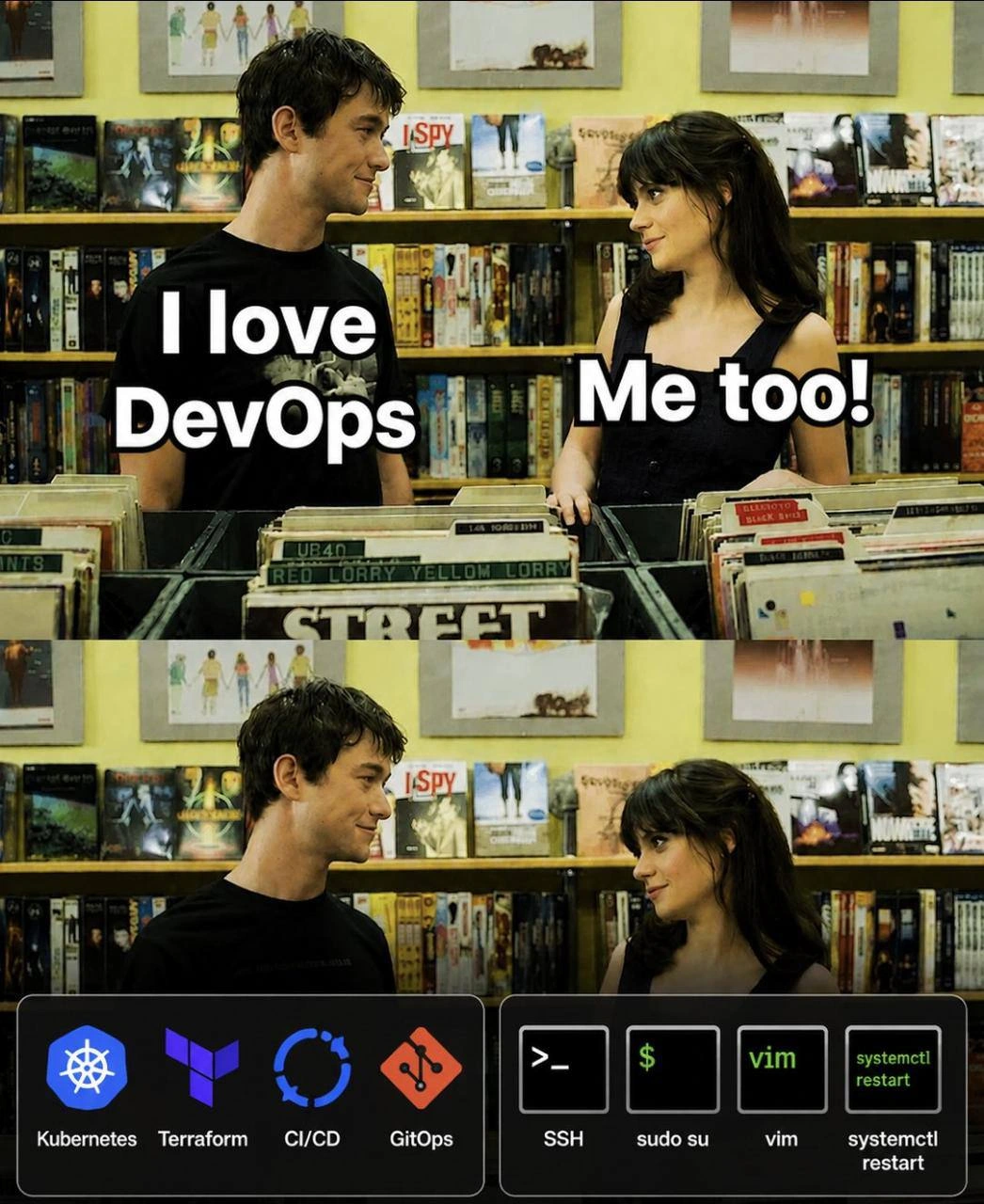
The meme’s image helps drive the joke home. It shows a gamer guy with a headset, arms flailing, basically freaking out with excitement. It’s blurry and chaotic. That visual represents how overzealous and reckless the Alpine user is being. Instead of calmly thinking, “hmm, maybe deleting my system configs is a bad idea,” they’re hyped up and cheering as they hit the delete command. The humor here is in that extreme overreaction. The Alpine user is behaving like they achieved something epic, when in reality they just sabotaged their own system for almost no reason. It’s poking fun at a certain mindset new tech enthusiasts might have: getting so caught up in tweaking and optimizing tiny details that they lose sight of the big picture (like keeping the system functional!). Every experienced engineer would cringe at the thought of removing /etc, which is why seeing someone do it with glee is darkly funny.
In simpler terms: this meme is a cautionary chuckle. It reminds us that while making software and systems efficient is good, you have to be smart about what you’re optimizing. Don’t remove the engine from your car to make it lighter, right? Deleting the entire /etc on a system is like removing the car’s steering and computer just to save a trivial amount of weight – you won’t get far, and you’ll crash fast. So, for junior developers or anyone new: always consider the consequences of an optimization. If a change saves a tiny bit of disk space but could break core functionality, it’s not worth it. In the end, it’s better to have a slightly bigger image that actually works, than a super slim one that self-destructs. This meme uses humor to highlight that lesson by showing an obviously extreme case of bad decision-making.
Level 3: Minimalist Meltdown
For experienced container folks, the idea of deleting the entire /etc directory on an Alpine Linux system just to reclaim a whopping 10 KB of space is equal parts hilarious and horrifying. This meme exaggerates minimalism in containerization to absurd levels. Alpine Linux is famously tiny as a base for Docker images – the whole OS is only a few megabytes, achieved by using the lightweight musl C library and busybox utilities. Alpine’s appeal is that you get a super small image footprint. But here we have an Alpine user taking that obsession with size to the extreme: they’re so fanatical about shrinking the image that they consider nuking /etc (the directory for critical system configuration) to save literally 10 KB. The caption drives home the sarcasm by calling it “a whopping 10 KB of space,” highlighting how absurdly trivial that gain is. Seasoned engineers instantly recognize the joke: it’s like sacrificing a living system’s brain to shed the weight of a paperclip.
Let’s put in perspective what lives in /etc. On any Linux, /etc is the configuration hub of the whole OS. Alpine’s /etc may be minimal, but it still contains vital files like:
- User accounts & passwords – e.g.
/etc/passwdand/etc/shadowdefine user IDs (even root!) and credentials. Remove those, and the system literally loses track of who’s who. - Network and DNS settings – e.g.
/etc/resolv.conffor DNS resolution and/etc/hostsfor local hostnames. Delete these, and your container can’t even resolve domain names (good luckapk add-ing packages or calling APIs when DNS is busted). - System configs and defaults – countless services check
/etcfor configs. Timezone info, certificate authorities in/etc/ssl, init scripts, package repos in/etc/apk/, etc. Wiping this out is basically ripping the heart out of the OS’s configuration.
In other words, removing /etc is catastrophic. You’d end up with a container that doesn’t know how to user, doesn’t know how to network, and doesn’t know how to Linux. Yet our meme’s Alpine user is celebrating this destruction as if it’s a pro move. The blurry, wild-eyed gamer image (headphones on, arms flailing in ecstatic frenzy) perfectly captures the chaotic enthusiasm behind such a harebrained stunt. It’s a parody of that reckless techie who’s overjoyed to shave off one more kilobyte, completely oblivious to the smoking crater where their system config used to be. The heavy motion blur in the picture screams “THIS IS FINE!!!” amid obvious chaos – a chef’s kiss visual for a reckless optimization.
To seasoned devs, this scenario is a textbook case of premature optimization run amok. We have a famous mantra in engineering: “premature optimization is the root of all evil.” Here, nuking critical config for a few bytes is exactly that evil. It’s optimizing the wrong thing at the wrong time. A veteran immediately thinks, “Why on Earth are you worrying about 10 KB? Focus on the real bloat!” In a typical container, you might save megabytes by trimming unnecessary libraries or using a slim base image. Ten kilobytes is so negligible it’s laughable – it’s less data than the meme image itself. The humor hits because every experienced dev has seen someone go down a rabbit hole micro-optimizing something that doesn’t matter, sometimes with disastrous results. This meme just cranks that scenario up to 11 for comic effect.
And let’s not ignore the delicious irony: in Docker, deleting files in a later layer doesn’t even always reduce the final image size if those files were added in a prior layer. Unless you plan your build steps carefully (or use multistage builds), those 10 KB of config might still be sitting in an earlier image layer, just inaccessible. In other words, our Alpine hero might think they freed space, but the final image could still carry the “ghost” of /etc internally. It’s the equivalent of sweeping dirt under the rug – the bulge is still there. So even from a technical standpoint, this extreme measure likely accomplishes nothing useful! This nuance makes the meme even funnier to insiders: the poor soul isn’t just causing harm, they aren’t even getting the benefit they wanted.
To visualize the insanity, imagine a Docker build that does this:
FROM alpine:3.18
# Removing /etc to save space (satire – DO NOT actually do this!)
RUN du -sh /etc && rm -rf /etc
The above Dockerfile snippet would print the size of /etc (a tiny 10 KB), then outright delete it. That’s the Docker equivalent of shooting yourself in the foot to lose a couple ounces of weight. After such a layer, your container would be “lighter” by a few bytes, but also braindead – likely unable to do much of anything. It’s a great way to achieve the mythical ultralight container image… by turning your container into a non-functional husk. Overengineering hardly covers it – this is overengineering’s eccentric cousin, over-optimization, at its worst.
The reason seasoned engineers chuckle (after facepalming) is that this meme nails a common anti-pattern in tech culture. We prize elegant, minimal designs – sure – but there’s a point where minimal becomes detrimental. Alpine Linux already gave us a minimal base. Deleting /etc crosses the line from minimalist design into self-destructive madness. It satirizes that one team member who obsesses over shaving off bytes or milliseconds even when it jeopardizes the project. We laugh because deep down, we’ve either been that person in our early years or had to fix the mess left by that person. It’s a shared trauma being played for laughs. The meme is essentially saying: “Look how ridiculous it is to save 0.0001% of space by blowing up your system’s essentials!” It’s a gentle reminder that just because you can optimize something doesn’t mean you should – especially not at the cost of common sense. In the end, the joke lands so well because it exaggerates a truth every dev learns sooner or later: don’t burn down the house to roast a marshmallow. 🏚️🔥🕷️
Description
A meme featuring the streamer Tyler1 in a blurred, rage-filled motion, wearing a headset and tank top. The top text caption reads, 'Alpine Linux user deleting their /etc (it was taking up a whopping 10 KB of space)'. The visual of intense, destructive energy is humorously juxtaposed with the triviality of saving 10 kilobytes. The joke targets the culture of extreme minimalism and micro-optimization often associated with Alpine Linux, which is favored for its tiny footprint, especially in containerization. Deleting the '/etc' directory, which contains essential system configuration files, would render a Linux system completely unusable. The meme satirizes the mindset of prioritizing minuscule space savings over system stability and common sense, portraying the user as irrationally destroying their own setup for a negligible gain
Comments
22Comment deleted
The senior DevOps engineer's motto: 'My containers are so minimal, they don't have a shell, a package manager, or a future.'
Deleting /etc to claw back 10 KB - because who needs DNS, PAM, or timezones when the real KPI is a sub-5 MB container on the CTO’s slide deck?
The real Alpine Linux power move is recompiling busybox without the 'ls' command because who needs to list files when you've memorized every byte's location in your 5MB root filesystem
Alpine users will spend 3 hours recompiling their entire toolchain to save 2MB, then wonder why their container won't boot after they deleted /etc to reclaim 10KB. Meanwhile, their node_modules directory sits at 847MB, completely unexamined. It's the systems engineering equivalent of meticulously organizing your sock drawer while your house is on fire - technically impressive attention to detail, catastrophically misplaced priorities
Congrats, you just reinvented scratch - now with musl, BusyBox, and a built‑in CrashLoopBackOff notifier
In container world, 10KB of /etc is the new 10GB monolith - time to rm -rf and embrace configless nirvana
Shave 10KB by rm -rf /etc and you’ve effectively shipped a scratch image - DNS, certs, and users disappear; great layer diff, terrible MTTR
literally me Comment deleted
you are ubuntu user and you still use snaps Comment deleted
ah, yes, I love opening browser for 10 seconds Comment deleted
FreeBDSM moment? Comment deleted
Jesus Comment deleted
even I can't fix her Comment deleted
ryan gosling? Comment deleted
why is everyone talkin' about him recently? Comment deleted
because he is literally me Comment deleted
huh Comment deleted
Recently because he was on top as Ken and even got award for singing. But it is actually going on for years if not decades. "Drive" movie from 2011 started it, probably Comment deleted
and what are concepts that can be referenced to his name as something funny? Comment deleted
https://www.google.lv/search?q=know+your+meme+gosling&client=ms-opera-mobile&sca_esv=e89bb2ca36dfcdc4&channel=new&espv=1&ei=c9FEZqmUPJeawPAPiIqCkA8&ved=0ahUKEwjpmYCo-Y-GAxUXDRAIHQiFAPIQ4dUDCBA&oq=k+ow+your+meme+gosling&gs_lp=Egxnd3Mtd2l6LXNlcnAiFmsgb3cgeW91ciBtZW1lIGdvc2xpbmdIAFAAWABwAHgAkAEAmAEAoAEAqgEAuAEMyAEAmAIAoAIAmAMAkgcAoAcA&sclient=gws-wiz-serp For example Comment deleted
ah okay thanks Comment deleted
Funny isnt correct world. He is more on the "relatable" side. Comment deleted