Skip to content
DevMeme
3870 of 7435
A Rusty Blockchain, Almost Too Literally
Blockchain Post #4213, on Feb 16, 2022 in TG

A Rusty Blockchain, Almost Too Literally

Why is this Blockchain meme funny?

Level 1: Three Words, One Picture

Imagine someone asks for a "hot dog" and you bring them a warm puppy. That is the same kind of joke here. Developers hear "blockchain with Rust" and think of complicated computer systems, but the picture shows a real block, a real chain, and real rust. It is funny because it takes fancy computer words and turns them into the most obvious physical thing possible.

Level 2: Literal Type System

The photo is built from three simple pieces:

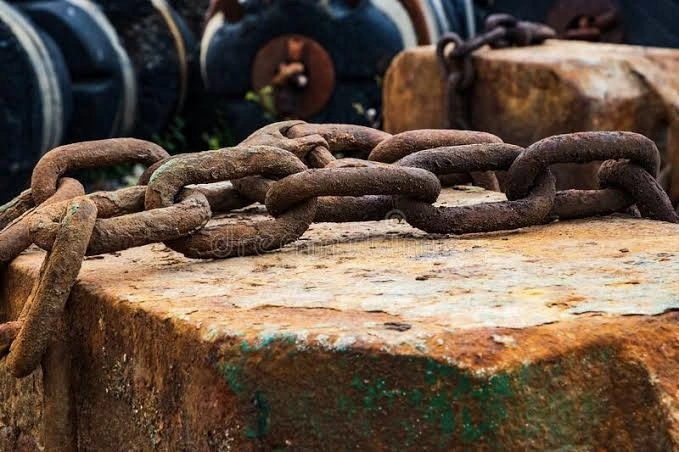
  • Block: the rectangular industrial-looking object under the chain.
  • Chain: the linked metal loops stretched across the top.
  • Rust: the brown corrosion covering the chain and parts of the block.

In software, blockchain usually means a database-like ledger where new groups of records are attached to previous groups. It is common in cryptocurrency systems, but the word also gets used in broader business pitches. Rust is also the name of a programming language used when developers want low-level control with strong memory-safety rules.

The joke is that the picture ignores the technical meanings and uses the everyday meanings instead. It is the kind of pun that works best if you have heard developers talk about blockchain and Rust as serious technologies, then suddenly see both reduced to an old metal chain on a block.

For someone early in programming, this is also a useful warning: technical words often sound mysterious until you learn their actual definitions. Sometimes the mystery is real, like consensus in distributed systems. Sometimes it is just branding. And sometimes it is a rusty chain sitting on a block, looking more production-ready than the last demo.

Level 3: Buzzword Corrosion

The caption says:

Block chain with rust or something, idk

That deliberately lazy wording is doing real work. It punctures the seriousness around Blockchain, Rust, and tech buzzwords by refusing to treat them as sacred vocabulary. The image contains no overlaid text, no diagrams, no architecture boxes, and no tokenomics. It is just a rusty chain on a block, photographed like someone searched the physical world for the most aggressively literal interpretation of a startup pitch.

Experienced developers recognize the pattern because software language is full of overloaded terms. A block can be a chunk of code, a disk unit, a transaction bundle, a memory allocation unit, or a square object heavy enough to hurt your foot. A chain can be a linked structure, a certificate path, a supply chain, a deployment chain, or the thing in the photo. Rust can be a language praised for preventing memory unsafety, or the reddish-brown evidence that metal lost an argument with oxygen.

The humor lands because blockchain conversations often arrive wrapped in grand claims: trustless systems, decentralization, immutable ledgers, financial reinvention. This image answers with a corroded chunk of reality. It is the anti-whitepaper. No roadmap, no governance proposal, no "web3 community," just a physical object whose only visible immutability is that it is probably not coming apart without a hammer.

The visual pun also works as quiet developer resistance to hype. Engineers spend their days mapping words to exact behavior. Buzzwords survive by becoming vague enough to sell. This meme reverses that process and makes the terms painfully concrete. "You asked for blockchain with Rust? Here. It has a block, a chain, and rust. Please stop scheduling the innovation sync."

Level 4: Hashes Meet Iron

The image shows an actual rusted chain lying across a heavy rectangular block, which is about as literal as blockchain in Rust can get without requiring safety goggles. The technical joke works because the real terms are deeply abstract. A blockchain is not a physical chain and not usually a literal block of metal; it is a data structure where each block contains records plus a cryptographic reference to the previous block, usually a hash. That hash reference is what creates the "chain": change an earlier block and later hashes stop matching.

In real blockchain systems, the hard problem is not merely storing linked data. A normal linked list can do that before lunch. The difficult part is getting many machines that do not fully trust each other to agree on which chain is canonical. That is where consensus mechanisms enter: proof-of-work, proof-of-stake, leader election, fork choice rules, finality, incentives, and the whole carnival of distributed systems pretending physics is negotiable.

Then the photo adds Rust, the programming language, by showing ordinary rust on the metal. Rust-the-language is associated with memory safety, ownership, borrowing, lifetimes, and systems programming. Rust-the-corrosion is associated with "this was left outside too long." The meme compresses two highly loaded developer words into a single industrial close-up: a corroded chain, on a block, doing absolutely no distributed consensus unless the background machinery gets a vote.

That mismatch is the technical core. Blockchain discourse often floats upward into whitepapers, economics, cryptography, and protocol governance. Rust discourse often goes downward into compiler guarantees, aliasing rules, and whether the borrow checker is your mentor or your parole officer. This photo drags both back to the physical dictionary meanings. It is not a blockchain implemented in Rust. It is a block, a chain, and rust. The specification finally fits on one image.

Description

The image is a close-up photo of a heavy rusted metal chain lying across a corroded rectangular industrial block, with blurred machinery in the background. There is no visible overlaid text in the image; the sibling metadata caption says, "Block chain with rust or something, idk." The meme is a literal visual pun on "blockchain" and "Rust", replacing distributed ledgers and a systems programming language with an actual rusty chain on a block. Its developer humor comes from collapsing overloaded technical buzzwords into their physical, non-technical meanings.

Comments

4
Anonymous ★ Top Pick Finally, a blockchain in Rust where ownership is obvious and the only unsafe block is tetanus.
  1. Anonymous ★ Top Pick

    Finally, a blockchain in Rust where ownership is obvious and the only unsafe block is tetanus.

  2. @ZgGPuo8dZef58K6hxxGVj3Z2 4y

    Lmao

  3. @denushev 4y

    yes 🗿

  4. @SamsonovAnton 4y

    At first, I read "with trust", and my thought was: "How this obviously unreliable piece of crap can be trusted?"

Use J and K for navigation