
Commits After PR Approval Meme Explained
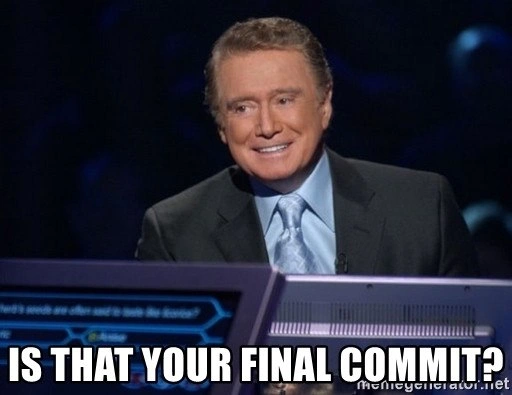
A game-show host asks “Is that your final commit?”—the developer dread of one more push. The dive covers Git commits, pull request approval drift, and why “final” is almost never final.
Level 1: Are You Done Yet?
Imagine a teacher checks your homework, says it looks good, and then you erase parts of it and write new answers before turning it in. The teacher would want to check it again. That is why the meme is funny: the host is asking the programmer, "Are you really finished this time?" because everyone knows one more little change might still be coming.
Level 2: Approval Drift
Version control is how developers track changes to code over time. Git records changes as commits, and teams often send those commits through a pull request so other developers can review them before they are merged.
The visible caption asks whether this is the "final commit" because a reviewer wants to know whether the code is stable enough to approve. If someone keeps pushing more commits after approval, the reviewer may have approved an older version of the work. That can be harmless if the new commits only fix spelling or formatting, but risky if they change logic, tests, database schemas, or configuration.
Common commands involved in this situation include:
git diff
git commit
git push
git log
For a junior developer, the lesson is that a commit is both a technical artifact and a communication artifact. The code matters, but so does the timing, the message, and whether teammates know what changed after they reviewed it. A clean Git history is not about looking fancy; it makes debugging, reviewing, reverting, and releasing less painful.
Level 3: History Gets Written
The caption lands because it turns a dramatic quiz-show pause into a developer's tiny moment of dread:
IS THAT YOUR FINAL COMMIT?
In Git, a commit is not just "some saved code." It is a snapshot with a hash, author, timestamp, parent history, and a message that future humans will use while bisecting a regression at the least convenient possible time. The image's host is smiling like he already knows the answer is wrong, which is exactly how git log feels when you discover that the commit titled final fixes contains a formatting change, a database migration, and three unrelated experiments.
The post message adds the sharper workplace version: "When your co-worker keeps pushing commits after you approved PR." That is a real GitWorkflow irritation. A pull request review is implicitly scoped to the code that existed when the reviewer approved it. If new commits appear afterward, the social contract gets fuzzy. Did the approval still apply? Were the new changes trivial? Did CI rerun? Did someone sneak in a behavior change under "address review comments"? Nothing says "team trust exercise" like approving 200 lines and later merging 240.
The humor is also about the gap between Git's technical flexibility and human process. Git happily allows more commits, rebases, fixups, amended messages, and force pushes depending on branch protections. Teams, however, need stable checkpoints:
| Developer Action | Git Allows It | Review Reality |
|---|---|---|
| Push after approval | Usually yes | Reviewer may need to re-check |
| Amend a commit | Locally, yes | Remote history may change |
| Squash before merge | Common | Context can disappear |
| Force-push branch | Sometimes | Everyone gets nervous |
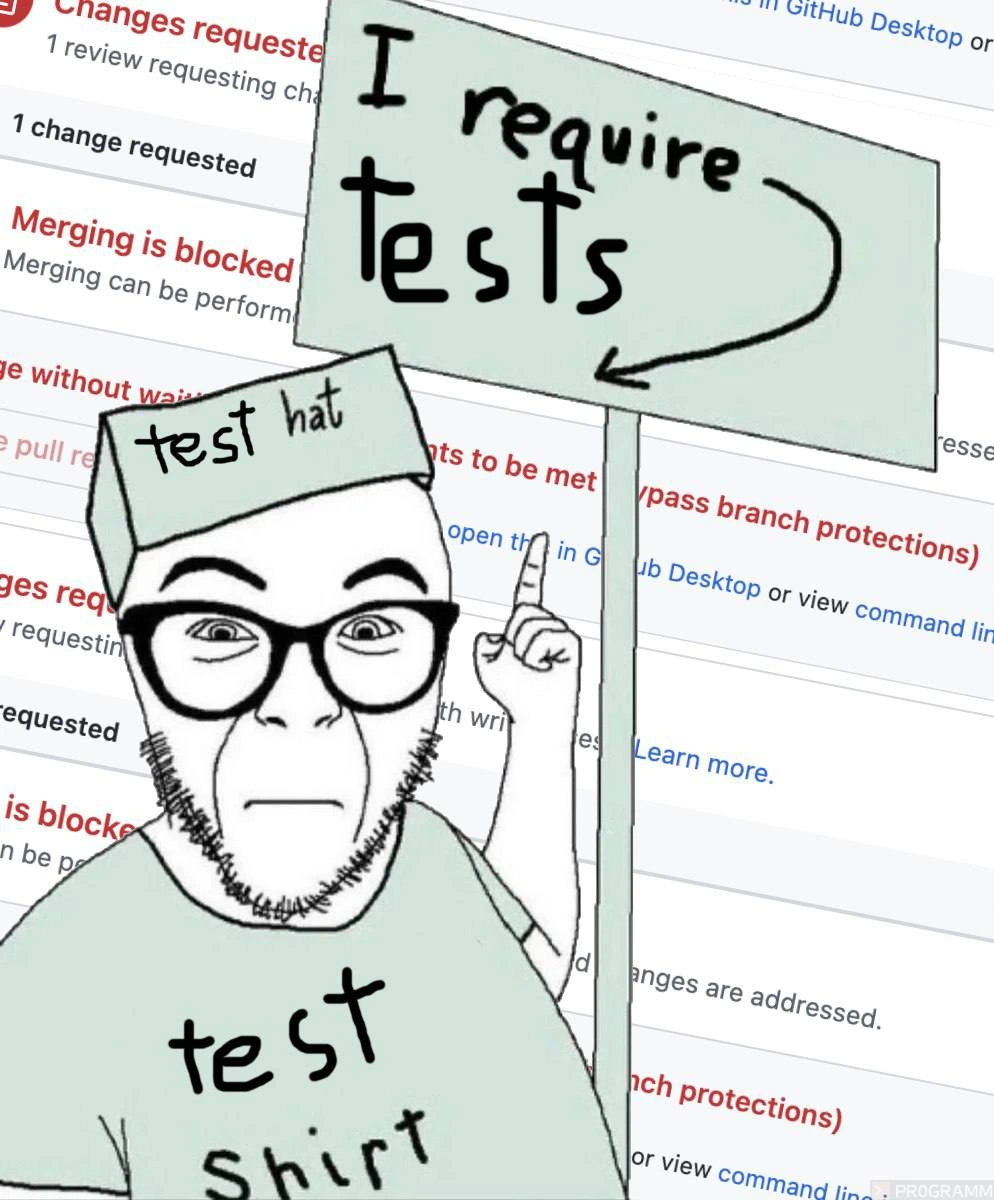
This is why mature teams care about BranchingStrategy, not because they enjoy ceremony, but because "approved" needs an operational meaning. Some repositories dismiss approvals when new commits are pushed. Some require green CI after the latest commit. Some block direct pushes to protected branches. These controls exist because humans are optimistic and Git is a very efficient accomplice.
The phrase "final commit" is funny precisely because experienced developers know it is almost never final. There is the final commit, then the typo fix, then the lint fix, then the "actually fix test" commit, then the "address feedback" commit, then the commit that should have been the first one. The game-show framing captures that suspense before pressing enter on git commit, git push, or the merge button: this decision will become part of the project's public memory, and future-you has a long memory when annoyed.
It is never the final commit; it is just the one you force-push a better message over five minutes later.
after you merged PR..