
Kernel Compiler Upgrade Meme Explained
An LKML exchange shows a developer calling a Fedora 42 GCC update “unreleased,” and Linus Torvalds firing back that the mainline kernel simply would not build without the patch. The dive covers bleeding-edge toolchains, -Werror culture, and how a quick fix can break older compilers.
Level 1: Had to Change It
Imagine you and your friend are building a giant LEGO castle, and suddenly the store starts selling a new type of LEGO block that’s just a little different. Your set at home even came with some of these new blocks. When you try to follow the old instructions, the new pieces don’t fit right and the castle keeps toppling over – it just won’t build correctly. So, your friend quickly changes the building plan, adding a new step to make those new blocks work. You were a bit upset and said, “Why are we using this new plan? That new block style isn’t even officially in the guidebook yet!” But your friend points at the box and says, “Look, this is the set everyone is buying now, and these new pieces are already in it. The old instructions wouldn’t finish the castle at all with these pieces.” In other words, you had no choice but to use the new instructions because you already have the new type of blocks. Thanks to the quick change, your castle can be built with the new blocks. But there’s a catch: now if someone with only old blocks tried to use your new instructions, they’d get confused or stuck, because the new plan assumes that special new piece exists. In the end, you fixed the problem for your set, but it might have made a new problem for someone still using the old blocks. It’s funny in a shake-your-head way – you had to change things to keep building, even if it felt early, because otherwise nothing would work at all. Sometimes, that’s just how it goes: when the pieces change, the plan must change too, whether we’re ready or not!
Level 2: Build Breaking Changes
Let’s break down what’s happening in simpler terms. This meme is all about a clash between new software tools and existing code. On one side, we have a compiler – that’s the program which converts the human-written source code (in C, for the Linux kernel) into machine code that a computer can run. Compilers have versions, just like apps do, and they keep getting updated. Here, Fedora 42 (a version of the Fedora Linux operating system) decided to include a very new version of the GCC compiler (GCC is the GNU Compiler Collection, widely used for C/C++). It’s so new that one of the kernel developers called it “unreleased”. By “unreleased,” they probably meant this compiler wasn’t officially declared stable by its own developers yet – maybe it’s a release candidate or a beta version. Fedora is kind of famous (or infamous) for including the latest-and-greatest packages, even if they’re fresh off the press. For context, Fedora is a popular Linux distribution, which is basically a complete operating system package that includes the Linux kernel plus lots of software, libraries, and tools. Each distro chooses certain versions of those tools to ship. Fedora 42, being cutting-edge, shipped this new GCC as the default. So when Linus Torvalds (the leader of Linux kernel development) tried to compile (build) the Linux kernel source code on Fedora 42, suddenly things broke. “Broke” here means the code failed to compile successfully – errors popped up and the build process stopped. This is what we call a BuildFailure: the program code couldn’t be turned into an executable because the compiler flagged an issue.
Why would a new compiler break the build? New compilers often come with new warnings or stricter checks. A warning is like the compiler saying, “Hmm, this code looks a bit fishy or unsafe.” In Linux kernel development, warnings are treated very seriously – in fact, they treat most warnings as errors (this is often done by compiling with flags that say “stop if any warning appears”). This keeps the code quality high, but it also means any tiny new complaint from the compiler will halt everything. So, when GCC was updated, it likely introduced a warning about something in the kernel code that older GCC versions didn’t complain about. Maybe it’s a new safety check or a change in language rules. The kernel maintainers probably had a plan to eventually address this (the complaining developer mentions “what has already been planned for this warning”). Perhaps they knew the warning was coming and had a more elegant fix in the works. But Linus encountered the issue right now because Fedora’s compiler brought it to his doorstep early. The kernel did not build on this new Fedora setup – which is a big deal, because it means anyone on Fedora 42 couldn’t compile the latest kernel until it’s fixed. Linus decided to merge a quick patch to fix the build. “Merging a patch” means he took a code change and incorporated it into the official kernel code so that it adapts to the new compiler. This might have been something like changing a bit of code or adding a compiler directive so that the warning/error goes away. It was a pragmatic, fast solution to get the kernel building again on that new compiler.
Now, why was another developer upset about this? From their perspective, Linus’s quick fix was a “mess” that wasn’t following the originally planned solution for this issue. They were frustrated that the kernel was modified to accommodate an “unreleased compiler version.” Think of it like this: they wanted to wait until the compiler was officially released and perhaps handle the warning in a cleaner way, rather than rush in a patch for a compiler not everyone even has yet. It can be frustrating to chase the bleeding edge because it feels like you’re doing extra work for something not widely used yet. But Linus responded, basically, that Fedora’s compiler is widely used now, because Fedora 42 is out and is one of the big Linux distros. In his words, it’s not some niche unreleased tool; it’s already the main compiler for lots of users. In short: “We had to do this now, because otherwise the kernel couldn’t even compile on a current mainstream system.” He also implied that the problem was not solved already by any plan – the phrase “not some kind of solved problem – quite the reverse” means the issue was very much unsolved and breaking things, so action was necessary.
The last part of the meme text jokes that after Linus’s quick fix, “Every build < GCC 15 instantly breaks.” What does that mean? It’s saying that if you tried to compile the kernel with any compiler older than GCC 15, you’d now run into problems. Why would that happen? Possibly because the patch that makes the code compile on GCC 15 might use something that older compilers don’t support or understand. For example, if Linus’s patch added a new attribute or flag that only GCC 15 knows about, an older GCC (say GCC 14 or 13) might throw an error, not recognizing it. This kind of thing can happen if you’re not careful to make the change backward-compatible. It’s an unintended side effect: fix it for the new guy, break it for the old ones. So the meme humorously frames this as the final outcome, labeling it “Profit” in a sarcastic way. That’s referencing an old joke format (like “Step 1: do X, Step 2: ???, Step 3: Profit!”) where the end result is ironically not a true profit but a new problem. In simpler terms, the kernel team solved the immediate crisis (supporting the new compiler), but possibly at the cost of complicating things for anyone not on the latest compiler. It’s a bit of a tongue-in-cheek caution: in the fast-moving world of BuildSystems, sometimes you can’t win – you just shift the burden around.
Level 3: Bleeding Edge Blues
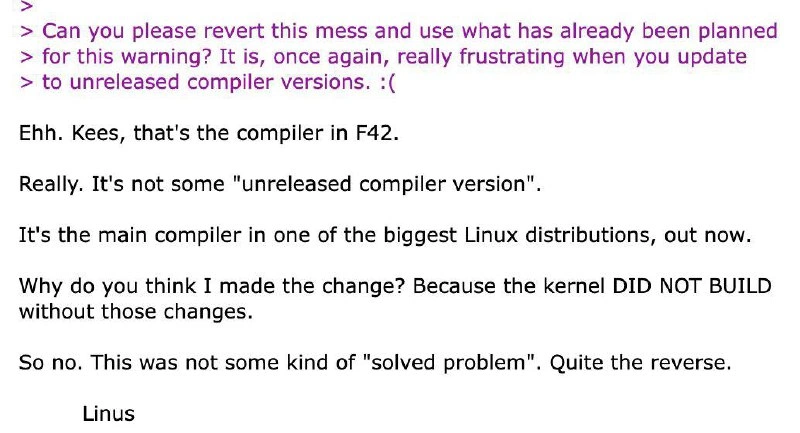
At the top of the Linux kernel food chain, toolchain updates can feel like sudden earthquakes. In this meme’s snapshot from an LKML (Linux Kernel Mailing List) thread, a frustrated developer complains about having to adapt the kernel to an “unreleased compiler”. The punchline? Linus Torvalds himself bluntly points out that this so-called unreleased version is actually the default compiler in Fedora 42, a major Linux distribution. In other words, it’s already in the wild. The humor here is multi-layered: first, the irony of calling a shipping compiler “unreleased,” and second, the trademark Linus response that flips the complaint on its head. His reply is terse and pointed – essentially “No, we’re not reverting anything; this new compiler is real, it’s here now, and the kernel literally wouldn’t build without adapting to it.” For seasoned developers, this scenario is both familiar and hilarious in a painful way. It highlights the perennial pain around toolchain updates: you plan for one thing, but then a distro pushes a new GCC version and your carefully crafted code does not build anymore.
What makes this especially relatable is the unspoken drama behind those email lines. Fedora, known for living on the bleeding edge, apparently shipped a near-future version of GCC (think GCC 15) as the default in Fedora 42. This is like a major city suddenly deciding tomorrow is next year – ready or not, everyone must adapt. Kernel developers, in turn, woke up to find that their source tree wouldn’t compile under the new compiler’s stricter rules or warnings. Linus, upon upgrading his system (or testing on F42), hit a BuildFailure. Perhaps the new compiler introduced a more pedantic check or turned a mild warning into a show-stopping error. The Linux kernel build treats warnings very seriously (often enabling flags like -Werror to treat warnings as fatal errors), so even a harmless warning from GCC’s perspective can halt the kernel build process. In this case, code that compiled fine with GCC 14 suddenly spewed errors with GCC 15’s extra strictness. The “mess” in question was likely a quick patch Linus merged to fix those compile issues ASAP. Another developer (Kees, referenced in the quote) was annoyed, suggesting Linus should have used a pre-planned solution for that warning instead of a hasty change targeting an “unreleased” compiler. But Linus isn’t exactly known for patience when the BuildProcess is on fire – he’ll douse the flames first and discuss elegance later. His retort basically says: “F42’s compiler might be brand new, but it’s not unreleased – it’s out in one of the biggest distros, and the kernel was broken on it. That’s why I acted.”
This exchange is humorous to seasoned engineers because it captures an industry anti-pattern turned inevitability: chasing the ever-updating toolchain. There’s an unwritten rule that Operating Systems like Fedora will push new technology fast, and upstream projects (like the Linux kernel) often scramble to keep up. We’ve all seen similar scenarios: a new Node.js version, a Python update, or a framework change that breaks existing code, prompting a frantic patch so things compile or run again. It’s funny in a dark way – the “here we go again!” of software maintenance. In the kernel world, there’s even historical precedence. Old-timers might recall the early 2000s “GCC 2.96” saga, when a major Linux distro (Red Hat) shipped a GCC version that wasn’t an official release. Back then, it infuriated developers (Linus included) because it caused weird bugs. Fast forward to Fedora 42 in 2025, and we have a similar script: distro goes bleeding-edge with a compiler, compiler breaks things, kernel maintainers scramble. The difference? This time Linus isn’t chewing out Fedora – he’s effectively shrugging and saying “well, it’s out, deal with it.” It’s a pragmatic acceptance that if a mainline kernel doesn’t build on a popular distro, that’s our problem, not the distro’s. Seasoned devs find humor (and maybe a bit of PTSD) in how compiler upgrades can feel like surprise boss battles in the ongoing saga of KernelDevelopment.
Linus’s email tone adds to the comedic flavor for those who know his style. He’s direct to the point of sounding exasperated: “So no.” – two words to squash the plea to revert his patch. Then the line, “This was not some kind of ‘solved problem’. Quite the reverse.” dripping with that Linus sarcasm, is basically him saying the situation was the exact opposite of under control. It’s a mic-drop moment in text form. The meme highlights this by showing the quoted complaint (in purple) followed by Linus’s no-nonsense rebuttal. You can almost hear the sigh and eye-roll in Linus’s voice as he corrects the notion of an unreleased compiler. The absurdity of calling something unreleased when thousands of Fedora users have it installed is laid bare, and Linus drives the point home with a bit of a “come on, you should know better” vibe. For veteran devs, there’s also an inside chuckle at how quickly a “planned” proper fix was tossed aside for an immediate hack – a situation we’ve all been in when prod is down or the build is broken and the clock is ticking.
Finally, the Post Message under the meme presents an amusing six-point saga that reads like a tongue-in-cheek play-by-play (with a nod to the classic "???: Profit!" meme format). It goes: Fedora ships beta compiler → Linus upgrades, kernel won’t build → Linus hurriedly patches → ??? → Profit: every build < GCC 15 instantly breaks. This is a sarcastic way of saying: step by step, a quick fix for the new compiler ended up breaking builds on older compilers. The “???” implies some mysterious gap or unforeseen consequence, and the “Profit” is an ironic punchline – obviously there’s no real profit when older setups break, except maybe Linus forcing everyone to move to the new compiler. This is classic dark humor in development: you fix one thing, something else unexpectedly goes awry (and often the people stuck on older tools now feel the pain). It’s a “victory?” that makes things worse for someone else. Those of us who maintain projects know this dance well: today’s urgent patch for environment X becomes tomorrow’s headache for environment Y. The meme gets a knowing laugh because it lays out this mini-drama in a brutally concise way, and we’ve all been there.
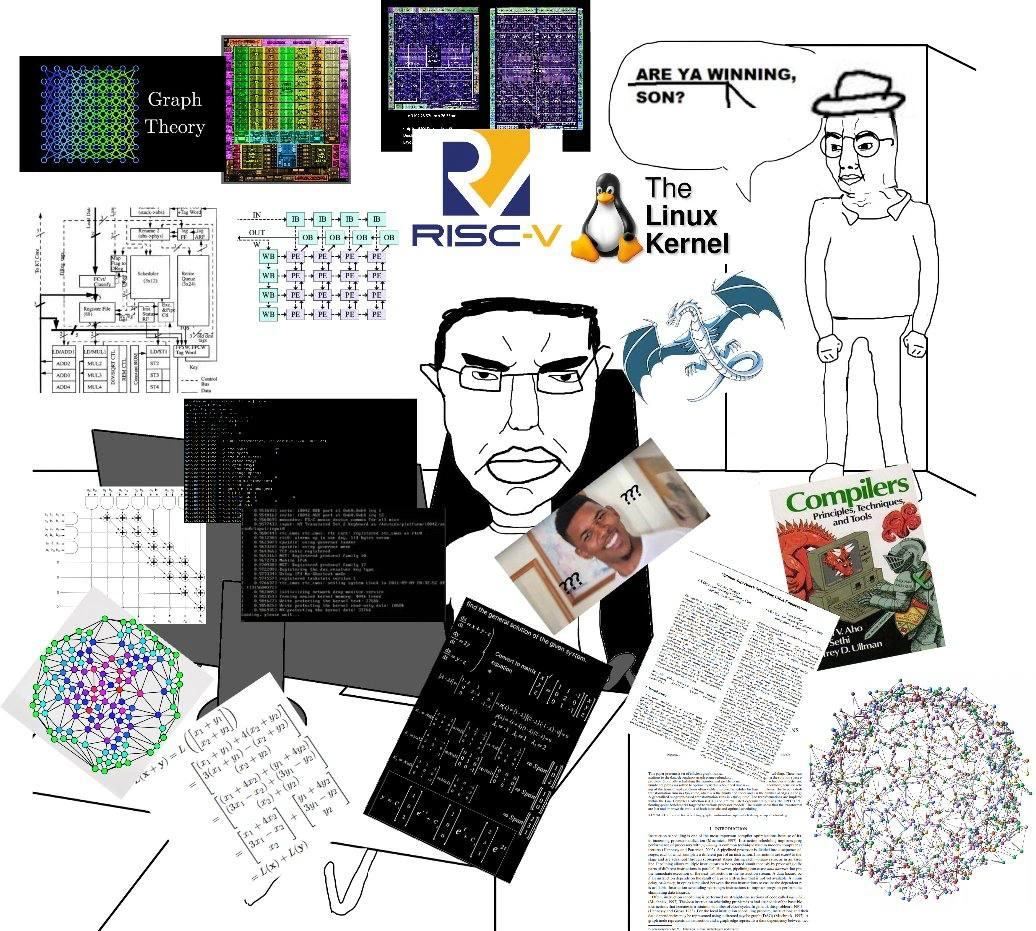

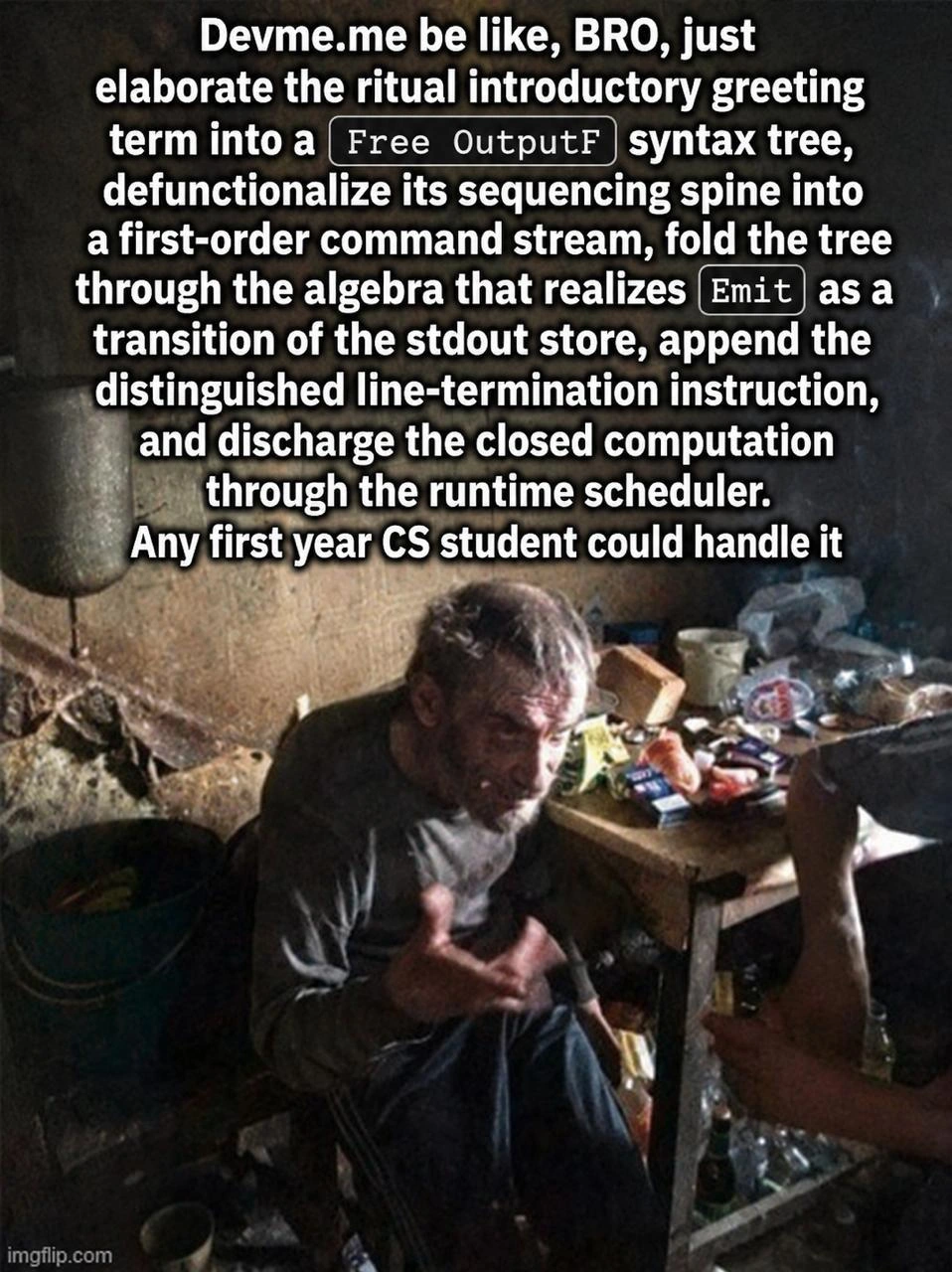
The ultimate 'works on my machine' privilege is when your machine belongs to Linus, and suddenly your environment isn't just a dev setup, it's the new CI baseline
Apparently the deprecation schedule for GCC is: 1) Fedora marks it default, 2) Linus hits ‘dnf upgrade’, 3) everyone else discovers their “stable” toolchain was legacy all along
The beautiful moment when someone tries to lecture Linus Torvalds about 'unreleased compiler versions' only to discover they're arguing against the very changes that make the kernel buildable with the current Fedora release - it's like telling the architect their building violates physics while standing inside it
When someone asks Linus to revert kernel changes for an 'unreleased compiler' and it turns out to be the default compiler shipping in a major distro - that's the kernel development equivalent of being told your production database is 'just a test environment.' The real joke is thinking you can maintain backward compatibility with compilers that don't exist while ignoring the ones that actually ship to millions of users. Classic case of 'works on my machine' meeting 'your machine is a time capsule.'
Calling Fedora’s default GCC “unreleased” is stability theater - the ABI is whatever your toolchain vendor shipped on Tuesday
In kernel land, an “unreleased compiler” is the one Fedora already shipped; when the kernel won’t build, Werror isn’t a flag - it’s the change-management system
Dismiss a compiler warning as 'unreleased'? Congrats, it's now Fedora's default - and your kernel won't build
sooo, does it mean that RedHat engineers and managers get to decide the toolchain Linus would use as the main one to build Linux?
Probably, that also means, that fedora is more bleeding edge than stock arch :D
This? Why is it beta?? https://gcc.gnu.org/gcc-15/
link to lkml thread?
once again I ask myself why linus uses fedora instead of literally anything else that ships stable packages
in every other regard maybe, but you'd think at least on his work machine he'd use something that won't break his setup randomly
my current machine is arch because the dev tools i use are most recent there (mainly go and rust). But for kernel dev I would honestly try to take the distro with even the oldest supported gcc
Ironically, I despise snaps on desktop but on server they are kind of neat :D
Afaik Linus was on Debian last time I checked it What made him move to Fedora though?🤔