
Languages Post #1514 · source on Telegram
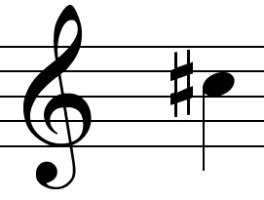
A musical pun for the statically-typed
Description
The image displays a small section of a musical staff with a treble clef. On the staff, there is a sharp sign (#) followed by a musical note. The note is positioned in the space for the note 'C', making the combination 'C sharp'. This is a visual pun on the name of the programming language C# (pronounced 'C Sharp'), which was developed by Microsoft. The humor is derived from the literal, musical interpretation of the language's name, a classic in-joke within the developer community. The original post caption, 'Will you upvote C#?', further confirms the intended pun, asking for approval of the language itself
More like this
More like this in Languages →

Use J and K for navigation
Comments
7Comment deleted
Ah, C#. The language that proves that even in a world of dynamic, interpreted chaos, some of us still appreciate a well-composed, statically-typed symphony
C# in treble clef - the only orchestration where a “rest” is just the GC suspending the strings section
After 20 years in the industry, I've finally found the root cause of why C# developers are so particular about their code style - they're literally composing in a different key than the rest of us, and every merge conflict is just an unresolved chord progression
When Microsoft named their language C#, they probably didn't anticipate developers would spend the next two decades explaining to non-technical stakeholders that no, we're not building a music composition app, and yes, the sharp symbol is actually part of the language name. Though given the number of null reference exceptions we've all debugged, perhaps 'C flat' would have been more appropriate
We asked for C#; they delivered C#. The score has more composition and less inheritance than our entire codebase
Double sharps: music's feature flags - flip the pitch till measure end, or face lingering dissonance like unrolled configs
F# in music raises the note; F# in .NET raises the type safety. We shipped in C# and raised the headcount