
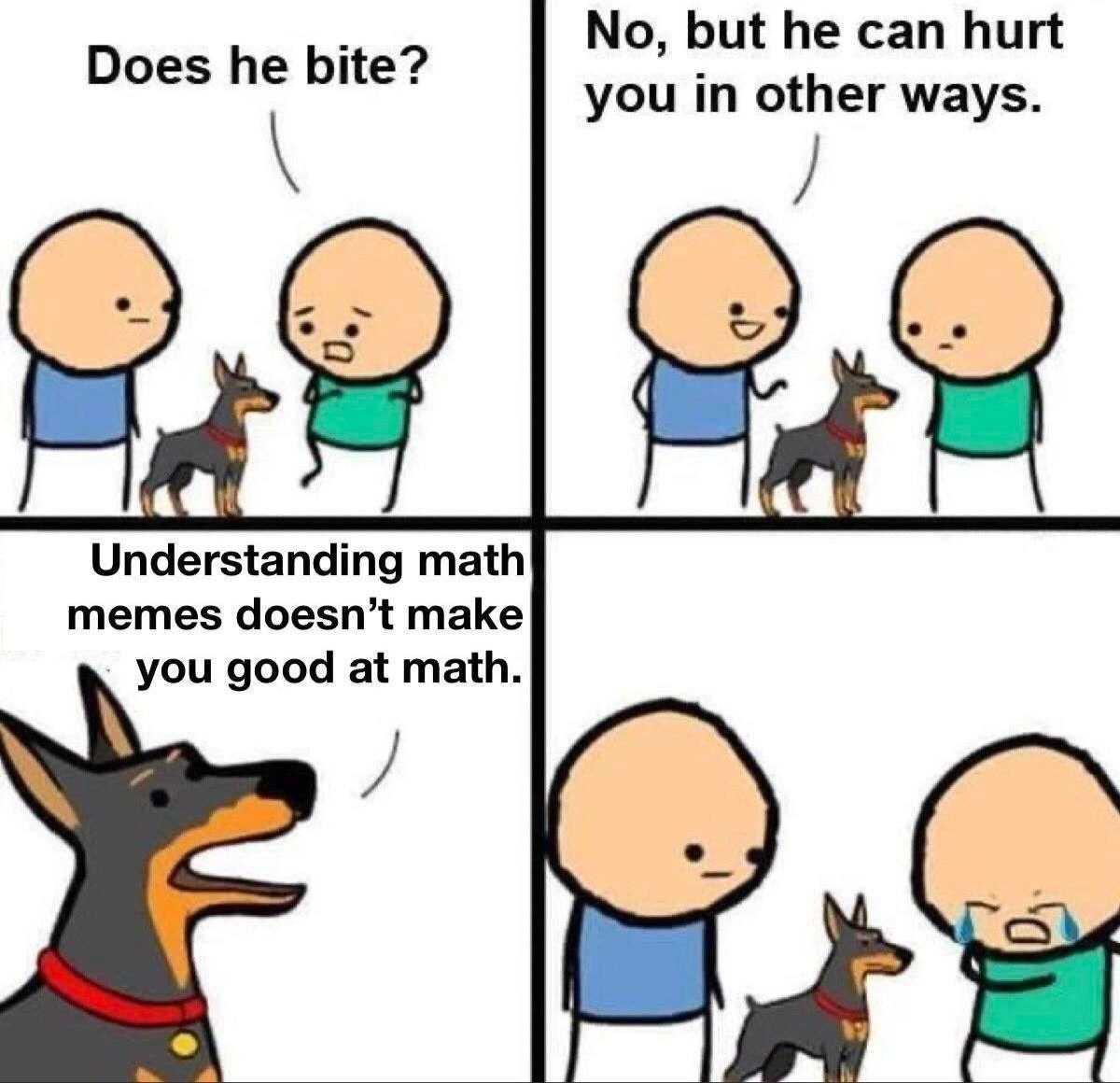
When the Dog Serves a Harsh Dose of Reality
Description
This is a four-panel comic strip meme from 'Cyanide & Happiness'. In the first panel, a character in a green shirt encounters a man in a blue shirt with his Doberman-like dog and asks, 'Does he bite?'. In the second panel, the owner replies, 'No, but he can hurt you in other ways.' The third panel is a close-up of the dog, who states, 'Understanding math memes doesn't make you good at math.' The final panel shows the character in the green shirt bursting into tears, emotionally wounded by this blunt truth. This meme humorously attacks the idea of performative intelligence. In a tech context, it's highly relatable for senior engineers who see complex topics like system design, advanced algorithms, or esoteric language features trivialized in memes. The joke is that enjoying or sharing a meme about a difficult concept is not a substitute for the deep knowledge required to actually implement or debug it, a pointed critique of surface-level understanding in a field that demands expertise
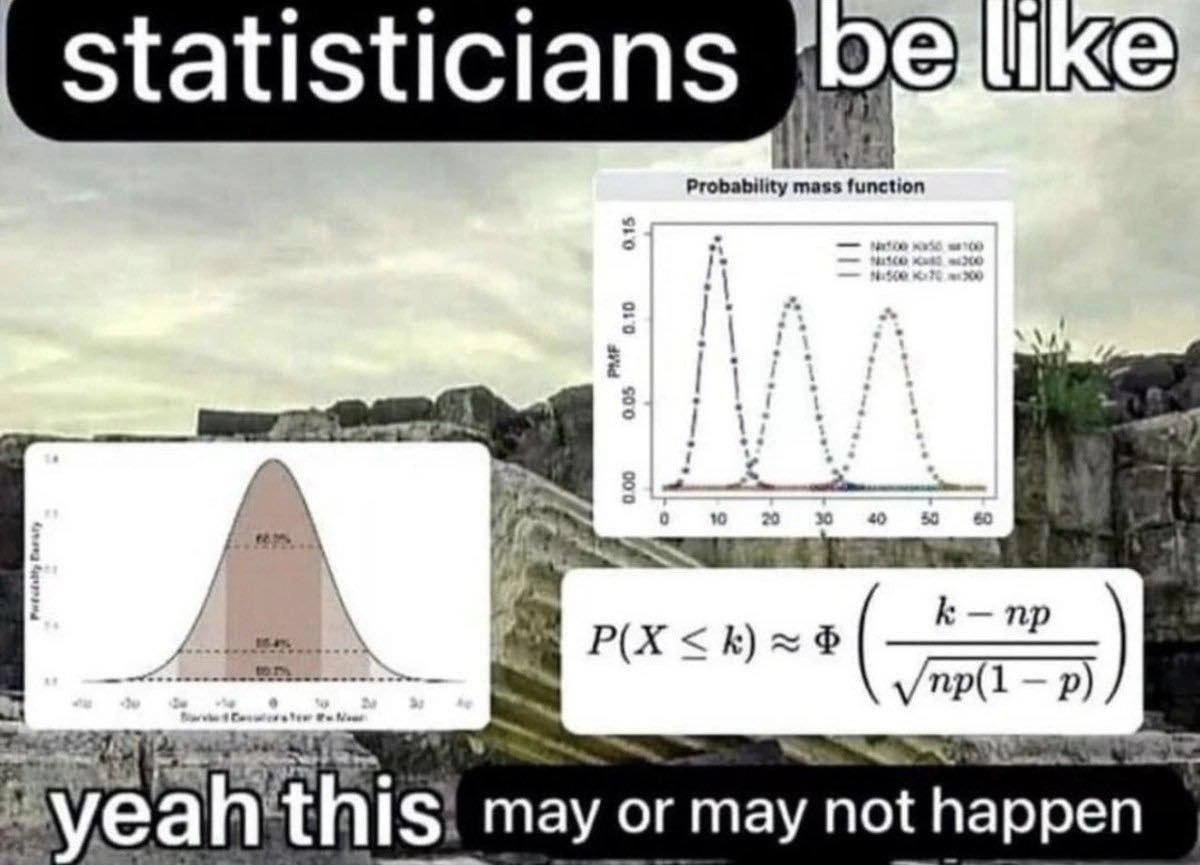
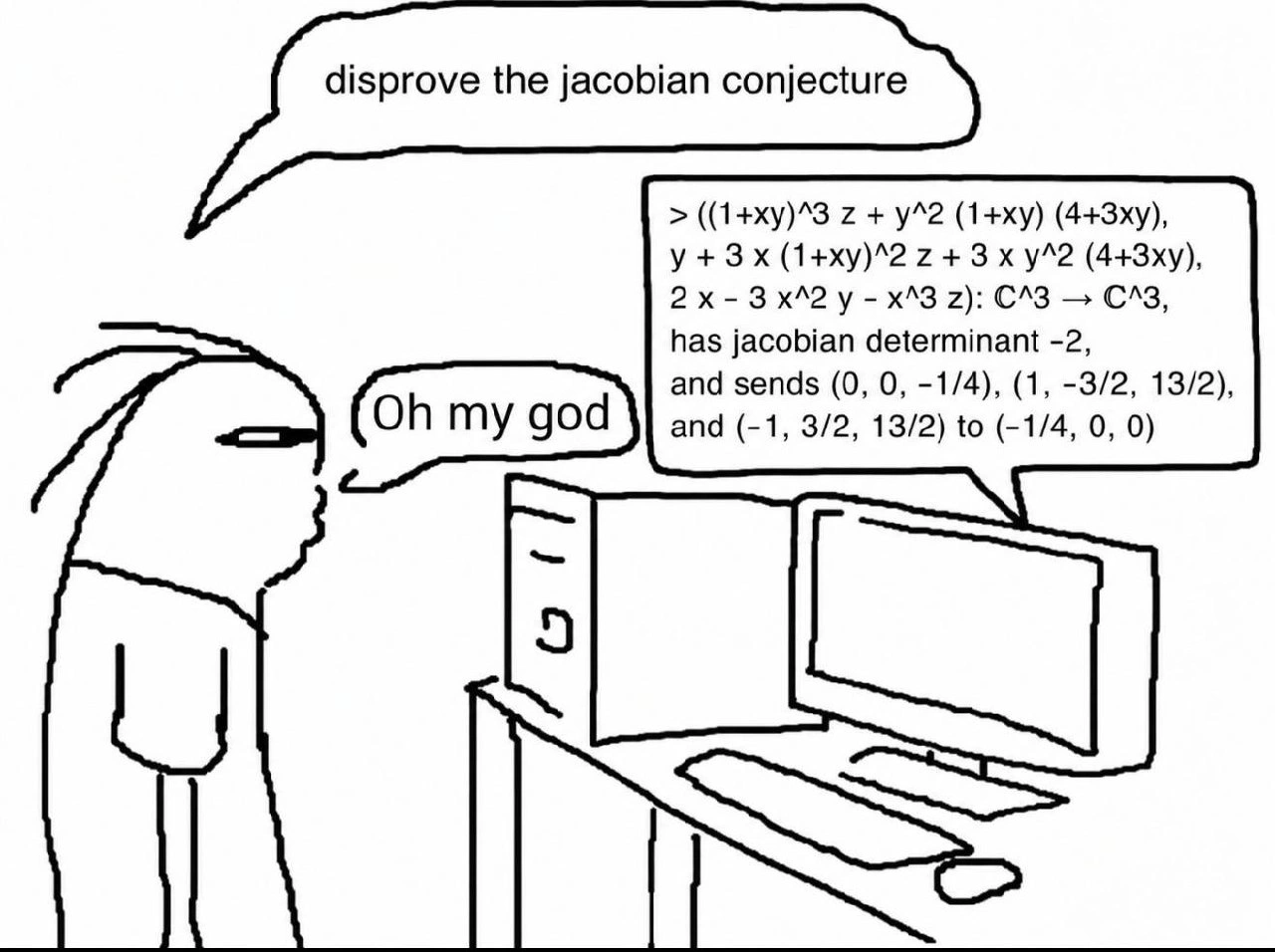
Comments
15Comment deleted
Knowing all the Kubernetes failure memes doesn't mean you can fix a CrashLoopBackOff at 3 AM without just deleting the pod and praying
Quoting every “NP-hard” meme in Slack is cute - right up until the CTO asks for an actual proof and you realize Big-O isn’t just a punchline template
It's like being fluent in Docker memes but still running everything as root in production - you can quote Dijkstra about goto statements all day, but your recursive function still blows the stack on n=1000
Same energy as starring distributed-systems papers on GitHub: the dog would add 'forking Raft doesn't mean you've reached consensus.'
This cuts deep for every senior engineer who's watched junior devs confidently discuss Big O notation in Slack after binge-watching algorithm memes, only to submit O(n³) solutions in code review. Understanding the joke about why bubble sort is slow doesn't mean you can implement a performant distributed system - it just means you're fluent in our collective coping mechanism for the actual hard parts of computer science
Knowing the punchlines to category-theory and Big-O memes doesn’t asymptotically optimize your code; it just tightens the lower bound on your imposter syndrome
Understanding CAP theorem memes doesn’t make you good at distributed systems; it just makes your postmortems more eloquent about why you picked availability over consistency - again
Math memes: Big O(1) laughs for theorists, exponential cringe for the rest
Sigh...Same with programming Comment deleted
Well... To understand some memes in math or programming you need to be veeeeery good in this) Comment deleted
I rarely see programming memes that require more than entry level knowledge Comment deleted
I think the next one should be one Comment deleted
Profunctor is for you Comment deleted
They are not really about programming tho, but more about (neat) parts of Maths often tough as part of CS education But they are not really about programming per se Comment deleted
Remove word "memes" and it is still true Comment deleted