
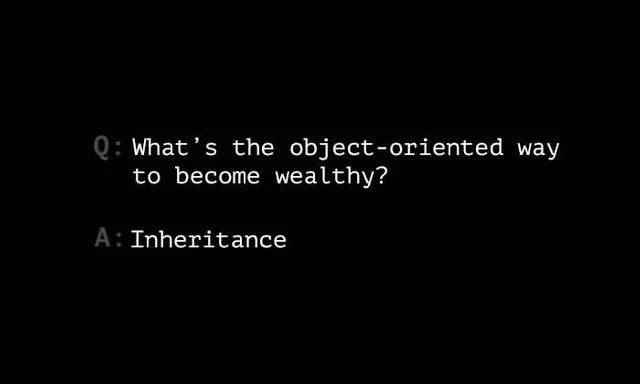
The Object-Oriented Path to Riches
Description
A minimalist, text-based image on a solid black background. The text is white and presented in a simple, monospaced font, resembling a terminal or a basic text editor. The image poses a question and provides a one-word answer in a classic Q&A format. The question reads, 'Q: What's the object-oriented way to become wealthy?'. The answer directly below it is, 'A: Inheritance'. The humor lies in the clever pun, which plays on the dual meaning of 'inheritance'. In object-oriented programming (OOP), inheritance is a fundamental mechanism where a new class derives properties and methods from an existing class. In the real world, inheritance is the primary way wealth is passed down through generations. This simple, witty joke is a staple of developer culture, resonating with anyone familiar with basic OOP principles
Comments
12Comment deleted
Some developers try to get rich through composition, but the truly strategic ones just wait for the parent class to be garbage collected
Inheritance sounds lucrative - right up until the diamond problem drags the whole estate into merge-conflict probate; these days I diversify in small, composable assets instead
Ironically, after 20 years in tech, most senior engineers realize the real inheritance pattern is passing down technical debt from one generation of developers to the next - and unlike OOP inheritance, you can't just override the problematic methods
The real irony is that in production code, deep inheritance hierarchies are now considered a code smell - turns out composition over inheritance applies to both software architecture and estate planning. Your tech lead would flag this in code review, but your financial advisor would approve
Inheritance is the OO path to wealth; senior rule still applies - composition over inheritance, because probate is a terrible dependency
Favor composition over inheritance - unless it's a fortune; then extend that parent class all day
Inheritance makes you rich - right up until the base class changes and every subclass inherits the debt
Factory Comment deleted
inherited factories Comment deleted
class WealthyFactoryFactory extends AbstractFactoryFactory {} Comment deleted
And encapsulation to remain wealthy Comment deleted
Nepotism, oh sorry, I meant polymorphism Comment deleted