
Failing Upward: From Production Bug to Senior Title
Description
A meme featuring a young man with dark hair, wearing a black t-shirt, looking directly at the camera with a smug, self-satisfied smile. The background is a plain, light-colored wall. An overlay of white text at the top of the image reads, 'When you introduce a bug into production but it's so complex that they make you a senior'. The humor stems from the ironic situation where a costly mistake, instead of leading to negative consequences, results in a promotion. For senior developers, this satirizes a common organizational flaw where the person who created a complex problem is seen as the only one who can manage it, mistaking their niche, self-inflicted expertise for genuine seniority and indispensability. It's a cynical take on 'failing upwards' in a corporate environment

Comments
8Comment deleted
My last bug was so architecturally significant they gave me a team to maintain it. We call it the 'volatile dependencies' group, and our primary KPI is not touching anything
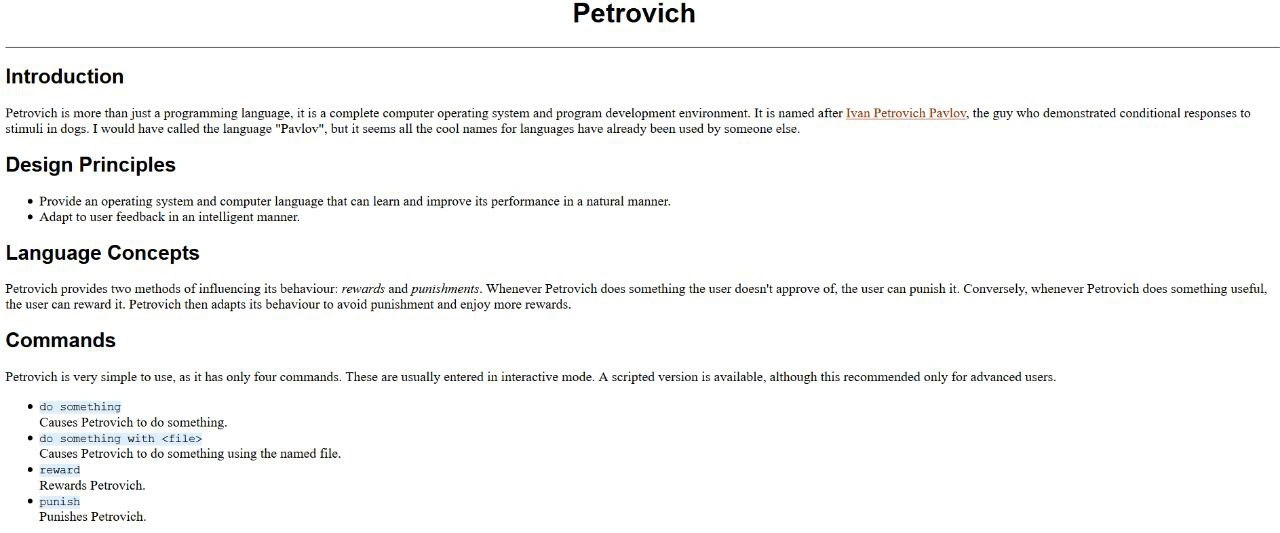
Petrovich: finally a DSL that formalises code reviews - run, wait for the Pavlovian “LGTM” bell, else take a nit-pick shock and refactor until you salivate at pre-commit hooks
Finally, a programming language that accurately models the relationship between developers and production systems: desperately trying to train something unpredictable while hoping it doesn't learn the wrong lessons from that one time you deployed on a Friday
Petrovich was decades ahead of its time - we now call 'do something, then punish or reward it' RLHF and raise billions for it
Finally, a programming language that captures the true developer-compiler relationship: an endless cycle of punishment for bugs and occasional rewards when it compiles. Though I suspect most production systems would quickly develop learned helplessness after their 47th deployment rollback, and the 'punish' command would just trigger a stack overflow from overuse. At least when Petrovich starts drooling at the sound of a build notification, we'll know the conditioning is working
Petrovich’s API is “do”, “do with <file>”, “reward”, “punish” - aka RLHF for prod; after two incidents it converges to the only globally optimal policy: idempotent no‑op
Petrovich: The OS where 'counting sheep' blocks forever - just like your PhD advisor's feedback loop
Finally, a language that mirrors enterprise ops: call do_something; if SLOs hold, reward(); if PagerDuty screams, punish(); after a few sprints the optimal policy is a no‑op wrapped in a success log