

Microservices: From One Big Pile to Many Small Piles
Description
A simple, two-part cartoon diagram illustrating a concept. On the left, there is a single, large, steaming pile of cartoon poop. An arrow points from this large pile to the right side of the image. On the right, there are five smaller, individual, steaming piles of cartoon poop. The accompanying caption reads: 'Advantages of rewriting monolithic code into micro services'. The meme is a cynical take on migrating from a monolithic architecture to a microservices architecture. It visually jokes that instead of solving the underlying problems of bad code (the 'poop'), the rewrite often just breaks down a single, large, unmanageable system into multiple smaller, distributed, but equally problematic systems. It's a critique of treating microservices as a magic bullet without addressing core issues like code quality and technical debt


Comments
6Comment deleted
We successfully migrated our monolith to microservices. Now instead of one big mysterious failure, we have twenty small, interconnected, and equally mysterious failures
We decomposed the turd into six micro-turds - now the stench is eventually consistent across three AZs and twelve PagerDuty rotations
Breaking up the monolith: now you have five independent services, each with its own database, deployment pipeline, monitoring stack, and on-call rotation. Congratulations, you've successfully transformed one problem everyone understood into a distributed system where the only thing consistent is the inconsistency
Ah yes, the classic enterprise transformation: take one steaming monolith and decompose it into a distributed system of smaller, equally fragrant services. Now instead of one deployment nightmare, you have twelve deployment nightmares, each with its own circuit breaker, service mesh, and observability stack. Bonus points when you realize you've just built a distributed monolith with network latency and eventual consistency problems. As the saying goes: 'Microservices are like teenage sex - everyone talks about it, nobody really knows how to do it, everyone thinks everyone else is doing it, so everyone claims they're doing it.' At least with the monolith, you only had one thing to debug at 3 AM
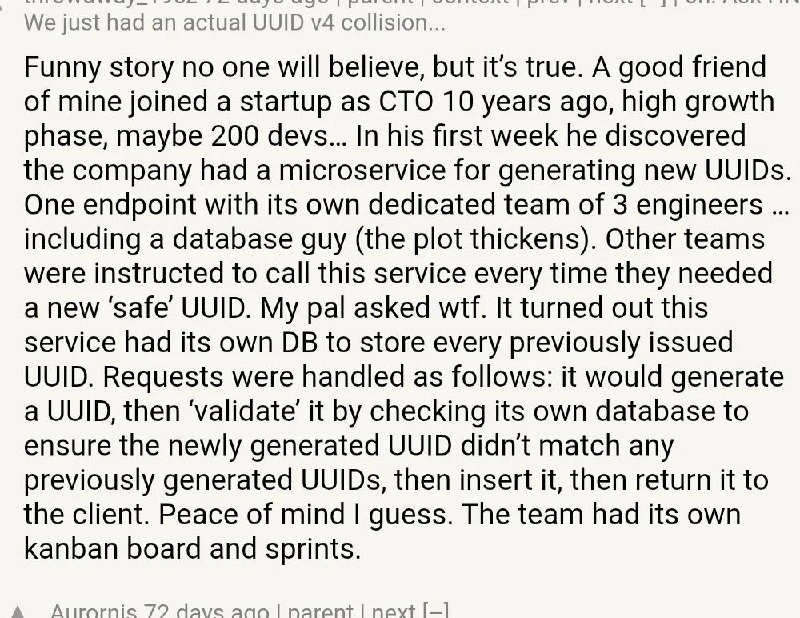
Microservices: decomposing one monolith turd into many independently deployable turds
Microservices: turning one failure domain into N^2 API contracts, distributed transactions, and an observability budget that needs its own cost center