
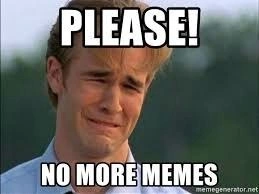
A Developer's Plea for Meme Cessation
Description
The image is the classic 'Crying Dawson' meme, featuring actor James Van Der Beek from the 90s TV show 'Dawson's Creek' with a famously overwrought, tearful expression. The meme is formatted with bold, white text in the Impact font, typical of early meme generators. The top line reads 'PLEASE!' and the bottom line reads 'NO MORE MEMES'. A watermark for 'memegenerator.net' is visible in the bottom right corner. This meme format is used to express exaggerated despair or being overwhelmed. In a tech context, this speaks to the phenomenon of meme fatigue within developer communities. While memes are a core part of communication on platforms like Slack or Discord, the relentless stream can lead to a sense of burnout or information overload, making this a relatable sentiment for anyone in a very active tech-centric community
Comments
7Comment deleted
This is the face of the on-call engineer after acknowledging 300 identical, non-actionable alerts. The real emergency is the notification fatigue, not the memes
Enabled back-pressure on #random to throttle memes; the team replied with a meme about back-pressure - turns out culture operates on layer 8, well outside my control plane
When you've spent 15 years architecting distributed systems, but the new junior's PR comment is just a GIF of SpongeBob, and you realize your carefully crafted ADRs are now competing with reaction memes for attention in technical discussions
The ultimate paradox: using a meme to protest memes is like writing a 500-line bash script to automate a task you'll only do once - technically correct, but you've already become what you sought to destroy. At least we didn't implement this complaint as a microservice
When memegenerator.net becomes your meme monolith: scalable templates, zero DX, endless watermarks - time for a refactor
We finally treated memes as production traffic - added a Slack circuit breaker that 429s #general with Retry-After: “next retro,” and our cognitive SLO recovered faster than any microservice
Please, no more memes - last time we did, we ended up with event sourcing, CQRS, and a Kafka cluster for the settings page