We Know a Guy Who Knows a Guy Who Worked There: Logo Wall Satire
Why is this Marketing meme funny?
Level 1: My Cousin's Friend Met a Celebrity Once
This is like a kid bragging, "I'm basically friends with a movie star — my cousin's friend stood next to one at the airport in 2019." The poster shows off logos of famous companies, but the actual connection it admits to is a friend-of-a-friend who used to work at one of them. It's funny because companies really do brag almost exactly like this on their websites, just with vaguer words — and seeing the brag spelled out honestly shows how silly the whole game is.
Level 2: Trusted-By Sections and Borrowed Résumés
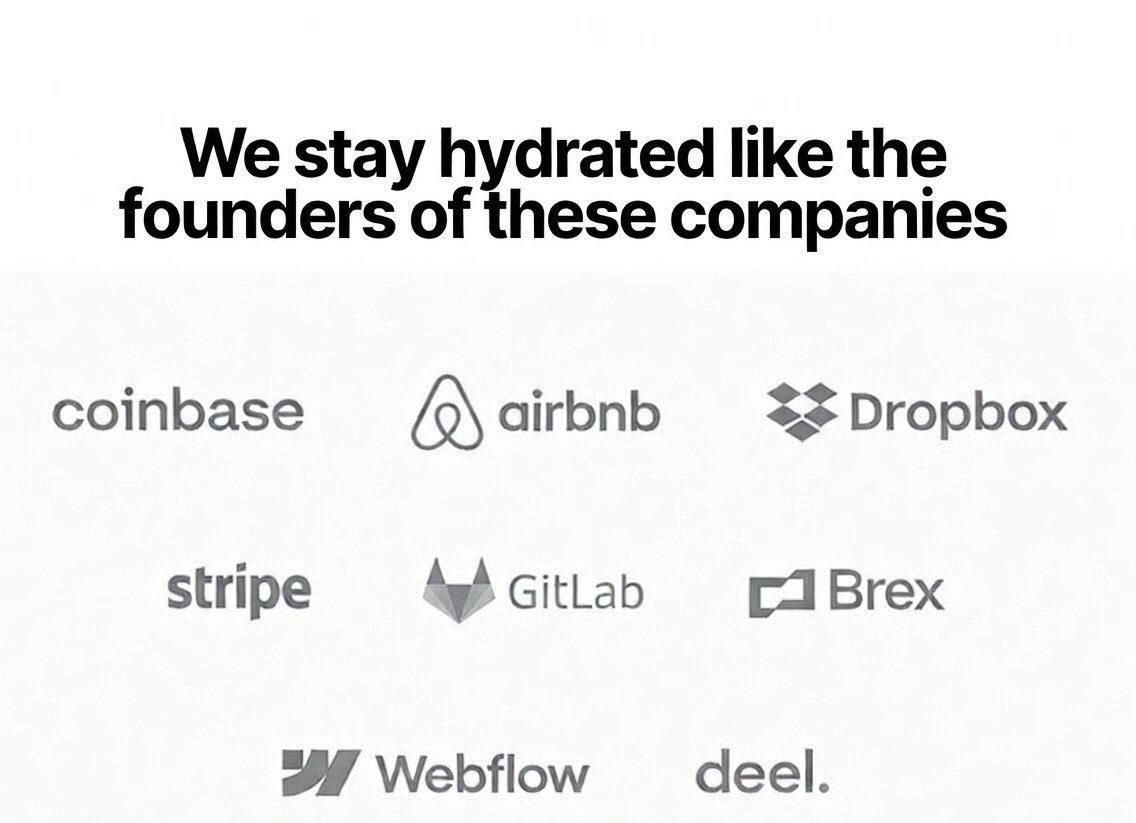
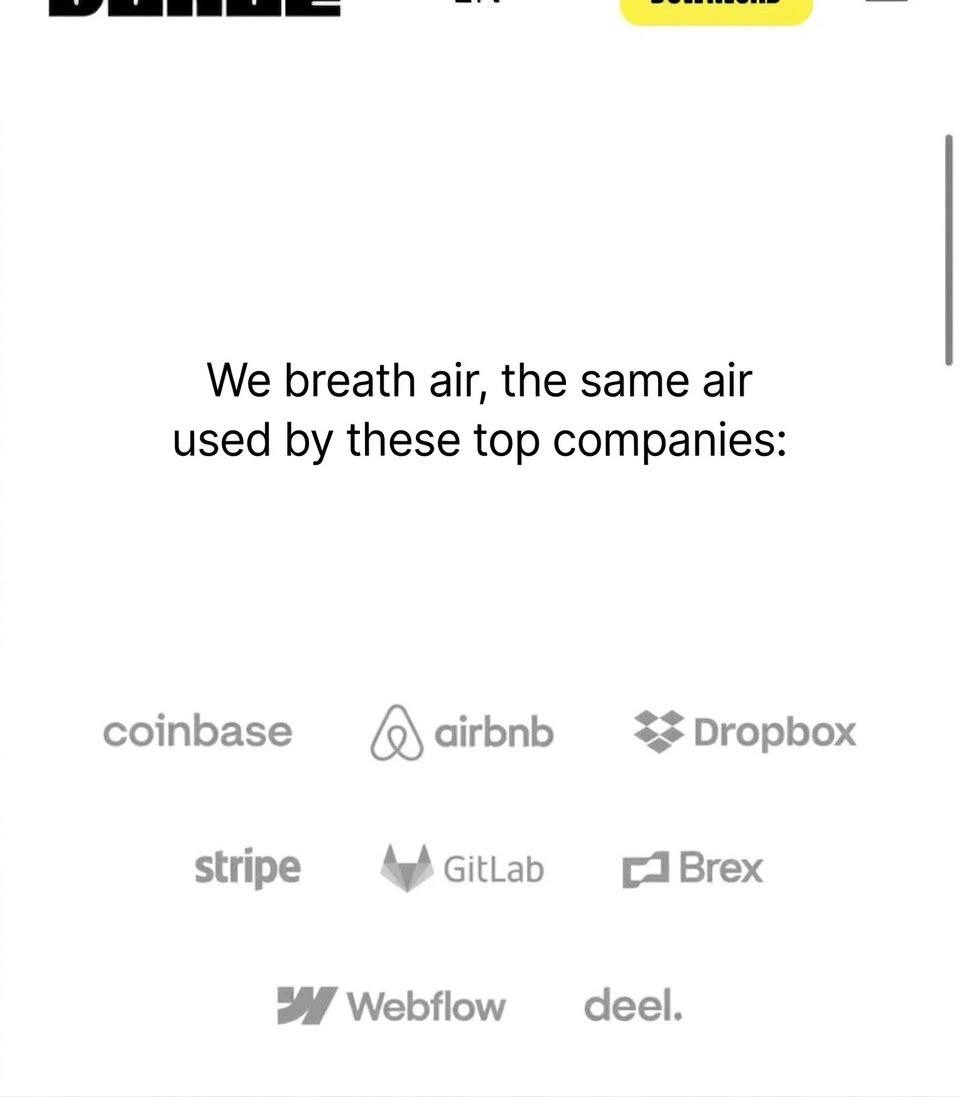
The pattern being parodied: startups put rows of famous logos on their websites under phrases like "trusted by," implying those companies are customers or partners. Social proof is the psychology — we assume quality when famous names appear nearby. The brands shown are the usual prestige set: Stripe (payments), GitLab (where code lives and CI runs), Dropbox (file sync), Airbnb (lodging), Coinbase (crypto), Brex (corporate cards), Webflow (no-code sites), Deel (international payroll). The meme replaces the implied business relationship with a second-degree connection — the kind LinkedIn labels "2nd" — to someone who used to be employed there. Early in your career you'll meet this constantly: job posts touting "founded by ex-Meta engineers," conference bios listing companies someone left years ago, and "warm intros" that turn out to be a friend-of-a-friend. None of it tells you whether the product works, just as knowing a guy who knows a former Dropbox employee tells you nothing about anyone's file storage. Learning to separate association from evidence is half of evaluating both vendors and employers.
Level 3: Two-Hop Authority With No TTL
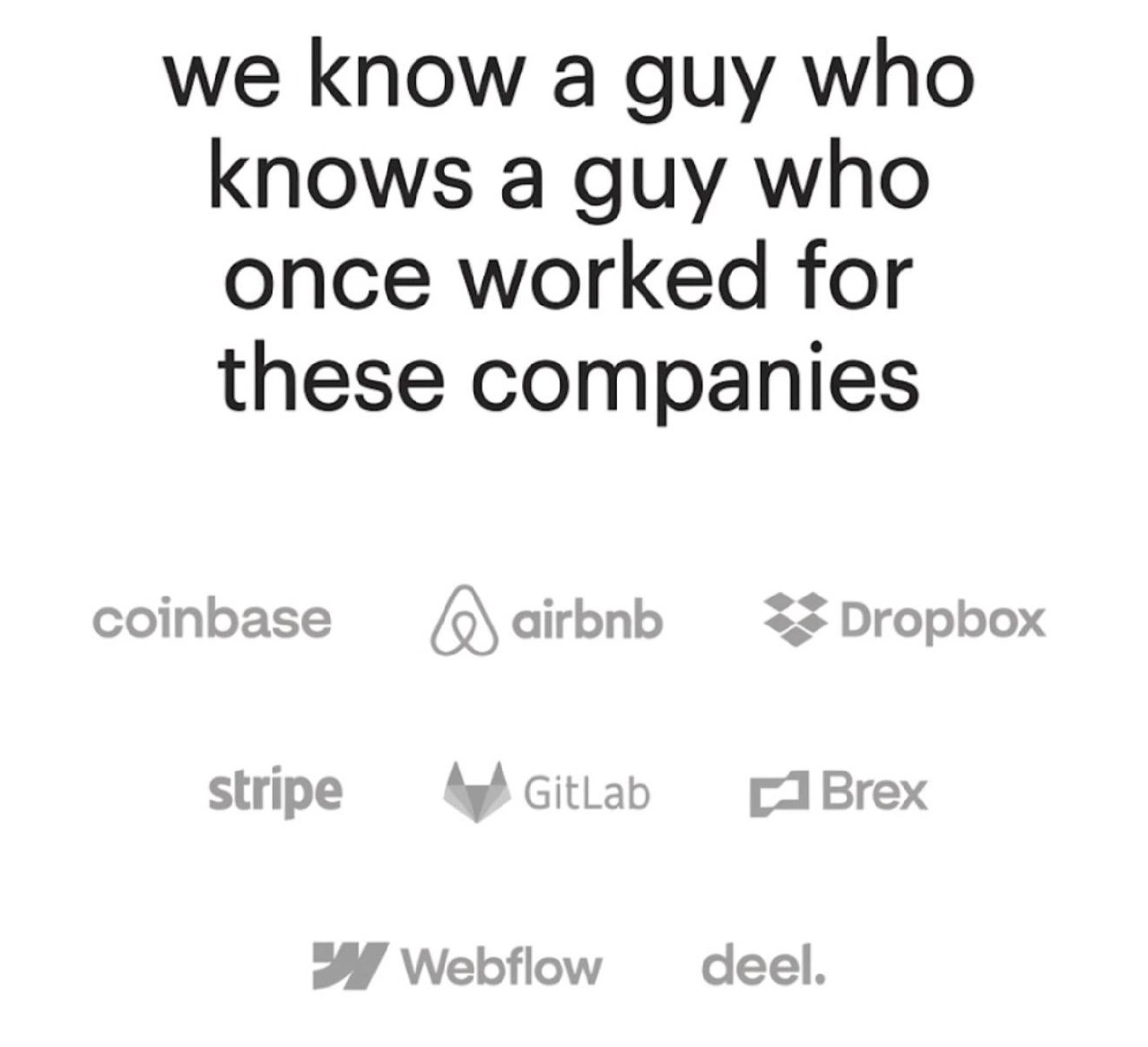
The slide keeps the sacred SaaS landing page liturgy — white space, grayscale logo wall of coinbase, airbnb, Dropbox, stripe, GitLab, Brex, Webflow, deel. — but swaps the headline for a confession that reads like a pub anecdote:
"we know a guy who knows a guy who once worked for these companies"
What's being skewered here is not just the trusted-by section but the entire economy of transitive credibility that startup culture runs on. The claim is a two-hop graph traversal terminating at a node with an expired edge ("once worked"). And yet — this is the uncomfortable part — it's structurally identical to credentials the industry takes completely seriously. "Ex-Google founder." "Team from Stripe and Airbnb." "Advisors from Coinbase." Venture capital openly prices these signals; accelerator applications have fields for them. The meme just discloses the hop count and the staleness that real marketing hides. In distributed-systems terms, it's authority forwarded through two untrusted intermediaries with no expiry check — a chain of custody nobody verified, presented in the visual format (the gray logo row) that the human eye has been trained to accept as proof.
The "once worked for" clause lands hardest. Ex-FAANG credentialism assumes competence transfers from employer to employee and survives departure indefinitely; this slide extends the assumption two more degrees, to acquaintances of former employees, and dares you to identify where exactly the logic broke. It didn't break — it was never load-bearing. That's the satire's thesis across this whole genre: the logos persuade, the words above them are unaudited free text, and somewhere a growth team knows their conversion rate wouldn't move if the caption were replaced with lorem ipsum. Six degrees of separation guarantees every startup on Earth can truthfully ship this exact slide, which makes it the only logo wall with one hundred percent industry adoption potential.
Description
A white parody slide with large black text reading 'we know a guy who knows a guy who once worked for these companies' above a grayscale logo wall in three rows: coinbase, airbnb, Dropbox; stripe, GitLab, Brex; Webflow and deel. Part of a satire series mocking SaaS 'trusted by' logo sections, this one reframes the implied affiliation as the flimsiest possible second-degree networking claim
Comments
1Comment deleted
That's still a stronger reference chain than most 'ex-Google' LinkedIn bios - at least this one discloses the hop count